My Walking Journeys

  • A Day Out in Colston Bassett and Kinoulton: Nature Walk Insights

    Mar 4th, 2025

    Hello and welcome back to my blog 😊.

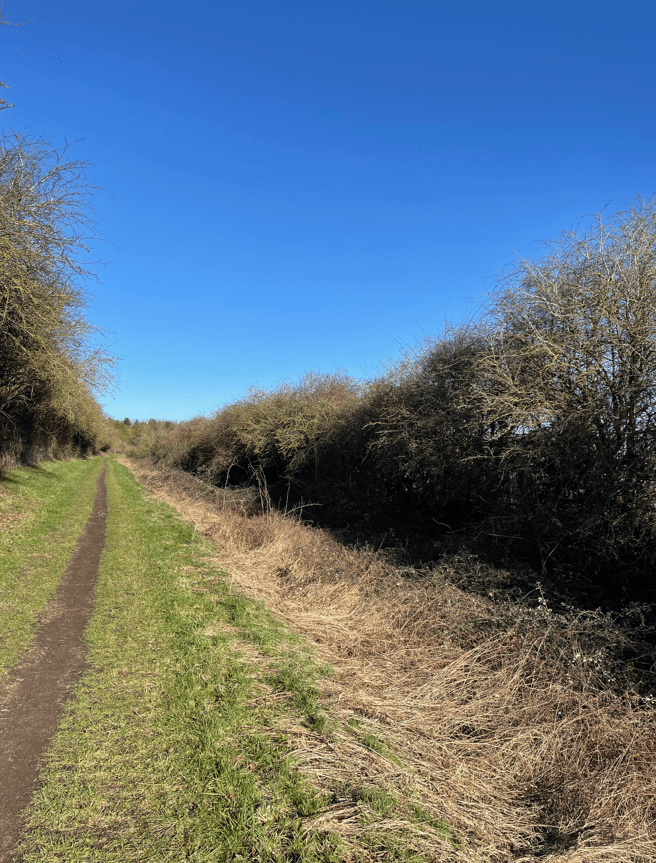
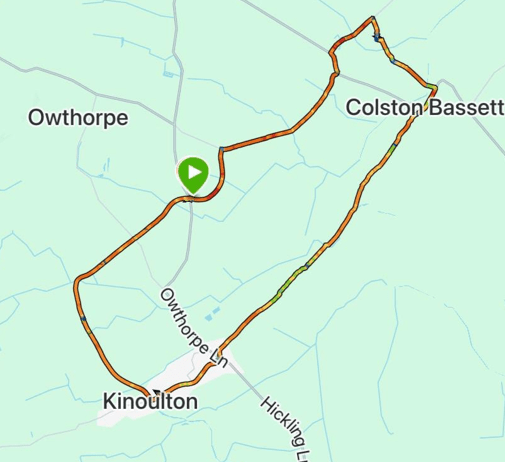
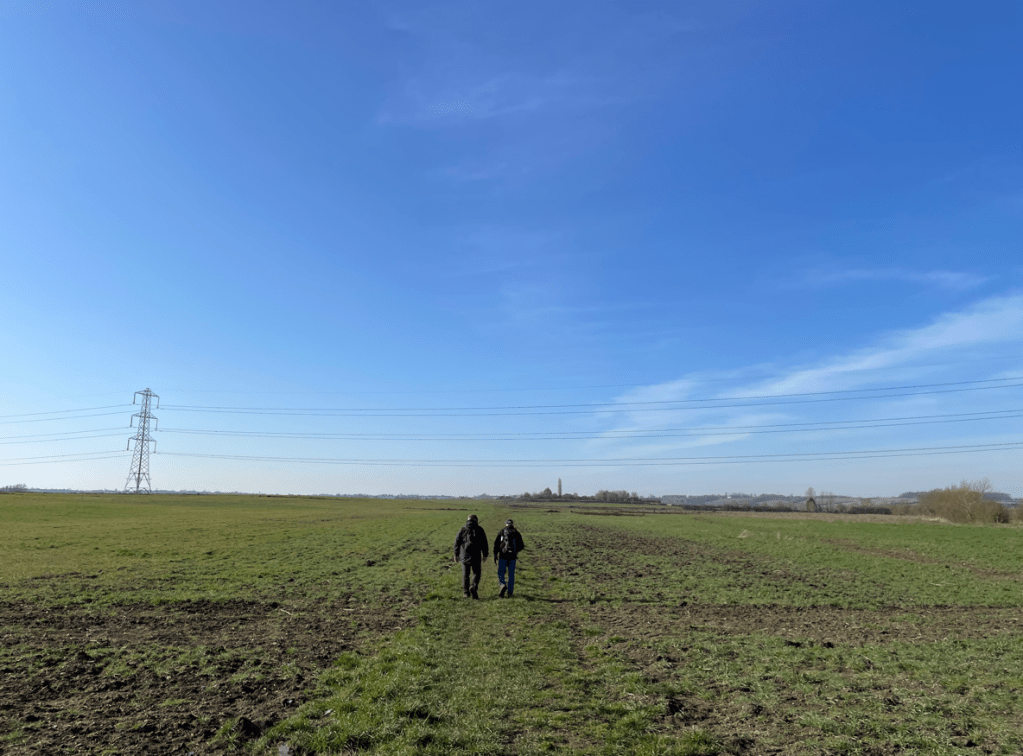
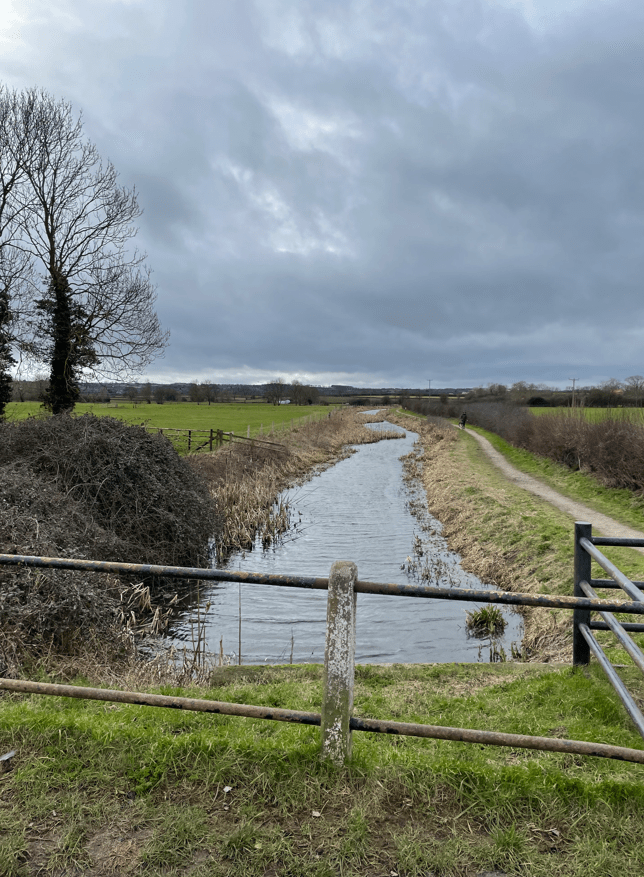
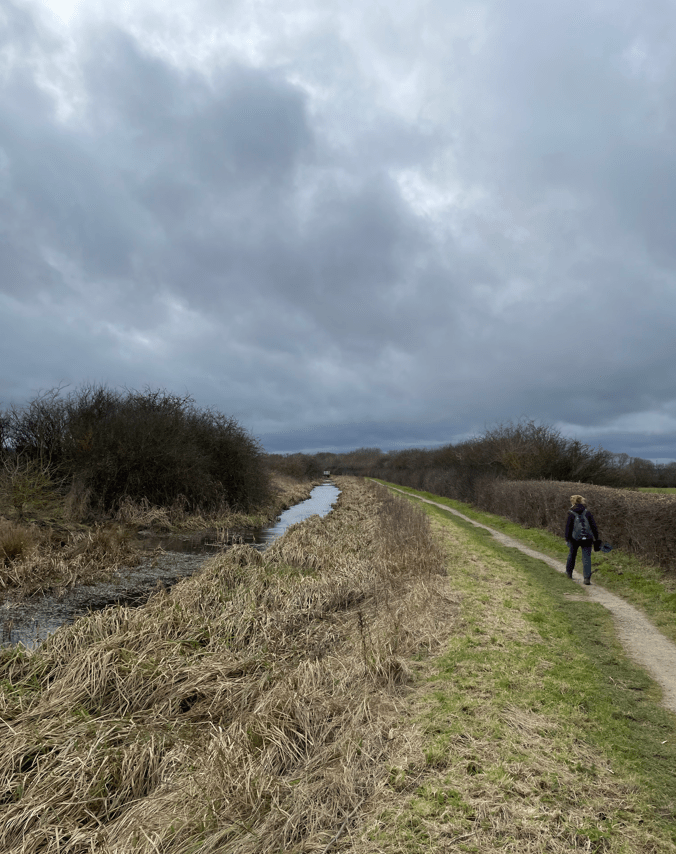
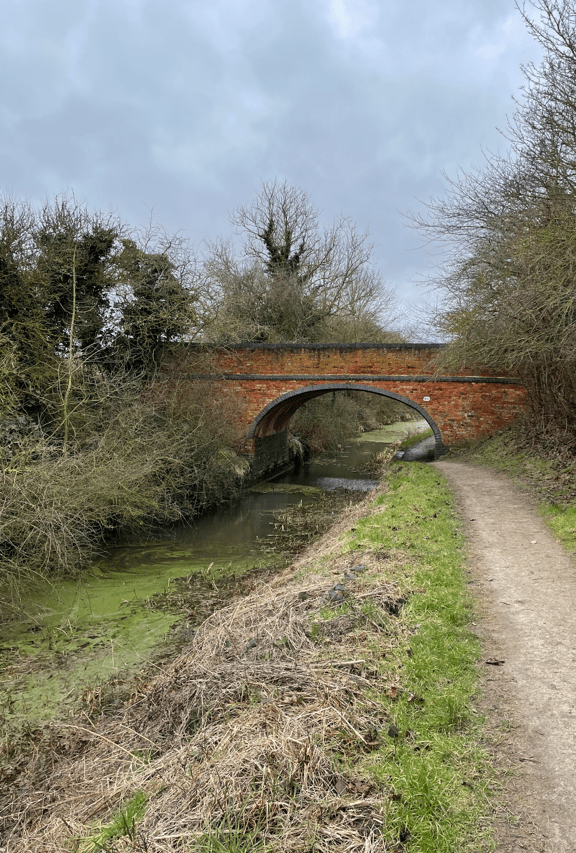
    The Three Amigos met up today and enjoyed a 6.5-mile circular walk in the Vale of Belvoir, along the Grantham Canal (under restoration), along quiet country lanes, across fields and through the quiet villages of Colston Bassett and Kinoulton.

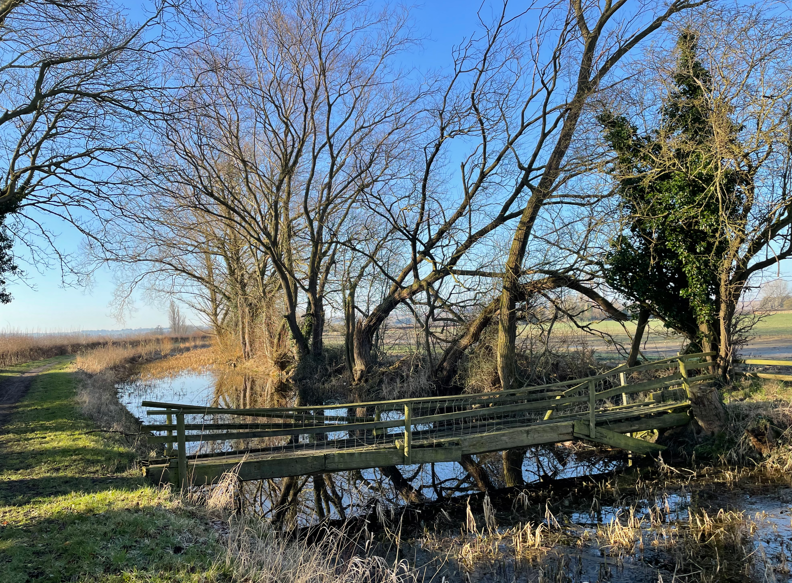
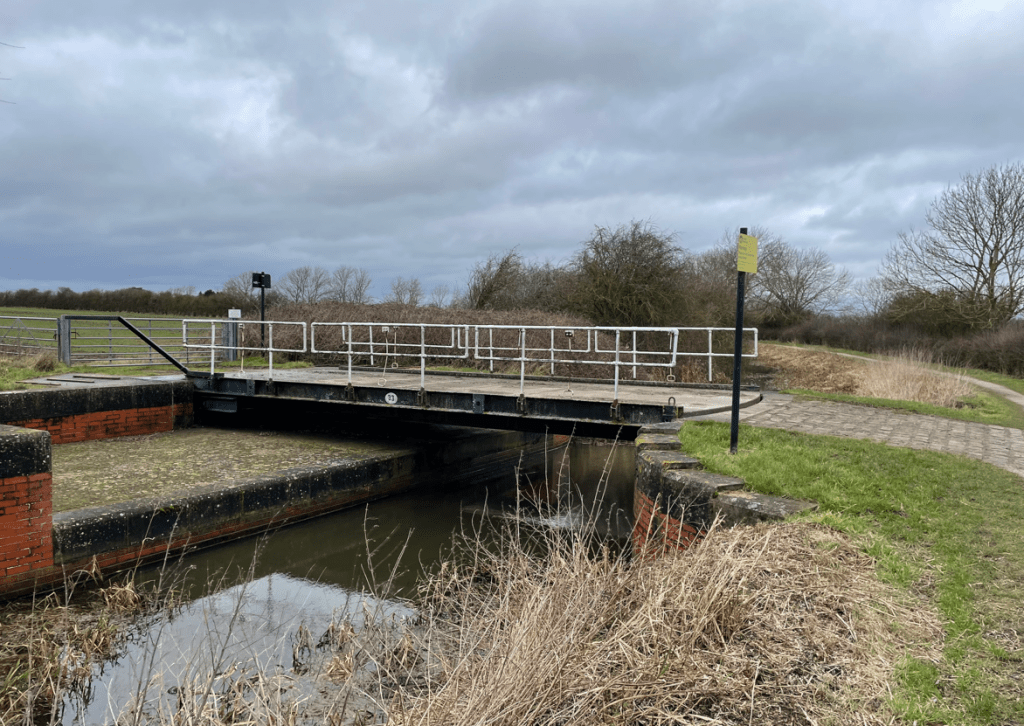
    It was a sunny blue sky day and we were looking forward to a great walk. We parked in a lay-by close to the canal and began our walk walking along the towpath. We passed a very dodgy looking wooden footbridge across the canal – I wouldn’t fancy my chances on that!

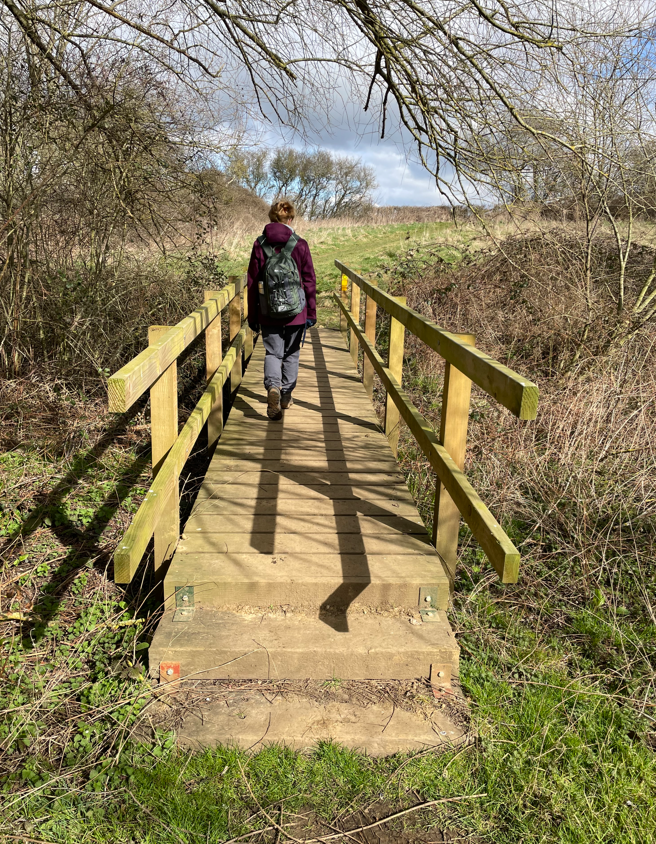
    A rickety bridge

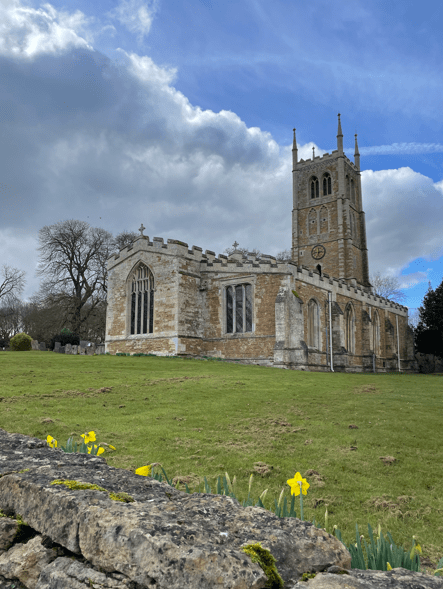
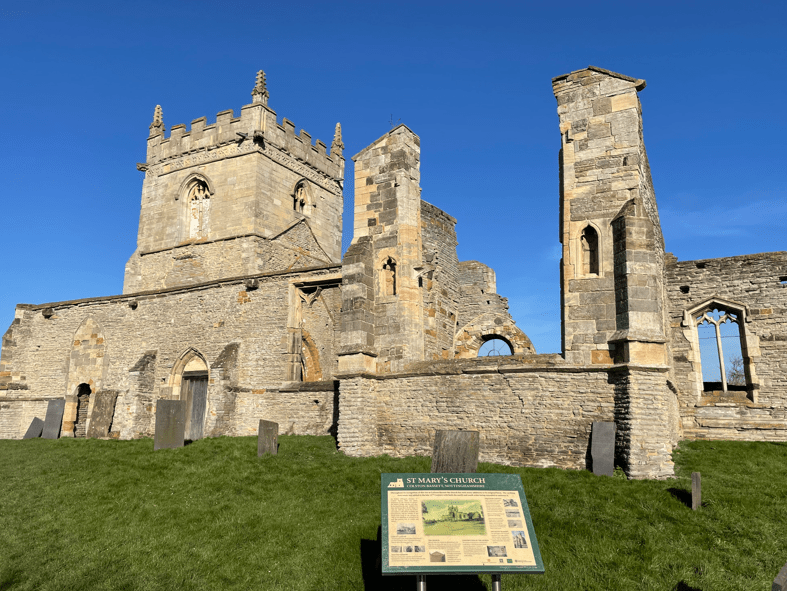
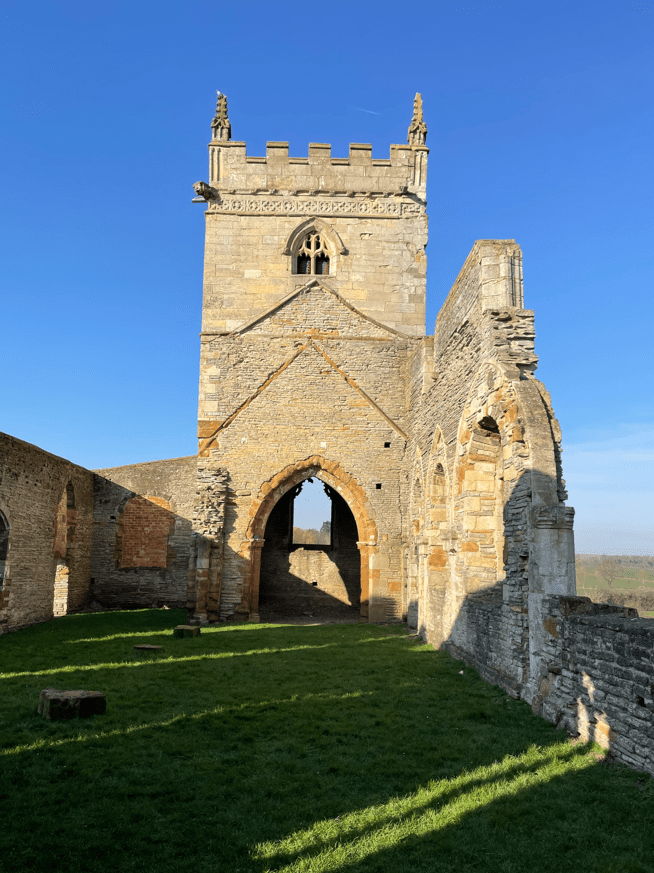
    After about a mile we left the canal and walked along quiet country lanes rising gently to to bring us to the ruins of St Marys church, close to Colston Bassett.

    We took a look inside and learnt that every period of medieval architecture is on show -Norman, Early English, Decorated and Perpendicular.

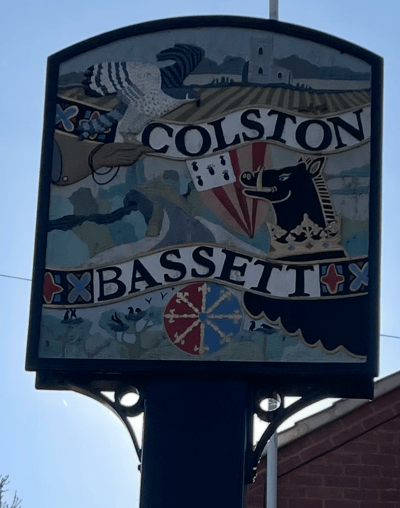
    Colston means homestead (or ‘ton’) of someone called ‘Col’, possibly a Danish leader long before the Norman Conquest. ‘Bassett’ is a family name – a wealthy Norman family possessed large estates including the manor of Colston.

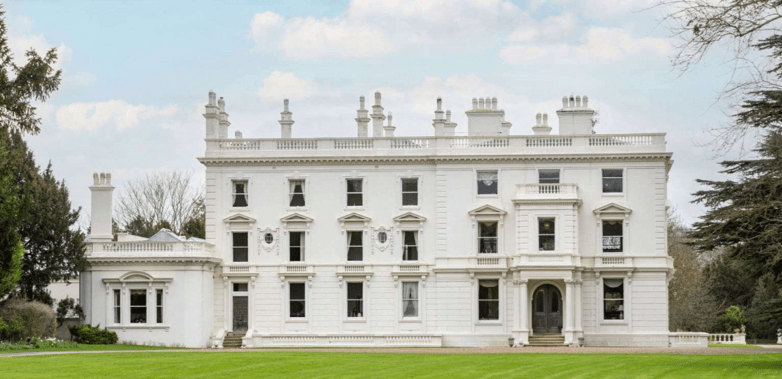
    After looking around the ruins we set off again, heading towards the village of Colston Bassett. On the way we glimpsed the fine Colston Hall through the trees.

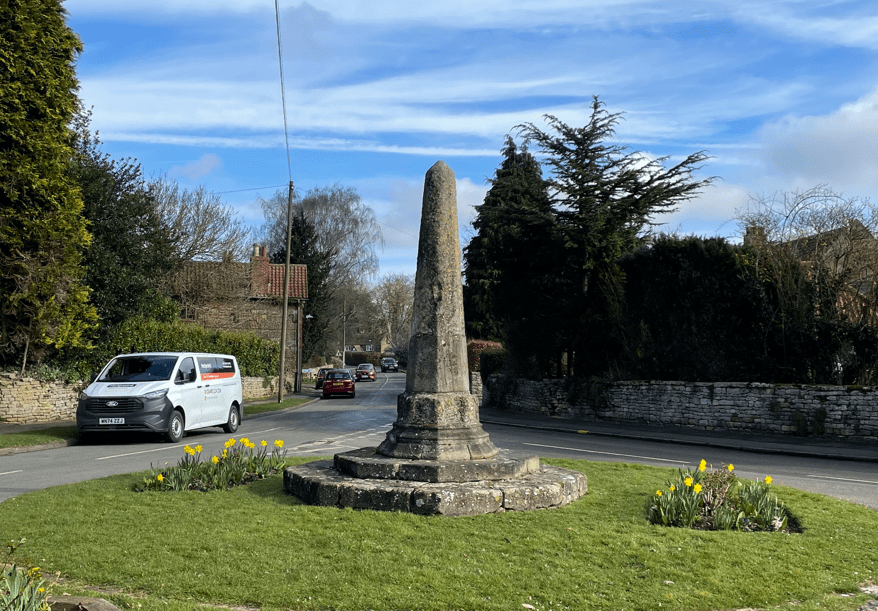
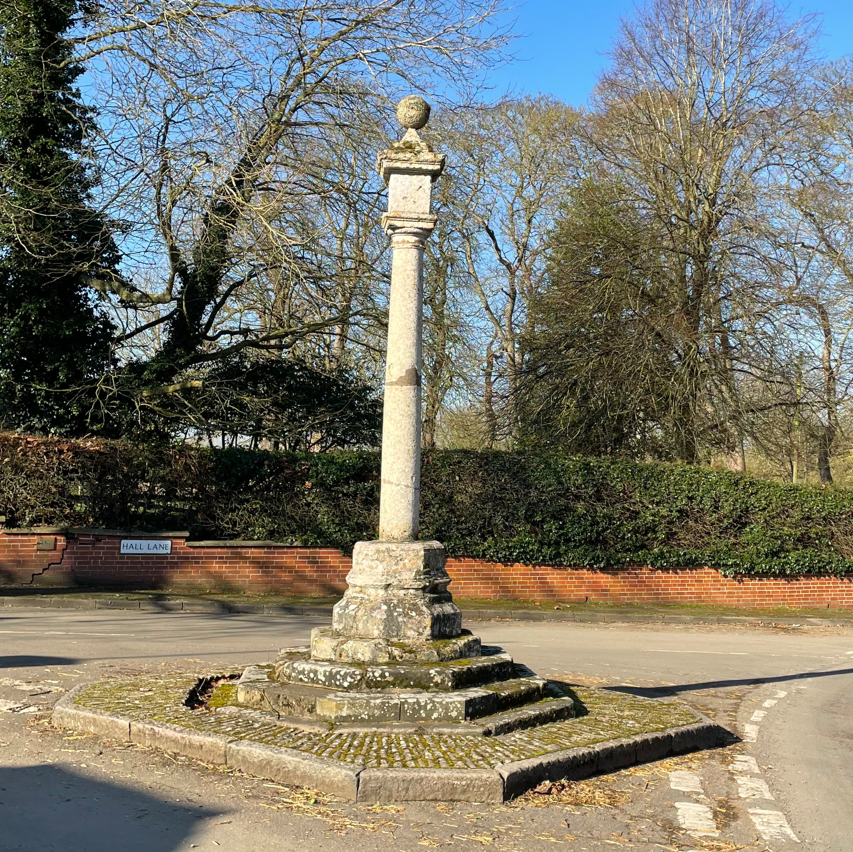
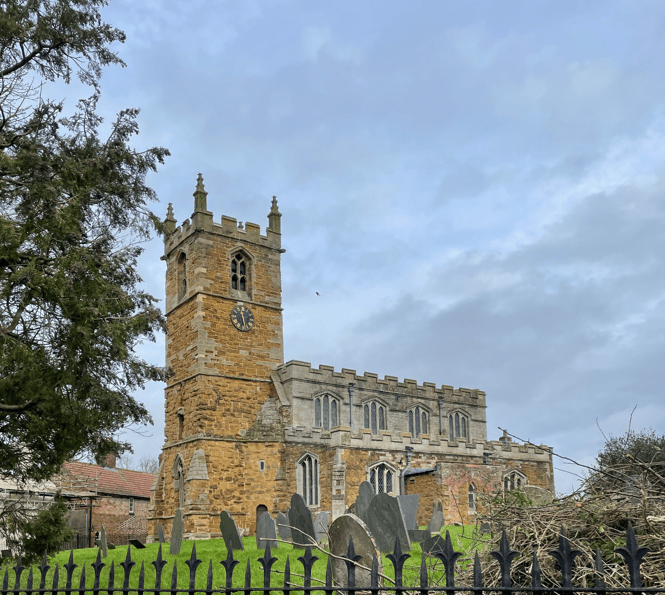
    Arriving into the small village we walked past the church and village cross to find our path lying on the far end of the village.

    Village cross in Colston Bassett

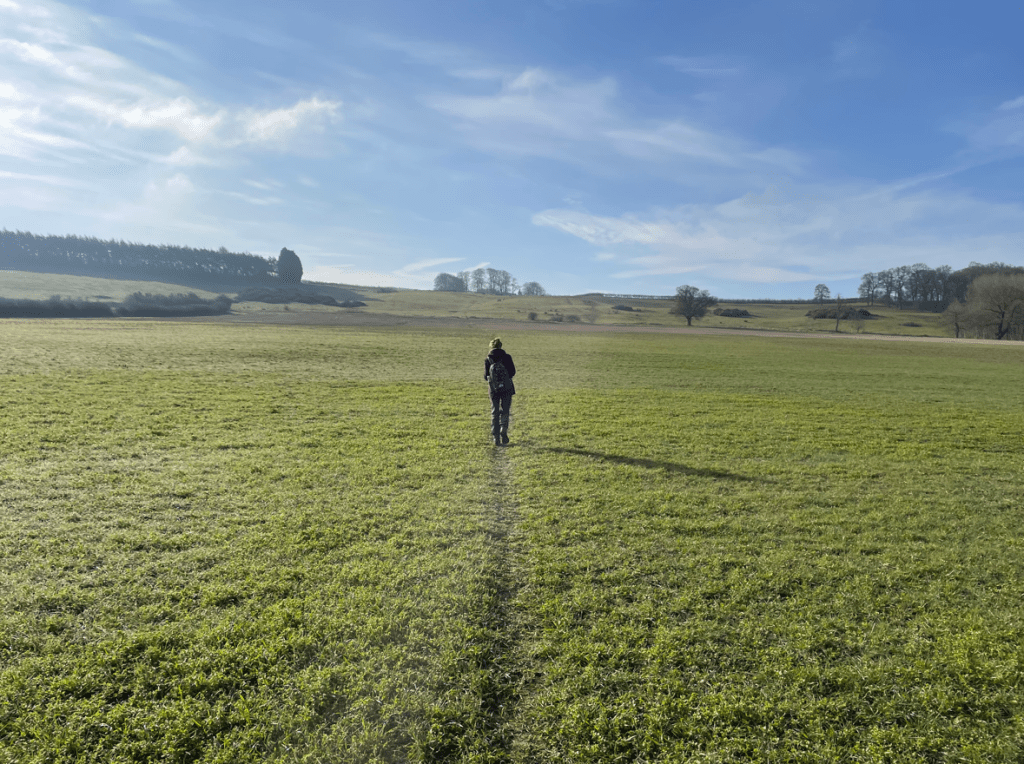
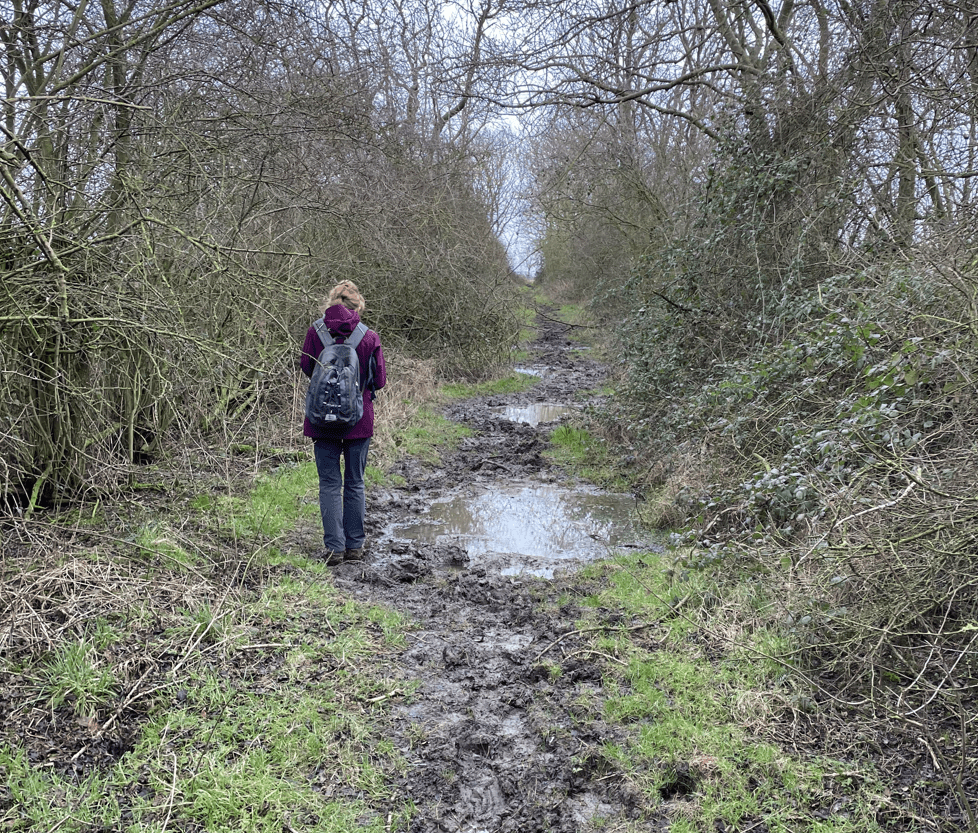
    We headed across muddy fields towards the village of Kinoulton- there were some murmurings within the ranks about the mud, but no mutiny! 😊

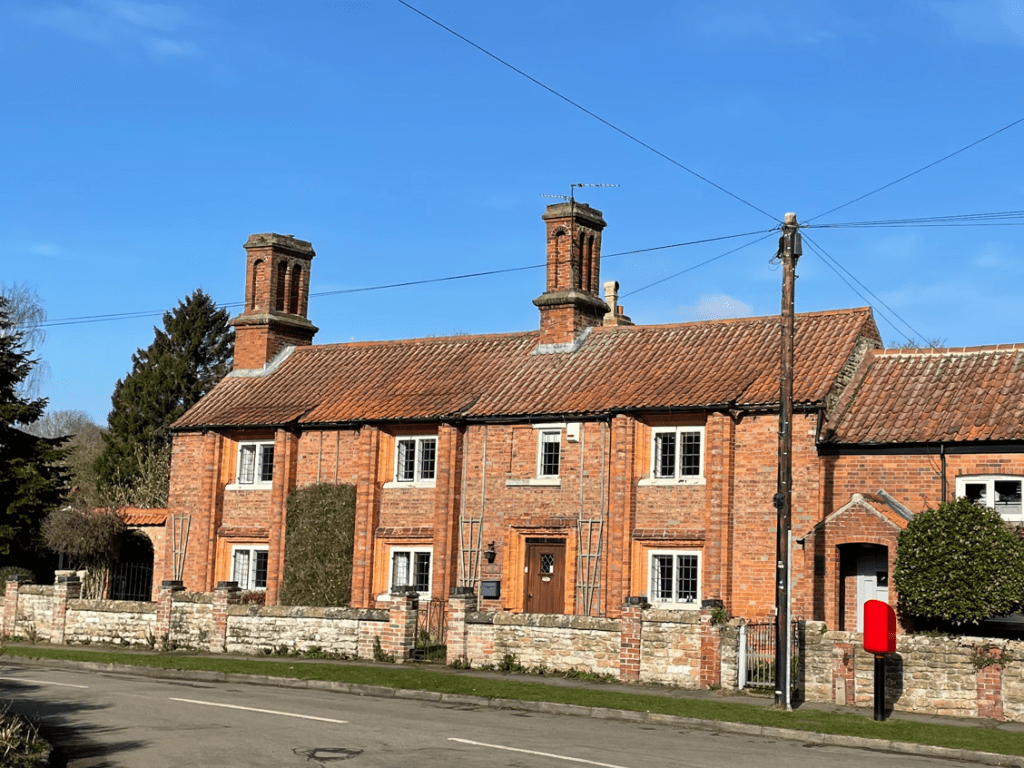
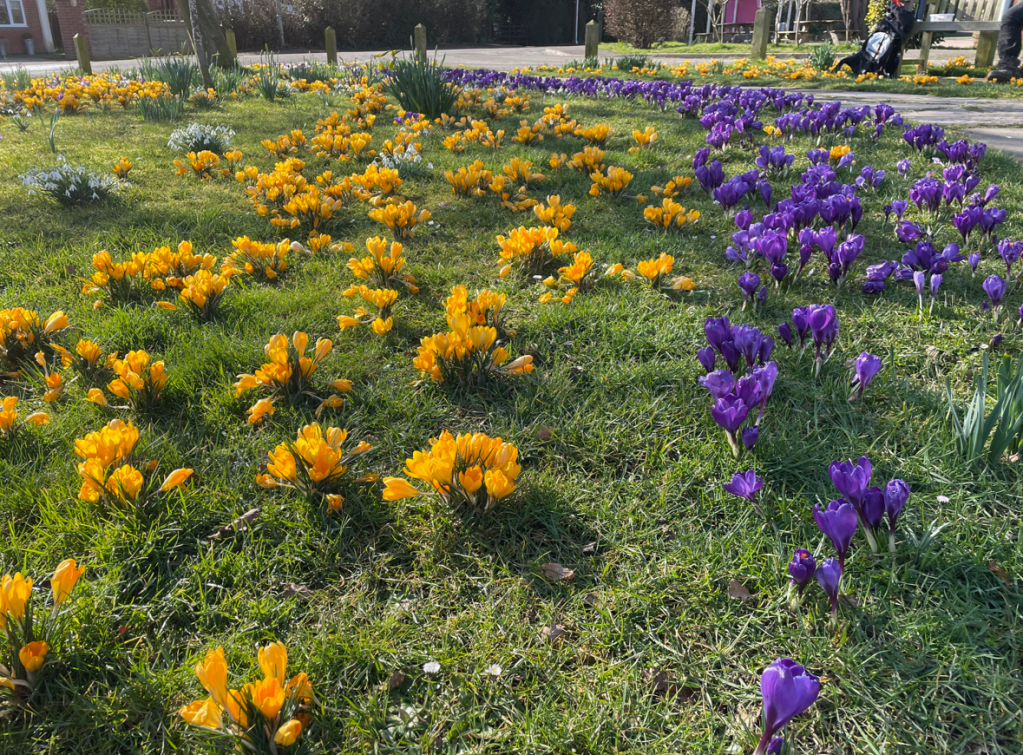
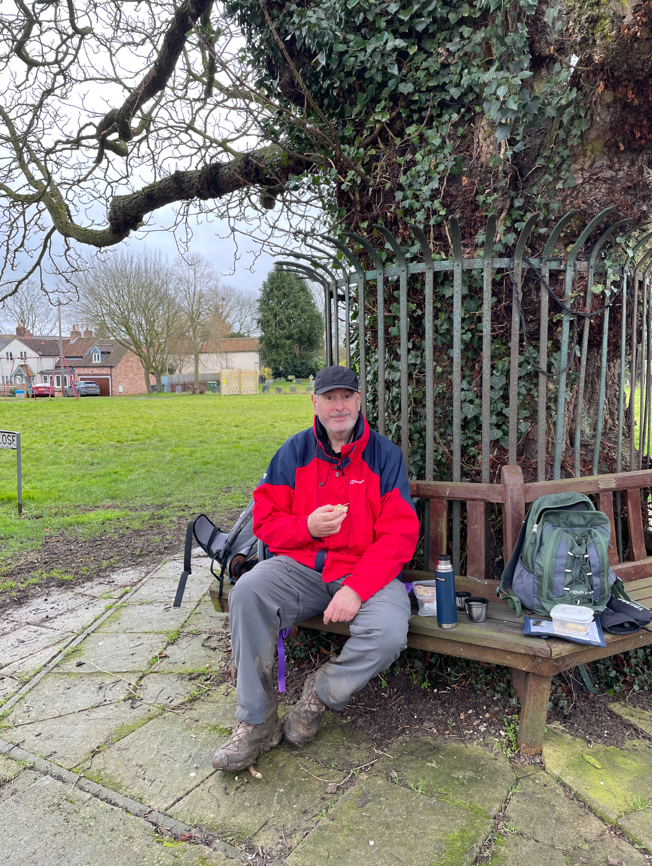
    After a struggle with the mud we were delighted to arrive into Kinoulton and see the most wonderful display of crocuses on the village green. Spring is definitely in the air! Taking advantage of a couple of seats by the green, it was a perfect spot for a break.

    Kinoulton village green

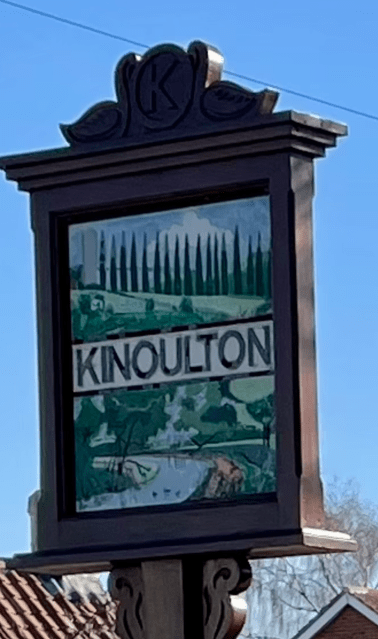
    I do enjoy looking at the village signs which usually depict things of importance to the village. In this case the Grantham canal and a row of poplar trees (the significance of which will be revealed shortly)

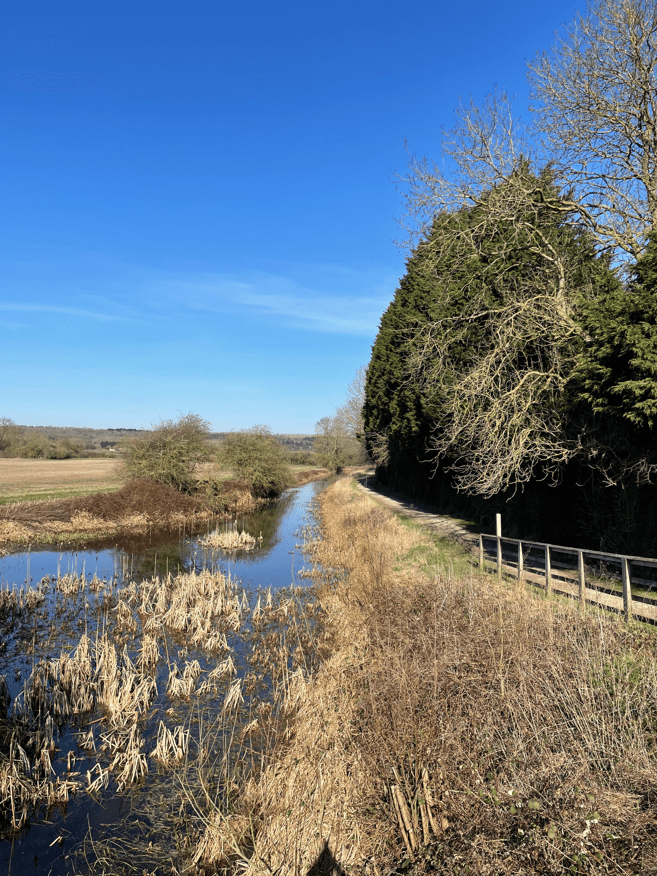
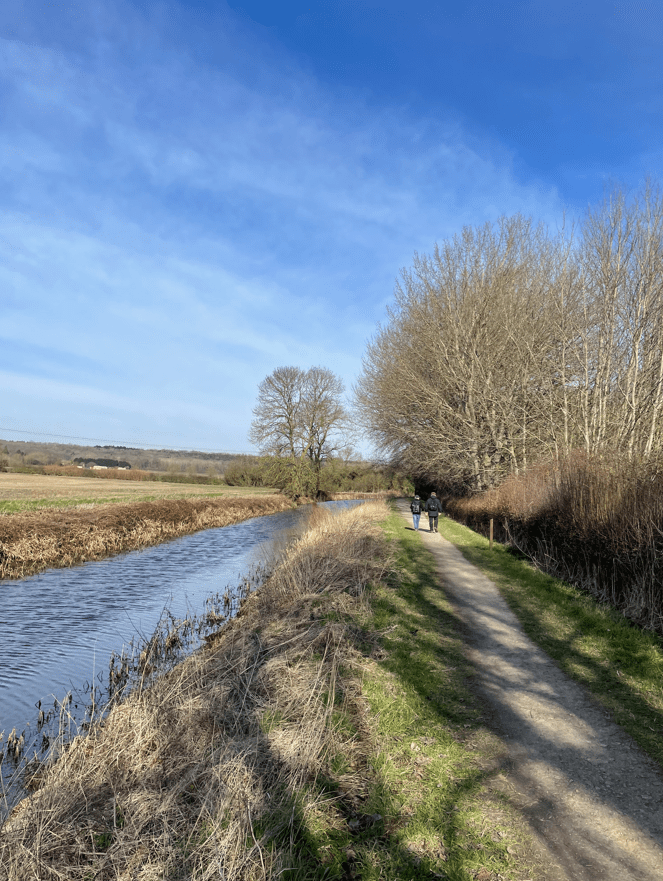
    Walking on through the village we picked up the Grantham canal once again and set off along the towpath.

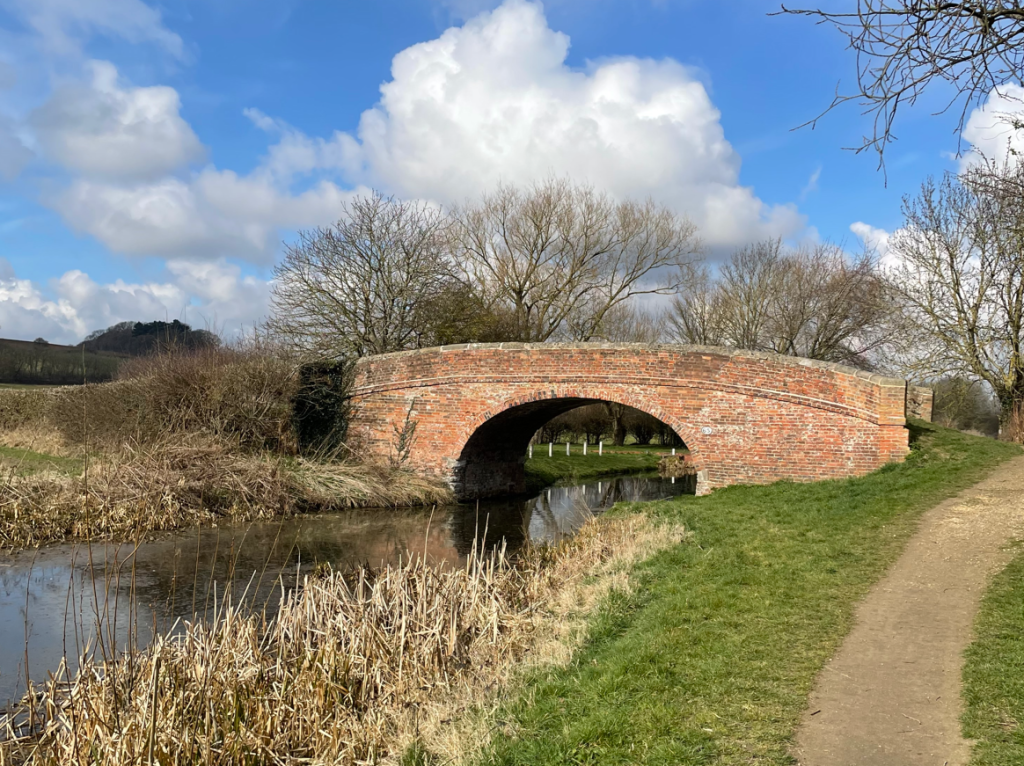
    The Grantham canal at Kinoulton

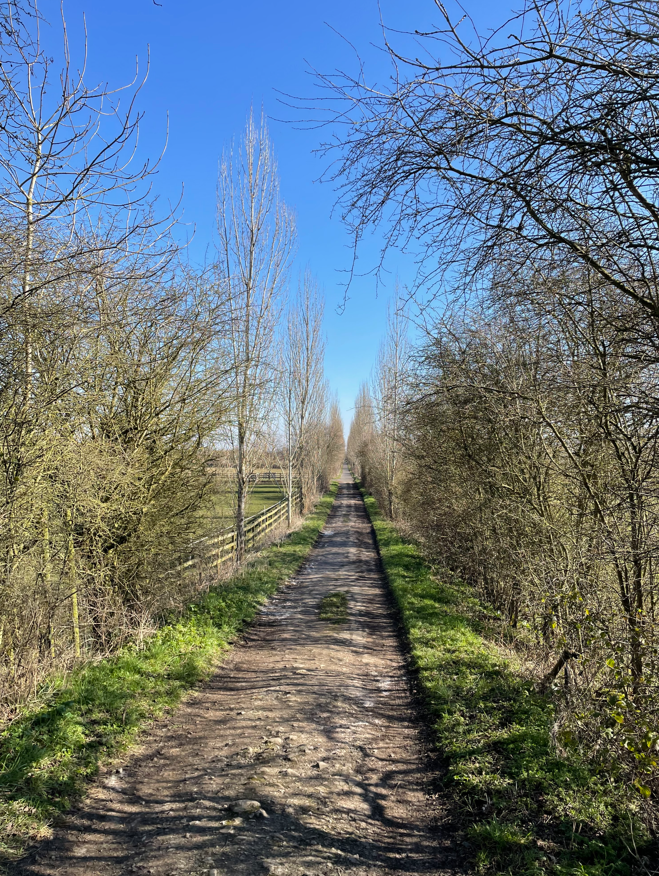
    As we reached Irish Jack’s bridge we read the board that explained the row of Lombardy poplar trees leading up the hillside at Vimy Ridge Farm. Previously named Pasture Hill Farm, it was renamed by Sir Jesse Hinde in memory of his son Francis who was killed at the Somme in 1916. The avenue is comprised of 184 trees to commemorate Francis and 183 other members of his regiment – the Sherwood Foresters-who died between July and November during that dreadful battle.

    Lombardy poplar trees at Vimy Ridge Farm

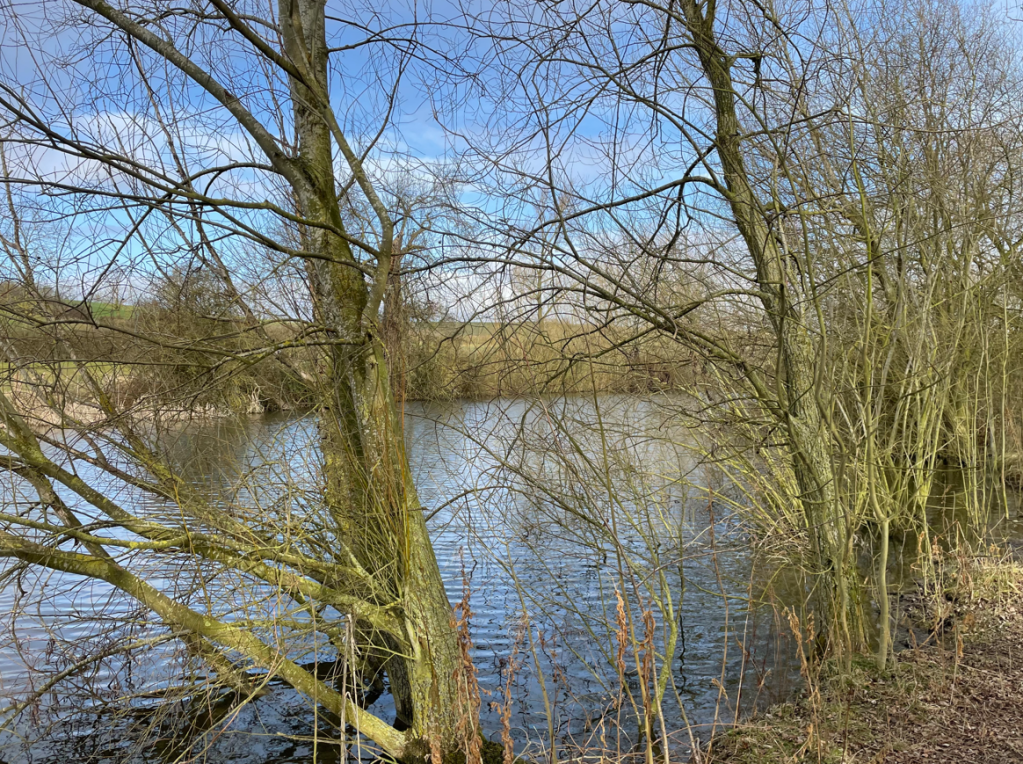
    Continuing onwards, enjoying the sunshine and the swans gliding along the canal, the miles slipped past effortlessly and we were soon arriving back at our cars.

    We had loved the walk and especially the sunny weather. For me it illustrated the joy of the unexpected -in this case, the ruined church and the beautiful spring crocuses. You never know what you will come across on a new walk. Till the next one.

    Happy Walking! 😊🚶
  • Enjoying a 10-Mile Walk from Syston to Marston

    Feb 28th, 2025

    Hello and welcome back to my blog 😊.

    Sunshine was forecast for today and I was definitely up for a good walk. After scraping the ice off the car windscreen I headed out to drive the few miles to my starting point in Syston village. Unfortunately, I encountered a traffic jam on the A607 and, after not moving for 5 minutes, I did a U-turn and parked in the village of Belton. The delay turned out to be a road traffic accident. The Fire Brigade, police and an ambulance were in attendance as I walked past. I hoped the injured party was ok.

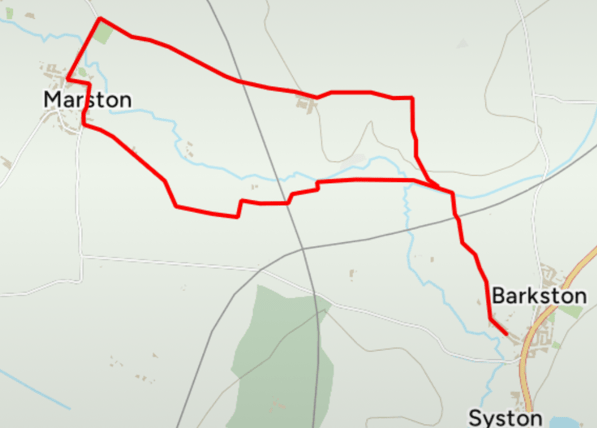
    My plan was to do a circular walk from Syston to Barkston then to Marston and back. I had seen that the Vale of Belvoir ramblers had recently blogged this walk and I liked the look of it. As I walked through Syston the sky was blue and there was a smattering of frost on the ground.

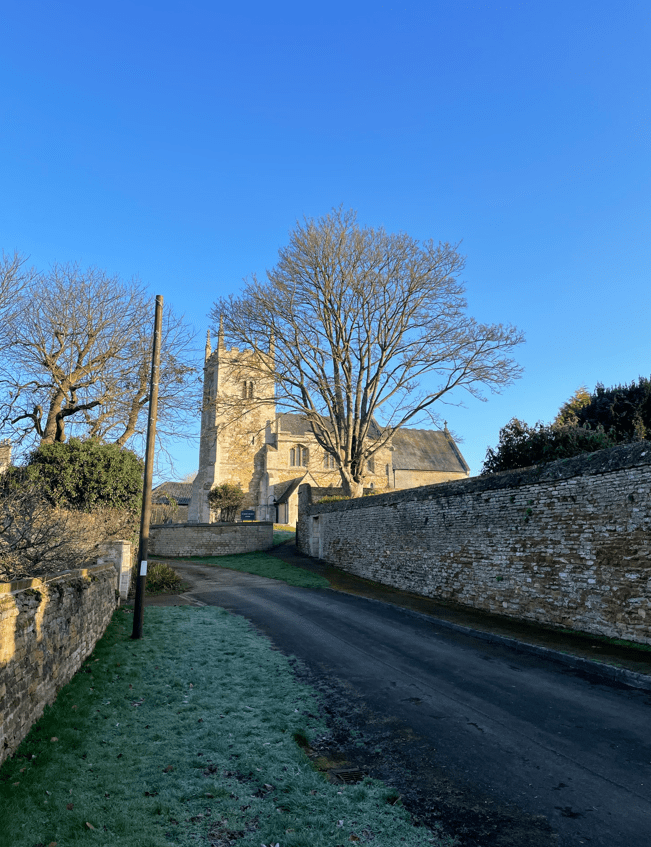
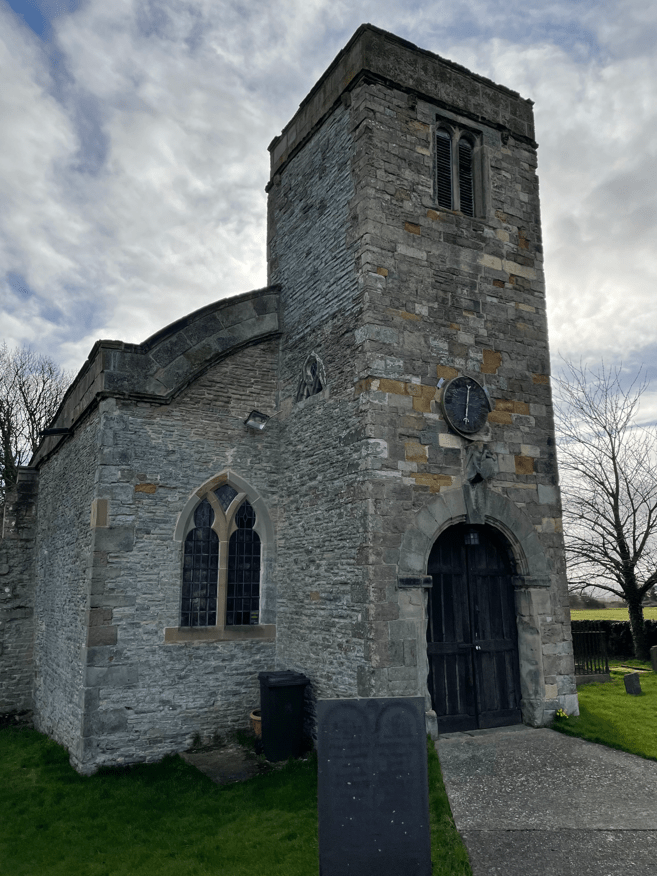
    St Marys church, Syston

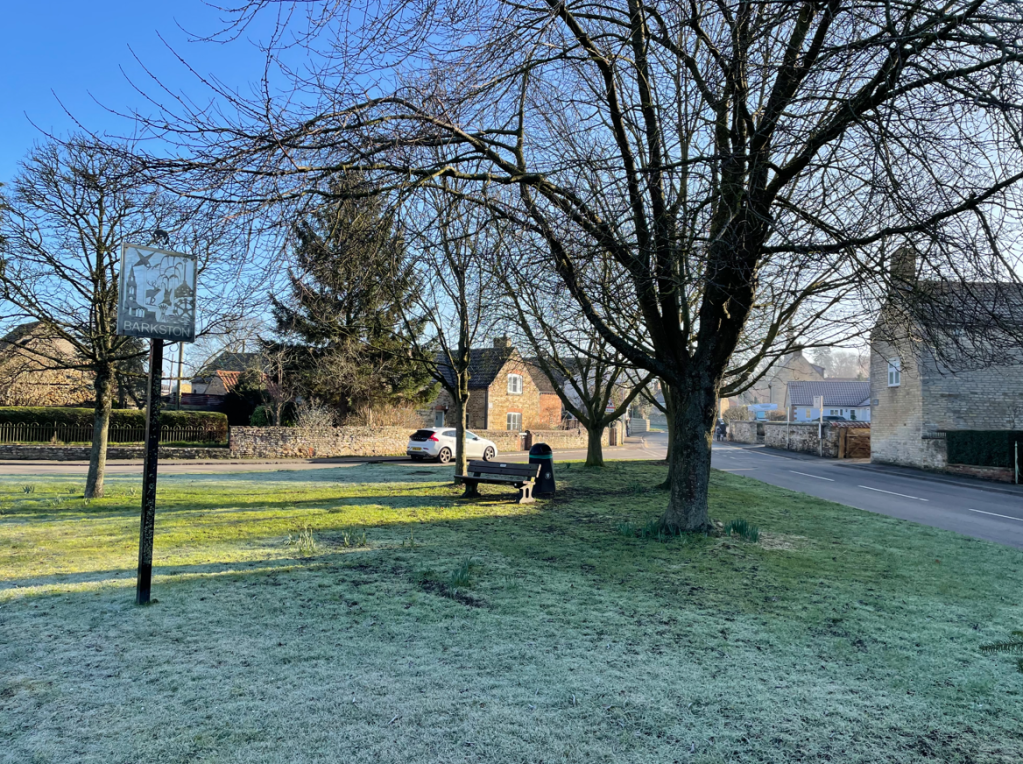
    It is a short walk from Syston into Barkston.

    Barkston village green

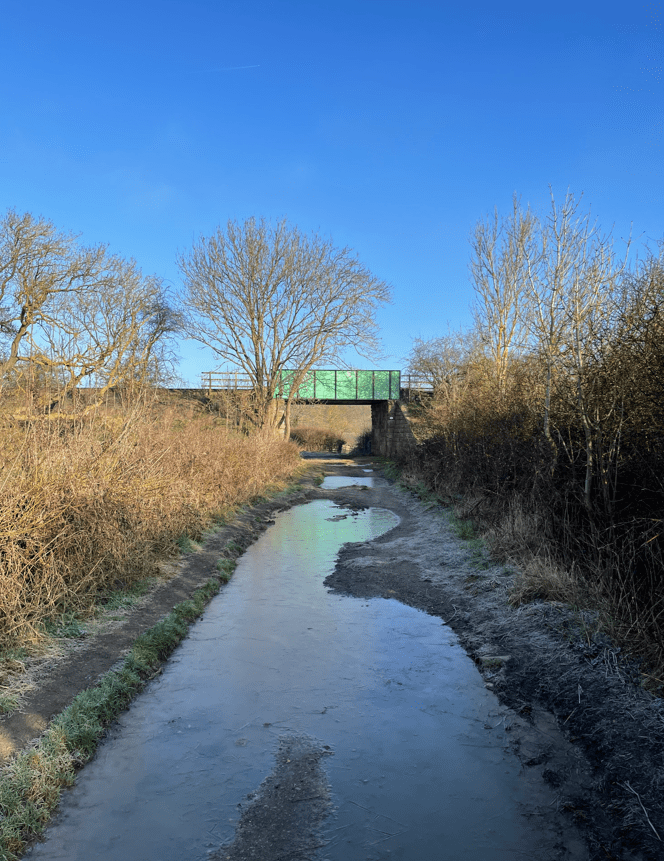
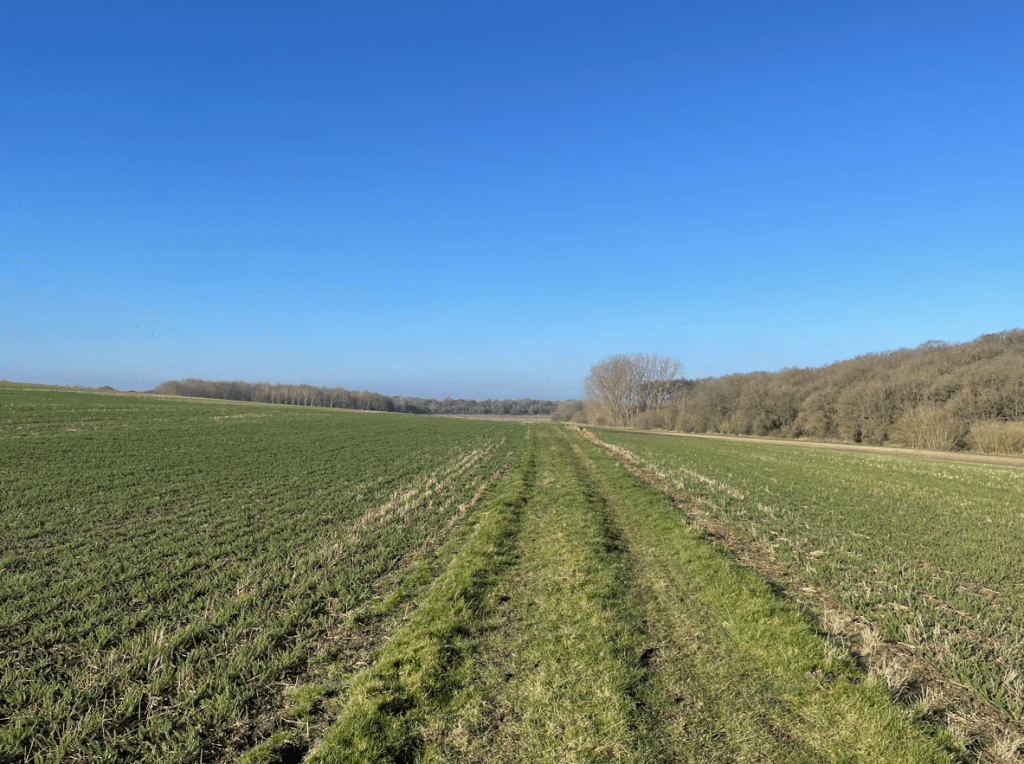
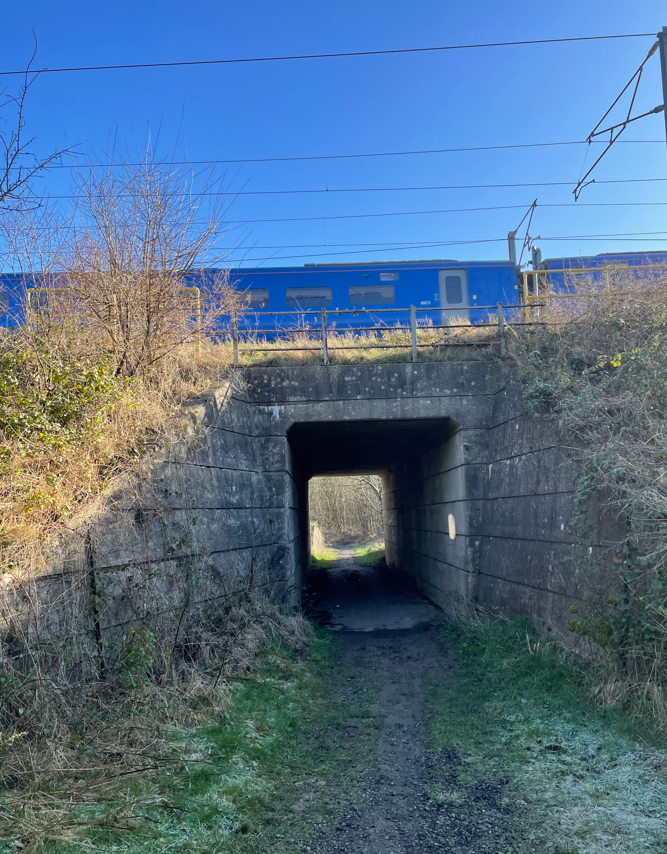
    After walking through Barkston, admiring the fine stone houses, I found the footpath I needed and headed across a couple of fields. I was soon on a wider track that passed under the Grantham to Skegness railway line. As I avoided the puddles of water I noted that there was a thin layer of ice on them.

    Railway bridge

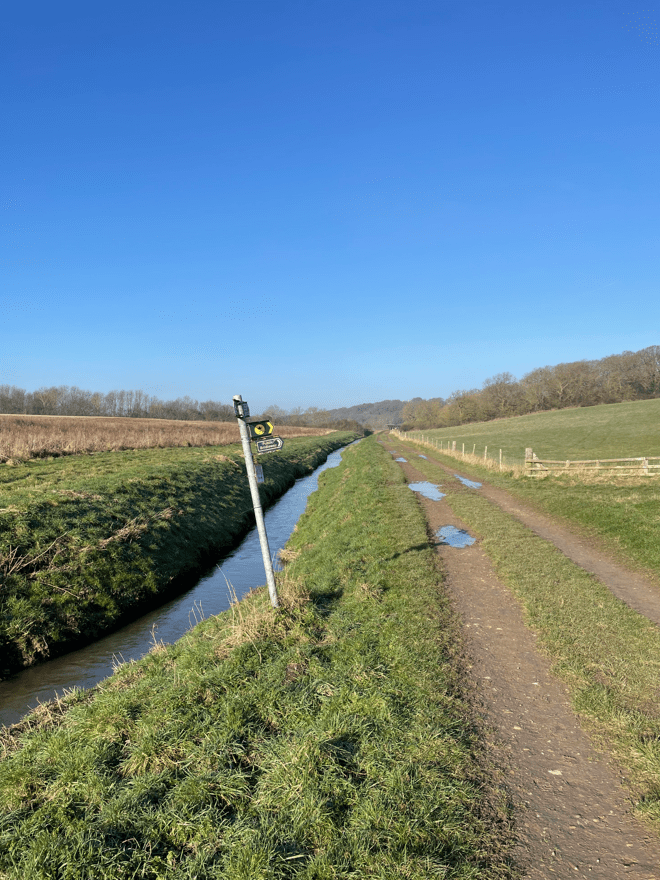
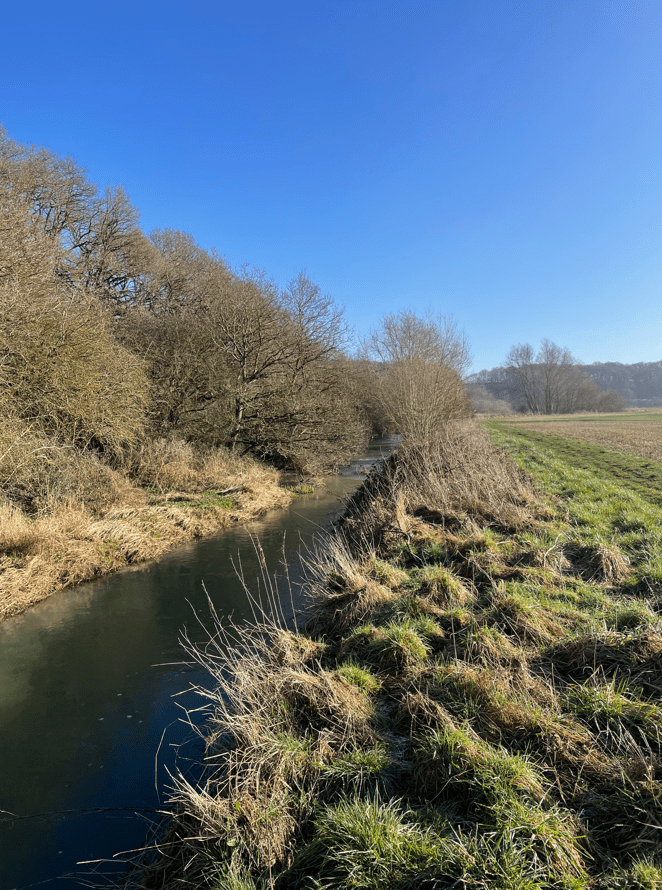
    After passing under the bridge I walked beside Honington Beck, a tributary of the river Witham, which it joined after a few hundred metres.

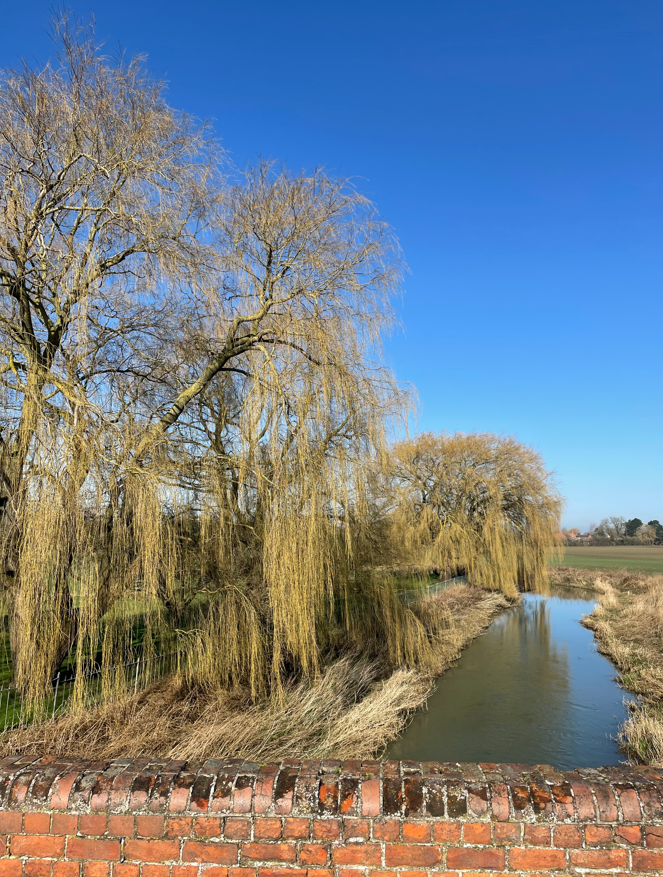
    Honington Beck

    My route continued across grassy fields. I met a chap walking his dog and had a chat.

    The sun was shining and do you know, it had some heat in it. I was loving it! Passing beside the river Witham for a while, I reached another railway bridge – for the East Coast main line, just as train was crossing.

    River Witham

    As I approached the tunnel I got the whiff of sewage in the air – there was a large sewage works on the other side! I noticed a sign that said the water company had spent £19 million upgrading the plant, which is good, but why the smell? Walking past quickly, I continued along the track to arrive in Marston village.

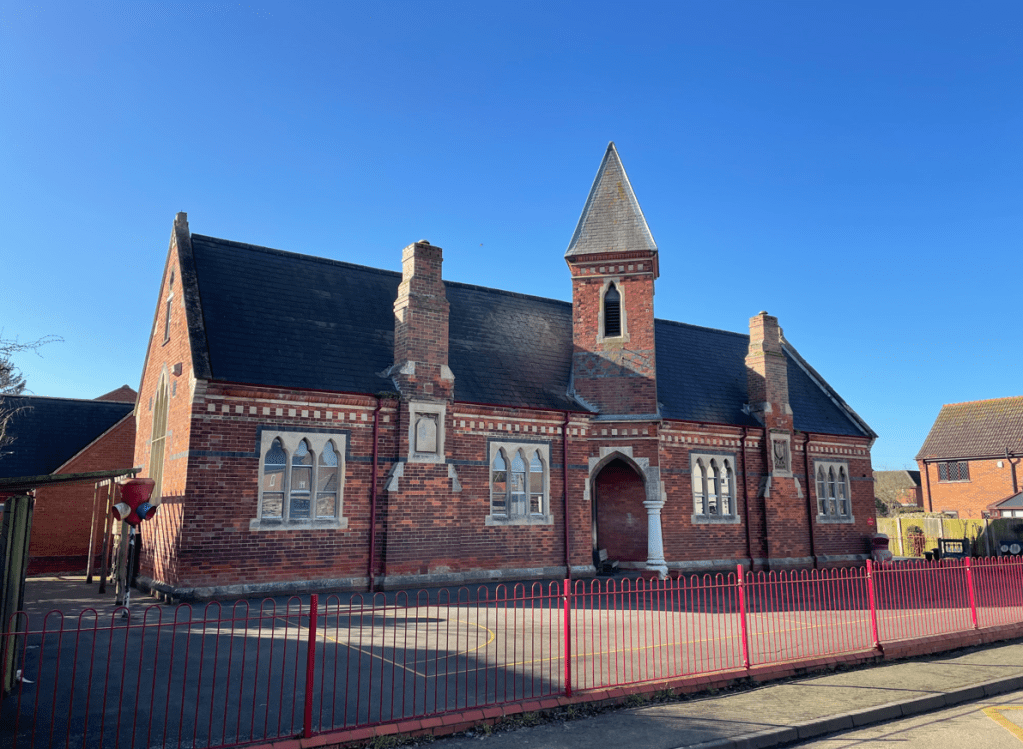
    I was looking for a bench to take a break. I passed a fine Victorian school building.

    I found a bench in a quiet spot and tucked into my usual scotch egg / coffee combo. Continuing walking through the village I crossed the river Witham.

    After passing the village hall I took the track running through muddy fields that took me to a level crossing on the very busy main line. I was doubly careful to check for trains before crossing.

    My route took me gradually uphill and when I reached the top I took in the nice views. Crossing fields, I would soon be heading down again.

    I came across a group of Ramblers who were taking a break so said hello. They were happy with the fine weather.

    Taking care on slippery muddy sections I wound my way back into Barkston, through Syston village and into Belton village. There was no sign that there had been a RTA earlier -just a few granules of oil absorbent on the side of the road.

    Checking my OS App I had walked 10 miles. It was a perfect walking day.

    Happy Walking! 😊🚶

  • A peaceful walk on a blustery day.

    Feb 23rd, 2025

    Hello and welcome back to my blog 😊.

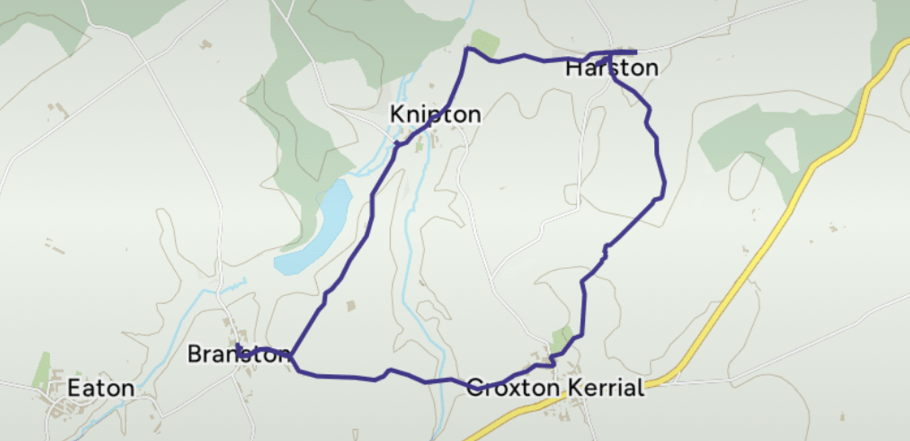
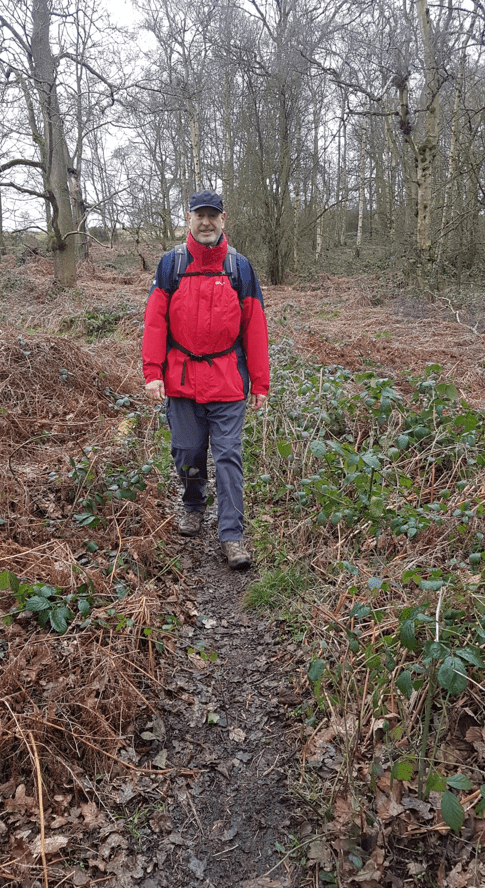
    Today myself and Angela enjoyed a 7.4 mile undulating, circular walk through rolling countryside. The walk began outside the church in Branston and took us to Croxton Kerrial, Harston and Knipton.

    It was a very windy day with rain forecast for later in the morning, which we wanted to avoid. This is one of Angela’s favourite walks – mainly because you get a strong sense of remoteness on it.

    After a short road walk out of Branston we turned into a wide track that would take us towards Croxton Kerrial. Inevitably, after the recent rain, there was plenty of mud along the way.

    On the way to Croxton Kerrial

    It was quite chilly in the wind. Walking along we were spotting Red Kites overhead, swooping serenely in the sky.

    Avoiding the mud

    Arriving into Croxton Kerrial we walked past the local church and then headed across grassed fields towards the Blue Bell woods (these look glorious when the flowers are out – its far too early yet).

    St Botolph and St John the Baptist church, Croxton Kerrial
    On the way to the Blue Bell woods
    Entering the woods

    I am always wary when crossing wooden stiles after walking through mud, having previously taken a fall from a stile a couple of years ago.

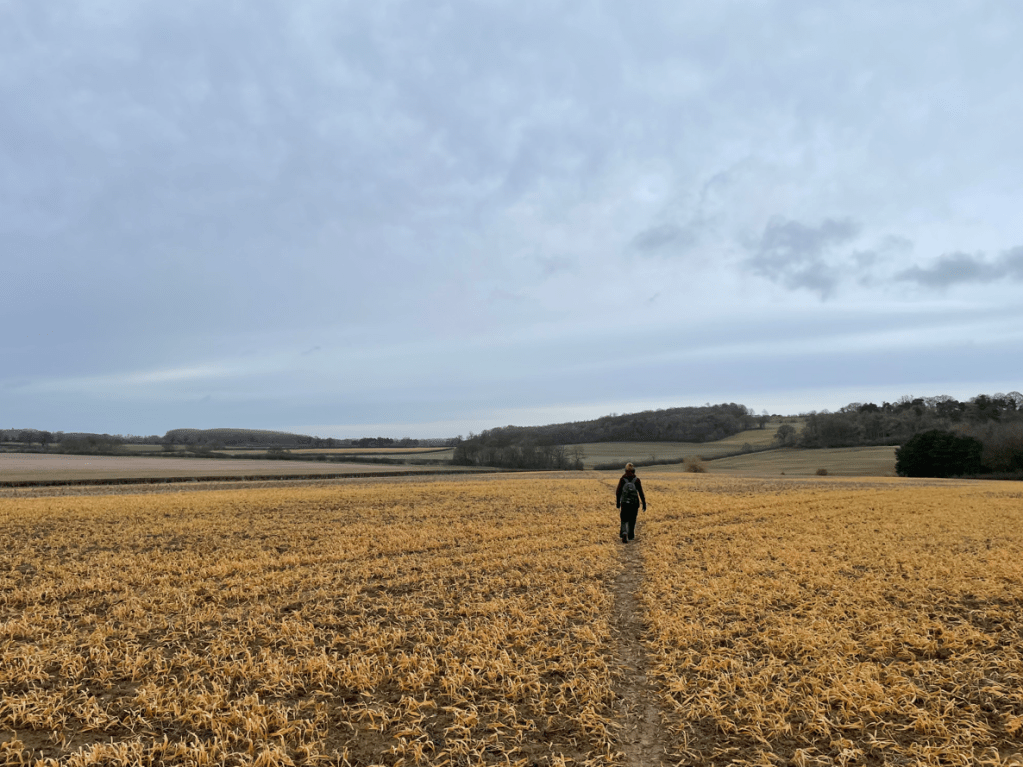
    Walking through the woods we could see that the Blue Bells were popping up so would make an impressive display in due course. Exiting the woods we crossed a wooden bridge over a stream and headed out across a large open field.

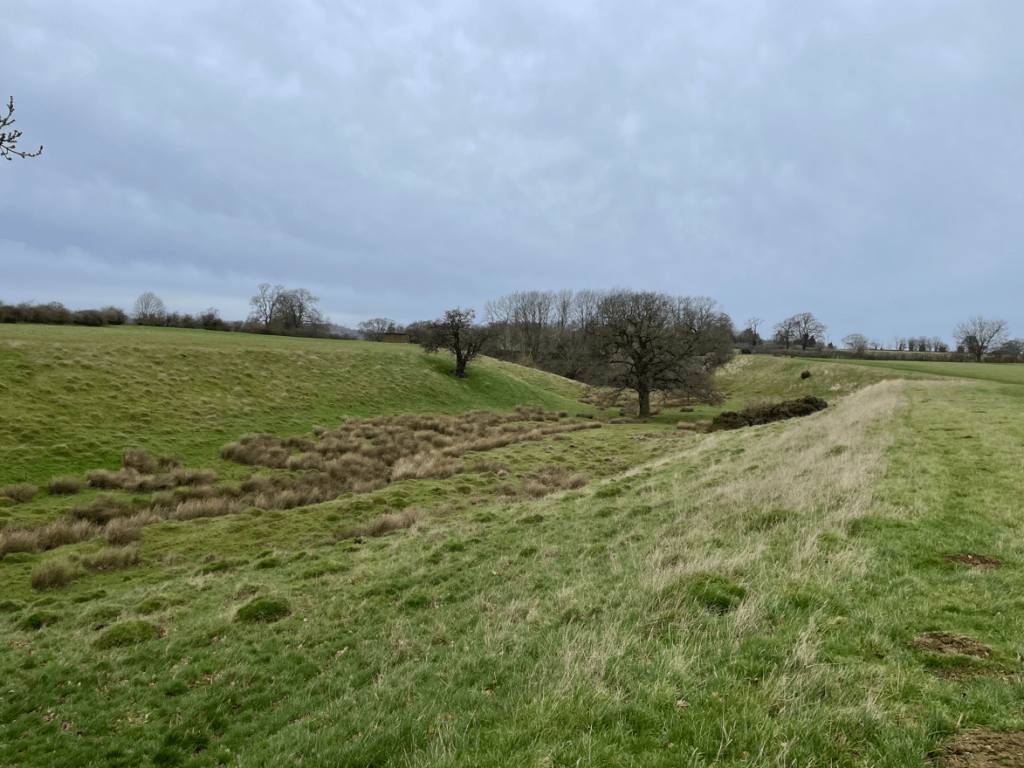
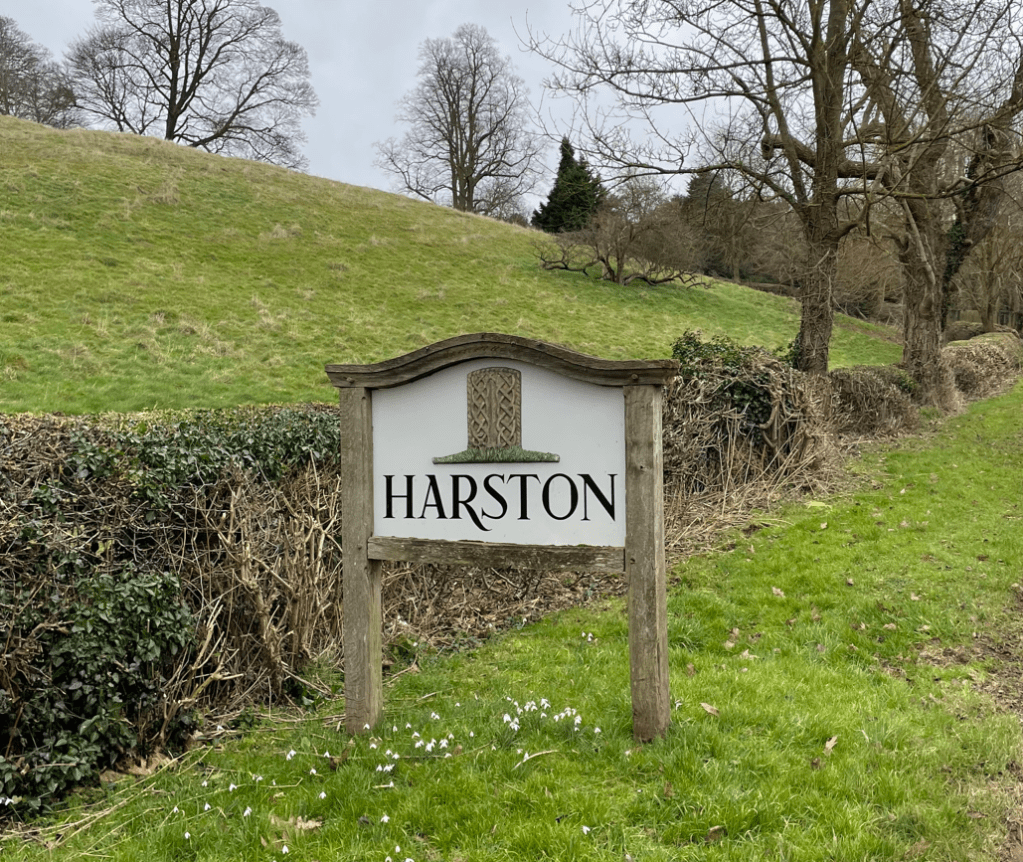
    We were on our way to Harston, where Ironstone was quarried until the 1970’s. Ironstone was mined in many small quarries in this area. We walked past the remains of a quarry – now a hole in the ground. I wondered how it looked back in the day?

    Remains of Ironstone Quarry

    Arriving at Harston we took a stroll around the church grounds and although there were benches we waited until we were further into the village, and a more sheltered spot, before taking a break.

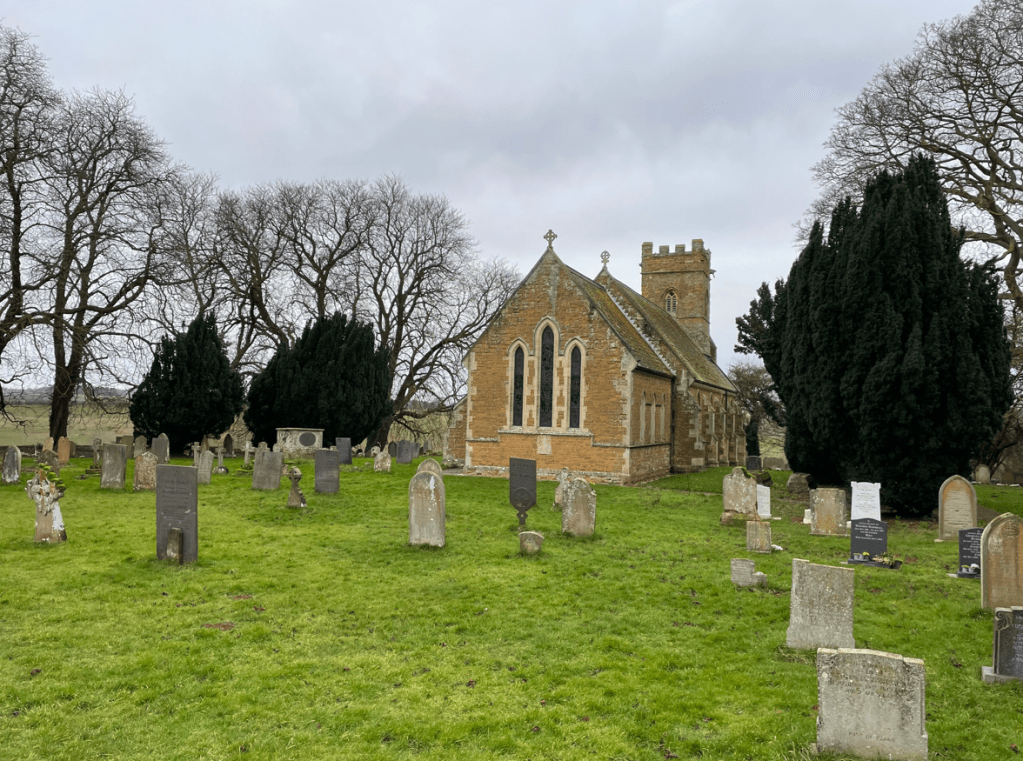
    St Michael and All Angels church, Harston

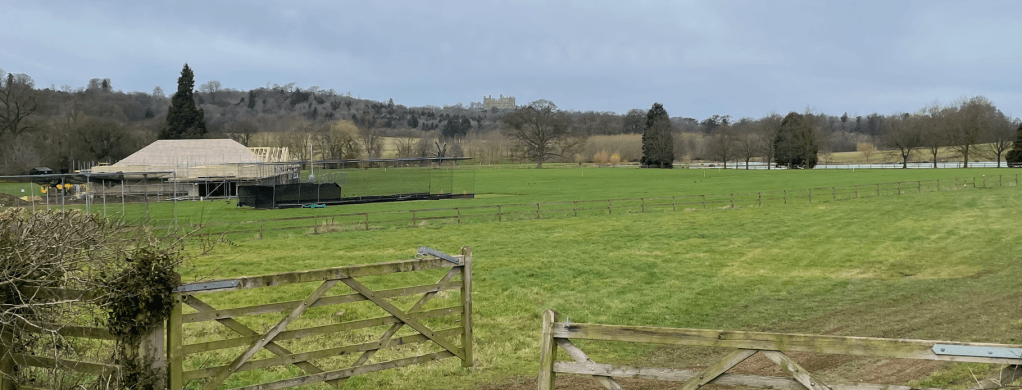
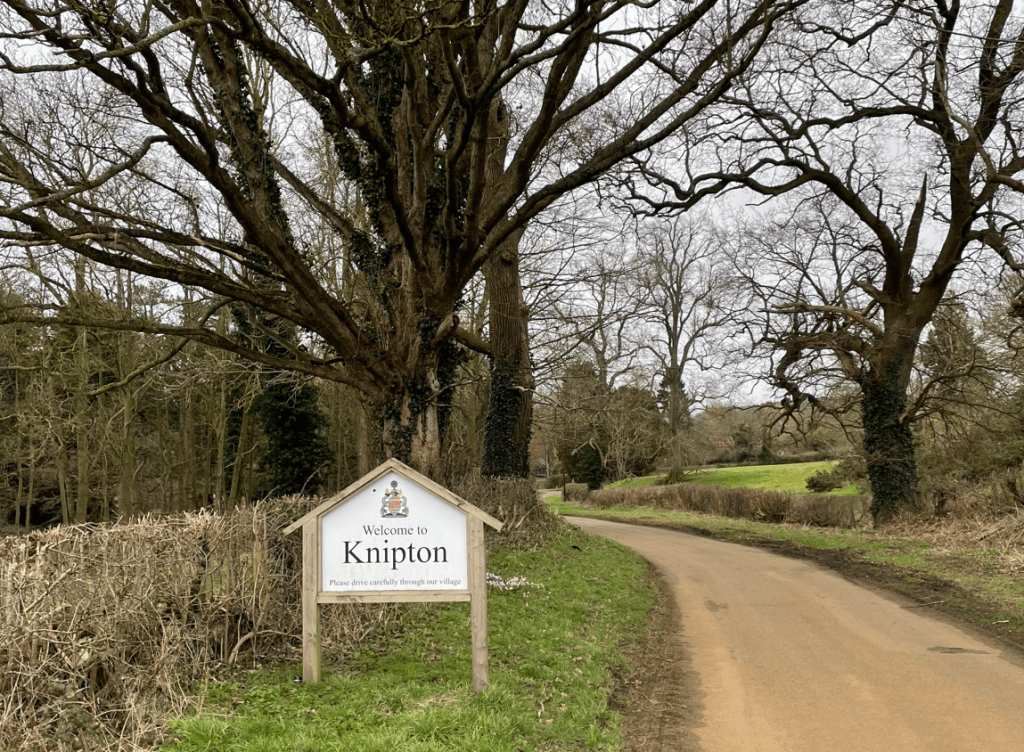
    After a cuppa and a bite to eat we continued our walk along the quiet road towards Knipton. Passing the Belvoir Cricket Club grounds where Belvoir Castle could be seen on the hill behind, we entered the village.

    Belvoir Cricket Club ground

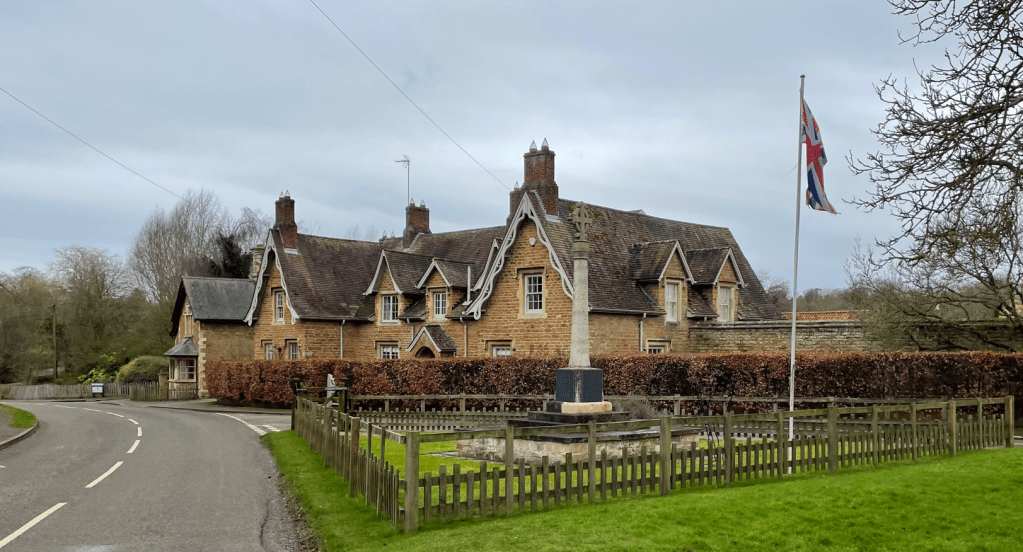
    The houses have the characteristic Ironstone brick colour which I quite like. We passed the war memorial.

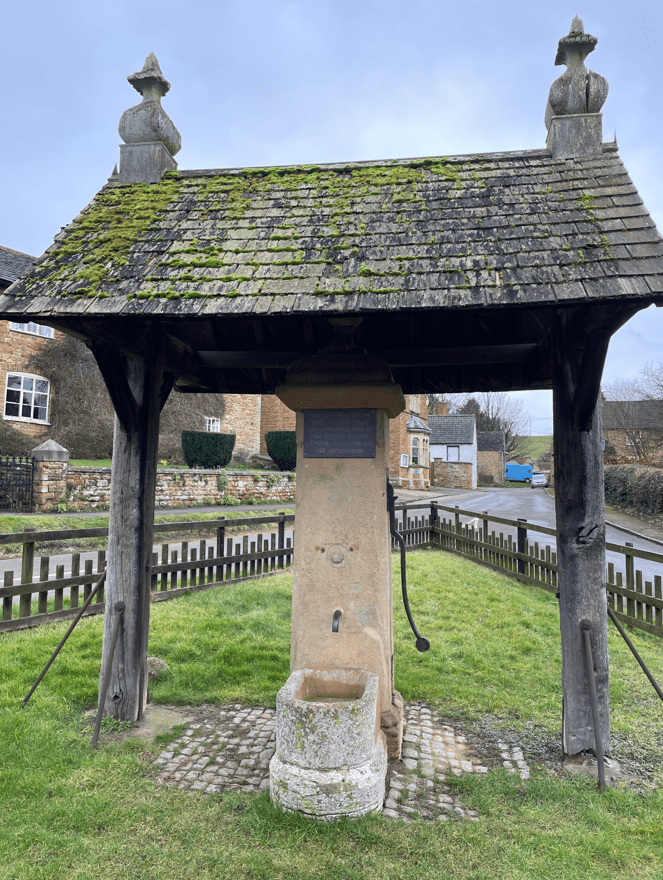
    Followed by the restored village water pump.

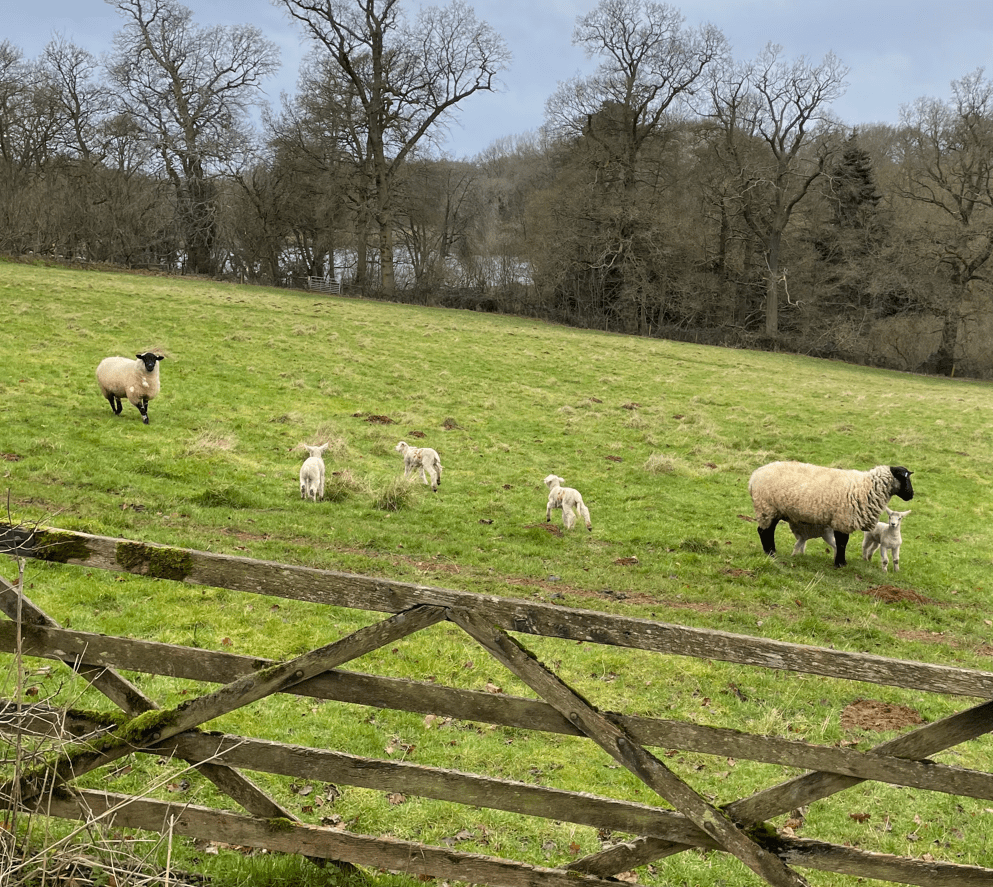
    As we headed out of Knipton we could hear the bleating of lambs and sure enough, we found the field shortly, and the wonderful sight of the little lambs.

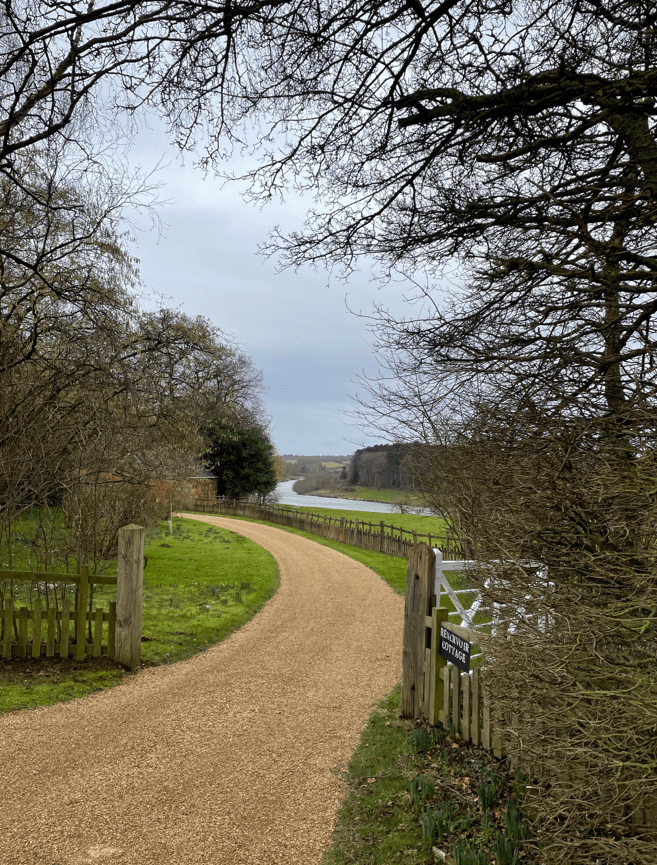
    Further on, through a driveway, we spotted Knipton reservoir which is a water source for the Grantham Canal.

    Knipton reservoir

    The lane was quiet and it meandered through the countryside bringing us back into Branston. As we changed out of our boots the first spots of rain started to fall – we were chuffed with our good timing.

    We had enjoyed the exhilaration of a blustery undulating walk in the tranquil countryside.

    Happy Walking! 😊🚶
  • Hickling to Hose: A Journey Through Mud and Canal

    Feb 20th, 2025

    Hello and welcome back to my blog 😊.

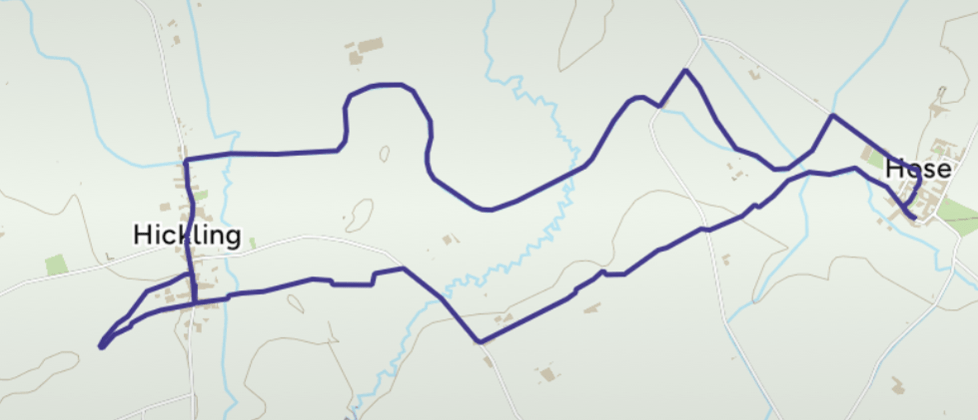
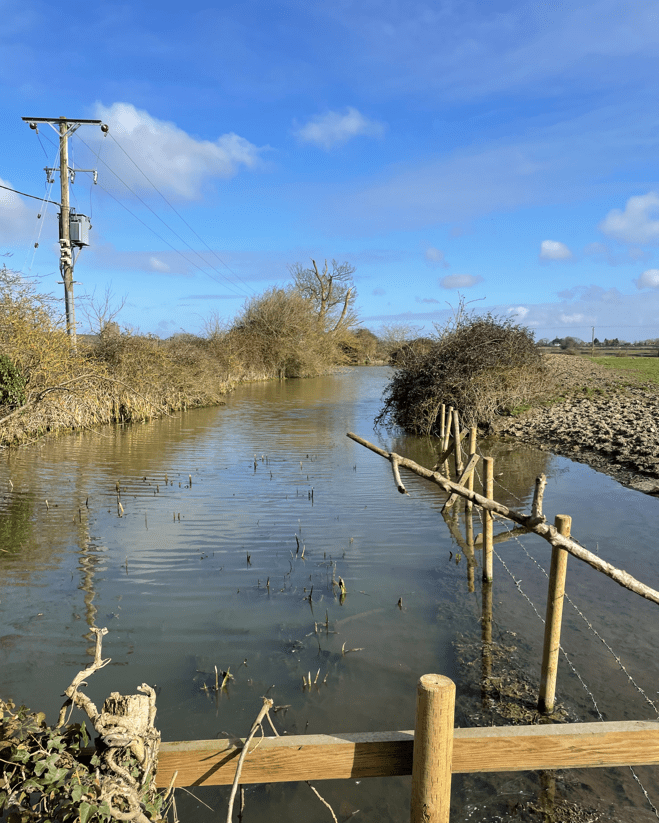
    Today myself and Angela did a 9.7 mile circular walk from Hickling to Hose across fields and returning along the Grantham canal. We did a slight detour from Hickling visiting the high spot of Hickling Standard to see what the view was like.

    It was a cloudy, blustery day but mild at 12 Deg C – much milder than the very cold February to date.

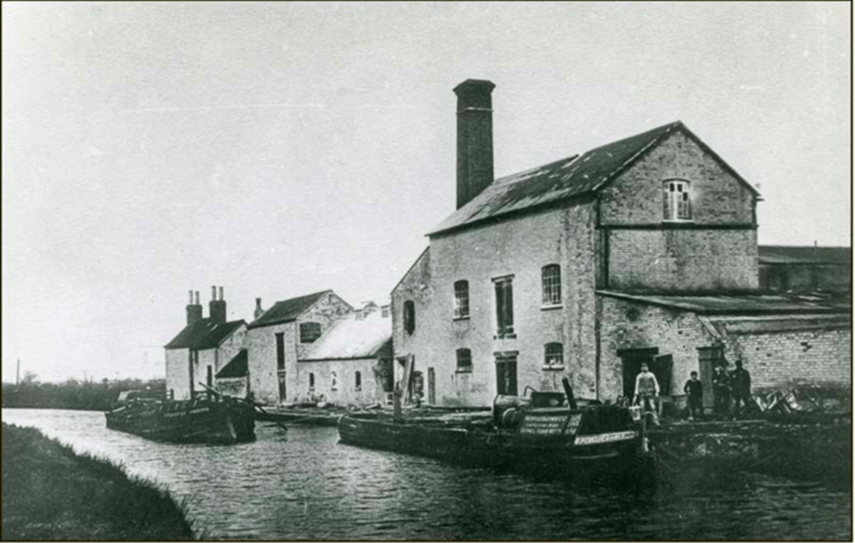
    We parked by the canal basin and the converted warehouse which is now a popular café called ‘The Old Wharf’.

    Hickling basin

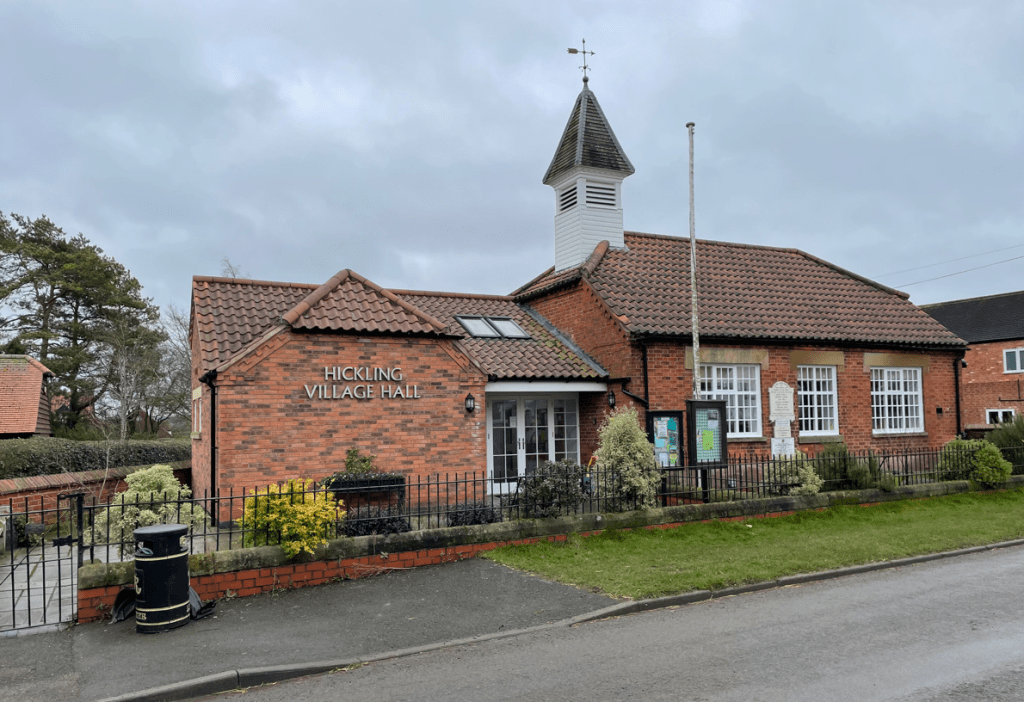
    Mr and Mrs Duck were having a domestic and there seemed to be a lot of squabbling going on😊. Walking through the village we admired the village hall which used to be the school before it closed in 1966.

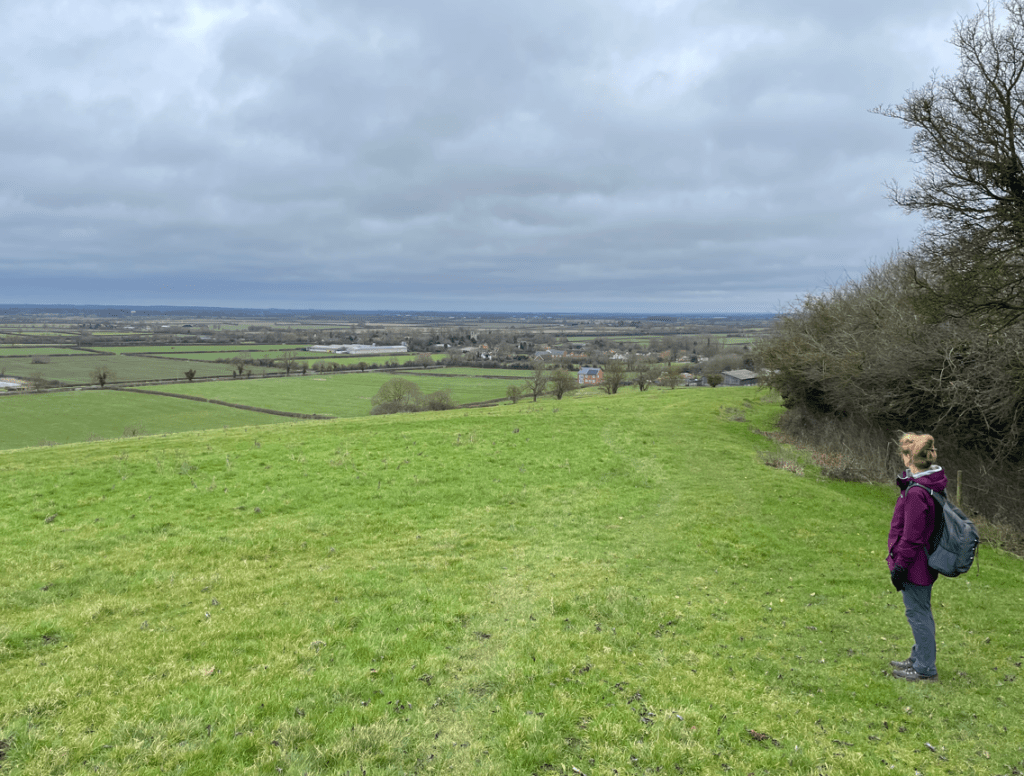
    Leaving the village we followed the footpath up a gradual hill – Hickling Standard. The path was quite boggy and it got worse – a sign of things to come! Reaching the top we took in the extensive view and then headed down via a different path to avoid the treacherously, slippery, muddy path by which we had ascended.

    Angela taking in the view from Hickling Standard

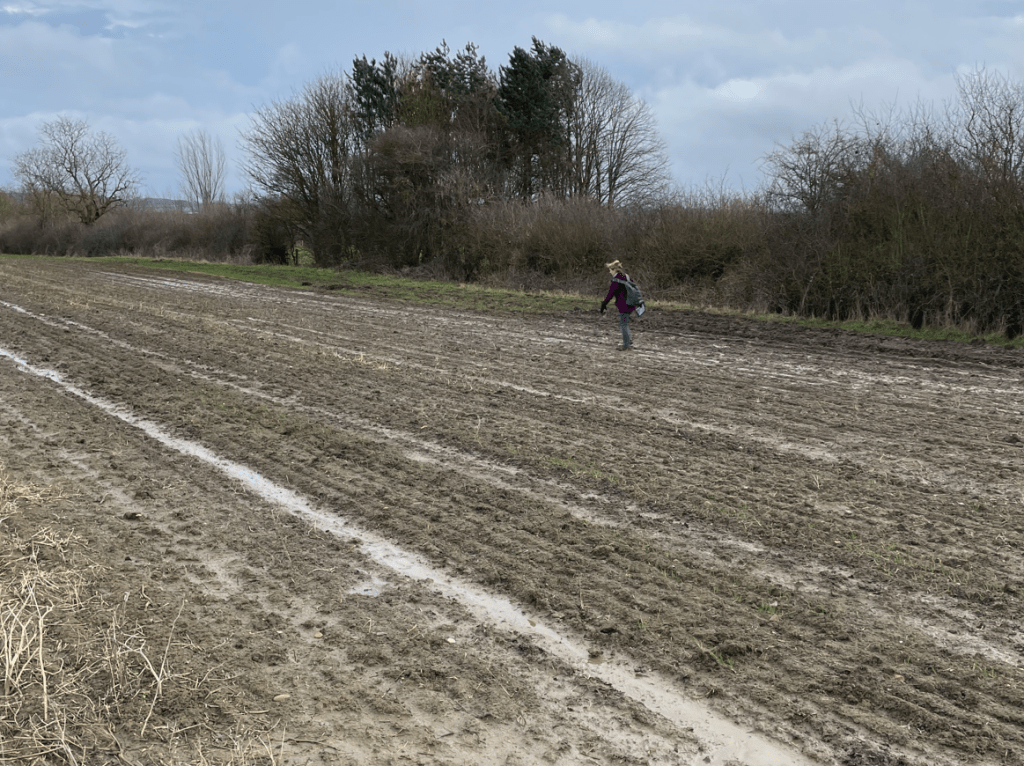
    Thankfully, our new path down was relatively mud free and brought us back into Hickling. Leaving Hickling our next section of the walk was roughly 3.5 miles across, what turned out to be, very muddy fields. The fact that horse riders clearly use some of the route did not help with the condition of the path. We did not enjoy the muddy fields – it makes walking slow and tricky. On this section we crossed over the small river Smite which forms the Nottinghamshire and Leicestershire county boundary.

    We were glad to reach the village of Hose and take a much needed break, by the church of St Michael & All Angels.

    A welcome break enjoying a scotch egg.

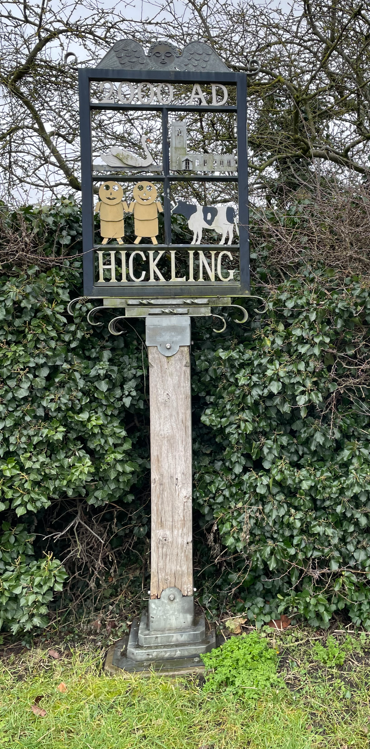
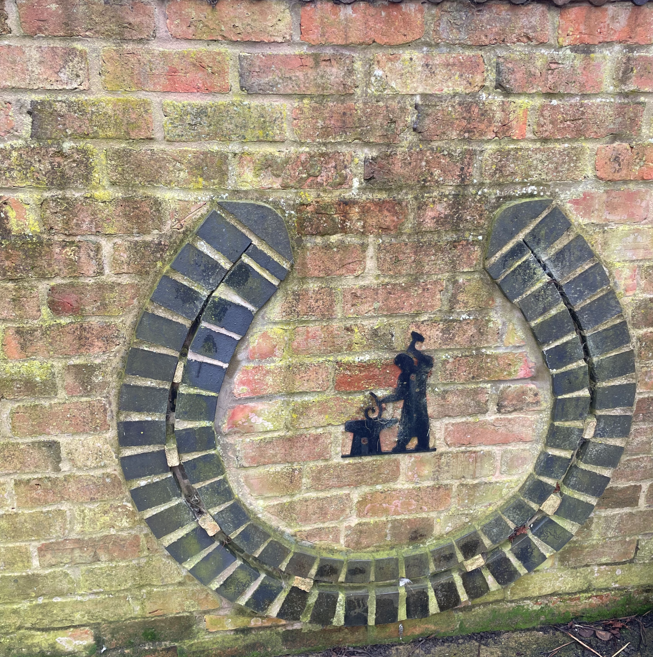
    There was a some nice brickwork at a workshop close to our coffee stop. The Farrier theme continued with the village sign.

    After a walk through Hose we took a short section of road to reach the Grantham Canal.

    Grantham canal

    Here we joined the towpath which, we rejoiced, was mud free. The canal is a restoration project so currently there are long sections covered in weed.

    It was great to be walking along solid footpath and we were able to stretch our legs. As per usual there were very few people using the towpath. We had the odd brief shower so we were pleased to avoid heavier rain. We passed a couple of nice swing bridges.

    Swing bridge

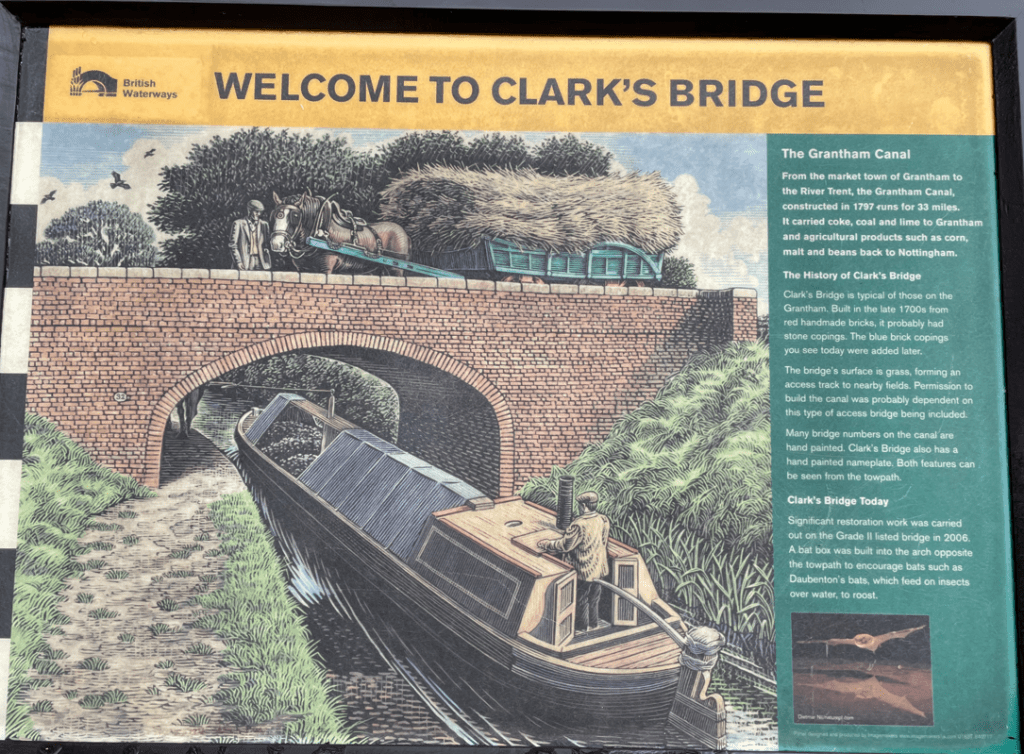
    One of my favourite bridges was next – the restored Clark’s bridge. The plaque beside the bridge gives a nice pictorial view of how it would have looked back in the day.

    Clark’s bridge

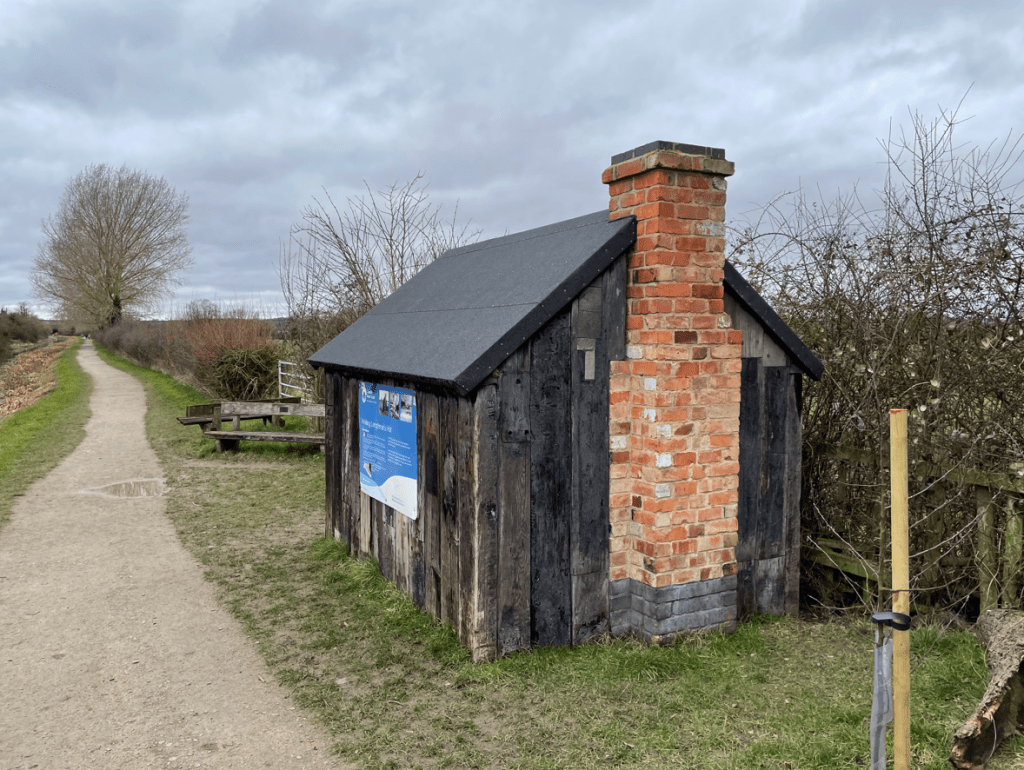
    Slightly further along we passed the restored Lengthsman’s hut. It gives us a good idea of an old canal building where a Lengthsman (responsible for looking after a section of canal) could take a rest and shelter from the elements.

    Restored Lengthmans hut

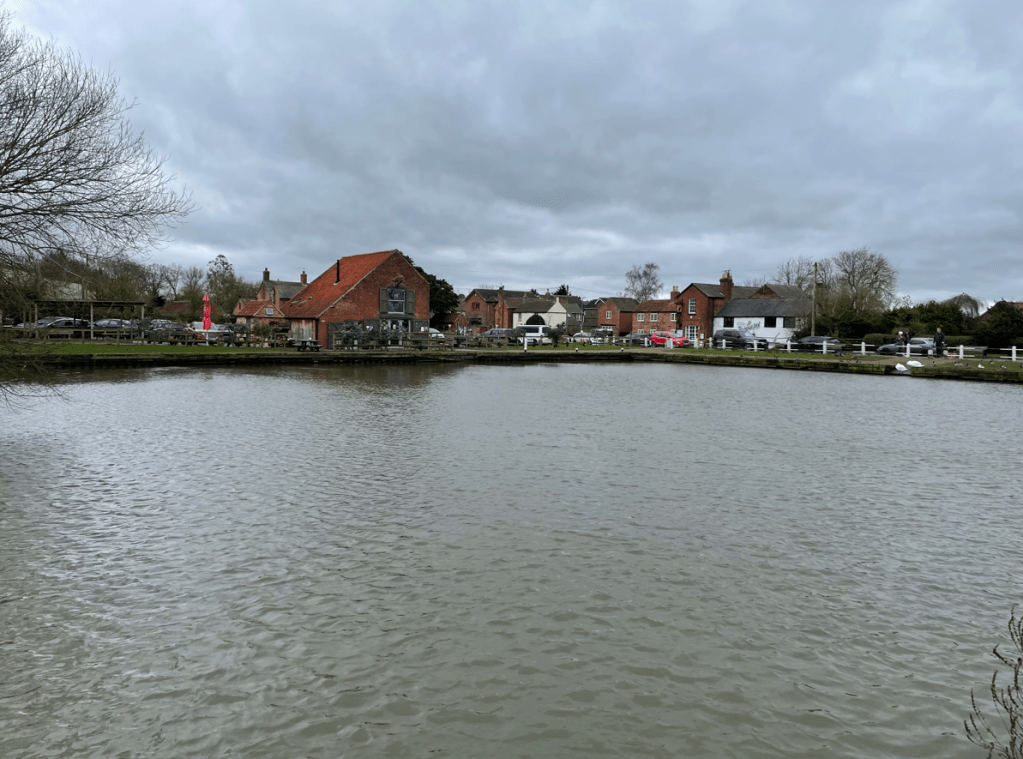
    Continuing along the towpath we arrived at Hickling basin which was considerably busier that when we had left it.

    Hickling basin

    So, it was a walk of two halves. The first half across horrendously muddy fields – I think that it will be some time before I am able to persuade Angela to do any more field walking ! The second half was lovely along the peaceful Grantham canal and a nice dry towpath.

    Happy Walking! 😊🚶
  • Discovering Crowland Abbey on a Fenland Walk

    Feb 13th, 2025

    Hello and welcome back to my blog 😊.

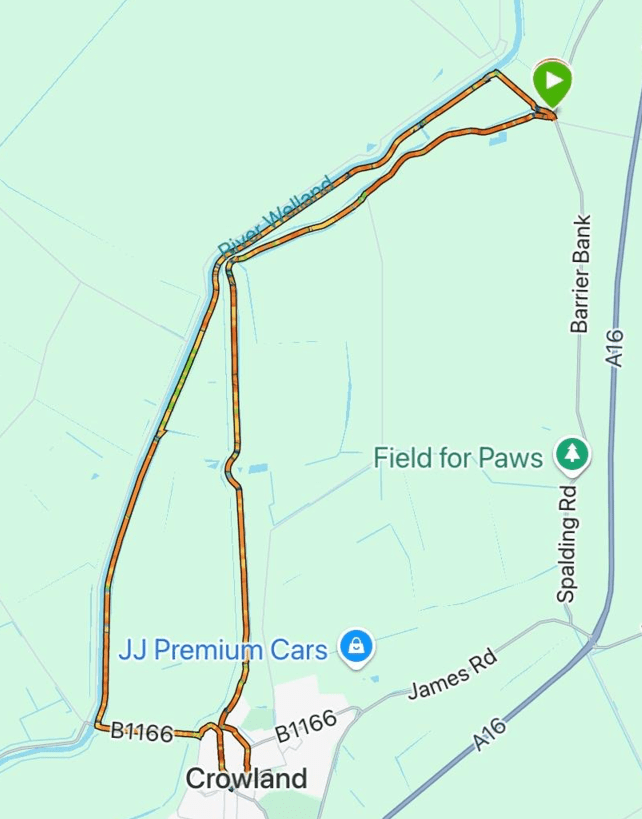
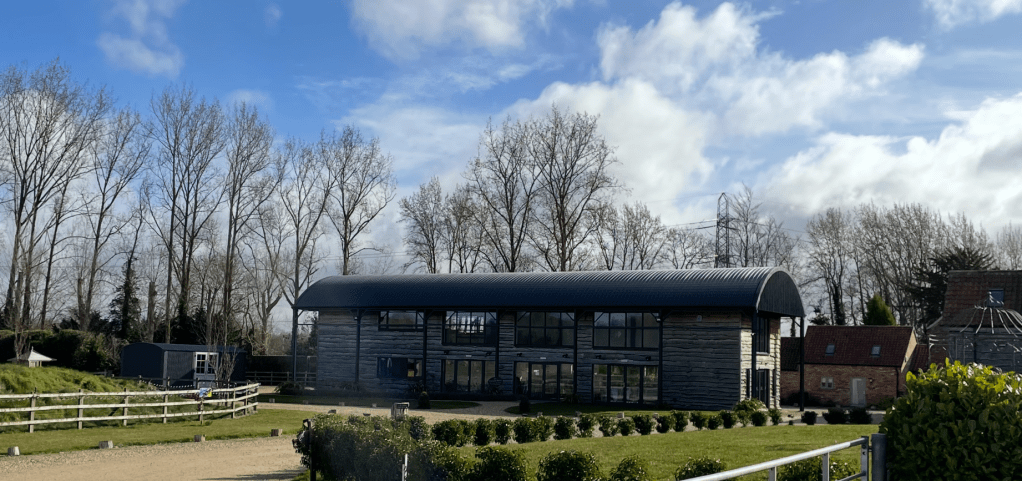
    Today myself and Mick ventured into the South Holland district of Lincolnshire and enjoyed a 9-mile circular walk across typical fenland landscape adjacent to the river Welland. The highlight was seeing the remains of Crowland Abbey and the historic village of Crowland.

    Mick found us a good parking spot in a layby and off we set. It was a grey day and very cold in the wind. We first saw the roughly inscribed stump of the ancient St Guthlac’s cross close to the parking spot.

    St Guthlac’s cross

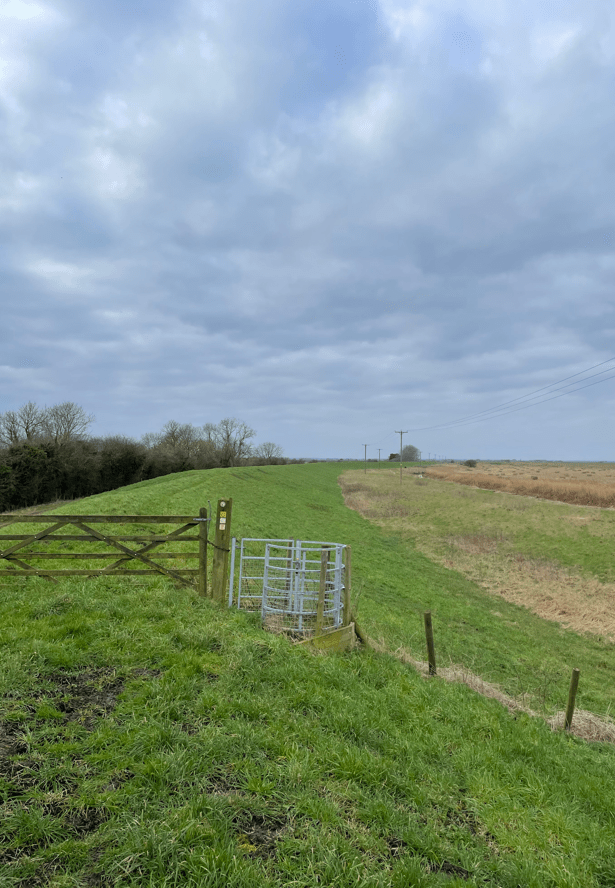
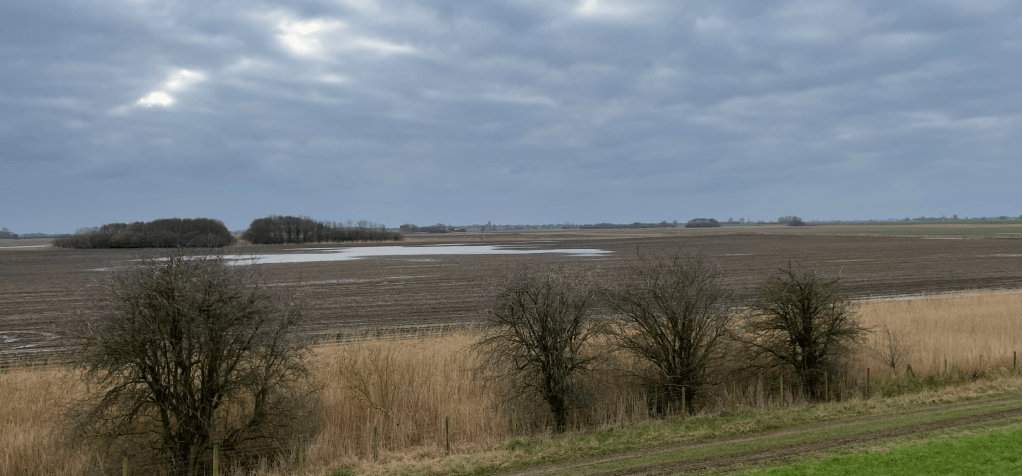
    We followed a grassy embankment with long views across the still flooded fields passing drains and ditches along the way as we walked towards Crowland.

    The nice grassy footpath on top of the embankment
    Typical drainage ditch
    Flooded fields

    We noted that there were a lot of Environment Agency folk dotted about on the walk looking at water levels in ditches and checking pumping equipment. There were also quite a few diggers clearing silt from ditches – all important work to maintain flood defences.

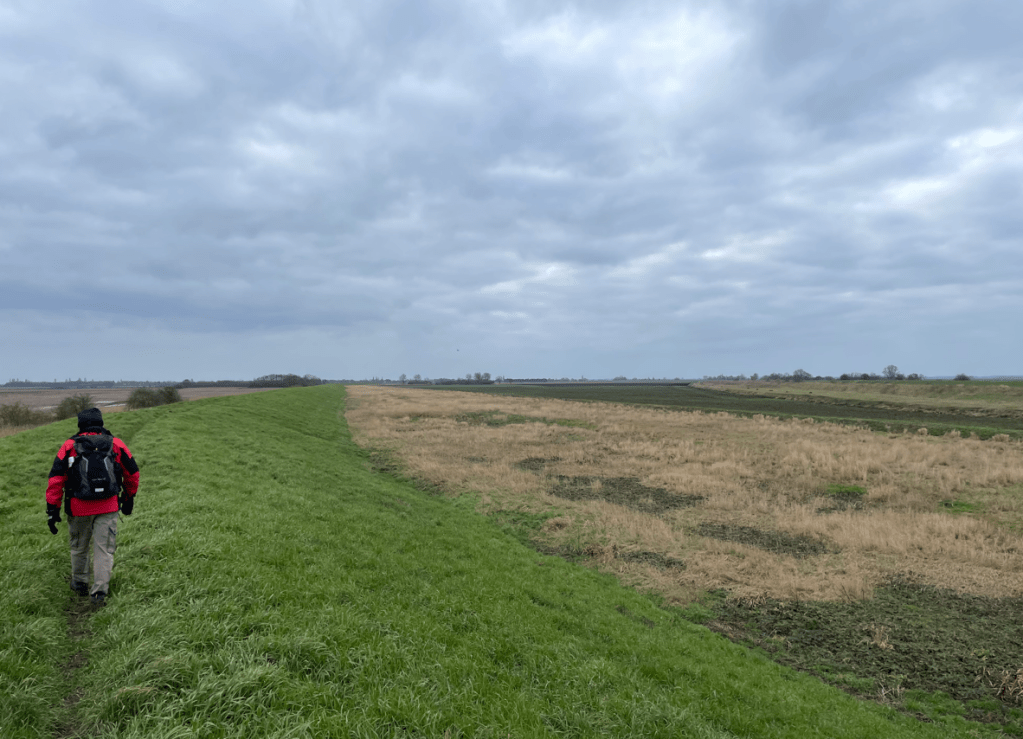
    Mick striding out on the way to Crowland along the embankment.

    We stopped for a chat with a dog walker, who had two nice Labrador dogs, and was interested in our walk today. He lived in Crowland and pointed us in the direction of the Abbey.

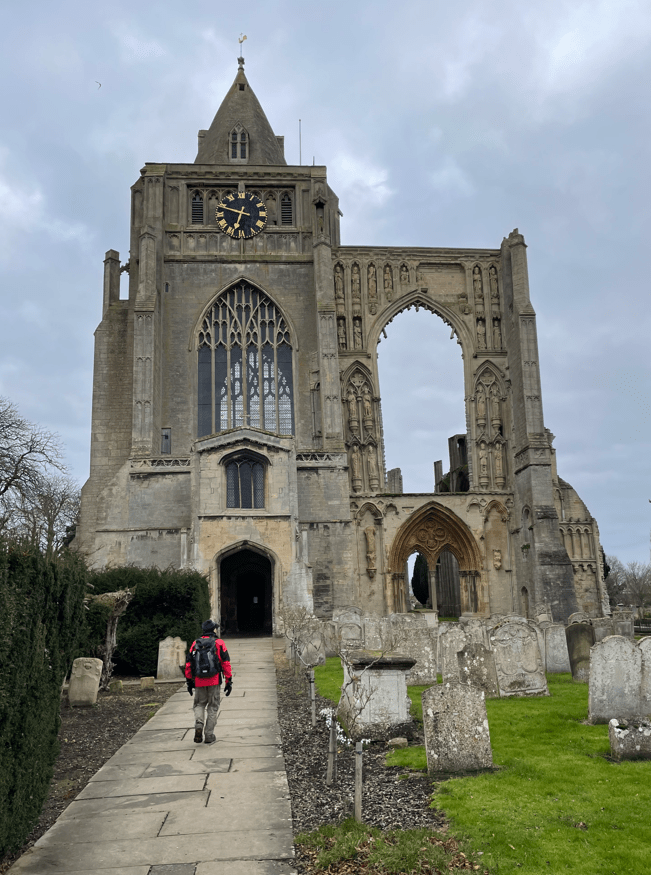
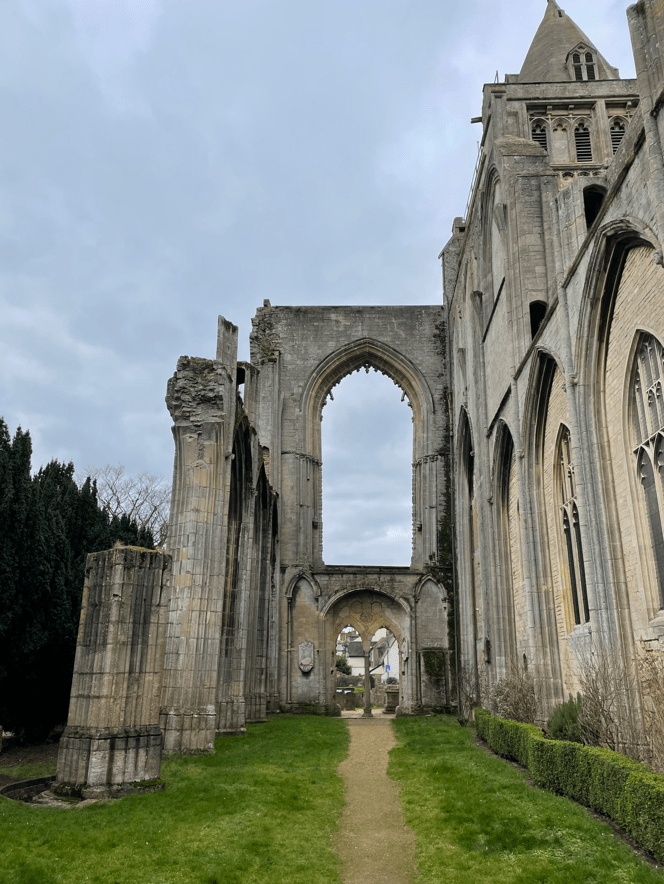
    The remains of the Abbey are very impressive. Originally founded by King Ethelbald of Mercia for St Guthlac in 716 the abbey had an eventful history, being plundered, burnt and rebuilt several times. It was dissolved by Henry VIII in the 1530’s and the west front and nave of the church are the main surviving portions. The north aisle is used as the parish church.

    Crowland Abbey

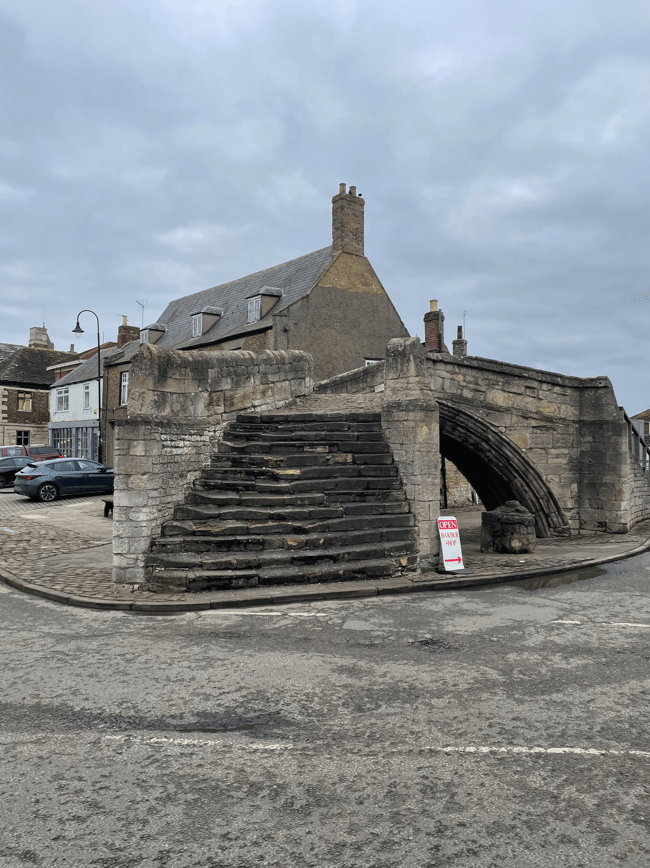
    We took a walk around the grounds then found a bench for a break. It was a nice peaceful spot. The town grew up around the abbey and, until the draining of the Fens, the rivers ran along the main streets. This explains the presence of the unique Trinity bridge in the town centre, an impressive piece of 14th century engineering (made from Ancaster Limestone) that is now redundant.

    Trinity bridge

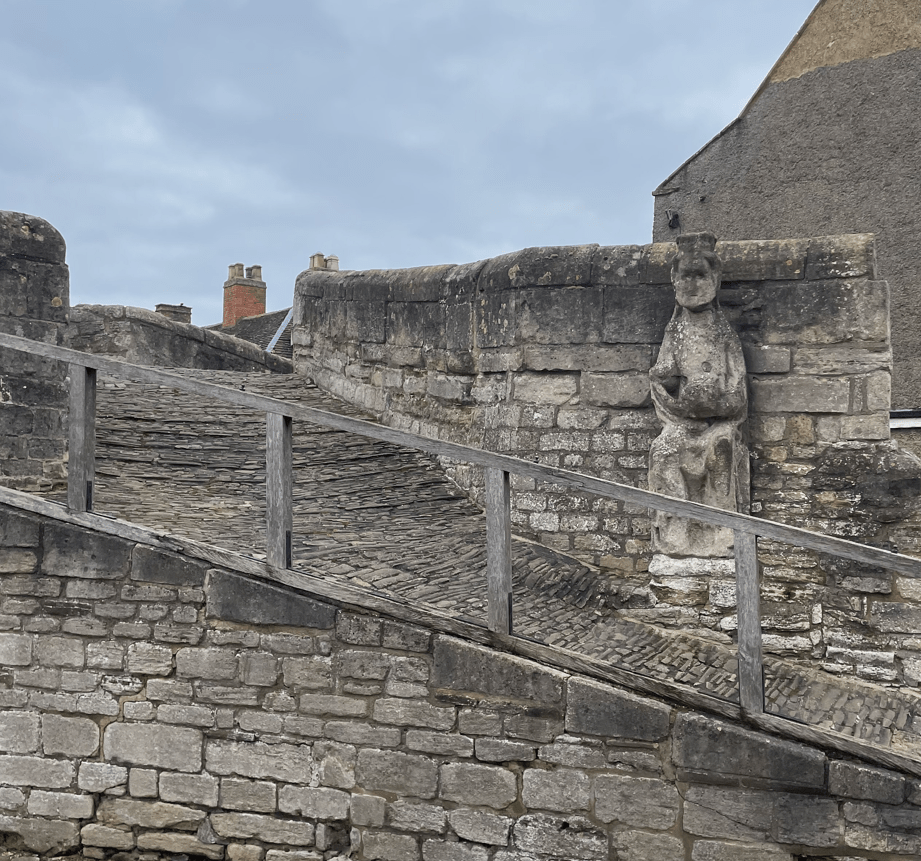
    On the bridge is a figure thought to be that of Christ or King Ethelbald and is possibly from the west front of the Abbey.

    The figure on the Trinity bridge

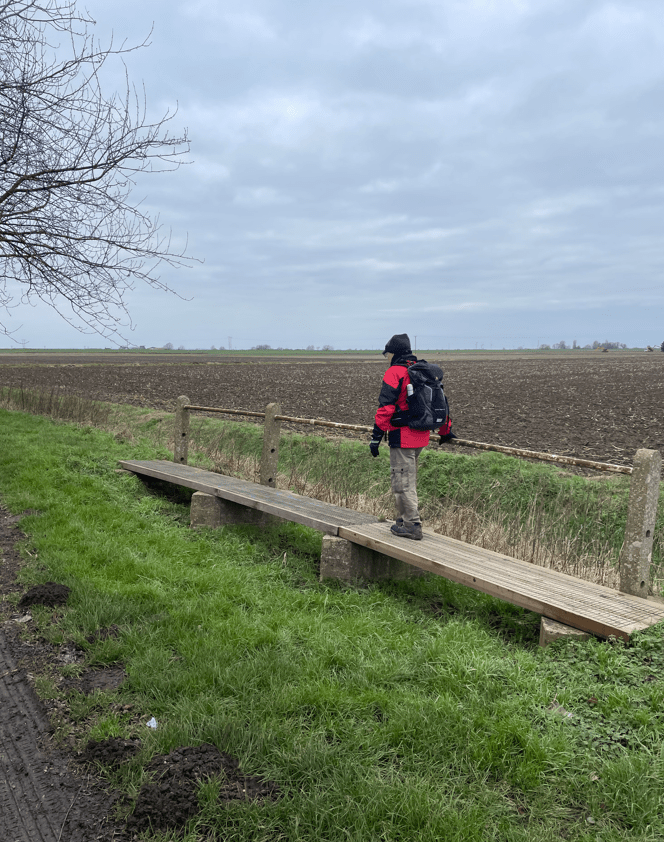
    We both agreed that the village was a lovely little spot. We left the village following a road that had numerous small walkways to cross along the side – to allow water to drain off the road.

    We reached the river Welland at Fen Bridge and headed along the embankment. The river Welland is a lowland river some 65 miles long rising in the Hothorpe Hills in Northamptonshire and ending at The Wash.

    Fen Bridge

    After a section of path that was good we then had a much more tricky section to walk along where you had to watch where you put your feet.

    River Welland

    There were a few wild birds spotted along the way which was nice to see. The wind was in our faces along this stretch so it made a chilly walk. We both wondered what the walk would be like in the summer? (summer feels a long way off at this stage!). Towards the end we passed a heritage sluice which I just had to photograph.

    Heritage sluice

    We arrived back at the car and could feel the walk in our legs. It was a good day out and particularly good to visit Crowland – highly recommended.

    Happy Walking! 😊🚶
  • Beautiful Winter Walks: Nottinghamshire’s Hidden Gems

    Feb 6th, 2025

    Hello and welcome back to my blog 😊.

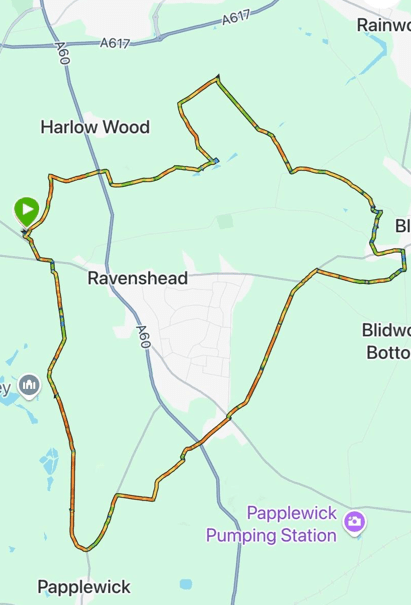
    Today myself and Mick enjoyed a 12.7 mile circular walk in Nottinghamshire, close to Blidworth. Driving to pick up Mick in the dark, there was dense freezing fog (not forecast!) so I was wondering whether the forecast sunny day would actually materialise?

    Our route

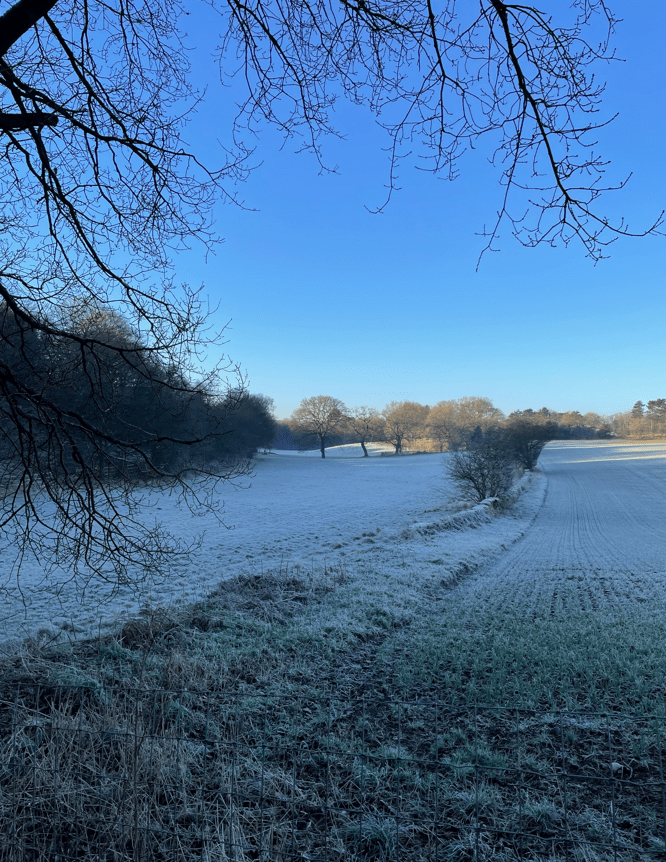
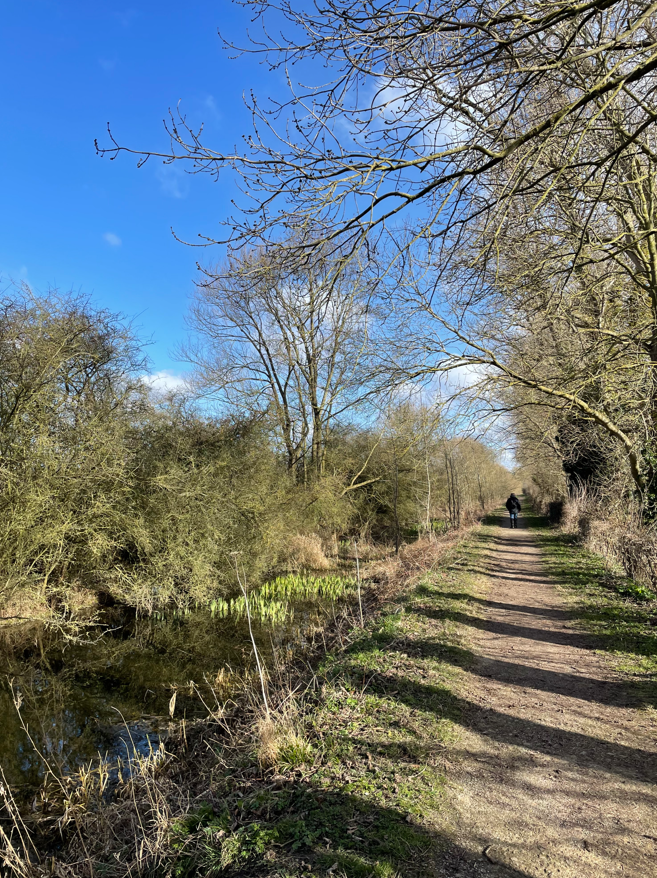
    We parked in Thieves Wood car park – a large free car park on the edge of Thieves Wood. The sun had cleared away any lingering fog and it was a cold, blue sky morning. Everywhere looked white with the frost.

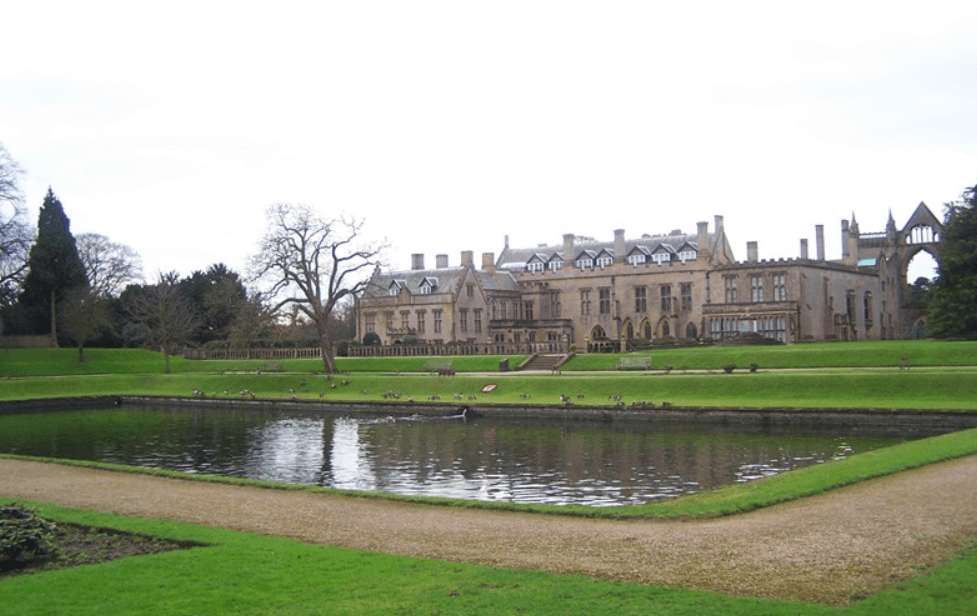
    We headed towards the grounds of Newstead Abbey, once home to Lord Byron.

    We followed a path that took us past the Abbey but we did not get a great view. The Abbey was originally an Augustinian priory which passed to the Byron family following the dissolution of the monasteries in 1539. I made a mental note that this would be a good place to visit.

    Newstead Abbey

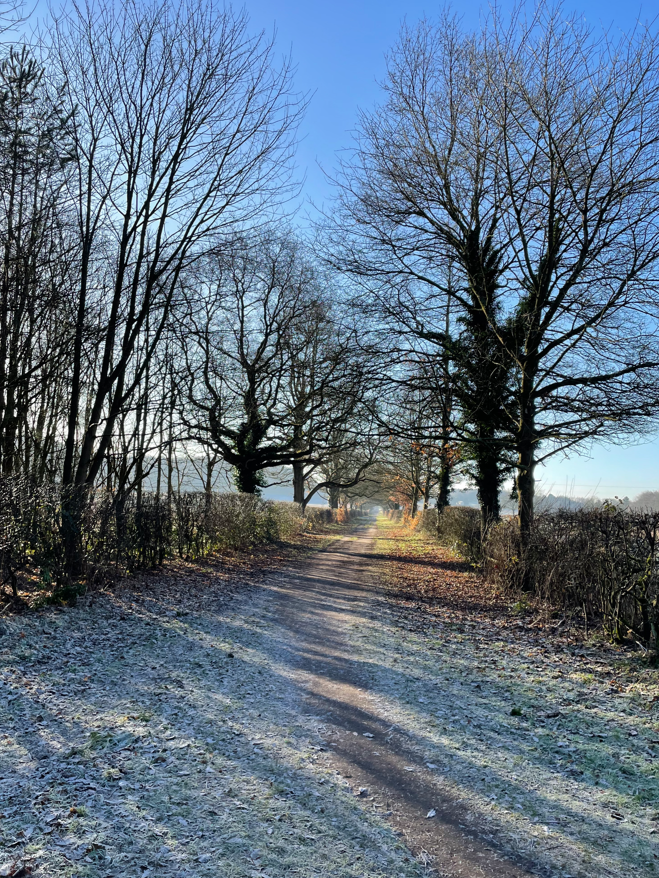
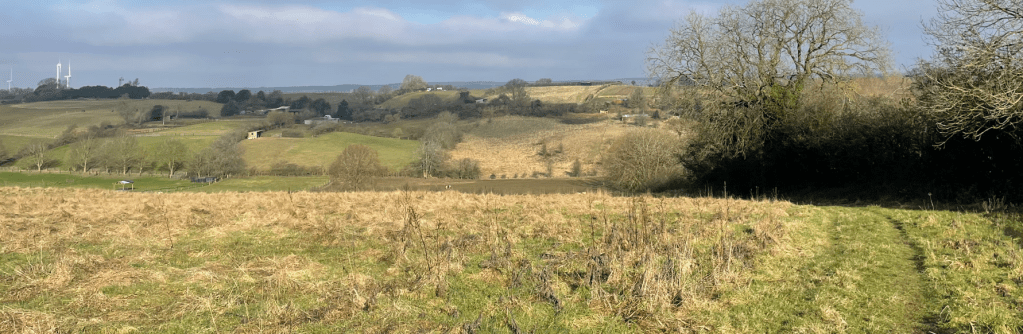
    The leaf strewn footpaths were good at this point with no dreaded mud. The walk would take us through woods and across undulating, open fields. It was great to have the sun on our faces, it really makes a difference.

    The walk followed the Robin Hood Way for a good portion of the route, so we followed the signs.

    Close to Papplewick we stopped at a handy bench for a break. I had my usual scotch egg and a coffee. Refreshed, we set off again following the ups and downs across the fields and meadows towards the outskirts of Blidworth.

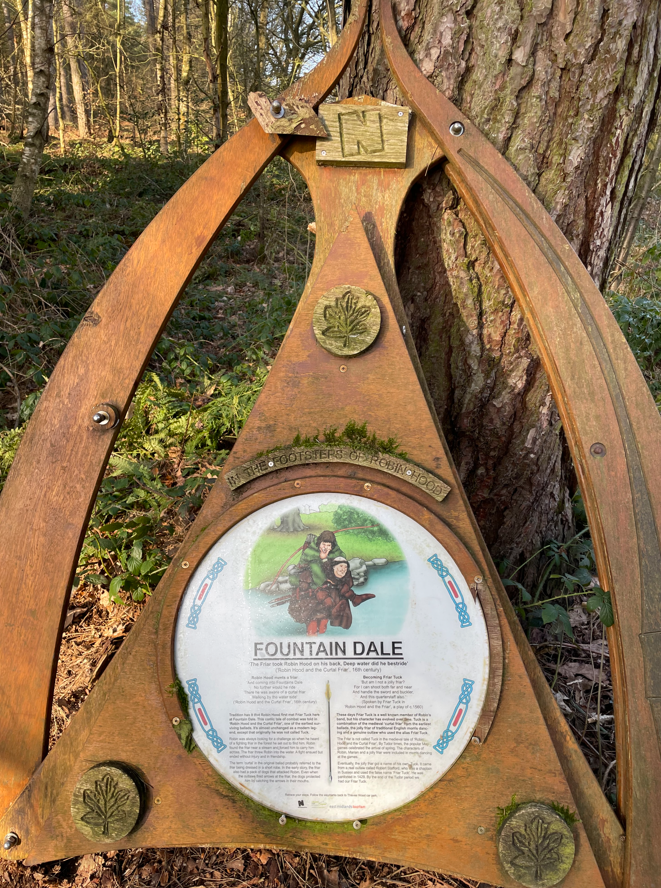
    Blidworth came and went as we headed to Harlow Wood and Fountain Dale. Legend has it that Fountain Dale was the home of Friar Tuck and that it was here that he had his first encounter with Robin Hood. The pair ended up fighting as a result of Robins insistence that the Friar should carry him across the stream.

    Rainsworth water runs through Fountain Dale, we took a look. The water was almost stationary but we spotted a couple of Anglers enjoying the fishing.

    Rainsworth water

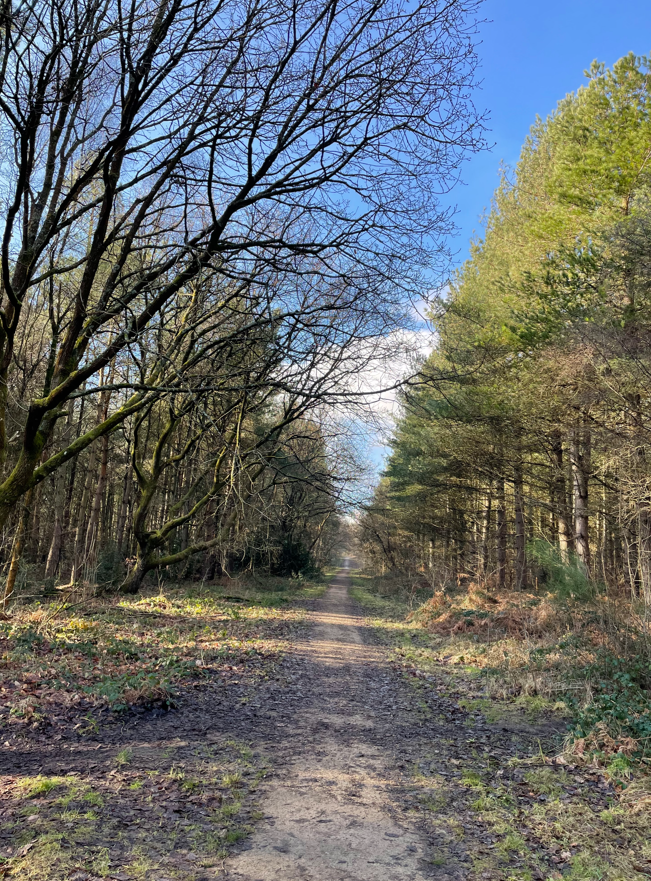
    A nice walk through Harlow wood was followed by a walk through Thieves Wood and back to the car park.

    Thieves Wood

    We had both enjoyed the walk and we debated our next walk whilst driving back.

    Happy Walking! 😊🚶
  • Exploring Quarry Bank Mill: A Day Out in Industrial Heritage

    Feb 1st, 2025

    Hello and welcome back to my blog 😊.

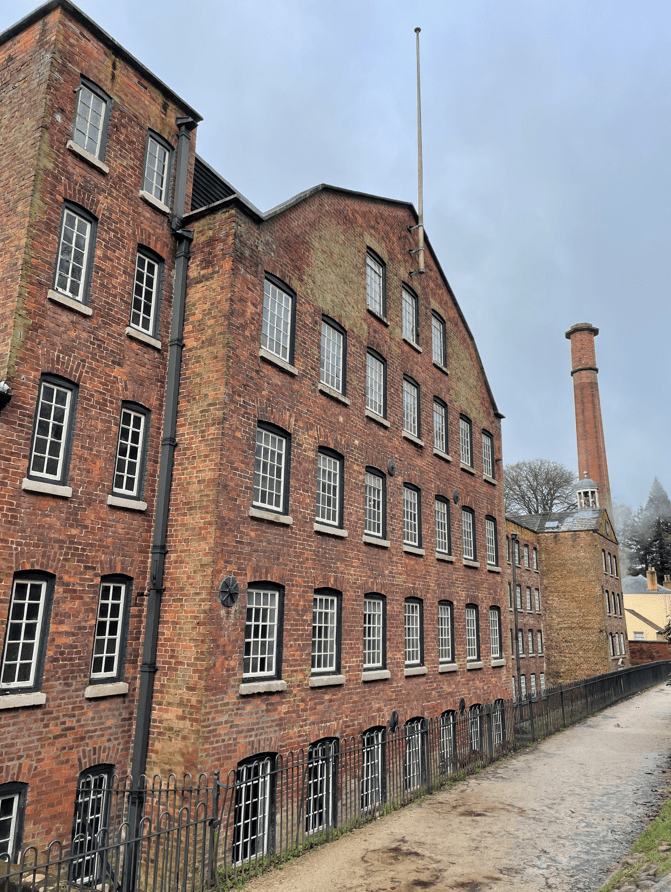
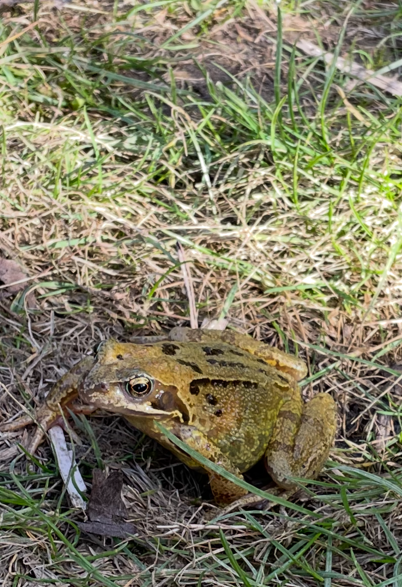
    Today myself and Angela visited Quarry Bank Mill. This is a National Trust property adjacent to Manchester Airport and is a beautifully example of a former cotton mill. It is one of Britain’s greatest Industrial Heritage sites set in picturesque gardens and countryside. https://www.nationaltrust.org.uk/visit/cheshire-greater-manchester/quarry-bank

    We had visited a number of years ago so thought that it was worth another visit and we knew it was a nice place to walk. However, when we arrived we found that our planned walk beside the river Bollin and through Chapel Woods was off the cards due to flood damage on the footpath by the river. We decided to stay and look around the former mill and make the most of our day. At the end we were glad that we had because it was a most interesting day out.

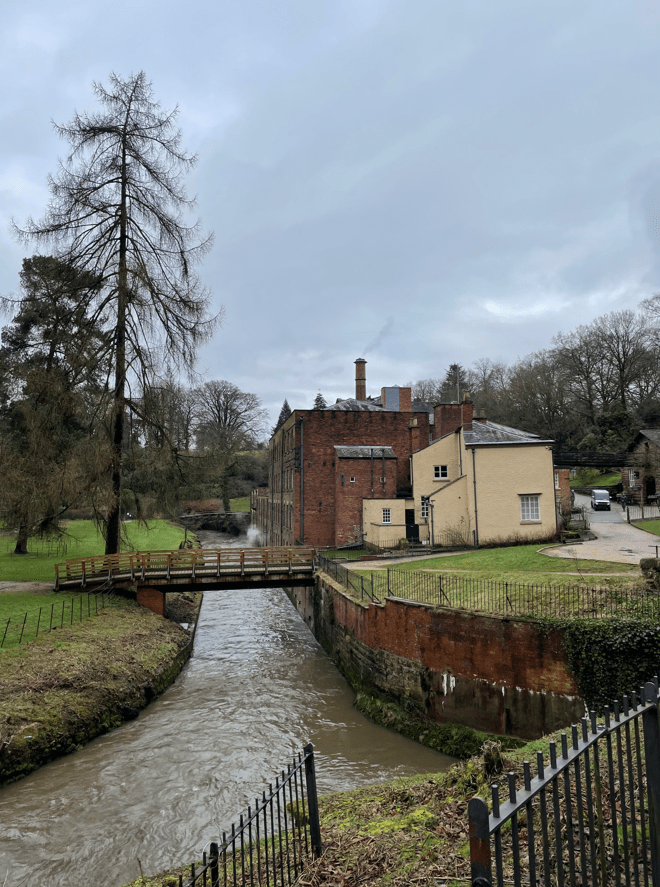
    The mill building

    The mill was built by Samuel Greg in 1784 at Styal, adjacent to the river Bolin, which would be the source for the water mill used to power the new machines that were pushing innovation in the cotton industry.

    Manchester’s damp climate made it perfect for processing cotton. Together with access to the canals / rivers and later the railways, transport of raw cotton into the mill and cloth leaving the mill was made easy.

    Arriving into the car park we were pleased to see that it was a new addition and that there was a nice new reception building. This would be a theme for the day where there had been big improvements to the infrastructure all around the site. We headed for the impressive mill building where we were told that a ‘Hydro Tour’ was leaving in 5 mins time and we were asked whether we like to join it. Yes, of course, so we enjoyed a 45 min tour by our knowledgeable guide Chris of the water system that feeds the mill.

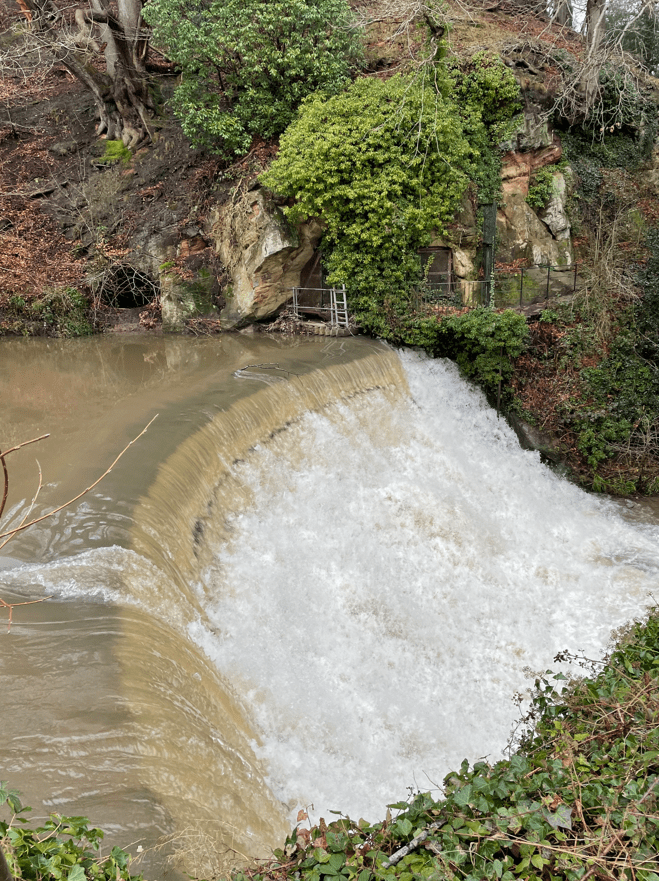
    Dam / weir across the river Bolin that feeds the mill

    We found out that in 2013 a water turbine was installed that now provides half of Quarry Banks electricity. A fish and eel pass were built to enable salmon to swim up river past the weir once more. A series of channels and sluices moves the water to the giant water wheel inside the mill. The supply of water, especially during the summer months, could be erratic and a large buffer pond was built close to the weir to supply additional water when the river was low. The giant gears that drove the belts powering the machinery were impressive.

    The new spinning machines required a steady power input and because trying to control the water to drive the water wheel was difficult, the mill took advantage of innovations in steam power and installed a couple of steam engines to power the machines. We saw one steam engine operating – the second had blown a gasket and was awaiting repair. This tour was a good introduction to the mill. After the tour we headed to the café for a coffee and a breather.

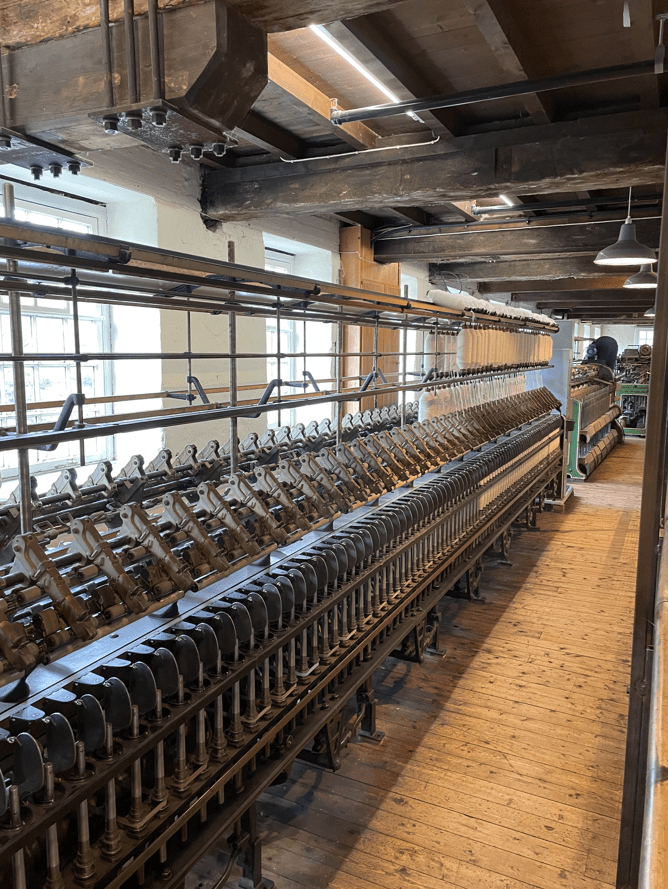
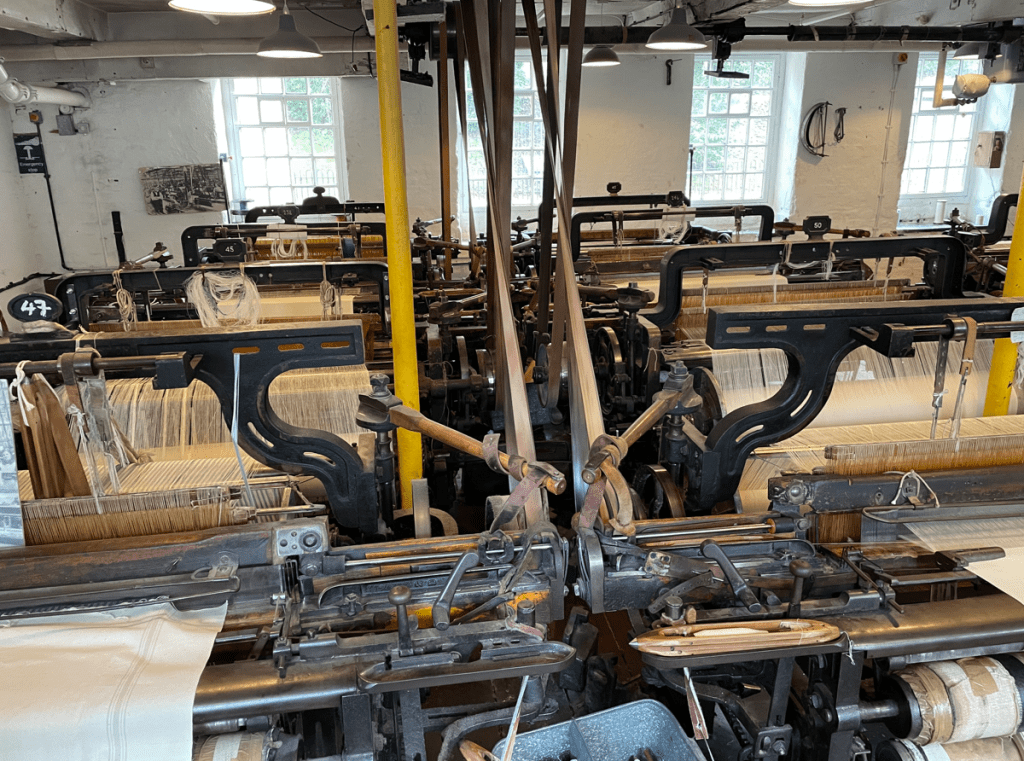
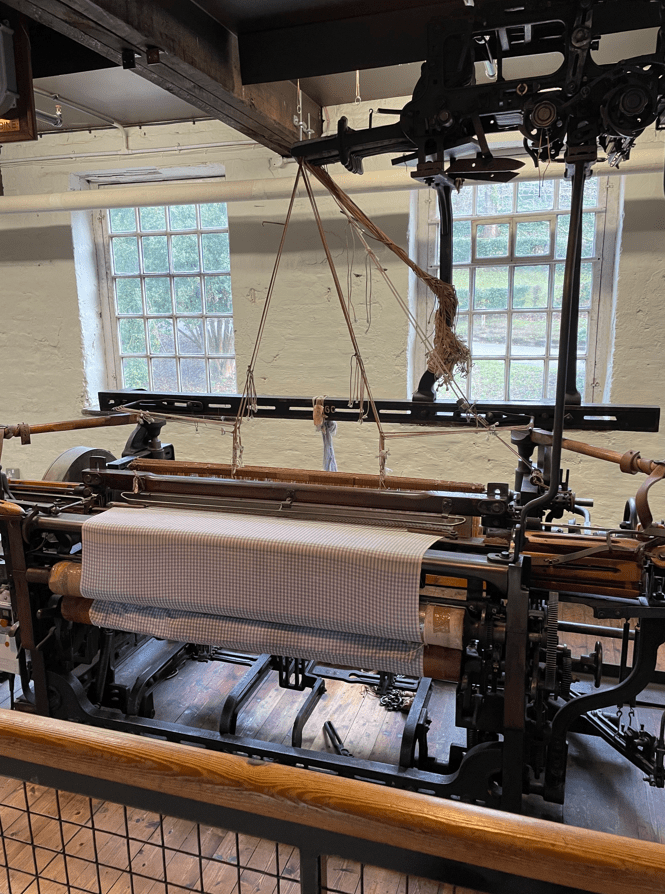
    After coffee we went around the mill looking at the various machines used to process the cotton. A volunteer started the carding machine which cleaned and brushed the fibres forming them into thick soft ropes called slivers. It was very loud and gave us an indication of the noise that would have been generated when a number of these machines were operating.

    It was fascinating learning about the very hard lives of the mill workers and particularly the apprentices. The mill owner built a house for the apprentices and in 1800 there were 90 children living there. Working 12 hours a day, six days a week they were legally bound to the mill owner until they reached 18 or 21. Robert Greg, Samuels son was now running the mill and he build more houses for the workers, a shop, pub and gardens that provided fresh vegetables. This was a glimpse into the days of our Industrial revolution and this particular mill owner was more enlightened than some.

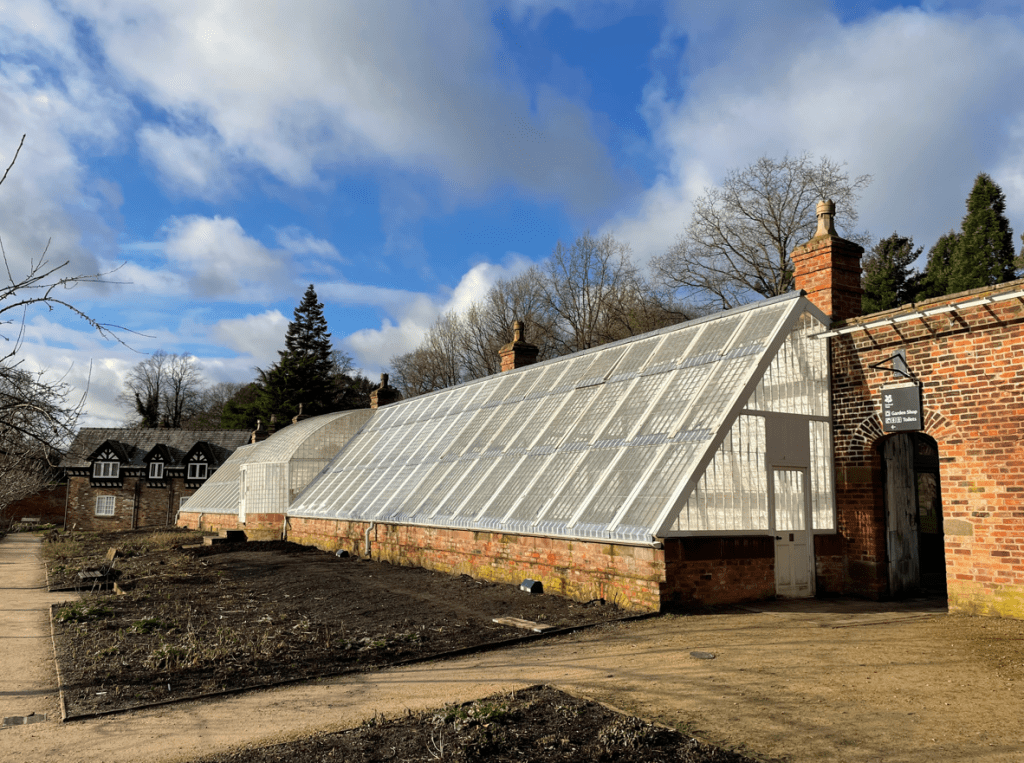
    Having toured the mill we had another coffee and then headed up to the walled gardens where we viewed the restored glasshouse. 7,500 panels of hand- blown Polish conservation glass were used in the restoration.

    The refurbished glass house

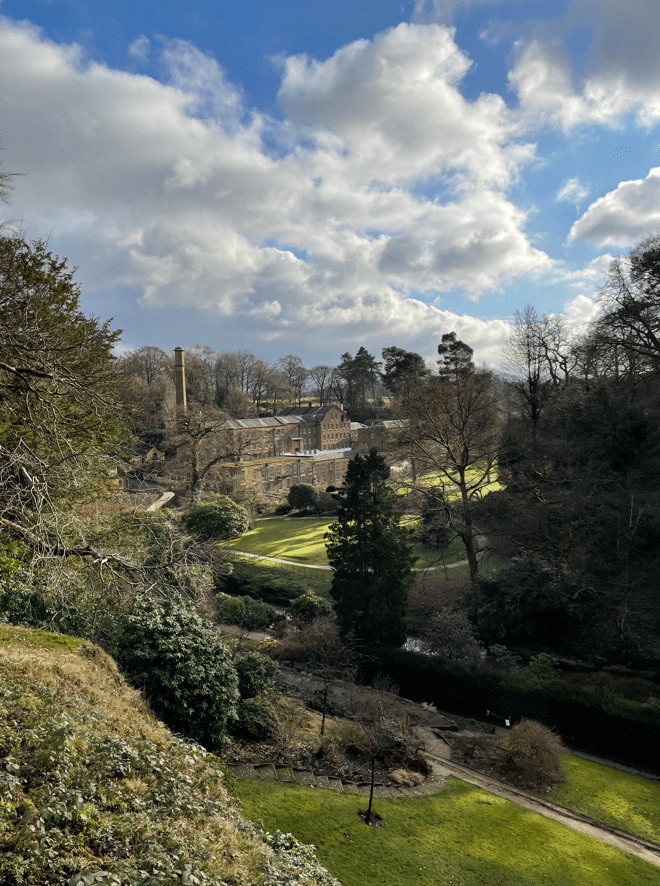
    As the gardens are at height we had a nice view down over the mill. A nice café has been built at the entrance to the gardens.

    View from the walled gardens

    We decided that we would definitely return to view the Apprentice house/ garden, Styal village and see if we can do that walk we had planned.

    Happy Walking! 😊🚶
  • Dunham Massey Circular Walk: Nature and Canal Views

    Jan 30th, 2025

    Hello and welcome back to my blog 😊.

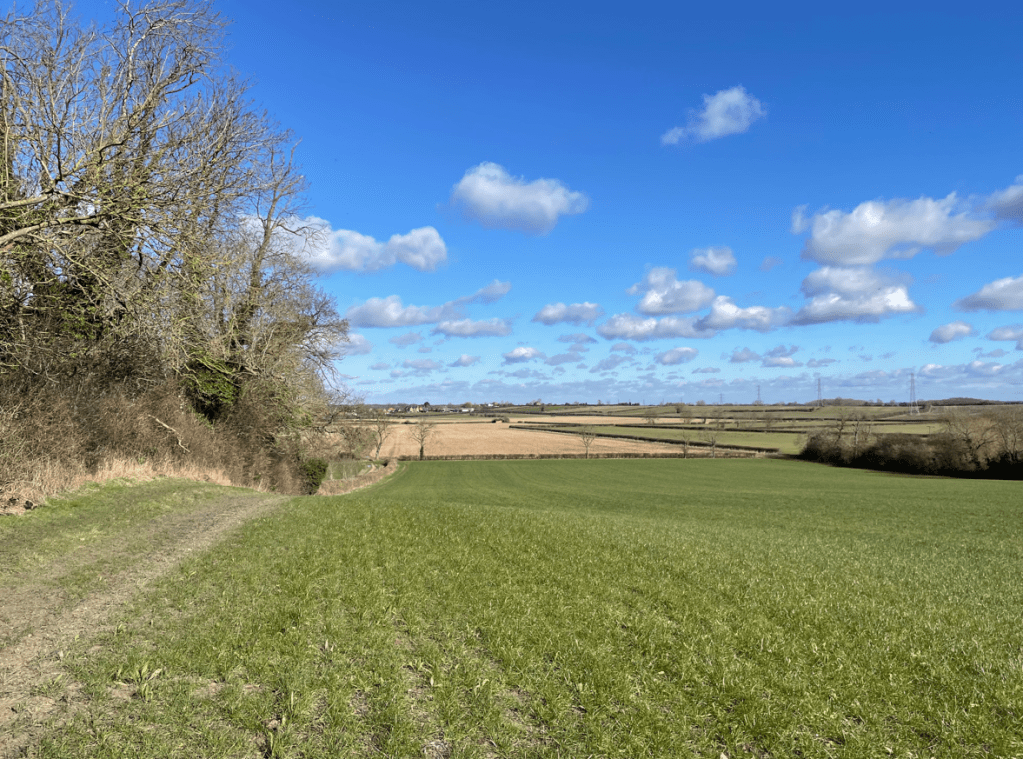
    Today myself and Angela enjoyed a 6.7 mile circular walk taking in Dunham Massey and the Bridgewater canal. Angela had done the recce for the walk and thought that I might enjoy it – I did!

    It was supposed to be a sunny day, but as we drove to the start of the walk it started to rain. Black clouds loomed overhead. We took a chance and carried on – the shower was short lived and the sun came out 😊.

    The walk initially took us through The Devisdale, an open suburban parkland where we saw a few dog walkers and then on through Denzell Gardens. I am sure that in summer the gardens would look splendid but not in January.

    Crossing the busy A56 we entered Dunham Forest Golf and Country Club following the footpath through the golf course. No golfers were to be seen.

    After crossing the golf course we entered farm land and the paths took us to the Bridgewater canal.

    At the start of January the Bridgewater canal suffered a catastrophic breach on a high embankment close to Dunham Massey following heavy rain. The whole saga was brilliantly captured by Josh Taylor, a Youtuber ,whose boat ‘Olive’, was caught in the emptying of the canal. https://www.youtube.com/watch?v=QWE8KH-PqA8&list=PLxMjv85EMilmBnSr8xsEPsLERSufySVj_&index=6

    This section has been closed off and coffer dams built to contain the leak. Myself and Angela used to enjoy walking this section of the canal so we are shocked at the damage that has been done. The good news is that Josh’s boat has been re-floated and his views and subscriptions have sky-rocketed.

    Grounded boats

    While the canal was dry some sections of the towpath have collapsed. Water is being reintroduced now that the breach section has been isolated.

    Leaving the canal we headed for the National Trust’s Dunham Massey where we could grab a coffee. A tree lined muddy path brought us into the park where we passed the old mill and the beautiful cobbled stone yard by the stable block.

    Footpath to Dunham Massey
    The old mill
    cobbled stone yard

    The café was very busy but we were happy to sit outside, where it was cooler, and enjoy our coffees.

    We resumed our walk going around the park. It was quiet which we both appreciated (they were all in the coffee shop!).

    A grand clock tower -reading the correct time!
    Dunham Massey house

    There are some lovely footpaths around the park which has deer, lakes and many trees. We were enjoying the solitude and views as we walked along quiet paths.

    One of the lakes

    Soon we were out of the park, across the golf course and headed through The Devisdale to reach the car.

    Crossing the Devisdale

    It had proven a nice walk, one that we will no doubt do again in the future.

    Happy Walking 😊🚶

  • The first signs of Spring

    Jan 23rd, 2025

    Hello and welcome back to my blog 😊.

    Today the Three Amigos met up and enjoyed an 11.5 mile circular walk from Bingham to Aslockton, Whatton-in-the -vale and on to Orston. We returned following the river Smite to Aslockton and back to Bingham. It was a chilly morning and we were expecting rain – a pre-cursor to named storm Eowyn which is arriving later today.

    Leaving Bingham

    Leaving the streets of Bingham we set off following paths along fields passing close to the Skegness to Nottingham railway line.

    We went through a ramshackle farm where we were surprised to see a Llama – it was surprised to see us too! Following our route through a new housing estate we eventually crossed the railway at the Aslockton station level crossing.

    Level crossing at Aslockton railway station

    Walking through Aslockton village it was a short walk to enter Whatton-in-the Vale and then leave via a nice tree-lined road.

    Leaving Whatton

    By this time the rain had commenced although thankfully, it was only light showers. Leaving the road we followed a bridleway and fields towards Orston. Here we went wrong slightly and had to double back across a field to enable us to get under the railway line via a tunnel. It was getting quite muddy underfoot at this stage.

    There were lakes either side of our path. Mick saw a sign and it said they were a SSSI (Site of Special Scientific interest) site and were Plaster pits. It turns out that in the second half of the 19th century there were gypsum mines here and a factory making plaster from the Gypsum. Between 1868 and 1871 it accounted for 8% of Britain’s plaster production.https://nottsvillages.blogspot.com/2015/07/orston.html

    Orston village has an impressive large village hall. We were looking for a bench to take a break and we found one not far from the hall. I was ready for a scotch egg and a Bovril. Refreshed, we continued through the village where we noticed snow drops in a garden – the first signs of spring 😊. A welcome sight.

    The old telephone box in the village is said to be the largest hanging basket in the East Midlands. There were no flowers today but the baskets were ready for spring.

    Not far out of Orston we crossed a bridge over the river Smite and turned left to follow the embankment for some distance.

    The river Smite and Gibson bridge

    This section of the walk proved very muddy and slowed us down because it would have been very easy to slip over. A fallen tree had to be climbed over.

    Muddy fields

    Arriving back into Aslockton we passed a large earth mound known locally as ‘Cranmers Mound’ after Thomas Cranmer who was born in Aslockton in 1489. He was appointed Archbishop of Canterbury by Henry V111 and oversaw the reform of the church in England and the break with Rome. He was later condemned as a heretic by Mary Tudor and burned at the stake in Oxford in 1556.

    Cranmers Mound

    Legend has it that Thomas, when he was a boy, used to climb the mound to hear the distant bells of Whatton church. The original purpose of the mound has been lost with time.

    We continued through Aslockton passing the pub ‘The Cranmer Arms’ and the village shop which had a delivery bicycle parked outside. I wondered whether it was actually used or just ormanental?

    Leaving Aslockton we re-traced our route back to Bingham pleased that we had escaped any heavy rain.

    It had been a good stretch of the legs and we had learnt some more local history.

    Happy Walking! 😊🚶
  • Frosty River Walk: Long Bennington to Claypole

    Jan 16th, 2025

    Hello and welcome back to my Blog 😊.

    Today, myself and Angela enjoyed a 10.8 mile circular walk from Long Bennington passing through Claypole and Dry Doddington along the way.

    It was a blue sky, but frosty, morning as we set off. We were looking forward to a nice walk.

    We headed for the river Witham and followed it, walking along the raised embankment.

    At the start along the river

    We could see the tide mark where the river had been high during the recent floods. The embankment was reasonably dry, and where it was wet, the water had frozen- we were grateful for that.

    The river Witham

    Fields adjacent to the river showed evidence of the floods.

    Flooded field next to the Witham

    The river meandered along, turning here and there. There is something nice about frosty grass on a sunny morning.

    Along the river we came to a point where a metal gate was in place – a cattle watering point, although the cattle were tucked up in their barn for the winter months.

    Cattle watering point

    Further along we passed a nice weir.

    After this point the official public right of way footpath ran out and the route that I had thought was ok had a ‘No Trespassers’ sign. We decided to head up a farm track instead, which eventually led us to a road, leading to Claypole. There were hundreds of small birds in the trees and flying around – almost like a murmuring. We could see a tall church spire in the distance- we would pass this soon.

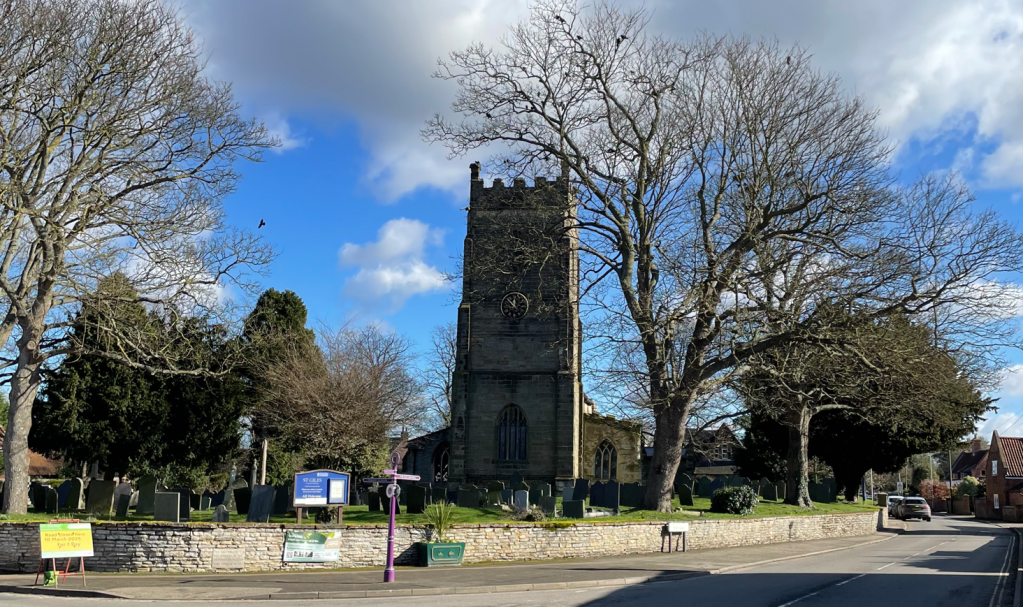
    St Peters Church Claypole

    Walking through the attractive village of Claypole we eventually found our footpath which would take us across the East Coast Mainline Railway – when we got there we found that Railtrack had fenced off the crossing. We have come across this on other walks – it is very annoying. Presumably it is avoid risk.

    Access to level crossing closed

    It looked like there might be a path beside the railway line that we could use but after following it for a while we came up against another ‘No Trasspassers ‘ sign.

    We had no alternative but to walk back into Claypole and then take the road to Dry Doddington. It turned out to be a quiet lane, but just as Angela said that there was less traffic than she had expected, every man and his dog was driving along the road. Doh!

    The ‘quiet’ road to Dry Doddington

    Arriving into Dry Doddington we admired the leaning tower of St James church. Apparently, the lean is greater than that of the Leaning Tower of Pisa.

    A seat beside the village hall was a good place to stop for a cuppa.

    Dry Doddington is a local high point but there were no views today as there was mist in the distance. We headed across fields from Dry Doddington to Long Bennington, meeting a dog walker whose dogs were vainly chasing a hare across the field. They had no chance! The dog walker said that there were lots of hares in the area and sure enough, we later saw another two hares.

    Obstacles in our way was a theme on todays walk and sure enough we had another obstacle blocking our path – an electric fence. Luckily it was low enough to step across.

    After crossing this muddy field it was nice to get some grass to walk on for the final mile back to the car.

    The final stretch

    Despite the challenges we both had enjoyed todays walk.

    Happy Walking! 😊🚶
←Previous Page
1 … 5 6 7 8 9 … 17
Next Page→

Blog at WordPress.com.


Loading Comments...
 

    • Subscribe Subscribed
      • My Walking Journeys
      • Join 62 other subscribers.
      • Already have a WordPress.com account? Log in now.
      • My Walking Journeys
      • Subscribe Subscribed
      • Sign up
      • Log in
      • Report this content
      • View site in Reader
      • Manage subscriptions
      • Collapse this bar