Skip to content

My Walking Journeys

  • Exploring Hickling Basin: A Scenic 8-Mile Walk

    Aug 11th, 2026

    Hello and welcome back to my blog 😊.

    Today, the Three Amigos met at 07:30 at Hickling Basin and enjoyed an 8-mile circular walk from Hickling to Hose.

    Hickling basin lies on the Grantham Canal and all was quiet when we arrived. It is a very popular spot with the cafe and nearby pub.

    The Wharf Cafe

    We took a walk through the village admiring the nice houses. The village hall looked good. Formerly, it had been the village school. We read some memorial plaques for villagers who had lost their lives in the World Wars. It is good to remember their sacrifice.

    Hickling Village Hall

    As we left the village and headed for the fields we passed a couple of chairs in a garden and I felt sure that Chris was minded to take a break there! I must say the chairs did look inviting.

    Our route took us across a couple of fields of mixed origins. The sunflowers looked like they were struggling with the extraordinary hot/dry summer.

    We continued across several fields and the going was much easier than the last time I had done the walk, when it was extremely wet and muddy. After a slight detour, due to the footpath being overgrown with vegetation, we arrived into Hose and took a break on a bench close to the church of St Michael and All Angels.

    I enjoyed a cold drink and a scotch egg before setting off through the village. Blacksmithing is clearly an important part of the village and we found two references to it.

    The temperature was rising as we left the village and followed a road to bring us to the Grantham Canal. Sadly, the canal is looking quite sad in this section.

    Grantham Canal -dry and overgrown with weed

    However, it does have a good towpath and is away from traffic, so is a lovely tranquil place to walk. I must say that I was shocked by the loss of water from the canal – the lack of rain is having consequences, and you do wonder if sufficient rain will fall over the autumn and winter to refill canal, rivers and reservoirs.

    Dry Grantham canal close to Hose

    We came across a hut (The hut by the cut) with benches to rest on that was selling drinks, cakes, jams and chutney operating in an honesty box manner. This was not here when I last walked this path. It was good to see.

    After a short path diversion we passed by three relatively new swing bridges.

    Swing Bridge

    A nice brick bridge (Clarks Bridge) came into view and we passed under it – it looked like the underneath had recently been rendered.

    Markers along the way told us the distance we were along the canal from the river Trent – the original start point for the canal.

    Close to Hickling we passed a restored Lengthsman hut – originally used as a shelter for a Lengthsman whose job it was to maintain a section of the canal.

    The canal close to Hickling was also dry.

    Arriving back at Hickling basin the area was very busy, even the Swans and Ducks were up now.

    A busy Hickling Basin

    The water in the basin is a few feet below normal levels. We noted that someone had kindly put a wooden ramp in place as the water level is so far below the brick ramp normally used by wildlife to enter the water.

    Cygnets above the temporary wooden access ramp into the water

    It had been a good stretch of the legs. Mick and I took advantage of being by the café to grab a coffee and chill. The walk can be found on the Grantham Canal website on the link below.

    Hickling Basin to Hose | Grantham Canal Society

    Happy Walking! 😊🚶

  • Exploring The Wrekin: A Scenic Hike Near Telford

    Aug 10th, 2026

    Hello and welcome back to my blog 😊.

    Today, Angela and I visit The Wrekin, one of central England’s best loved hills, located close to Telford.

    The Wrekin

    We arrived early on a sunday morning and were surprised to find quite a few cars already parked up in the lanes. Well, we shouldn’t have been, because it is a very popular spot with spectacular 360 degree views. After some driving around we found a new car park – The Donkey Field car park, operated by RingGo. It took quite a while to pay because of the poor mobile signal on my phone.

    It was a short walk from the car park to the start of the trail that would wind it’s way steeply up the hill. We passed a café on the ascent called the half-way café – typically it was closed because we were walking quite early in the day.

    As you would expect, in olden days, there was an iron age fort located on the Wrekin.

    Some people were descending down the path already – they must have been very early birds! Eventually, the broad track showed signs of less gradient – the top was close.

    Nearly at the summit

    Close to the summit there was a radio mast and we started to see the distant views.

    Also at the summit there is a trig point and a toposcope.

    Next to the toposcope

    Having taken some photos we moved away from the summit and took a seat on rocks for a short break and paused to admire the views.

    A short way off the summit
    On a break
    A view from the Wrekin summit

    After our stop we headed down the opposite side to that we had ascended. If we thought the way up was steep this path was much steeper and I regretted having left my walking poles in the car. Having nearly slipped a few times on the slippery path we were pleased to arrive in one piece at the bottom.

    Our walk continued through wooded tracks around the base of the Wrekin and then we headed to Limekiln wood and Ercall wood. Walking through the woods was nice because we were able to enjoy some shade. The woods were part of a medieval hunting forest. Within the forest are the hollows of small pits where coal and limestone were dug.

    The Ercall was extensively quarried from the 19th century and the abandoned faces reveal some of the oldest rocks in the country and wave ripples from a 540-million-year-old seashore.

    After an 8-mile walk and 1,700 ft of ascent we arrived back in the car park. I had been wanting to go up the Wrekin for some time, so it was nice to tick that off the list. We had great weather for the walk and the views were fabulous.

    Happy Walking! 😊🚶
  • Exploring Shropshire – The Stiperstones

    Aug 10th, 2026

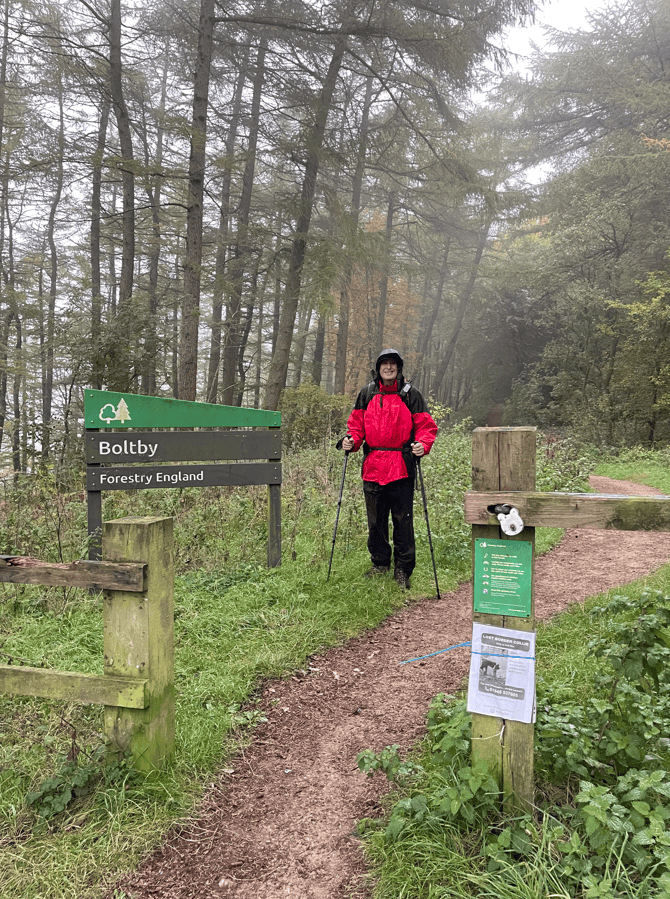
    Today, myself and Angela did a classic Shropshire walk on the Stiperstones ridge, followed by a walk to Nipstone Rock. It would be a distance of 9-miles and 1,540 ft of ascent. However, our journey began in the picturesque town of Church Stretton.

    Church Stretton

    I put the location into Google Maps and stupidly chose the shortest route. It would be a half hour drive to the East Bog car park. Well, what a drive on top of the Long Mynd (nice views) and unfortunately along single lane roads, lined with hedgerows and no passing places. My nerves were frazzled. And then suddenly, in front, is a large HGV with its hazard warning lights flashing, stopped and completely blocking the narrow lane. I thought the driver might get out of his cab and tell me what was happening but he didn’t. So instead, I went to the lorry cab and asked if he was waiting to turn into the nearby farm. Turns out, he had broken down with a fractured air pipe and his lorry now unable to move. He said he was waiting for the breakdown wagon to arrive. I wished him luck and did a three point turn and looked for somewhere else to park – luckily we found the main Stiperstone visitor car park. There was only one other car there which was no surprise at 08:00.

    So, after all that excitement I fired up my phone to get the map only to find the mobile signal was poor. As we could see the ridge we started off walking up the track where we met a herd of wary cows coming down – we stood to the side and let them pass.

    The Stiperstones is a succession of serrated quartzite rock pinnacles that punctuate the ridge in this remote area of Shropshire. Angela decided to scramble to the high point of one of the pinnacles – I was thinking if she falls I have no mobile signal to call for help. Thankfully no incident occured.

    Angela on top of Manstone Rock

    The path across the ridge is very rocky so we needed to be very careful where we put our feet. The ridge is covered in heather and we had glorious views over Shropshire.

    Another cow on our path

    We descended from the ridge and made our way to the Bog Visitors Centre. Unfortunately, it would not open until 11:00 so sadly we missed visiting it. We did see the broken down lorry which was still there but a couple of rescue vehicles were also there.

    On our way to the visitors centre

    Close to the Visitors centre were some information boards that told the story of the lead mining activities that were carried out near the village for 200 years. In fact, the visitors centre was previously the village school.

    Having read the information boards we continued along our route to Nipstone Rock. The heather was very colourful.

    We were following a section of the Shropshire Way. Ferns crowded in around us – a check for ticks would be necessary at the end.

    We passed under Nipstone Rock and then followed the Shropshire Way along an undulating route. It was tough going in the heat. The surrounding fields were parched.

    Nipstone Rock

    Eventually we arrived back at the car – the car park was full.

    Parched fields

    On getting back to the car I chose a longer route home, mostly avoiding the narrow lanes (and broken down lorry – I hope its not still stuck there!). It had been a good day out exploring Shropshire.

    Happy Walking! 🚶😊

  • One of my favourite walks

    Aug 6th, 2026

    Today, the Three Amigos met up in the village of Branston and enjoyed a 5.6-mile circular walk to Croxton Kerrial. The weather had cooled slightly, which we appreciated.

    Our route took us along an undulating gravel track towards Croxton Kerrial.

    The track to Croxton Kerrial

    As we drew close to Croxton Kerrial we passed by the sewage works – surprisingly, it did not smell, unlike the large heap of manure tipped in an adjacent field!

    A gaggle of geese were in a field closer to the village – they were surprisingly quiet and an unexpected sight. I thought they looked cute.

    A visit to the wonderful village shop is always a must when in Croxton Kerrial. The coffee and cakes/savouries are always good and the staff are happy and helpful. I decided to go with a flat white and a sausage roll and sat in the shade under a tree 😊

    Village Shop in Croxton Kerrial

    After our break we followed the path through fields, then down into a valley and up the other side.

    The uphill certainly got the heart pumping. At the top, sheltering in the shade under a tree, were some cattle and to their right, a bull – he was staring at us, so we didn’t hang around.

    Everywhere the land was parched and crying out for some rain. July was the driest month recorded since records began.

    Leaving the cattle we crossed a field and do you know, I felt a few drops of rain. It didn’t amount to anything, and I might have thought that I had imagined it, but the others had felt it too.

    Finally, we had a nice downhill walk, with great views, back into Branston.

    This is one of favourite walks in the locality, although it can be muddy in winter.

    Happy Walking! 😊🚶
  • A Scenic 8.7-Mile Walk in Shropshire’s Ironbridge

    Aug 3rd, 2026

    Hello and welcome back to my blog 😊.

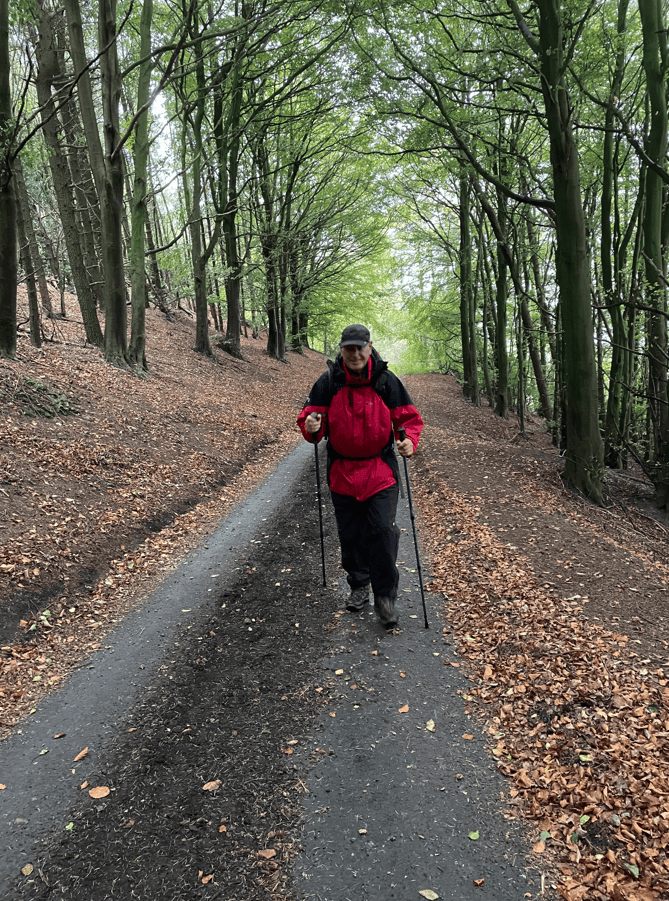
    Today Angela and I enjoyed a 8.7-mile circular walk in the county of Shropshire. We visited one of our national treasures – the Ironbridge Gorge. This area lying deep in a wooded gorge, gouged out by the River Severn, is a World Heritage Site and is where the Industrial Revolution began. In 1708 Adrian Darby started iron-smelting in the coalbrookdale furnaces using coke. He would become the worlds first mass producer of cast iron.

    We parked in coalbrookdale and it was a short walk along the river to reach the famous iron bridge – the worlds first cast iron bridge, built by Thomas Telford in 1779 to link the important industrial towns of Broseley and Madeley.

    The worlds first cast iron bridge
    View from the bridge
    On the bridge

    We sat on a bench and had some lunch taking in the design of the bridge. After, we walked across the bridge, passing the old toll house where, historically, a toll had to be paid to cross. The table of Tolls was on display.

    Having crossed the bridge we followed the trail which once was the course of the Severn Valley Railway. Some track and level crossing gates were a nod to its past.

    As we continued we passed the Jackfield Tile Museum – the area had been a big producer of tiles – in fact, shortly, we passed the site which is now a craft centre but was formerly the worlds largest tile works.,

    Major engineering works had to be carried out in recent years to prevent Jackfield slipping into the River Severn.

    Our next port of call was ‘The Boat Inn’ – a nice pub by the river where a refreshing cold drink was taken. A little further on we crossed the river once again, using a pedestrian bridge, and found the pot kilns of the former Coalport Pottery -now also a museum. The pottery was moved along the canal in tub-boats – I think we will be returning to look at the museums and learn more about the history.

    We shortly found the Silkin Way – a pleasant wooded route along the course of the Coalport Branch Railway. A nice former wagon wheel marked the route.

    Along the Silkin Way we passed the entrance to another museum – Blists Hill Victorian Town which is a very popular spot.

    We took a detour involving quite a bit of uphill to visit a spot called the Rotunda, which in Victorian times, was a popular viewing spot. On this occasion not much could be seen through the trees and our route downhill was closed off for repair so we followed the path diversion. Eventually, we landed back into Coalbrookdale where we found a wonderful piece of sculpture and a beach!

    The beach in Coalbrookdale

    It had been a voyage of discovery – which is what the best walks are.

    Happy Walking! 😊🚶
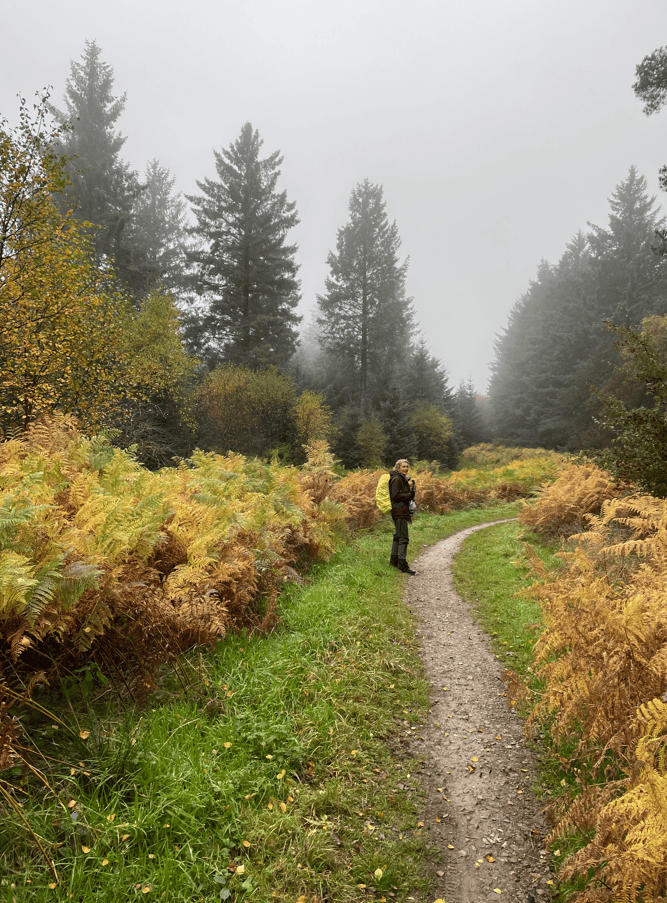
  • 9-Mile Circular Walk Through Nottinghamshire’s Villages

    Jul 29th, 2026

    Hello and welcome back to my blog 😊.

    Today, Mick and I returned to Nottinghamshire enjoying a 9-mile circular village walk from Epperstone to Woodborough, Calverton and Oxton.

    This was our third consecutive walk in this area as we explore the many footpaths it has to offer. It won’t come as a surprise if I tell you it was another blisteringly hot morning. – the 4th consecutive heatwave of the summer is peaking today.

    We parked in the excellent car park at Epperstone village hall and set off on our walk. One of the unusual aspects of this walk turned out to be the number of times the footpath took us through peoples properties and almost as soon as we were leaving Epperstone we passed along such a path. Mick stopped and said hello to a tiny Shetland pony in an adjacent field.

    Entering a field we saw a large property in the distance and wondered if it was of significance.

    As we made our way to Woodborough the parched land was self evident. I wondered whether it will rain at all next month.

    As we passed through Woodborough some of the route was familiar from a previous walk but then it took us through a narrow path close to allotments and then through someone’s back garden. I wasn’t expecting that! Leaving Woodborough we followed a road uphill out of the village passing the cemetery on the way. The road soon turned into a track.

    Eventually, we were at the top and then started our descent towards Calverton.

    We passed the grounds and club house of Springwater Golf Club – it looked a nice place.

    Springwater Golf Club

    Continuing through fields, one was particularly hard going because the grass had recently been cut and still lay on the ground. Strangely, it almost felt like walking on a sandy beach. Was I hallucinating due to the the sun?

    We passed an actual stream with running water, which is a very rare sight indeed this summer. This was Dover Beck.

    We were now on our way to Oxton and as we entered the village we passed a nice looking pub.

    Shortly after, we found a bench and took a well deserved break. I enjoyed a cold drink, courtesy of my insulated ice-pack and my scotch egg went down a treat. After walking through the village we crossed a Ford – it was good to see that it had some water in it.

    Leaving Oxton we headed uphill on a tarmac lane. We said if Chris was with us he would run up this hill. We had a steady walk up and were pleased to reach the top.

    Leaving Oxton

    At the top we had nice views across the fields.

    We walked down through a farm yard and through another front garden to reach a stone track which would bring us back to Epperstone. Tractors were ploughing in the fields.

    Tractors at work

    It was certainly getting hot at this stage. At the end of the track we passed through a front garden to reach the road back into Epperstone. We were pleased to reach the shade under the trees.

    It had been a good undulating walk, it would had been nicer if it wasn’t quite so hot.

    Happy Walking! 😊🚶
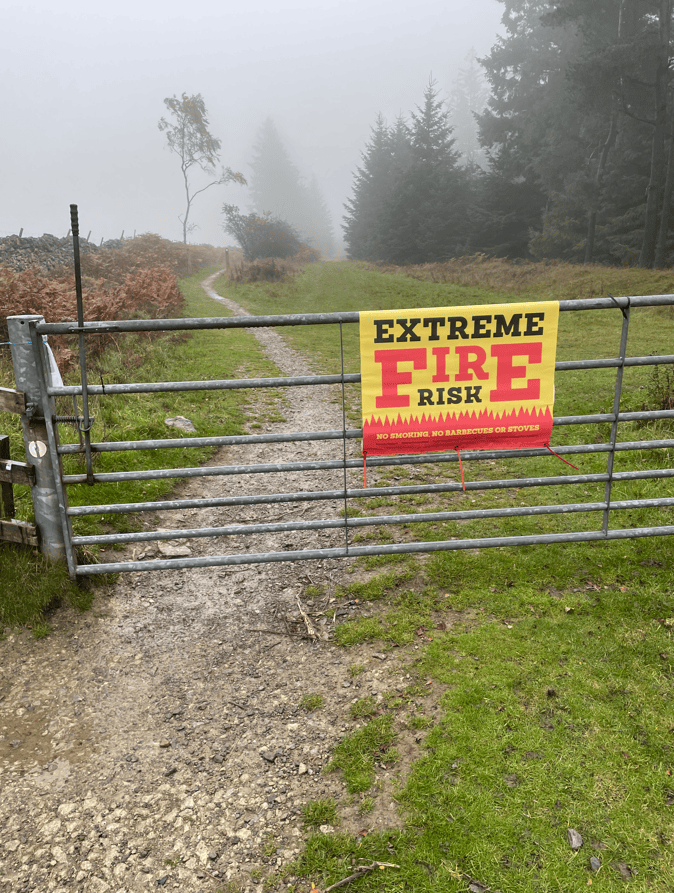
  • A Day in Nottinghamshire: Circular Walk from Epperstone

    Jul 20th, 2026

    Hello and welcome back to my blog 😊.

    Today Mick and I enjoyed a 10.5-mile circular walk from the Nottinghamshire village of Epperstone to Thurgarton. The weather forecast was for a hot day (again!) so we arrived at Epperstone village hall early and set off walking at 07:15.

    We had walked to Epperstone from Woodborough last week and thought it would be nice to explore more of the area. https://oldblokewalking.blog/2026/07/14/enjoy-a-day-walk-discovering-nottinghamshire-villages/

    Leaving the village hall we walked through the village admiring the lovely houses, eventually finding the footpath that would take us uphill and out of the village. The field had recently been harvested and hay bales lay scattered around awaiting collection. It was nice to look at the views and admire the beautiful English countryside.

    Our initial ascent
    View back towards Epperstone

    At times the paths on the ground did not align with the map but we managed to get by.

    Where did the path go?

    Some fields were clearly ready for harvesting.

    As we walked towards Thurgarton we started to get a glimpse of the Priory Church of St Peter.

    The Priory Church of St Peter

    An Augustinian Priory was built in the 12th century but dissolved by King Henry V111. It was a large priory rivalling the one at Southwell. After dissolution it fell into private hands at which point it was dismantled, apart from a tower. The church was restored in 1853.

    Arriving into Thurgarton village we stopped by the war memorial for a break.

    Here, we learnt that during World War1 Thurgarton had an airfield. We wondered where it was located. We took a look at the village sign close by. I always enjoy looking at these – they represent the important bits of a village.

    Village sign

    Leaving Thurgarton we headed uphill along a straight concrete lane. In the air we could see a powered hang glider enjoying circling around, eventually it dropped down and landed.

    I think we had found the site of the former airfield!

    We continued along the straight road – we wondered if it was Roman in origin because it was very straight and the map indicated Roman ruins in the area.

    The day was warming up and we were glad that we had started early. We had passed several streams along the way and they were all dry. The prolonged hot weather is taking its toll. Heading to Epperstone now we passed numerous fields full of hay bales.

    We had a nice downhill walk into Epperstone, and soon we were arriving into the village hall car park – quite large and positioned at the end of the village.

    We had enjoyed the walk and exploring new territory.

    Happy Walking! 😊🚶
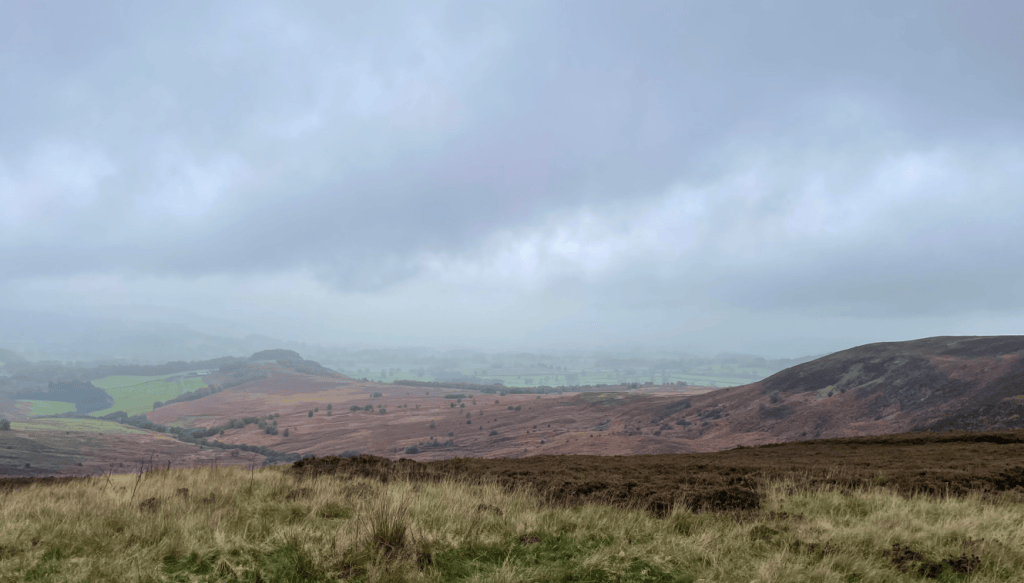
  • Enjoy a Day Walk: Discovering Nottinghamshire Villages

    Jul 14th, 2026

    Hello and welcome to my blog 😊.

    Today, Mick and I enjoyed an 8-mile circular walk, starting in the Nottinghamshire village of Woodborough, taking in the villages of Lowdham and Epperstone along the way.

    We parked outside the church – we were going to park in the village carpark but we saw a good spot outside the church and took that instead. It was a relatively cool morning which made a very pleasant change.

    Walking to the village hall we passed a colourful mural on a wall.

    Passing through the village hall carpark and the Tennis club we crossed into open fields and headed up a slight incline towards Ploughman Wood. The fields either side of the path had recently been harvested.

    Heading to Ploughman Wood

    Looking back we could see Woodborough.

    Looking back at Woodborough

    Entering the wood, it was quite atmospheric as we walked along its narrow paths. The wood is one of the few remaining areas of ancient woodland in Nottinghamshire.

    Ploughman Wood

    After leaving the wood we followed paths across arable fields. Mick wondered whether we might get rain – it was looking possible.

    Several fields on our right contained corn.

    And then, we hit a problem. Ahead of us was a large construction site surrounded with metal fencing signed keep out. Where was the path diversion? No signs to be seen. The right of way was blocked.

    We edged our way around the fencing, eventually deciding to cut (good job I had packed the secateurs) our way through a hedge to reach the road- that was fun, crawling on hands and knees through a gap in the hedge. It is so annoying that construction companies can get away with this sort of thing and that local authorities allow them.

    We continued across fields towards Lowdham, and as we crossed the final field into Lowdham we met a chap who had worked the land here for 40 years so we had a good chat with him.

    Heading into Lowdham

    We stopped in the churchyard (in the shade) of St Mary the Virgin church for a break – I enjoyed my scotch egg😊.

    St Mary the Virgin, Lowdham

    Continuing onwards we passed a very nice property which was the former Lowdham mill before reaching a lane that would take us to Epperstone.

    Sluice at the former mill

    As we walked along the lane we could hear guns shooting – soon we passed the entrance to the firing range with the red warning flag flying.

    Just before entering Epperstone village we passed a nice old brick building – most curious. I wonder what it had been used for?

    We walked through Epperstone village – it is a lovely place. After finding the footpath out to Woodborough we enjoyed the final mile or so back to the car. The rain had kept off, and in fact, it was becoming another hot day.

    Happy Walking! 😊🚶
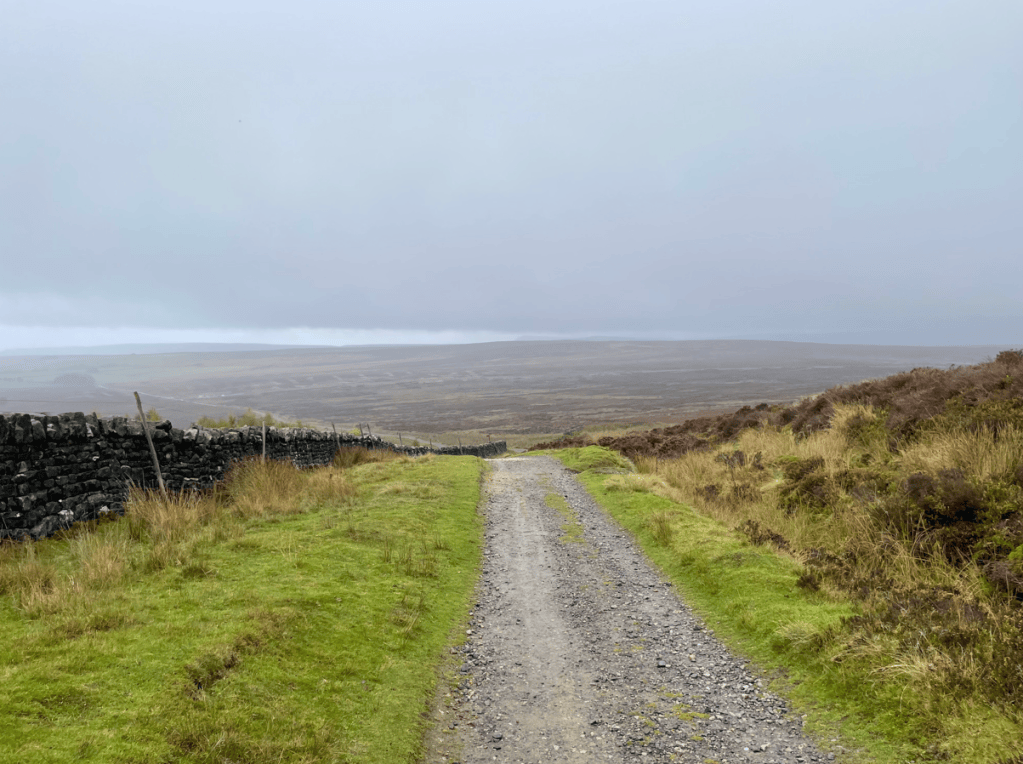
  • Beat the Heat: An Early Morning Walk in the UK

    Jul 8th, 2026

    Hello and welcome back to my blog 😊.

    The UK is experiencing its third heatwave of the summer. With this in mind, the Three Amigos agreed to do a local walk and start early to avoid the heat as much as possible. I arose from my slumber at 05:00, briefly listening to the birds singing in the garden. It had been a hot night and the house was still hot from the retained heat.

    I sense that the climate is changing more quickly than predicted – each season bringing extremes and new records are set. There is no normal anymore! Where will it all end I ask myself. In this country we are not geared up for such hot weather and there seems little acknowledgement of the changing climate e.g. we continue to build houses that are designed to retain heat.

    Mick and Chris were already at our meeting point when I arrived at 06:15 and without further ado we set off following the Grantham Canal towpath.

    Most of the way on this stretch the canal cannot be seen because of the growth of weeds and reeds, however, in one clear section we spotted two swans with their cygnets which was wonderful.

    Cygnets on the canal

    After walking along the canal we turned off and followed a farm track. The adjacent fields looked ready for harvesting – crops are ready early this year because of the previous two heatwaves.

    Wheat ready for harvesting

    Shortly, we reached a road and then had an uphill walk towards Belvoir Castle. The road had recently had a coating of tar / chippings and was subject to a speed restriction. This was very clearly being ignored and as the cars flew past chippings went sailing up into the air in all directions. You would think drivers would be more considerate? Having reached the top of the hill we took a break in the Belvoir Castle Retail Outlet called The Engine Yard. There was a nice Eagle sculpture there.

    There was also an impressive horse sculpture attached to a Gypsy caravan.

    Chris wondered why the retail area was called The Engine Yard. Well, built around 1812, the original yard featured a 20-ton steam engine used to pump water from the Holwell Spring in Woolsthorpe, a mile away, to Belvoir Castle. The engine powered the saws and forges in the workshops too.

    After our break we continued on passing two horse riders (we had also met a third earlier on the walk) and exchanged greetings. We had distant views across the Vale of Belvoir.

    Looking across the Vale of Belvoir

    We had a nice view of the Castle as we walked firstly, along a track, and then through fields to take us into Woolsthorpe village.

    Belvoir Castle

    Wheat in these fields looked ready for harvesting too.

    Combine Harvester due shortly?

    The temperature was rising quite quickly at this stage and we had a hill climb to do. Mick pointed out that we should have done the walk in reverse, which, given the weather would have been a good idea! Chris, relishing the challenge charged up the hill in one take and then waited for the two moderate walkers to arrive.

    View from the summit

    A short section through woods – thankfully not overgrown- and a field crossing brought us to the Viking Way and a downhill section to the canal. A cheer went up as we started to descent.

    On the Viking Way

    After an easy descent we reached the canal. The canal is rich in fish and these could be seen swimming as we crossed over the bridge to reach the towpath.

    The Grantham Canal

    A walk along the towpath brought us to the cars – it was only 09:40, so it definitely had been a good idea to start early on our 8.2-mile circular walk.

    Happy Walking! 😊🚶
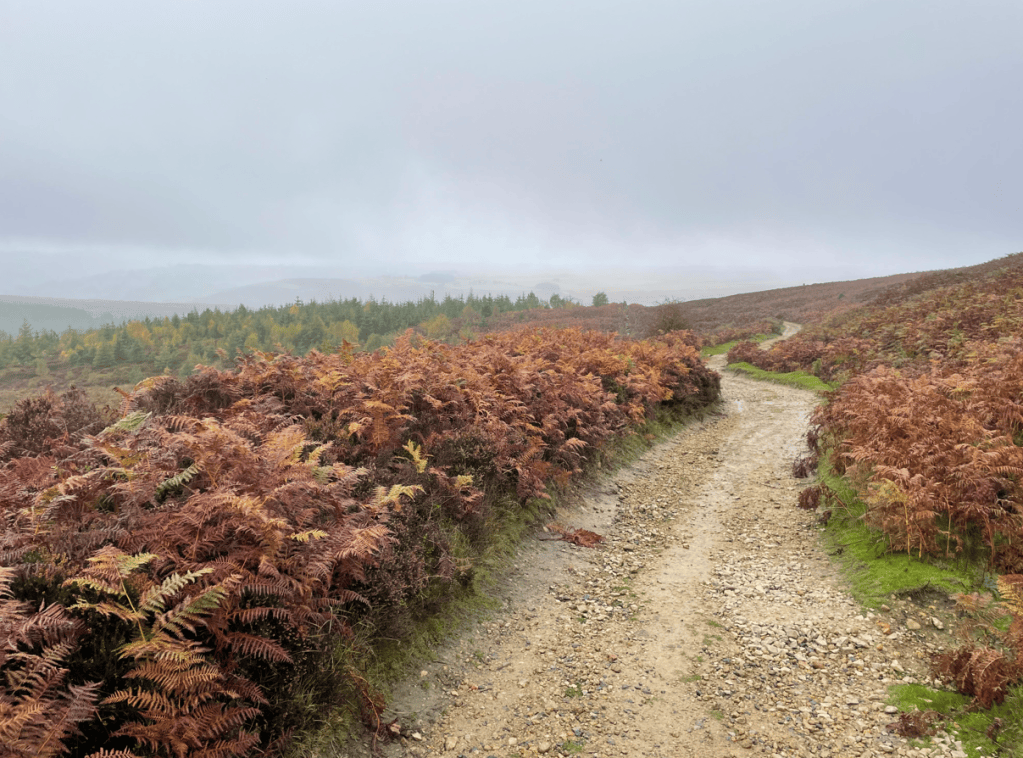
  • Scenic 8-Mile Walk in Lincolnshire: Nocton to Potterhanworth

    Jul 2nd, 2026

    Hello and welcome back to my blog😊.

    Today, the Three Amigos met up and enjoyed an 8-mile circular walk from the Lincolnshire village of Nocton to Potterhanworth and then through Dunston returning to Nocton. It was a lovely sunny day, with normal summer temperatures, which was a joy following the record breaking temperatures set in last weeks blistering heatwave.

    Nocton lies approximately 7-miles south east of Lincoln, and as none of us had been there before, we were looking to exploring new territory. It turned out to be a lovely little village. We parked on the road outside of the village hall – Chris had thought about parking in the village hall car park but a stern look from one of the village hall ‘guardians’ persuaded him this was not a good idea.

    We set off walking through Nocton admiring the stone cottages along the way.

    Groups of youngsters riding bicycles passed us by – they were cycling to the school in Potterhanworth, a rare sight to see these days. Part of our route would be along the Spires and Steeples trail which we had encountered previously whilst walking near Sleaford. https://oldblokewalking.blog/2026/04/14/exploring-sleaford-a-scenic-11-5-mile-walking-adventure/

    Arriving into Potterhanworth we passed a converted water tower which was built in 1903 as part of an innovative water supply system from a borehole in a nearby field.

    Converted water tower

    Taking a footpath we left Potterhanworth and crossed fields.

    I was walking along, minding my own business, when an unexpected sudden gust of wind took my hat and deposited it, out of reach, over a barbed wire fence in an adjacent field. Damn!!

    Chris retrives the missing hat

    This was my expensive Tilly Hat. The fence was too high to just throw a leg over and clamber across, especially when there was barbed wire running along it. Myself and Mick went one way along the fence and Chris the other, to look for a way over. Chris found a way across without damaging legs and other vital pieces of anatomy and hopped over the fence- that was great, my hat was retrieved! The cursed field got its own back though, a hidden hole covered in grass toppled Chris over – thankfully, he had a soft landing!

    We next headed through Potterhanworth Wood.

    Potterhanworth Wood

    Soon, we arrived at the Car Dyke, a 85-mile ditch which runs along the western edge of the Fens in eastern England. The canal that runs down the east side of Potterhanworth wood is part of the Car Dyke. The waterway dates back to Roman times. There is evidence that it was used for transporting goods as well as land drainage. Today there was not much evidence of water, which is not surprising given the dry weather.

    Walking beside the Car Dyke

    We found a wooden carving beside the Car Dyke but could see no explanation of why it was there. Does anyone know its history?

    We reached a hamlet, quirkily called Wasps Nest, where there was a nice table and chairs. We took a break here. Apparently, the hamlet sits at 10 metres above sea level.

    Wasps Nest

    Along the way we passed a couple of farms that are owned by James Dyson – the hoover magnate. In 1919 some 8,000 acres of local fen and heath land became part of the farming empire of the Dennis family and their Nocton Estate was to become the centre of Lincolnshire’s largest (by far!) ‘Potato Railway’ for potatoes was their main crop – primarily grown for Smith’s Crisps. The estate manager was ex-army Major Webber who managed to procure vast amounts of narrow gauge track taken from WWI trenches around Arras and stored at an army supply base there. He had it shipped over and brought to Nocton.

    Begun around 1919/20 the network of narrow gauge lines eventually extended throughout the estate for almost 23 miles. It remained operational until 1964.

    We arrived into Dunston and then took a path towards Nocton. We passed the ruins of Nocton Hall.

    Nocton Hall

    During World War 1 the house was used as a convalescent home for wounded American Officers. During World War 2 it was used as an American Military hospital followed by the RAF. It reverted to private ownership in the 1980’s but following a fire in 2004 it has been left in its current state.

    Arriving into Nocton we checked out the sundial that was designed to commemorate Queen Elizabeth 11’s golden Jubilee. The hours represent Noctons history through the ages while the base of the gnomon is inscribed the family name of each household in 2002.

    Sun dial in Nocton

    Finally, there were more nice houses to admire in Nocton.

    It had been a fascinating and enjoyable walk.

    Happy Walking! 😊🚶
1 2 3 … 20
Next Page→

Blog at WordPress.com.

Loading Comments...
  • Subscribe Subscribed
    • My Walking Journeys
    • Join 65 other subscribers.
    • Already have a WordPress.com account? Log in now.
    • My Walking Journeys
    • Subscribe Subscribed
    • Sign up
    • Log in
    • Report this content
    • View site in Reader
    • Manage subscriptions
    • Collapse this bar