Hello and welcome back to my blog 😊.
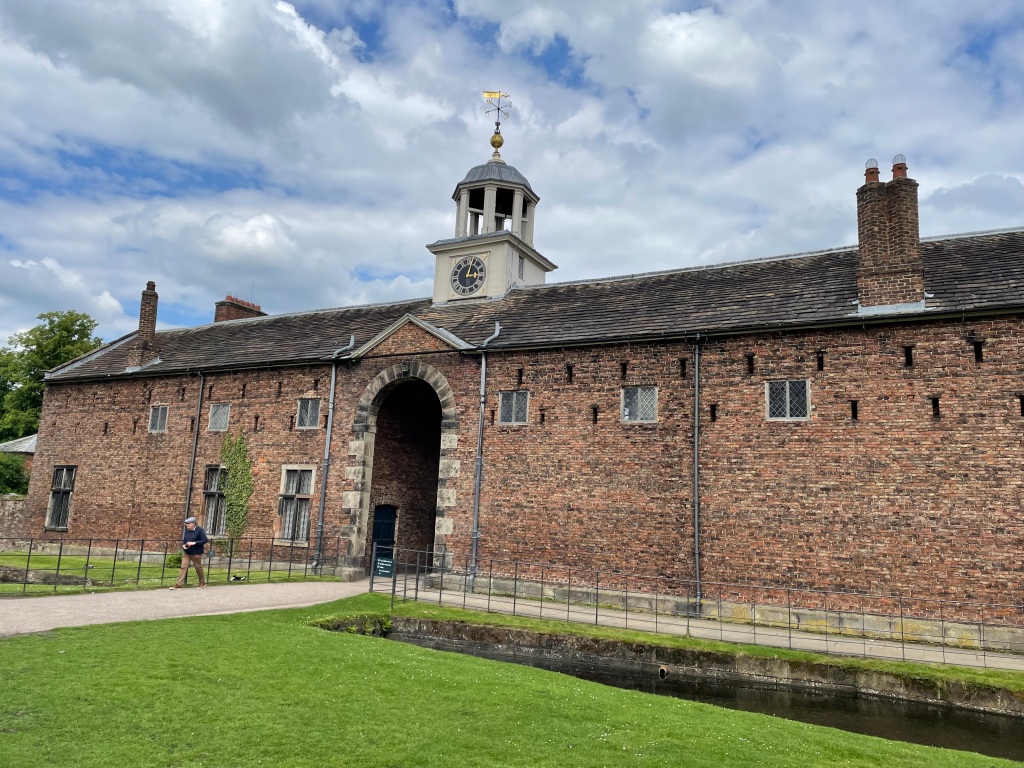
Today myself and Angela visited Quarry Bank Mill. This is a National Trust property adjacent to Manchester Airport and is a beautifully example of a former cotton mill. It is one of Britain’s greatest Industrial Heritage sites set in picturesque gardens and countryside. https://www.nationaltrust.org.uk/visit/cheshire-greater-manchester/quarry-bank
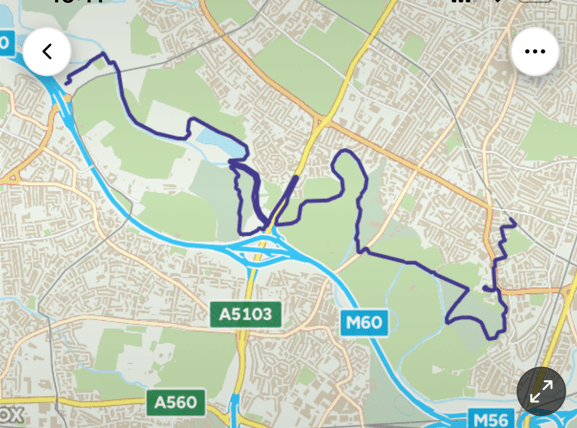
We had visited a number of years ago so thought that it was worth another visit and we knew it was a nice place to walk. However, when we arrived we found that our planned walk beside the river Bollin and through Chapel Woods was off the cards due to flood damage on the footpath by the river. We decided to stay and look around the former mill and make the most of our day. At the end we were glad that we had because it was a most interesting day out.
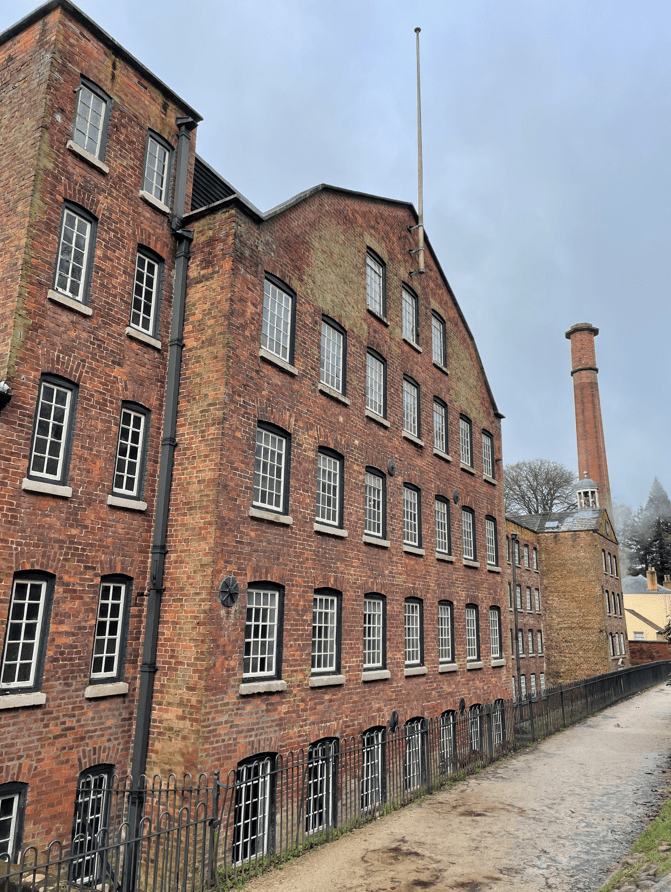
The mill was built by Samuel Greg in 1784 at Styal, adjacent to the river Bolin, which would be the source for the water mill used to power the new machines that were pushing innovation in the cotton industry.
Manchester’s damp climate made it perfect for processing cotton. Together with access to the canals / rivers and later the railways, transport of raw cotton into the mill and cloth leaving the mill was made easy.
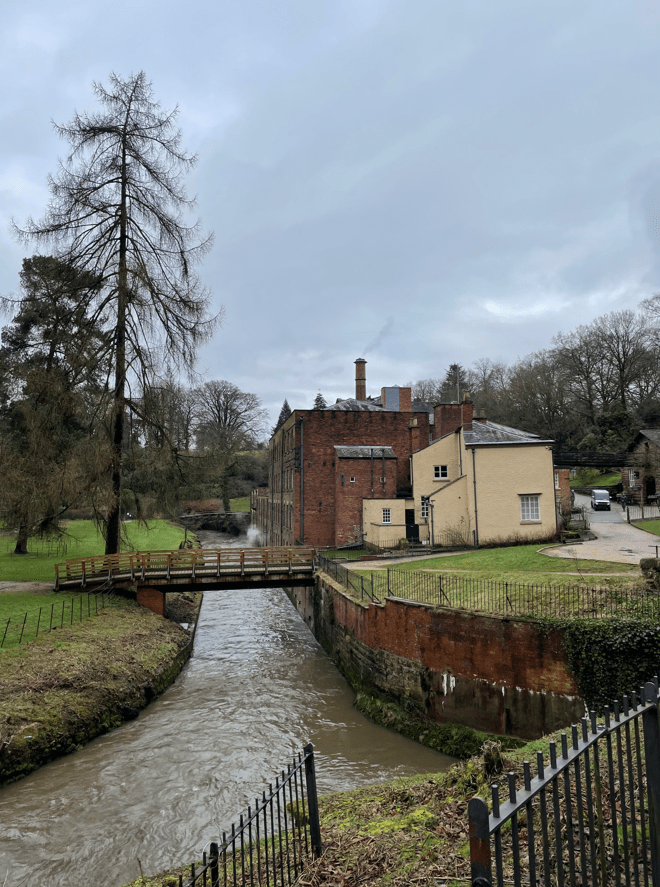
Arriving into the car park we were pleased to see that it was a new addition and that there was a nice new reception building. This would be a theme for the day where there had been big improvements to the infrastructure all around the site. We headed for the impressive mill building where we were told that a ‘Hydro Tour’ was leaving in 5 mins time and we were asked whether we like to join it. Yes, of course, so we enjoyed a 45 min tour by our knowledgeable guide Chris of the water system that feeds the mill.
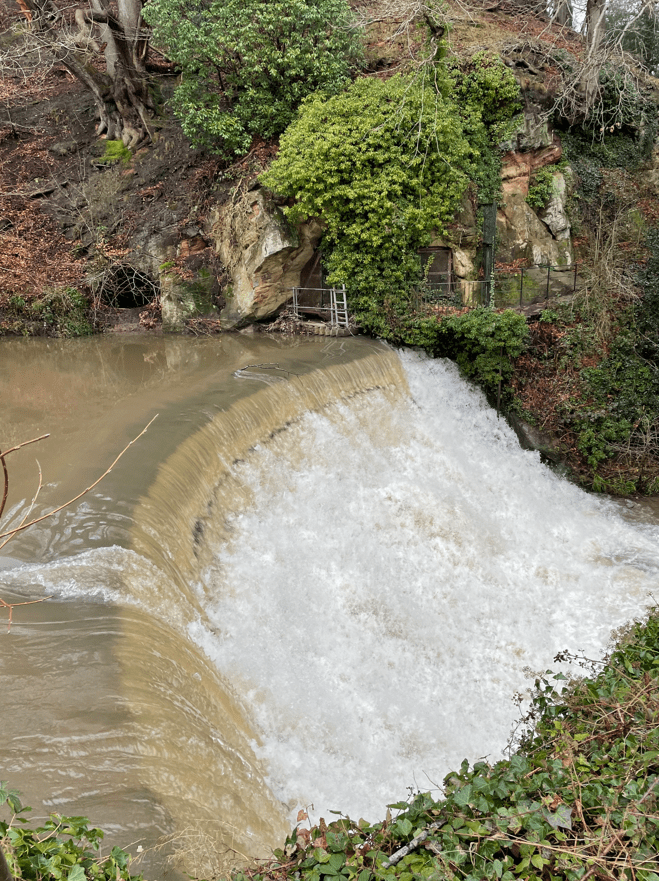
We found out that in 2013 a water turbine was installed that now provides half of Quarry Banks electricity. A fish and eel pass were built to enable salmon to swim up river past the weir once more. A series of channels and sluices moves the water to the giant water wheel inside the mill. The supply of water, especially during the summer months, could be erratic and a large buffer pond was built close to the weir to supply additional water when the river was low. The giant gears that drove the belts powering the machinery were impressive.
The new spinning machines required a steady power input and because trying to control the water to drive the water wheel was difficult, the mill took advantage of innovations in steam power and installed a couple of steam engines to power the machines. We saw one steam engine operating – the second had blown a gasket and was awaiting repair. This tour was a good introduction to the mill. After the tour we headed to the café for a coffee and a breather.
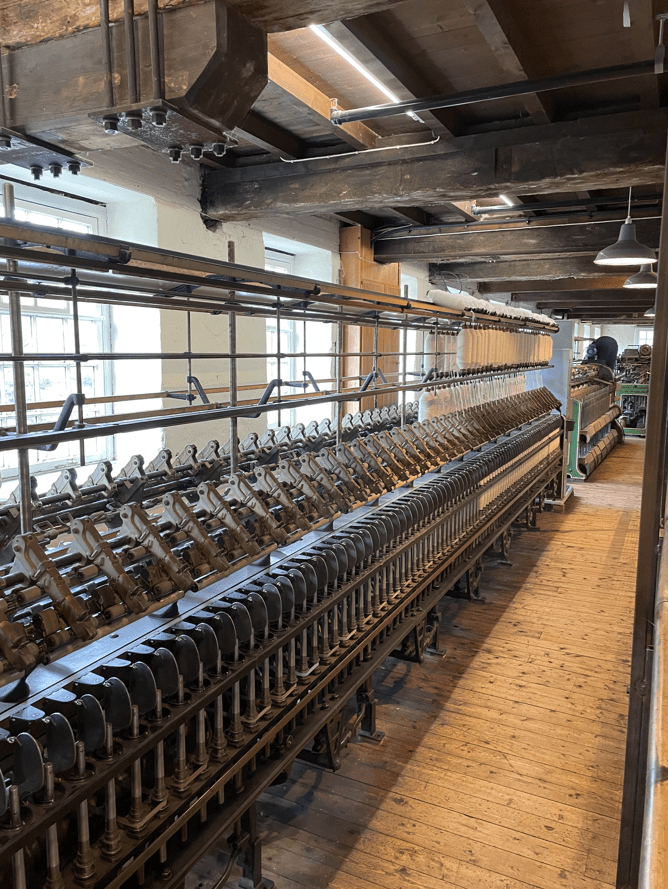
After coffee we went around the mill looking at the various machines used to process the cotton. A volunteer started the carding machine which cleaned and brushed the fibres forming them into thick soft ropes called slivers. It was very loud and gave us an indication of the noise that would have been generated when a number of these machines were operating.
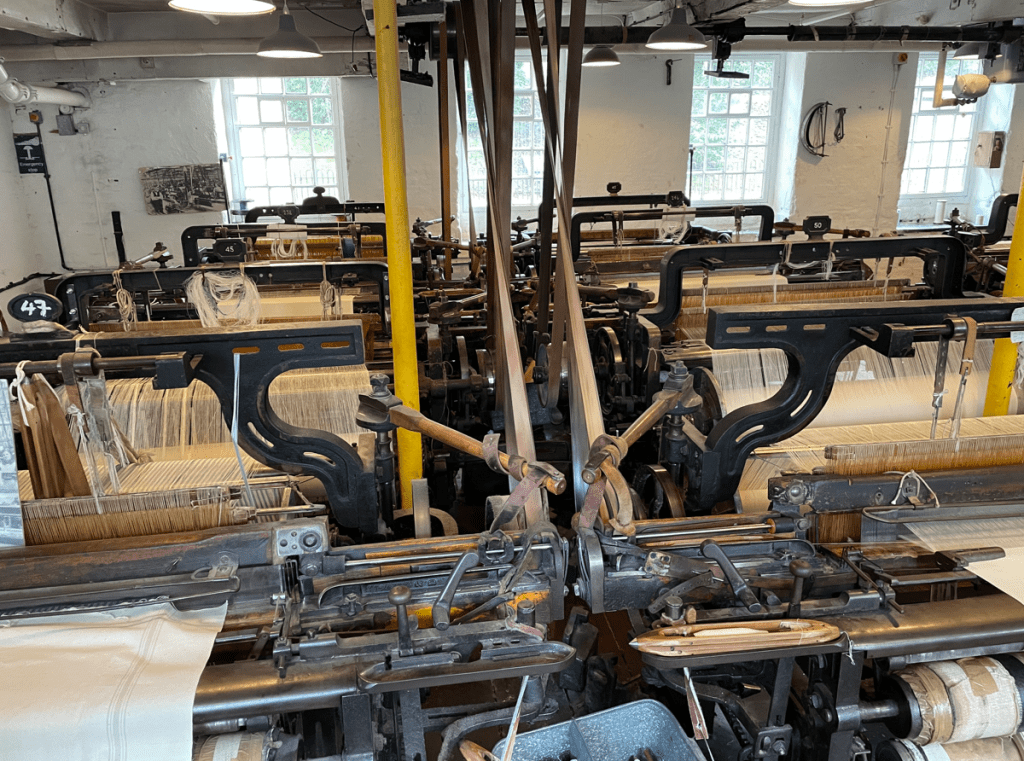
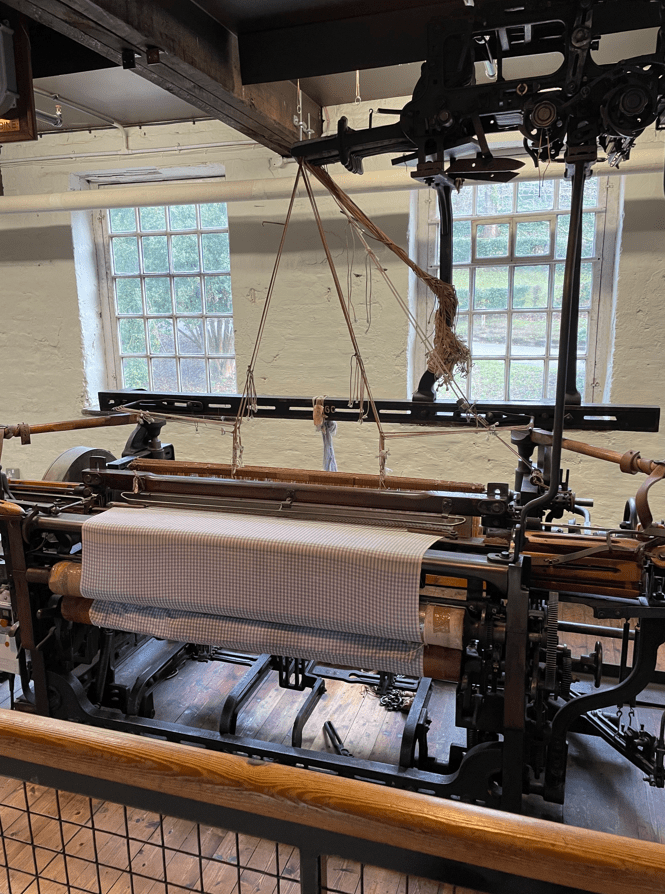
It was fascinating learning about the very hard lives of the mill workers and particularly the apprentices. The mill owner built a house for the apprentices and in 1800 there were 90 children living there. Working 12 hours a day, six days a week they were legally bound to the mill owner until they reached 18 or 21. Robert Greg, Samuels son was now running the mill and he build more houses for the workers, a shop, pub and gardens that provided fresh vegetables. This was a glimpse into the days of our Industrial revolution and this particular mill owner was more enlightened than some.

Having toured the mill we had another coffee and then headed up to the walled gardens where we viewed the restored glasshouse. 7,500 panels of hand- blown Polish conservation glass were used in the restoration.
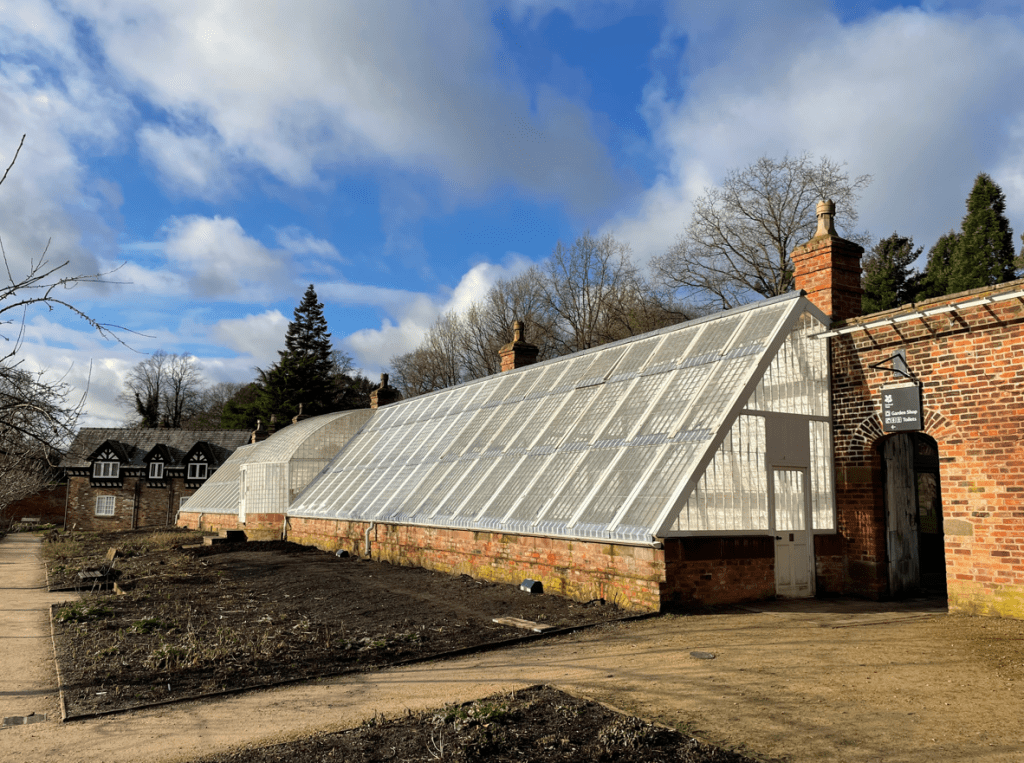
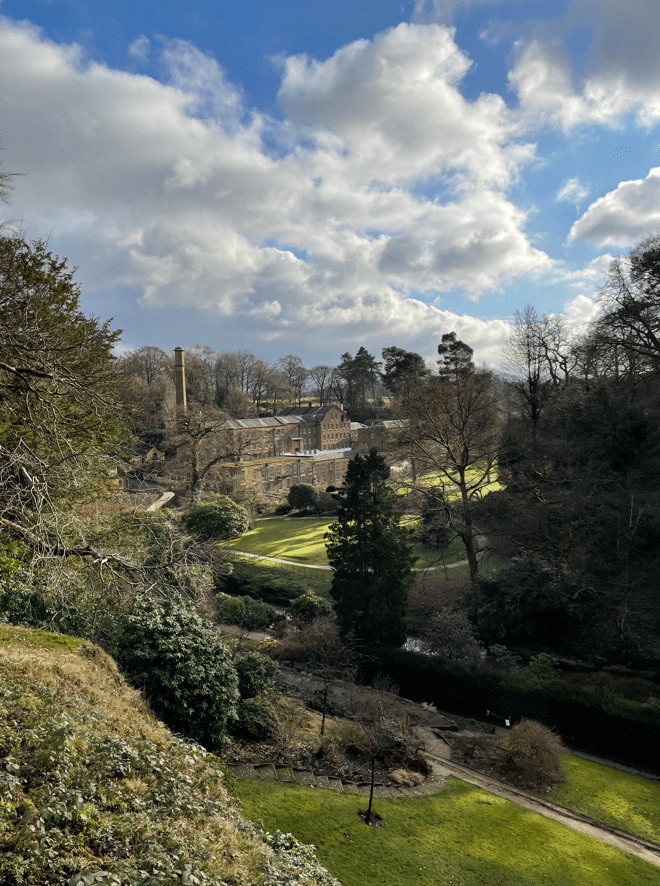
As the gardens are at height we had a nice view down over the mill. A nice café has been built at the entrance to the gardens.
We decided that we would definitely return to view the Apprentice house/ garden, Styal village and see if we can do that walk we had planned.
Happy Walking! 😊🚶






 My Walking Journeys