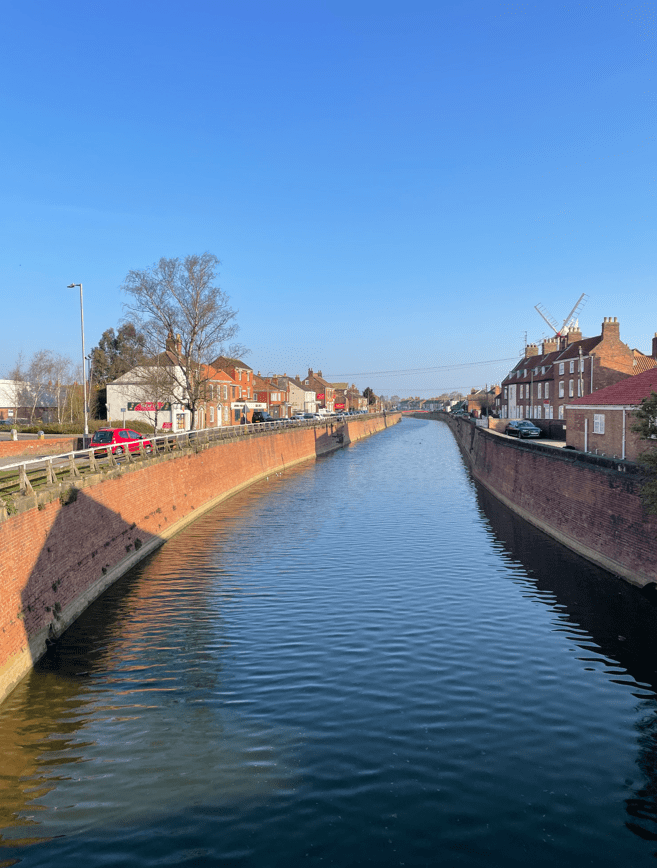
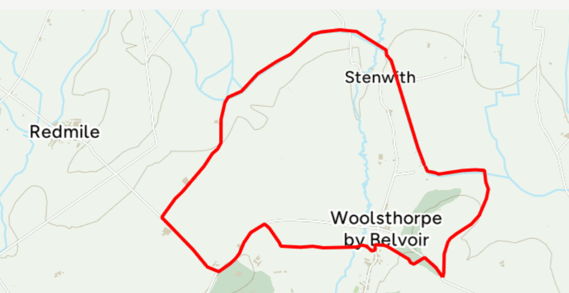
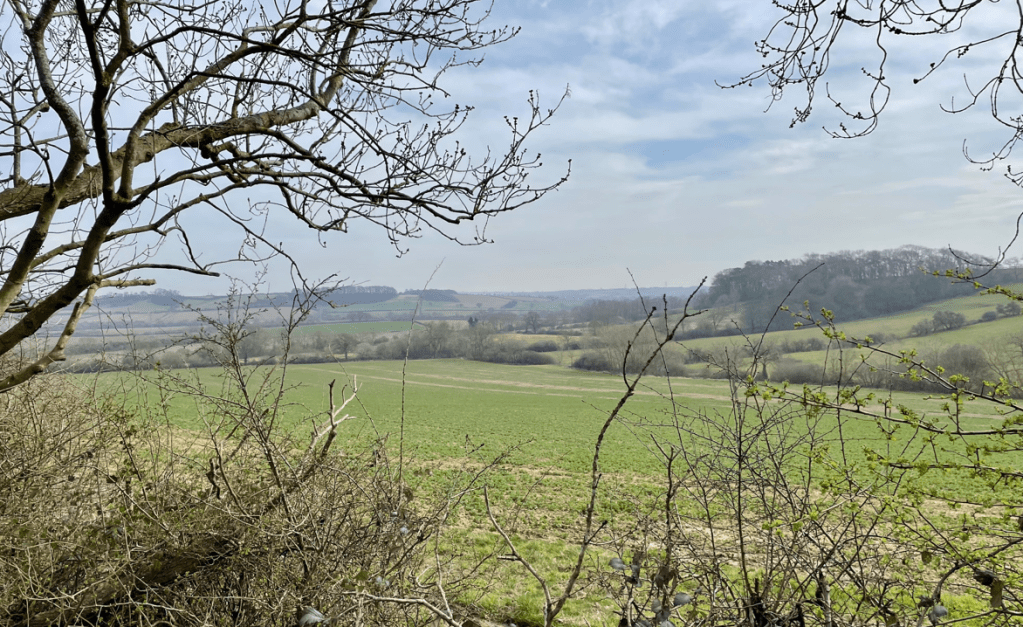
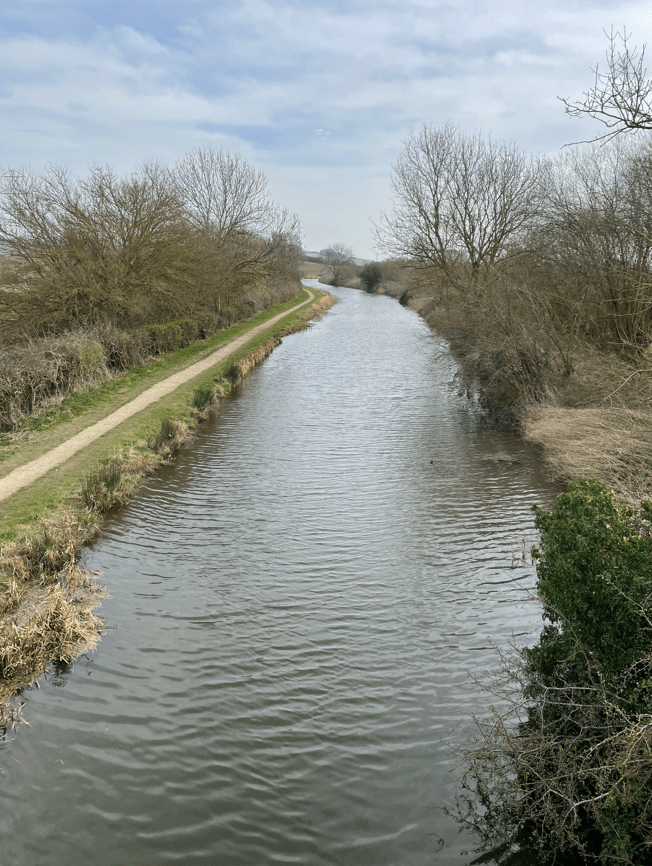
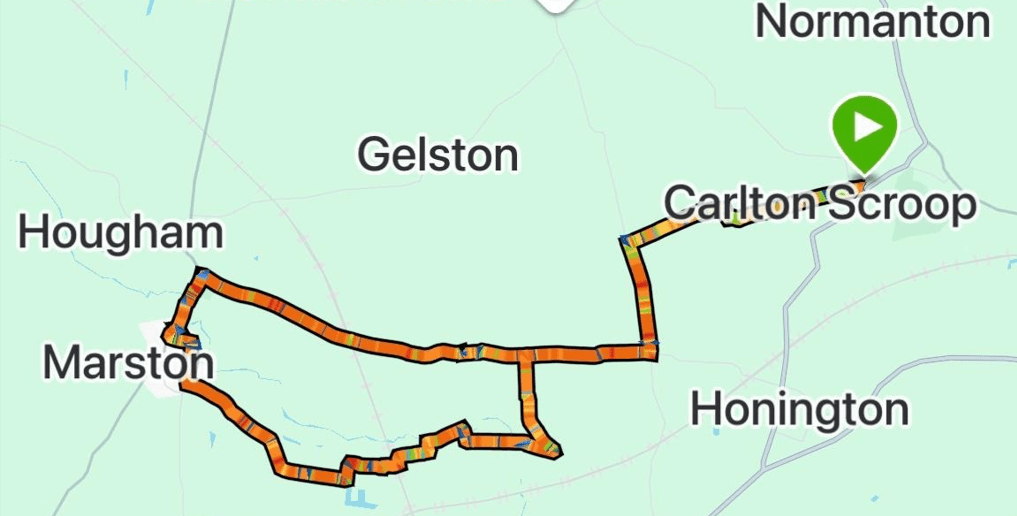
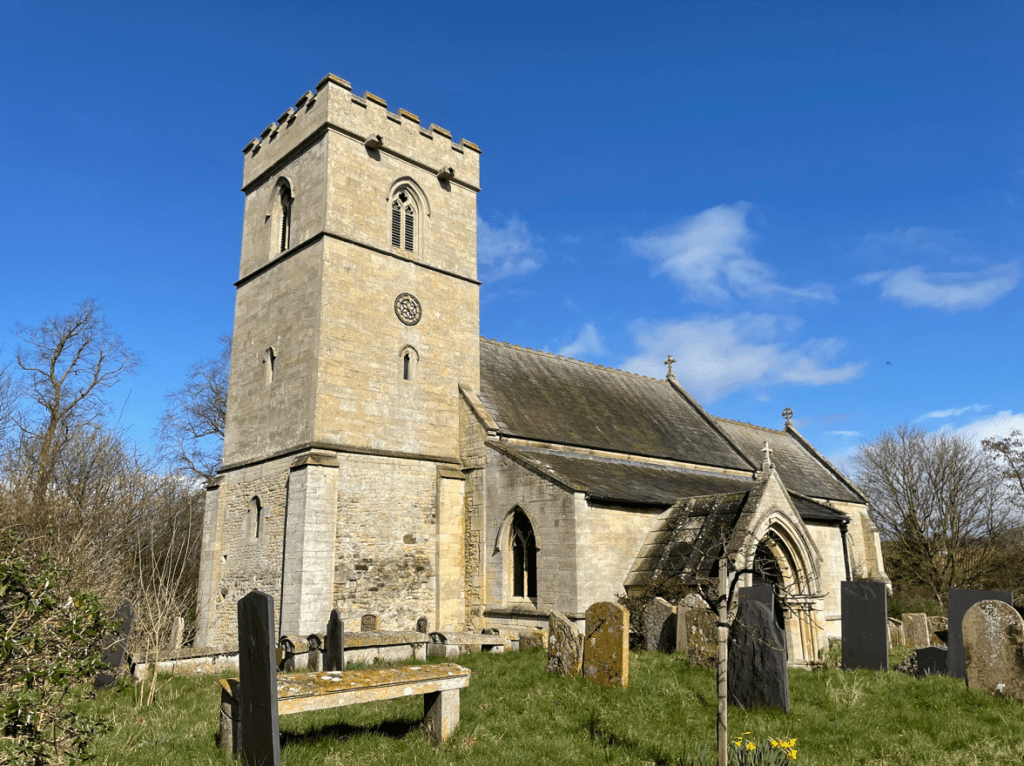
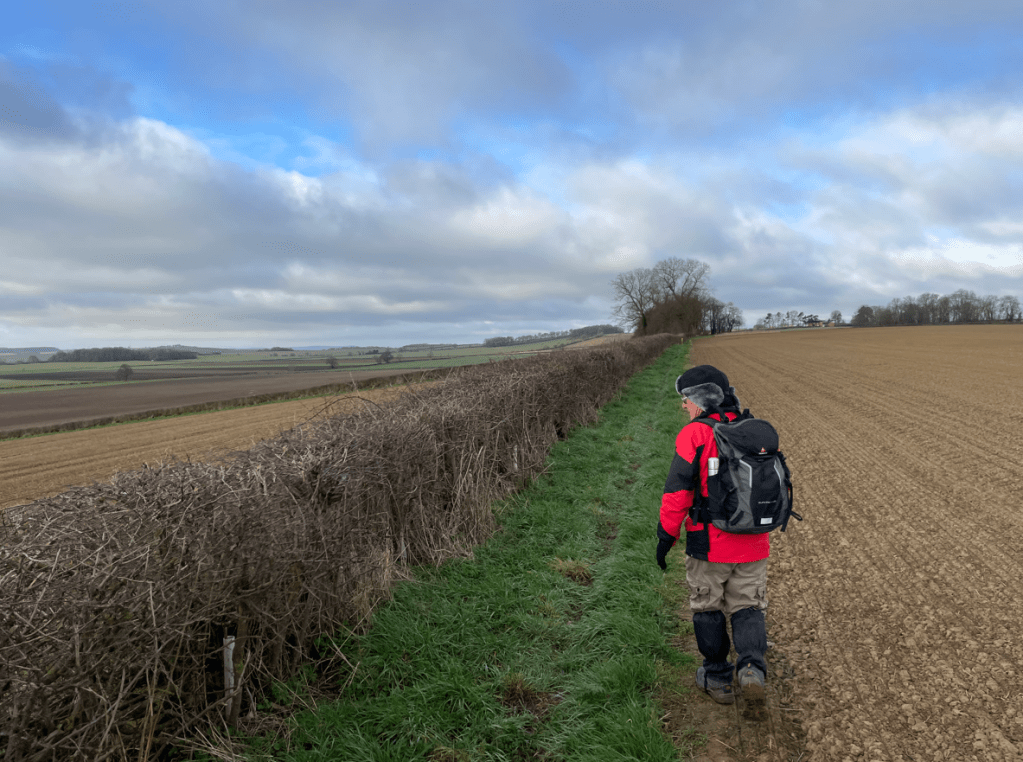
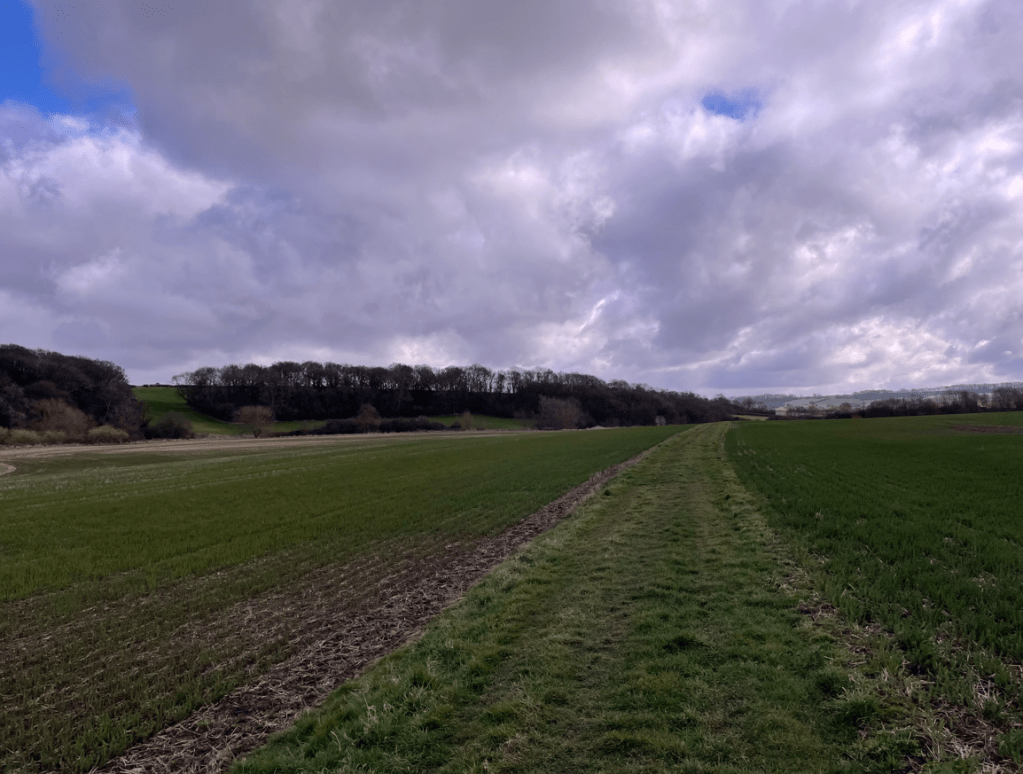
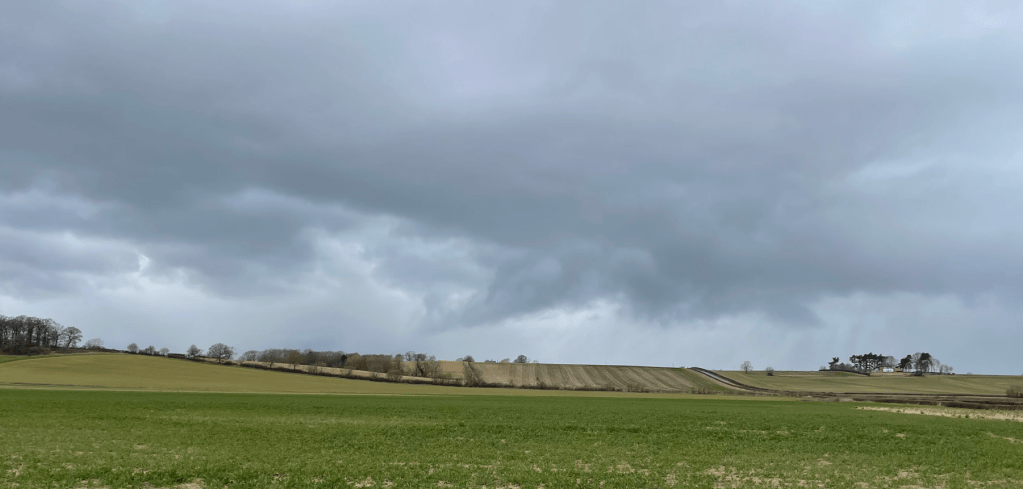
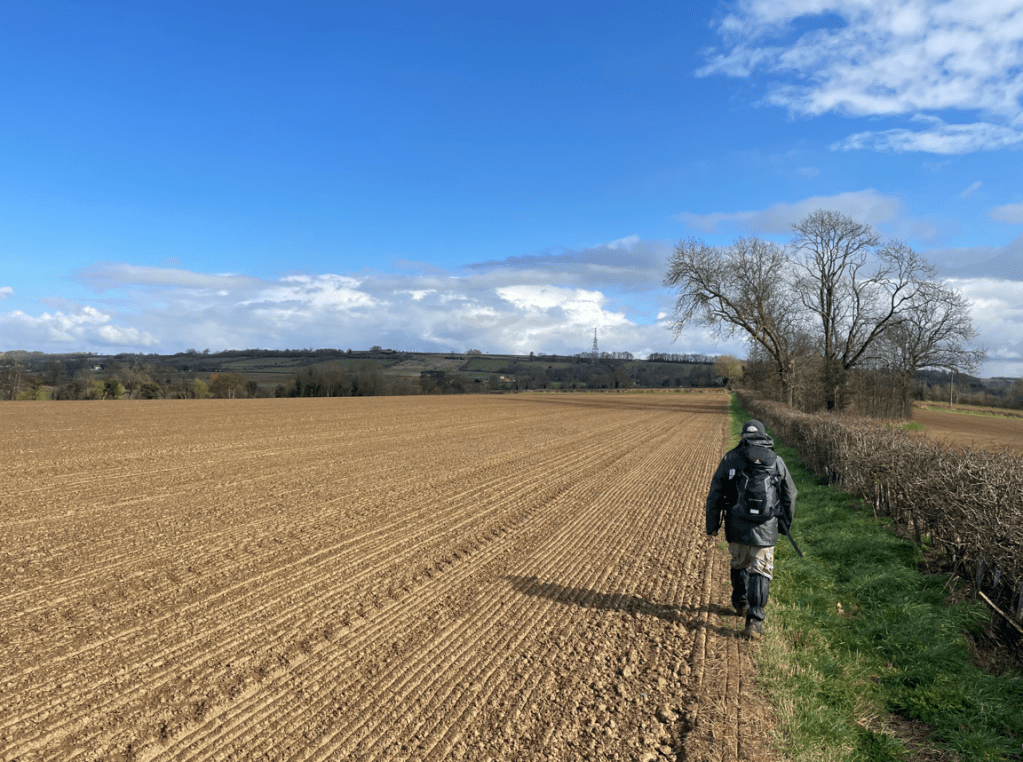
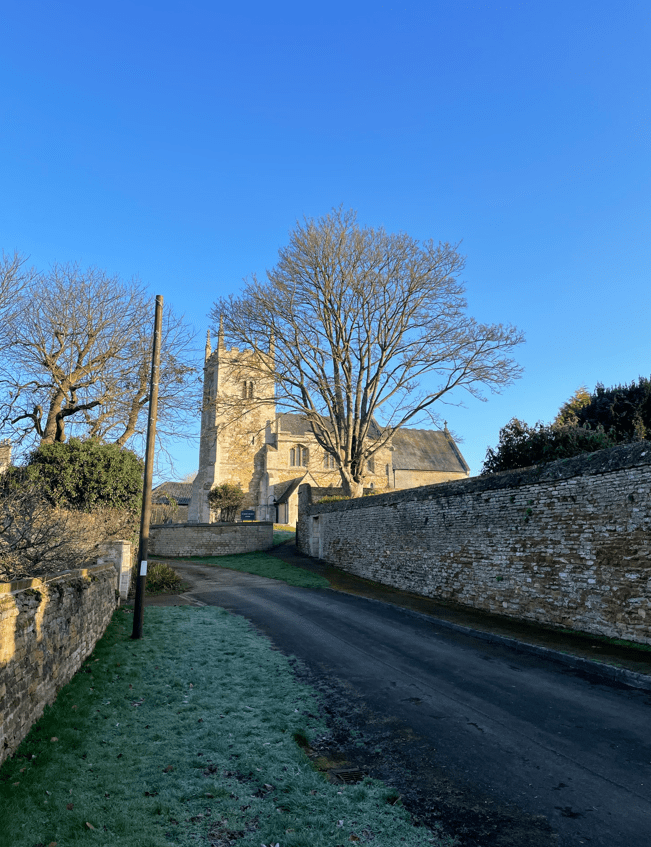
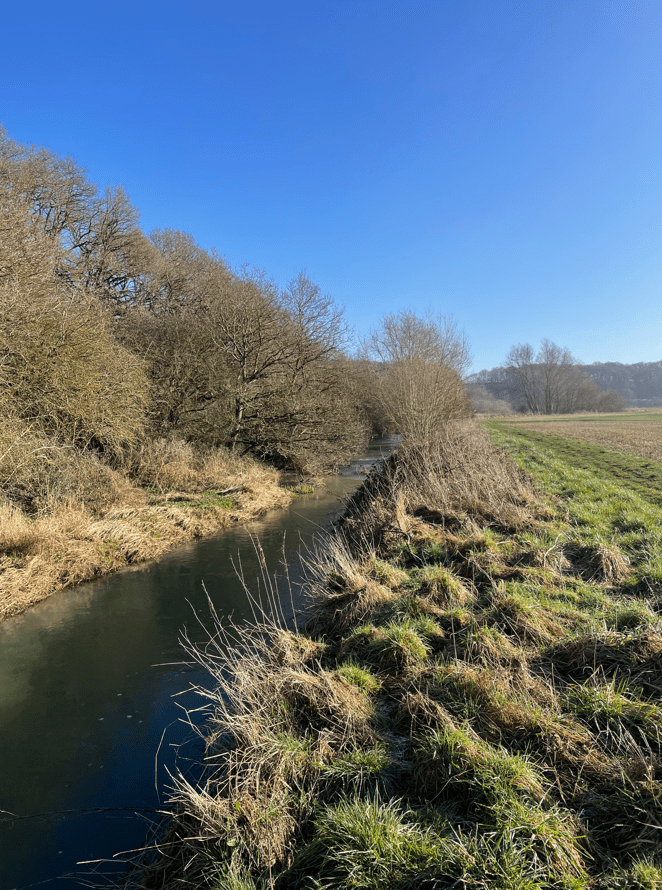
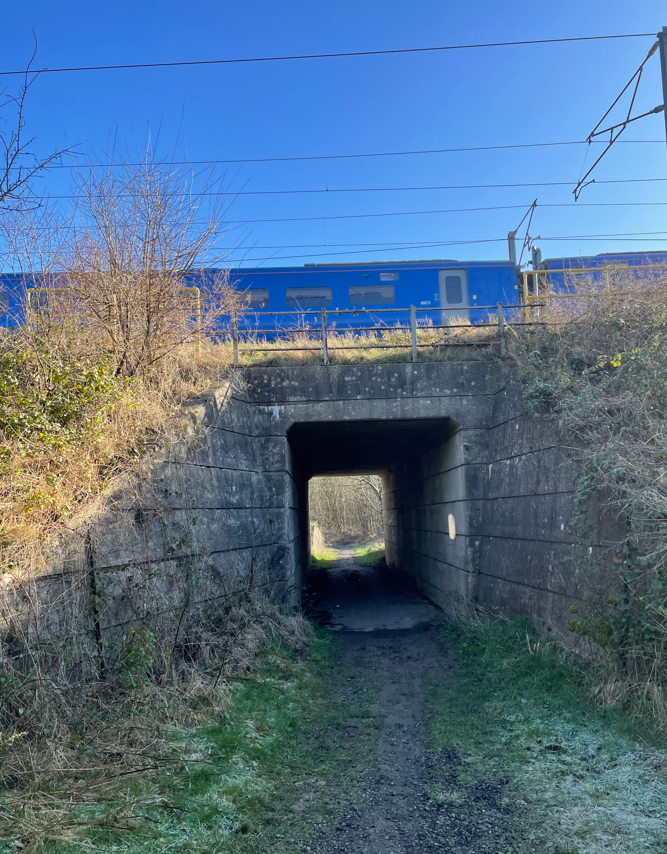
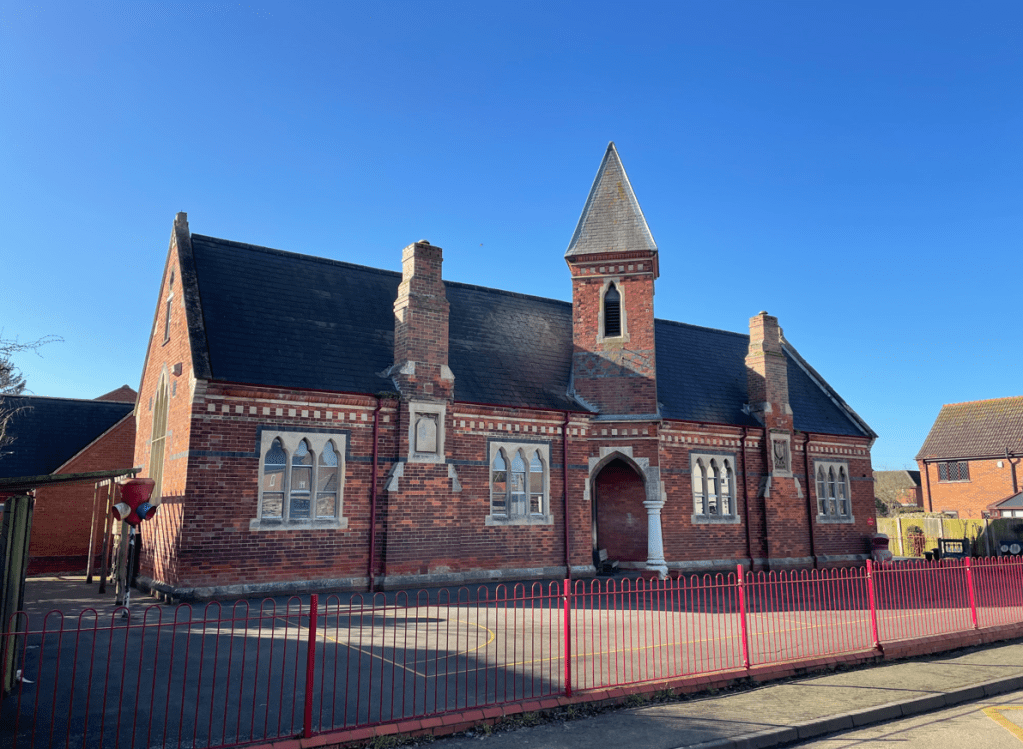
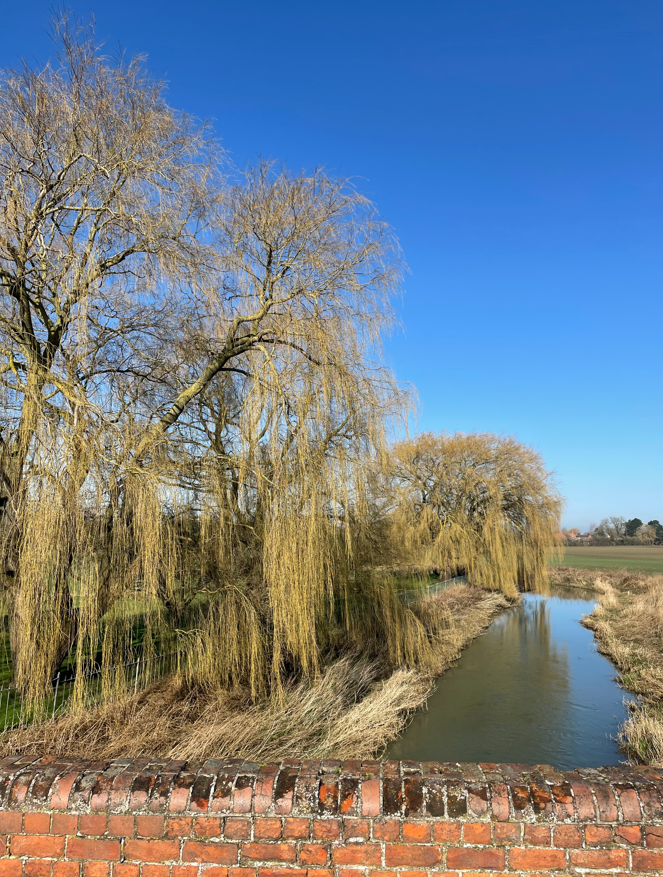
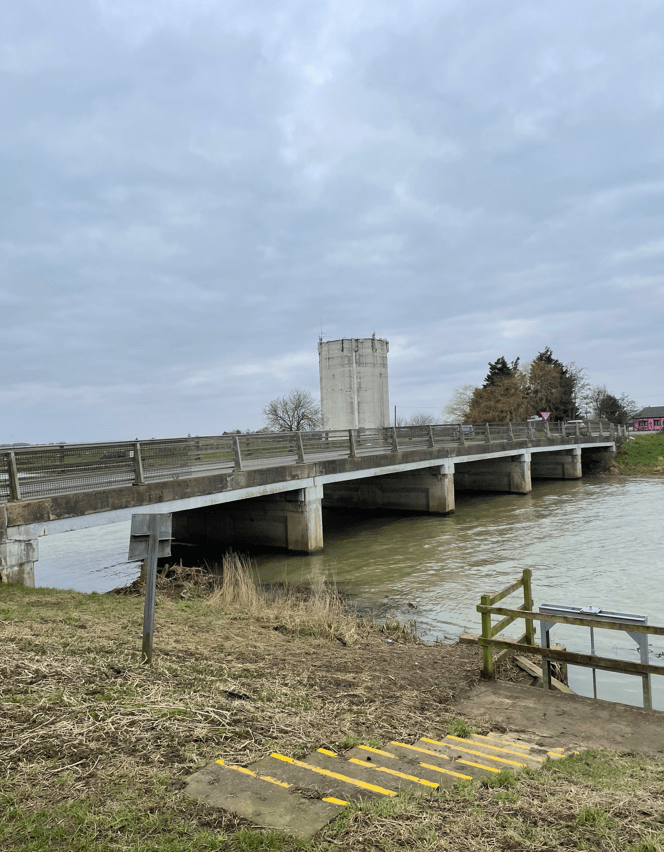
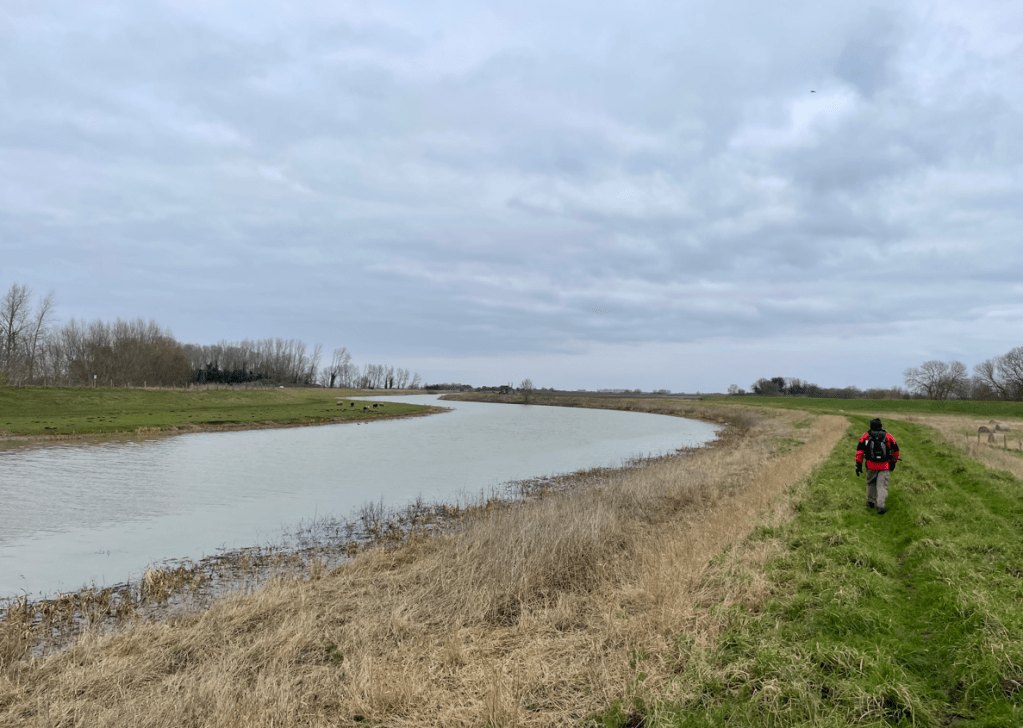
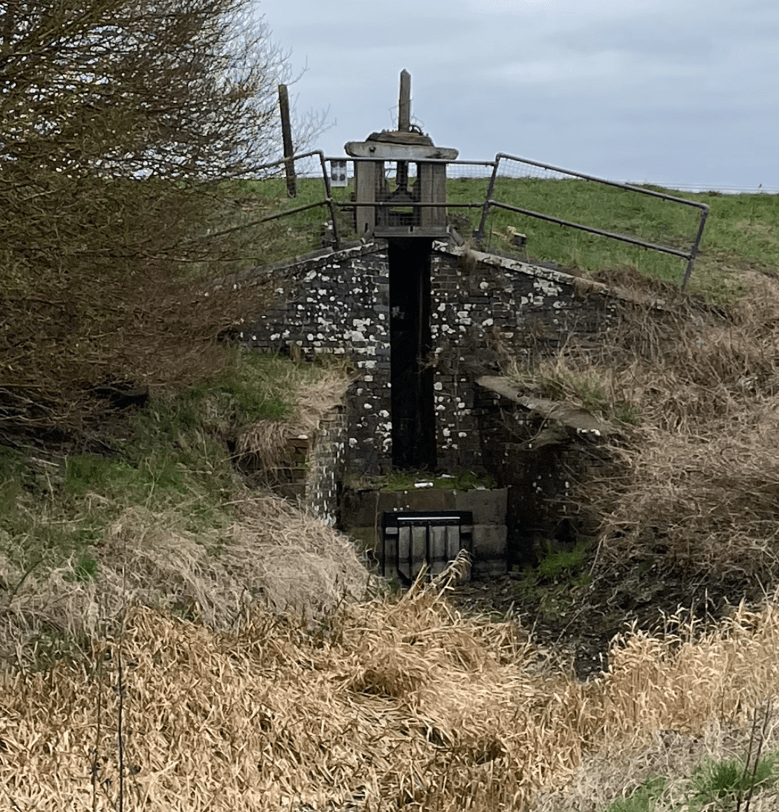
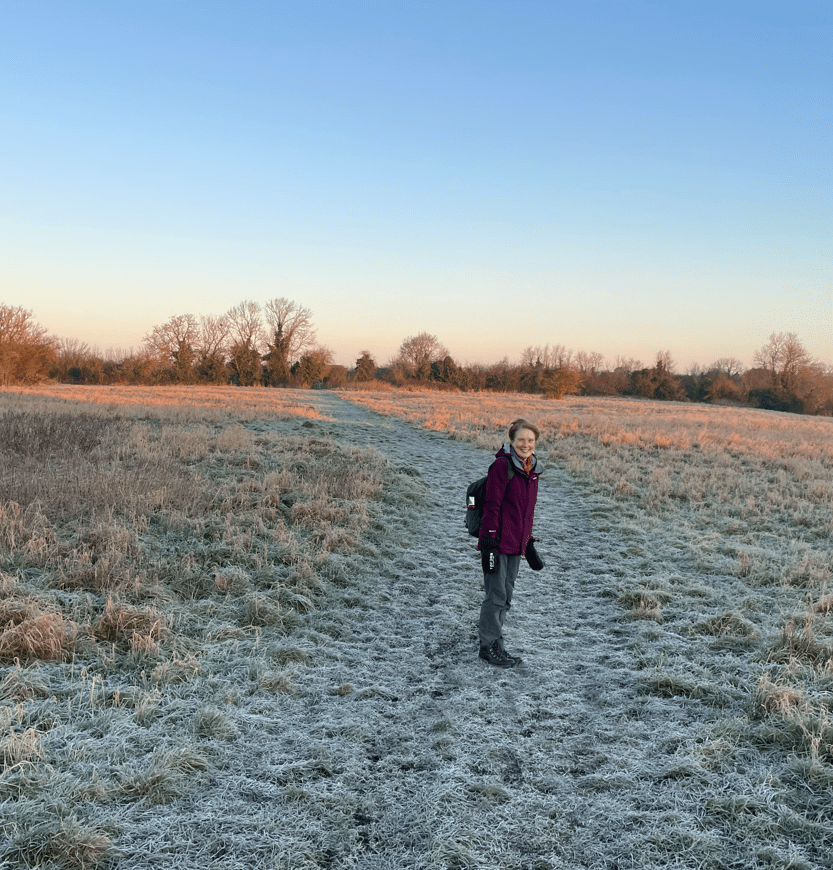
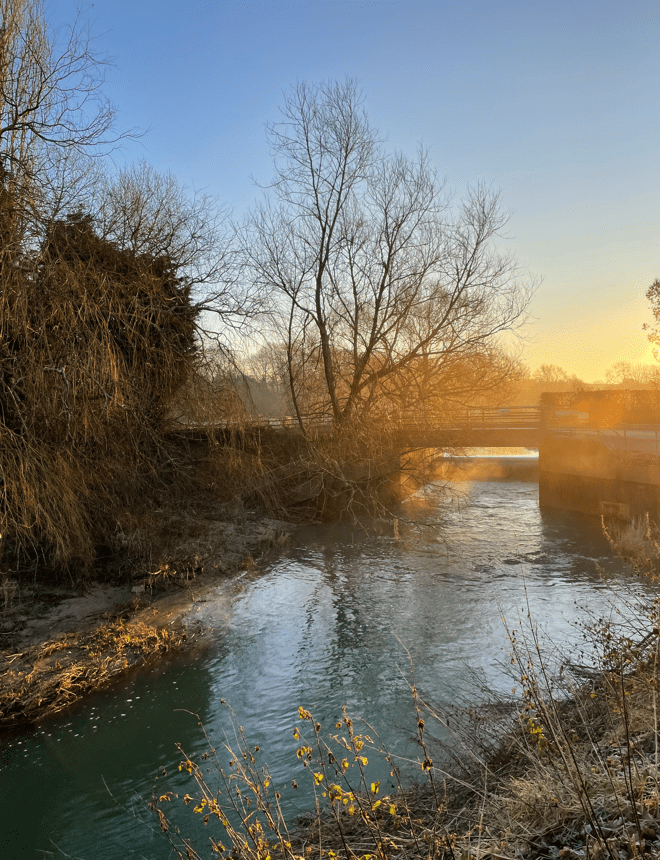
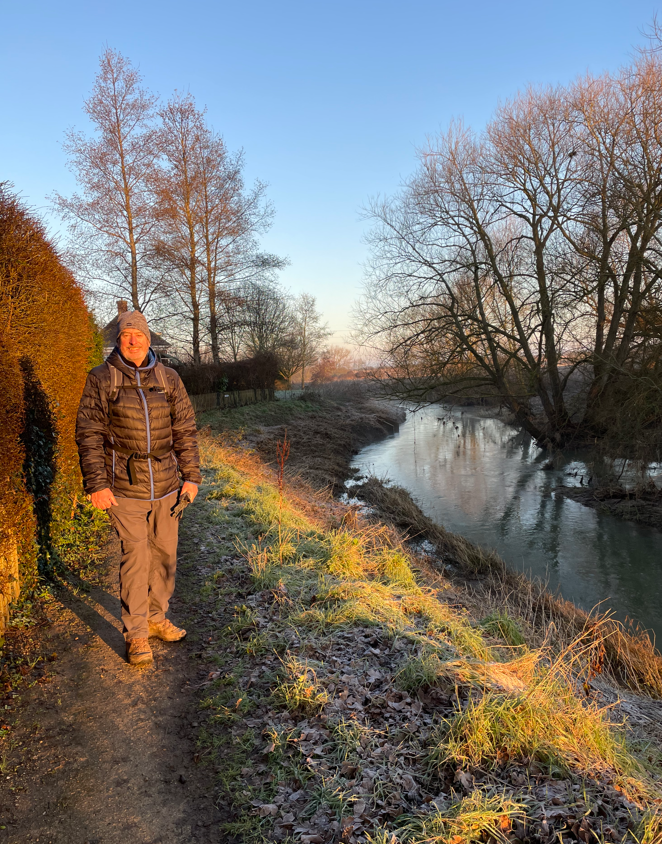
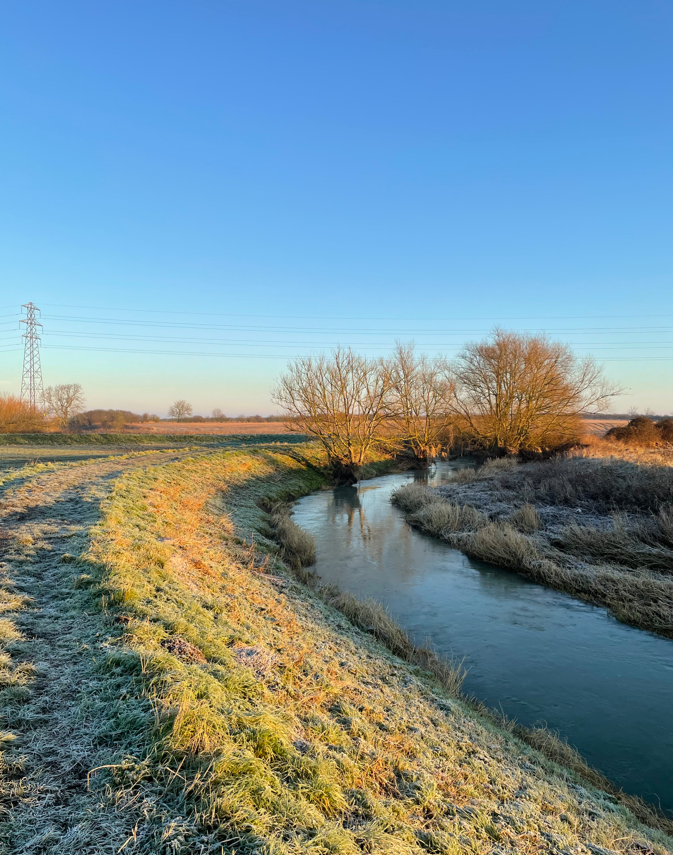
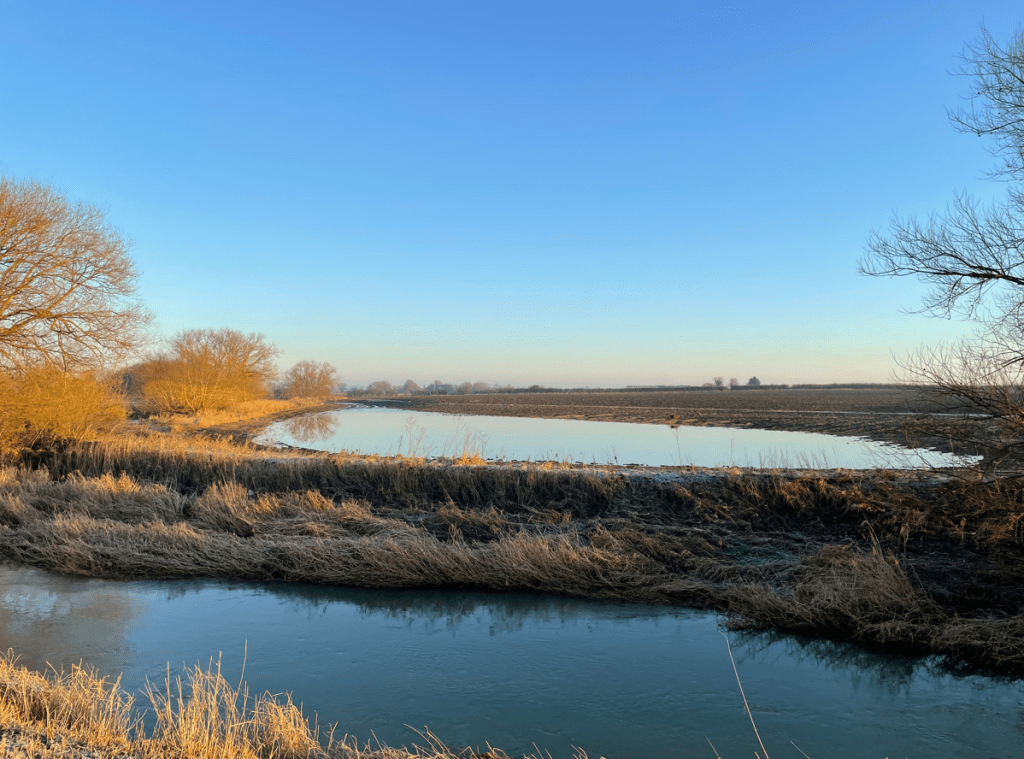
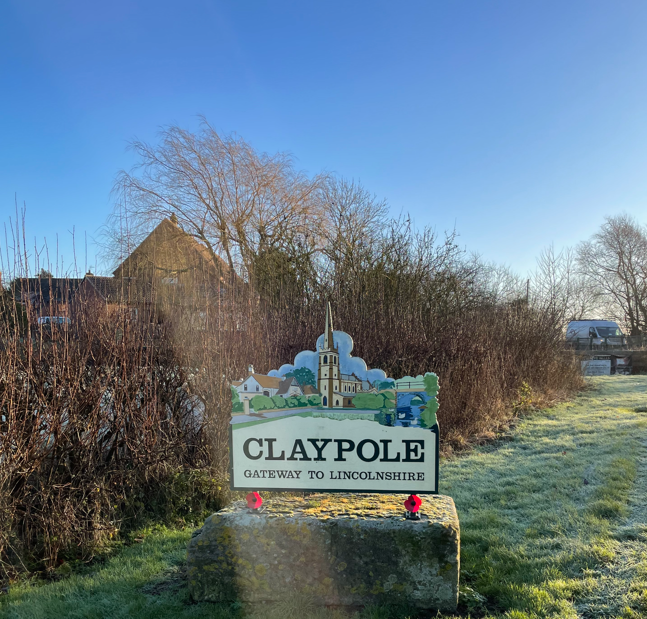
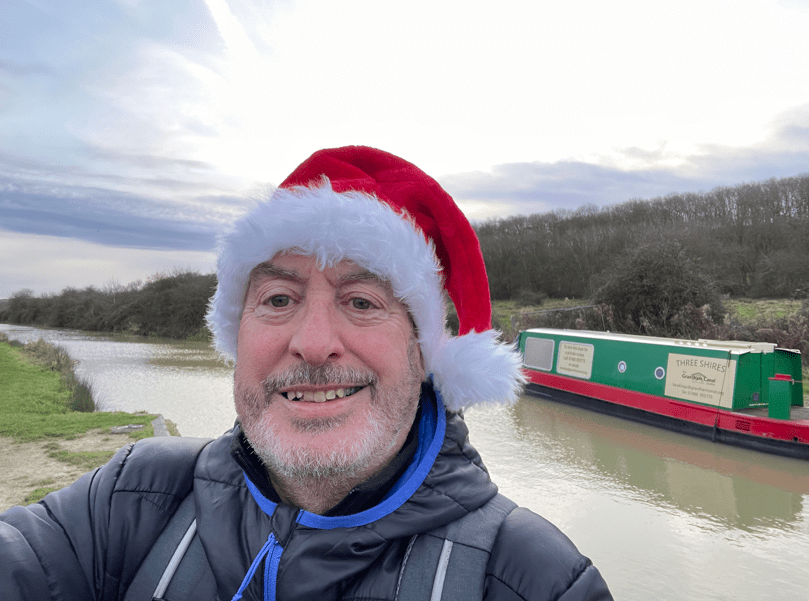
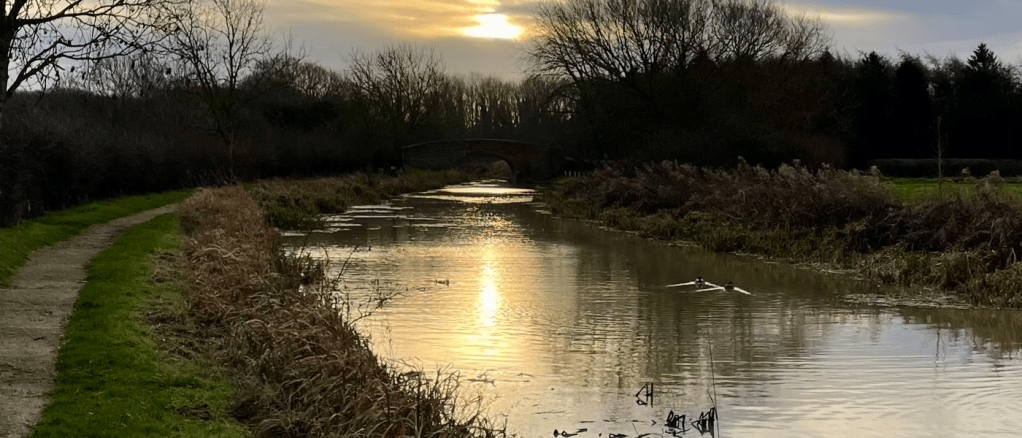
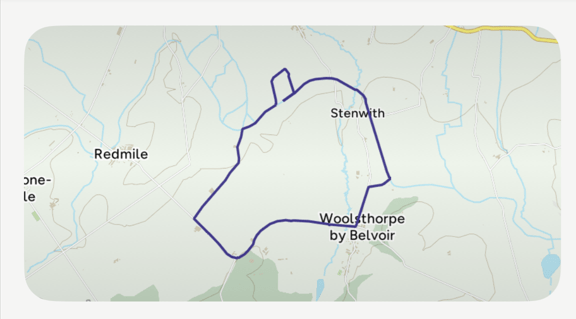
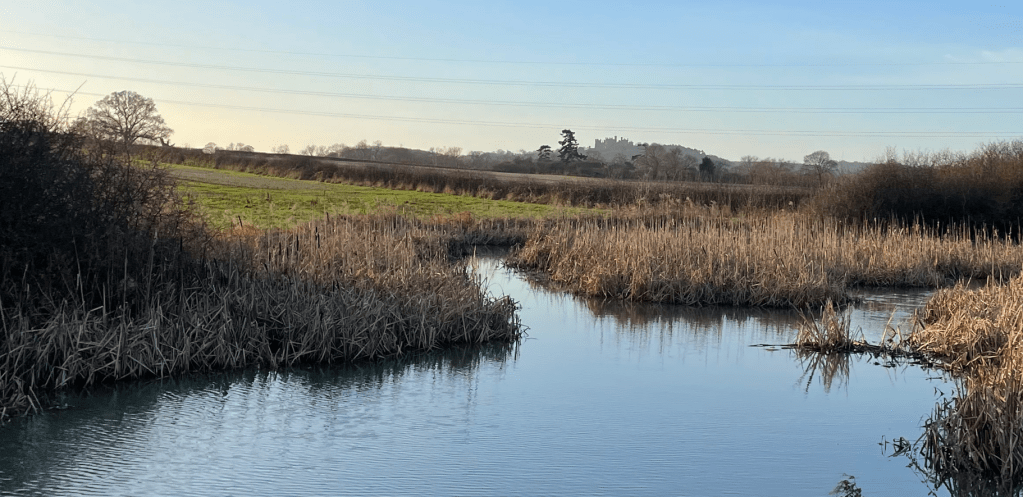
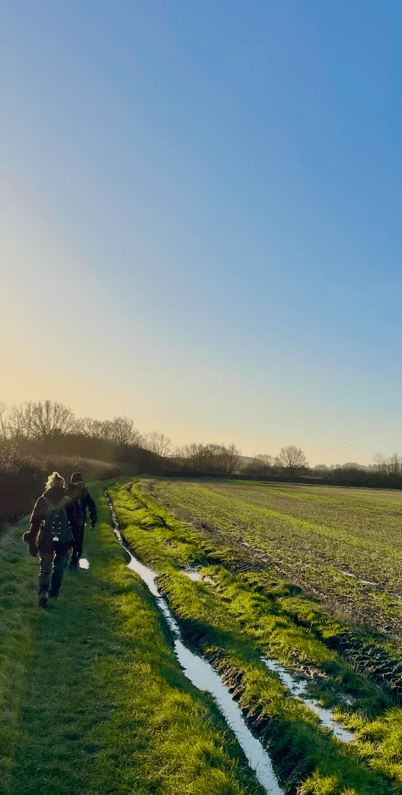
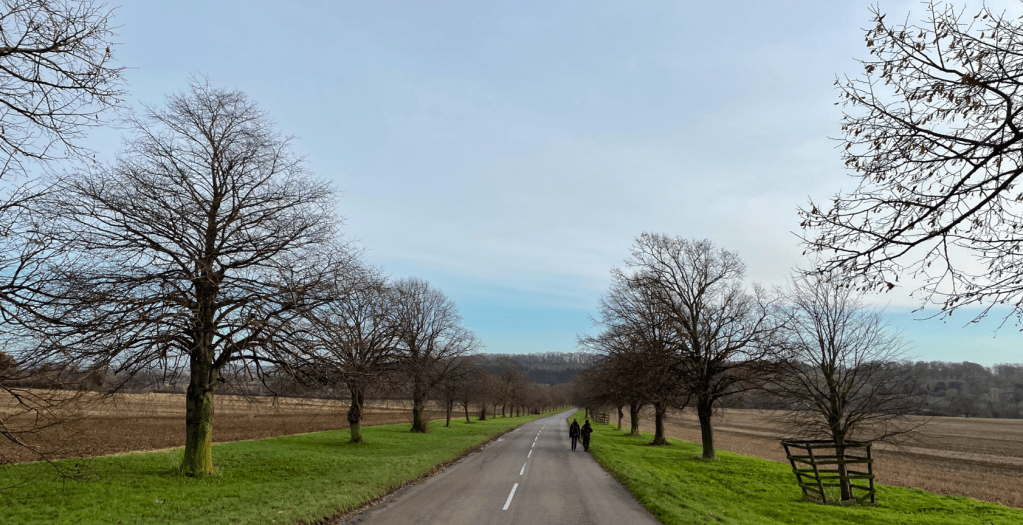
Today ‘The Three Amigos’ met up at Woolsthorpe and enjoyed a 9-mile circular walk taking in the Grantham Canal, Denton reservoir and the Sustrans cycle trail that was once the Ironstone Ore railway line.
It was a chilly start to the day following on from many rainy days that has resulted in flooded fields and roads. I arrived at Woolsthorpe to find that Mick and Chris had already arrived and were busy getting their boots on. Both were recovering from bouts of the dreaded lurgi but clearly were keen to get walking. I took some abuse from them about being late, although, in actual fact, I was 10 minutes early π.
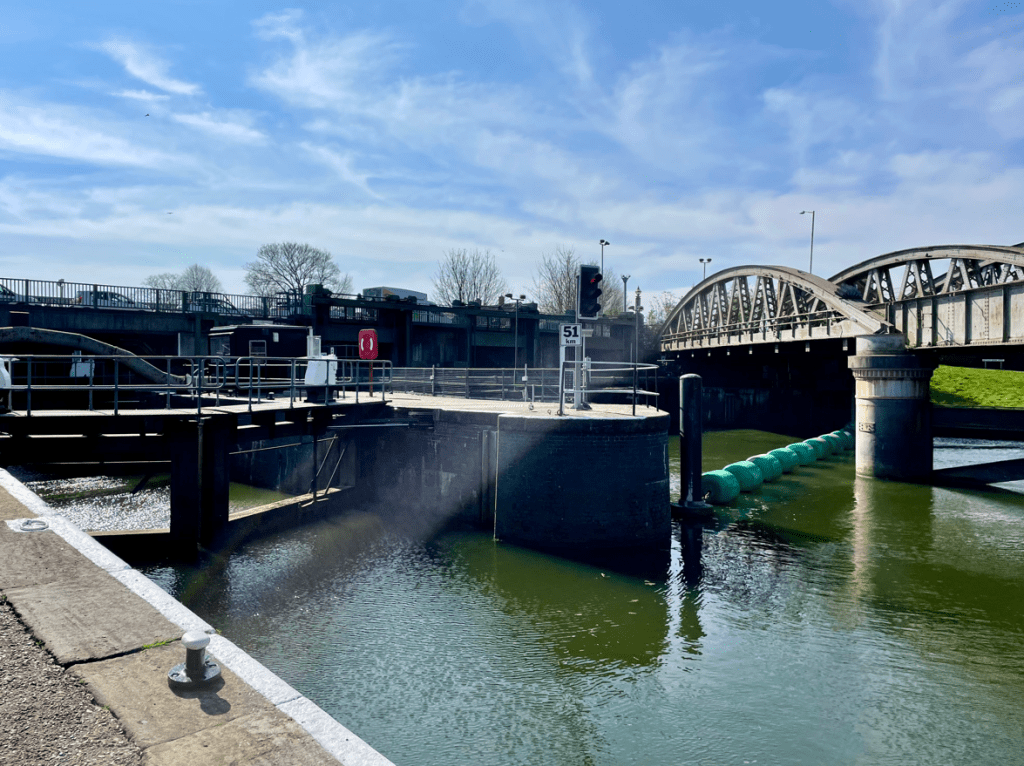
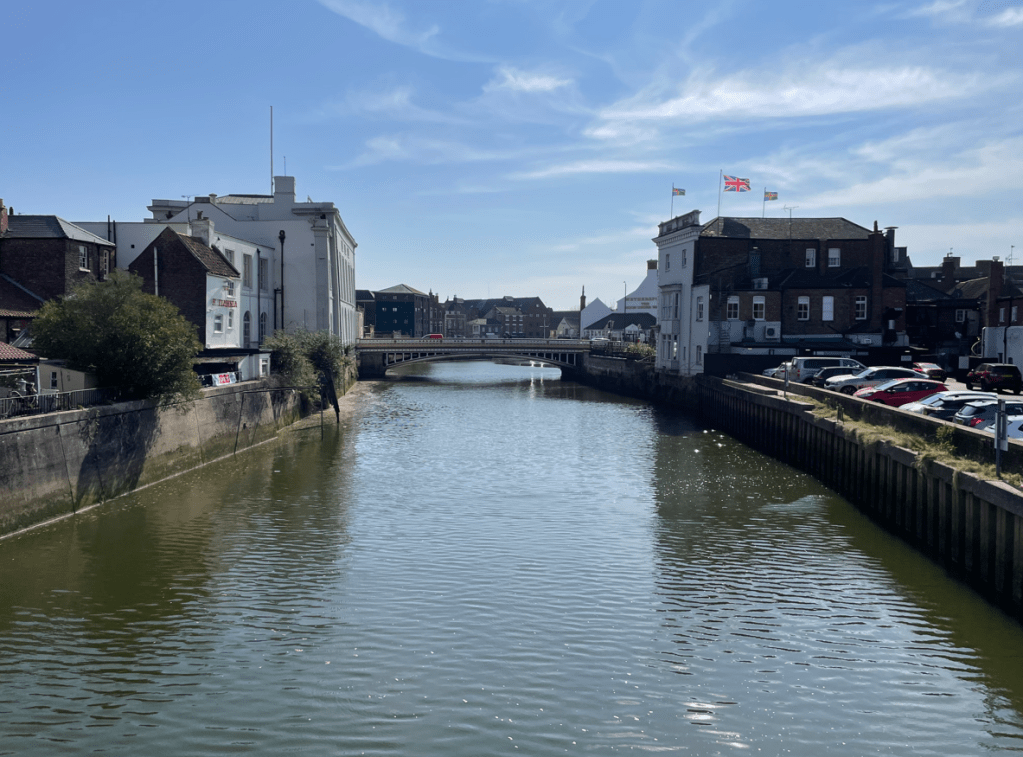
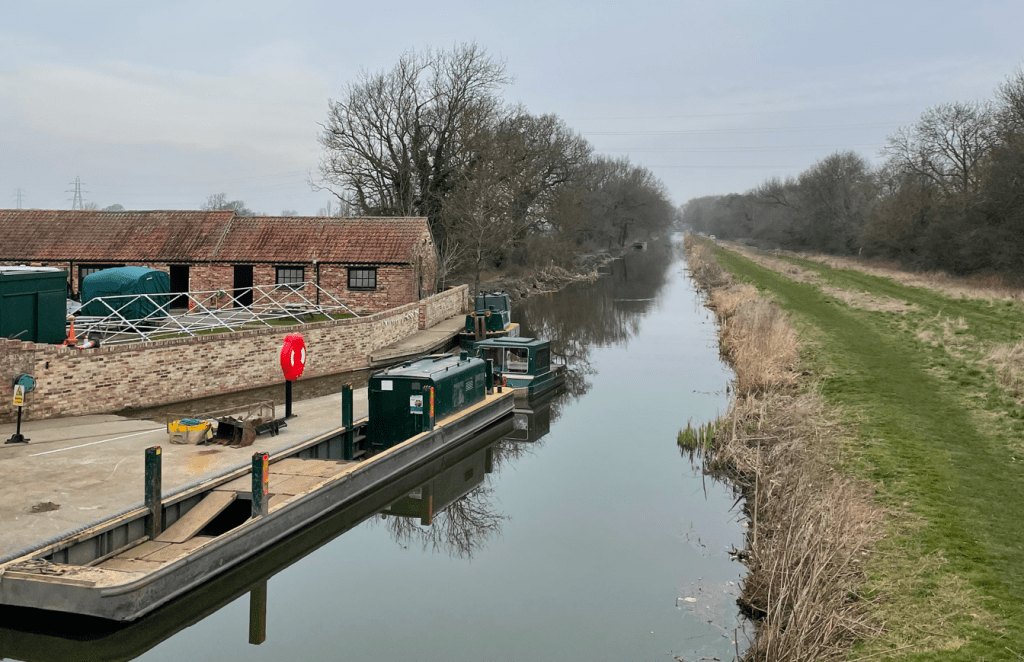
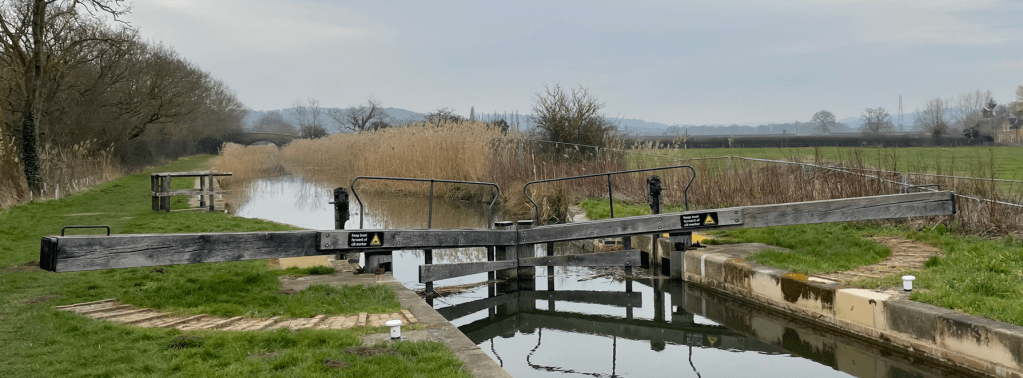
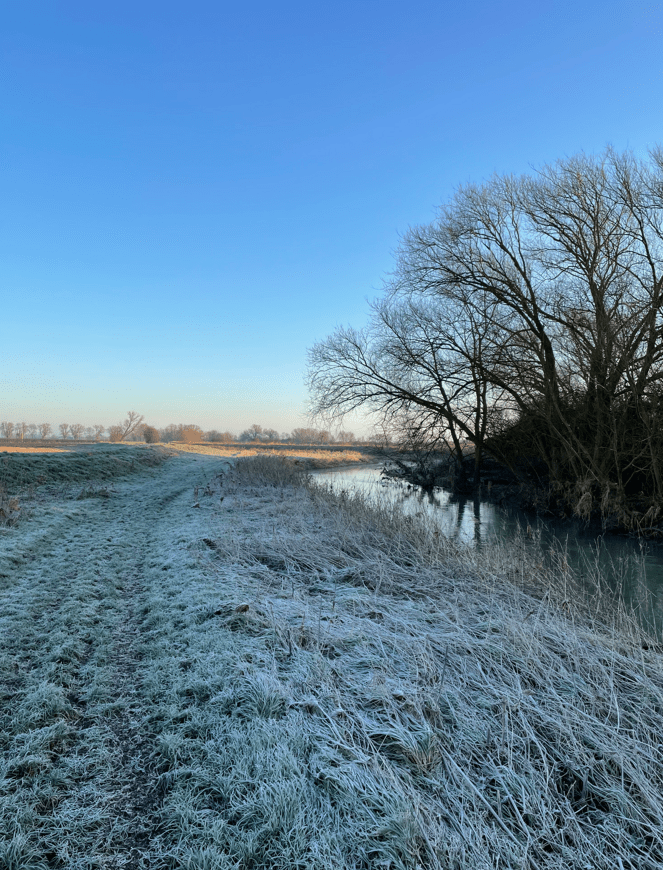
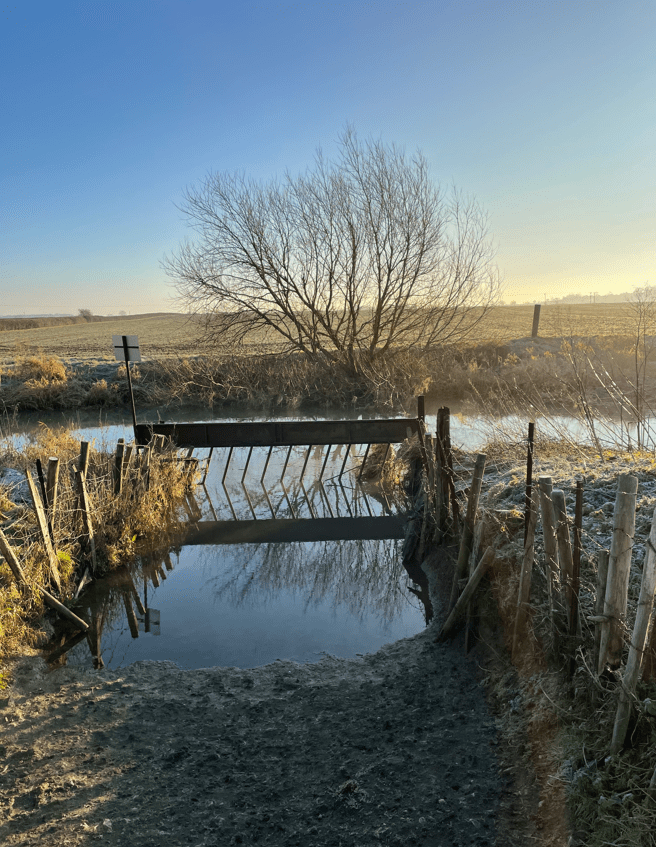
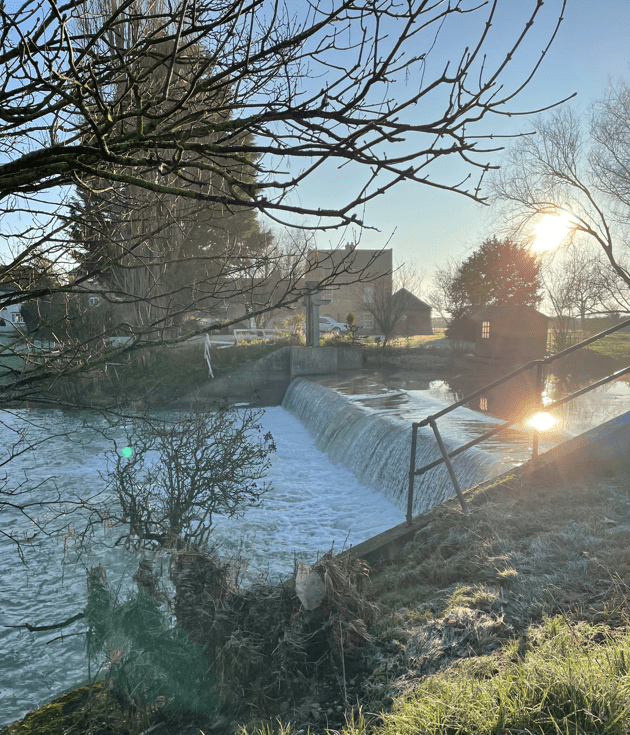
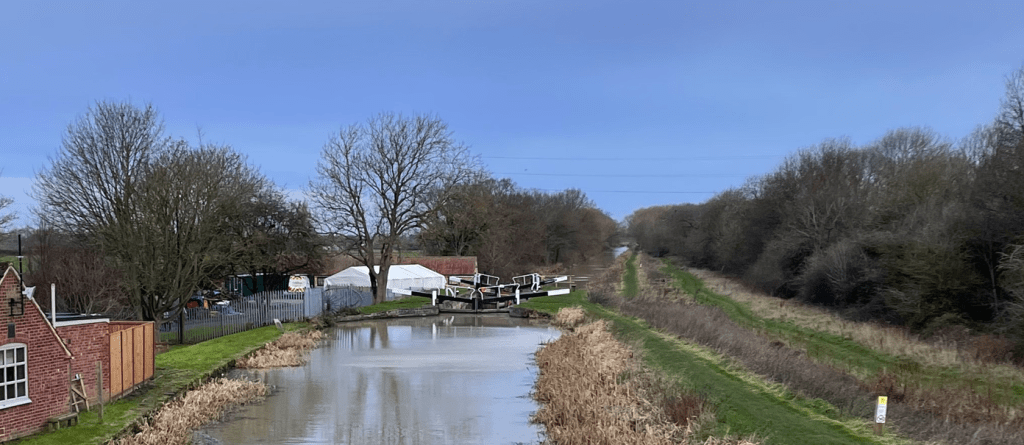
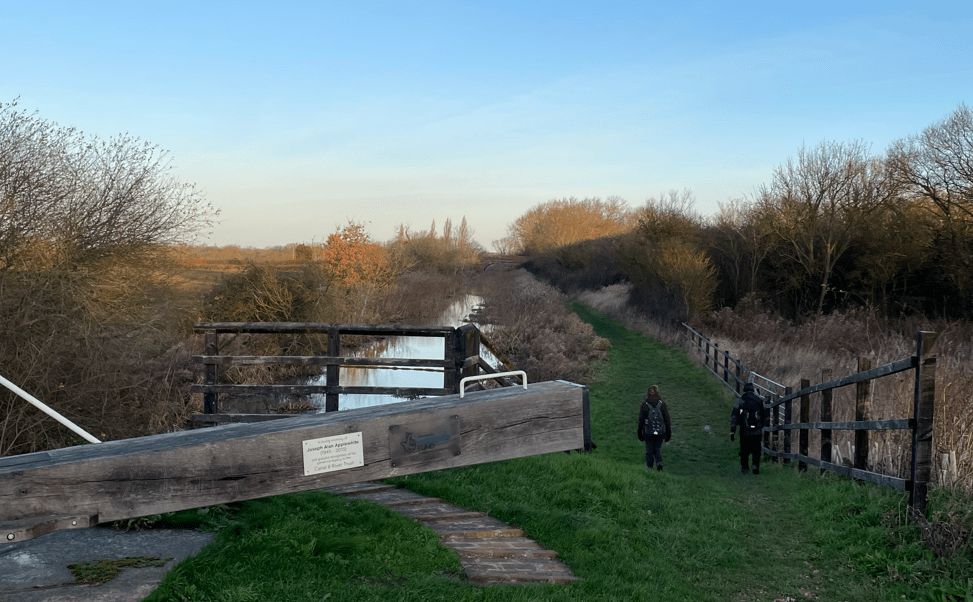
View of lock 16
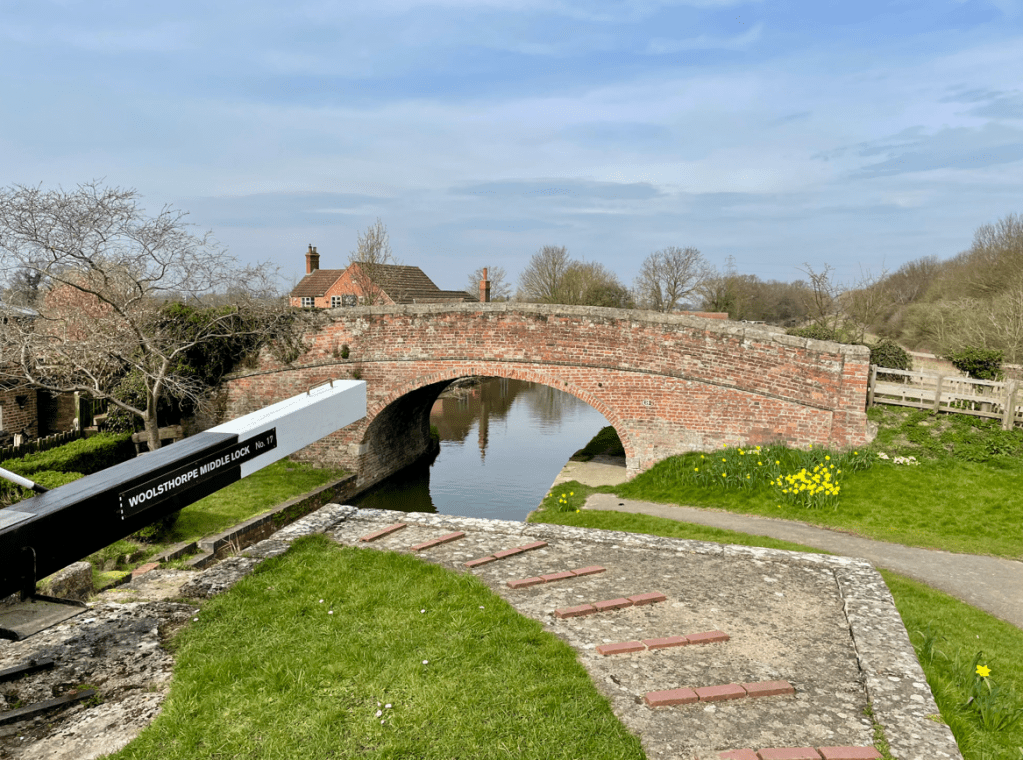
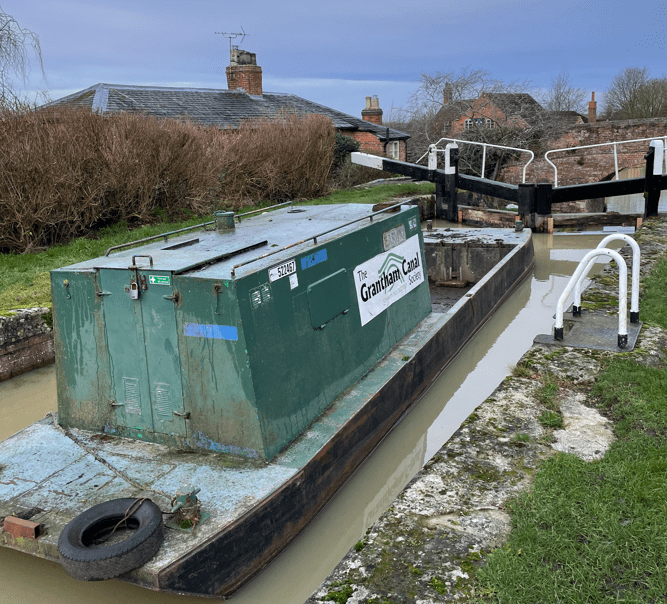
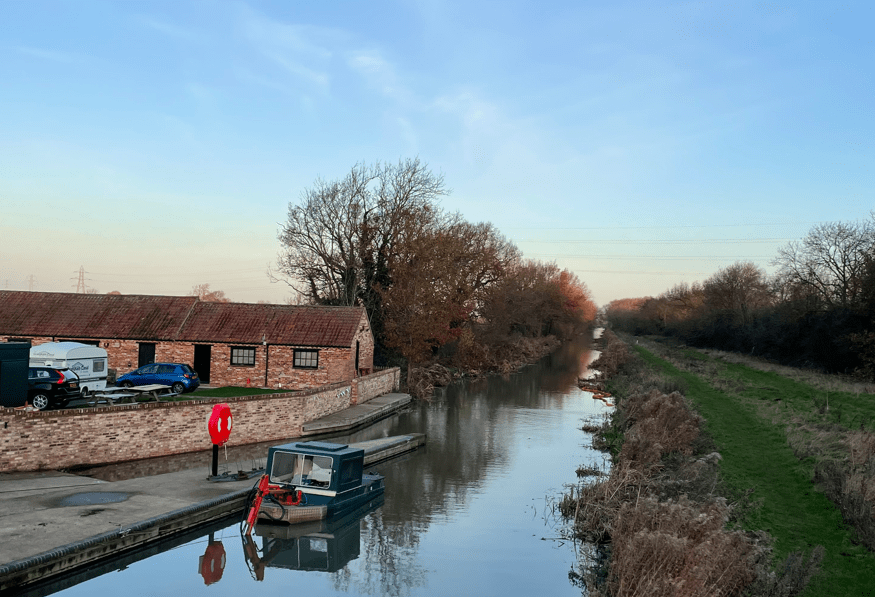
We walked past lock 17, heading for Harlaxton, noting that the lock was full of water for a change.
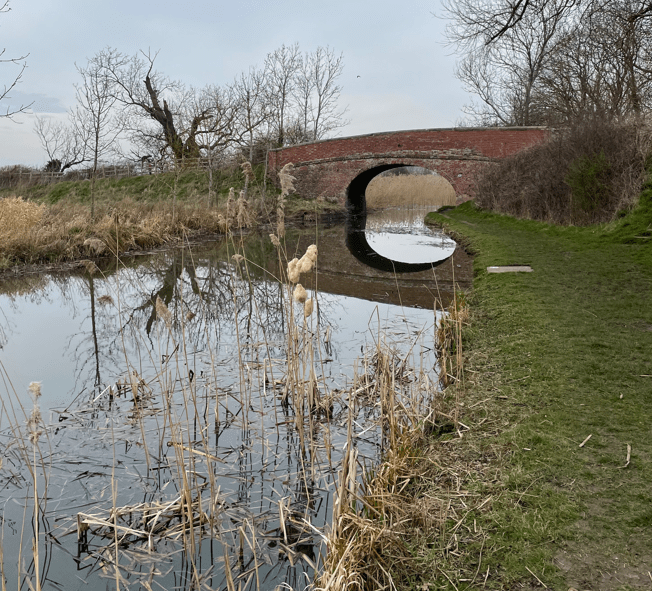
Lock 17 and the boat Earwig
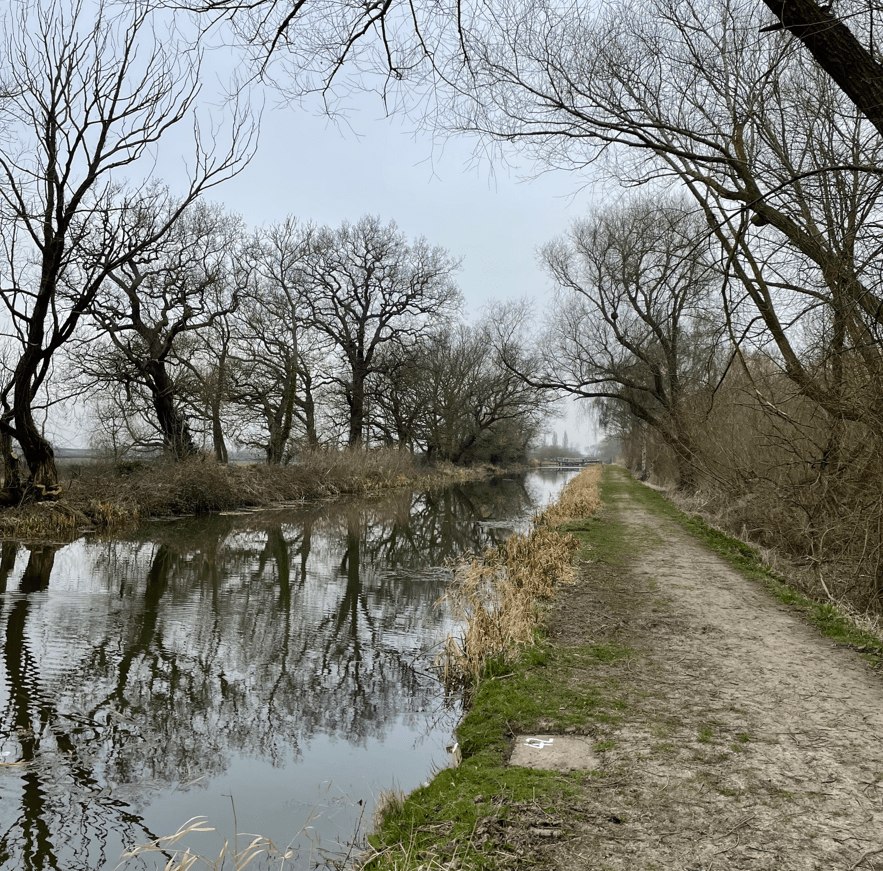
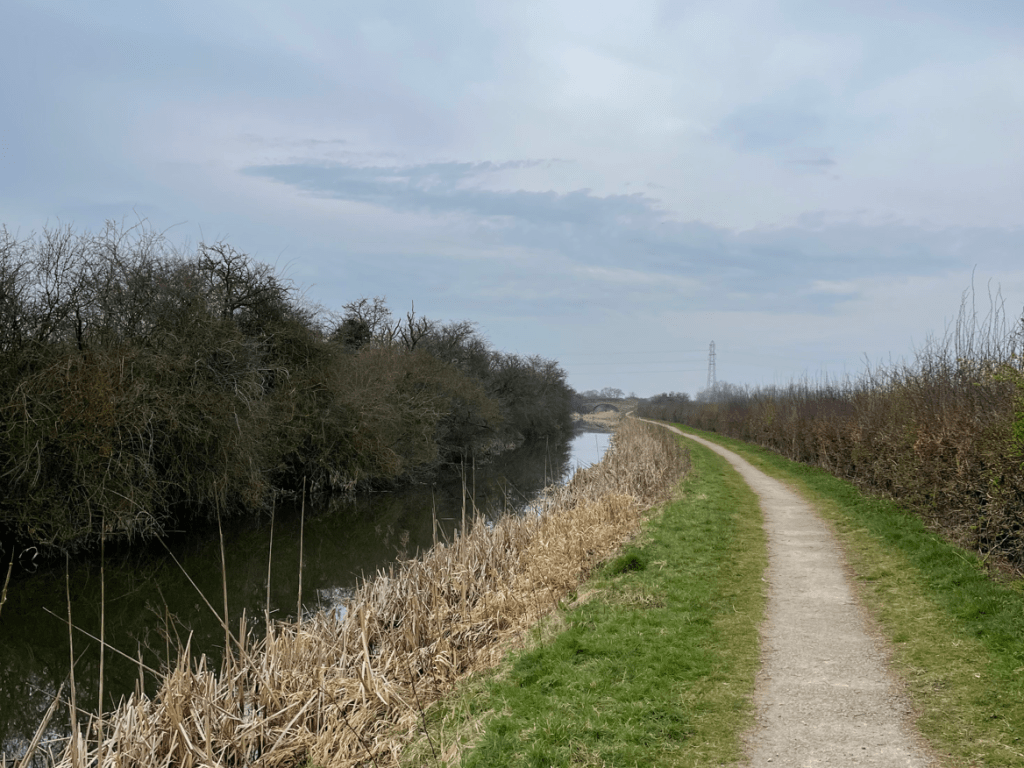
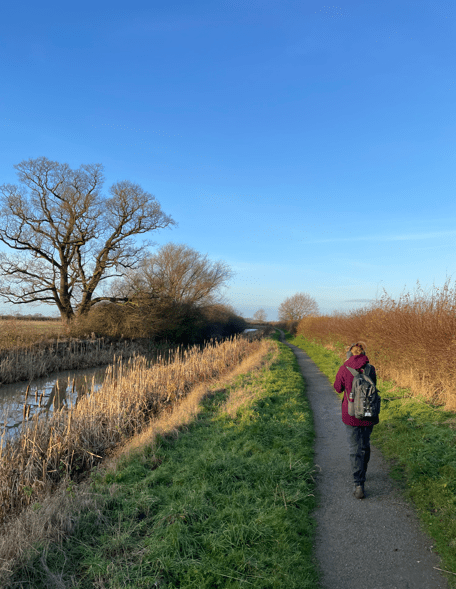
It was quiet along the towpath – we only met one runner while we were on it.
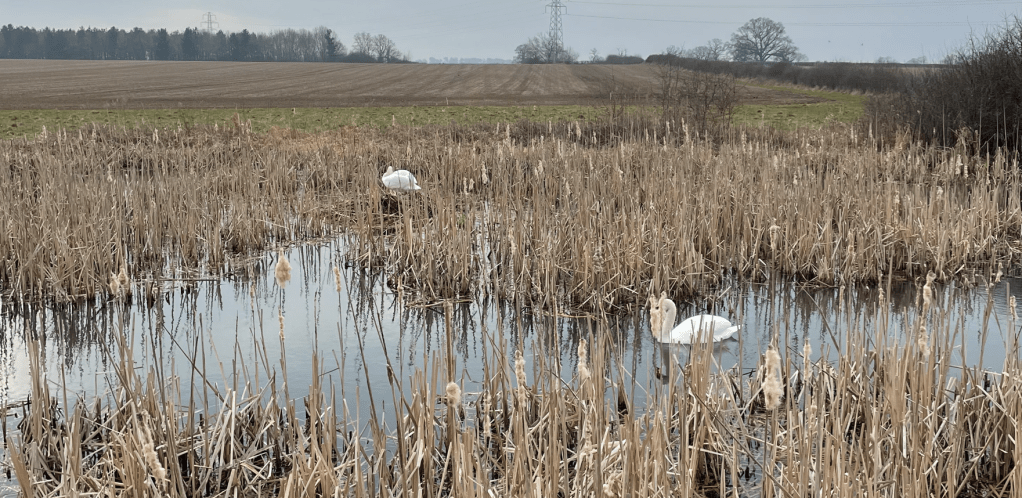
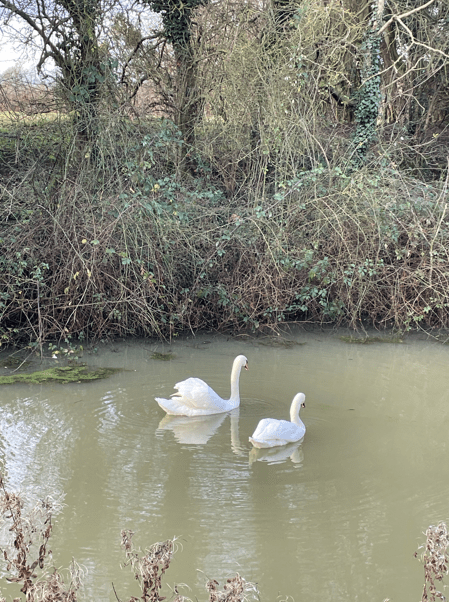
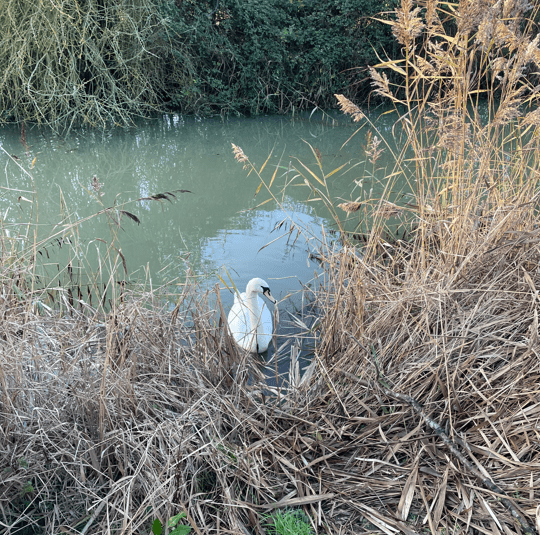
Ducks and swans were merrily paddling along the calm waters.
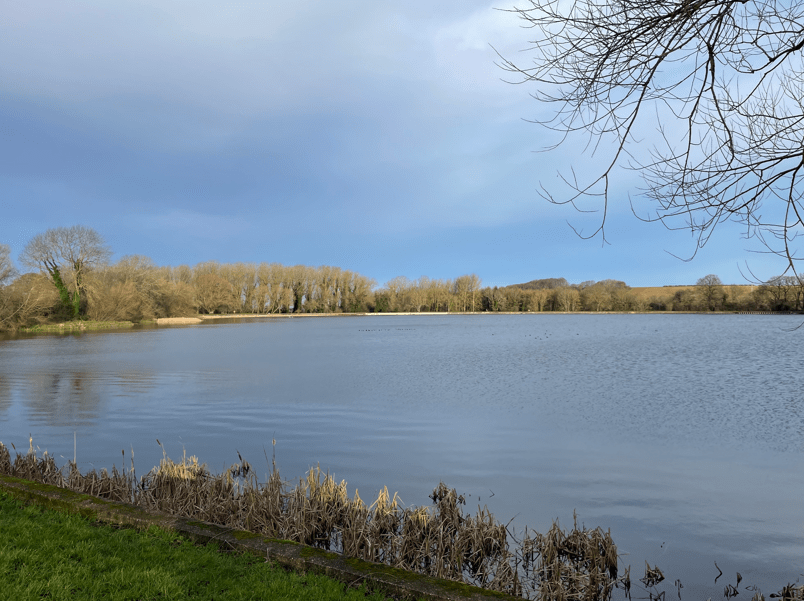
Mick and Chris were putting the world to rights along the way. Soon we arrived at Harlaxton Wharf and headed via fields towards Denton Reservoir. This reservoir supplies the water for the canal.
Harlaxton wharfDenton reservoir
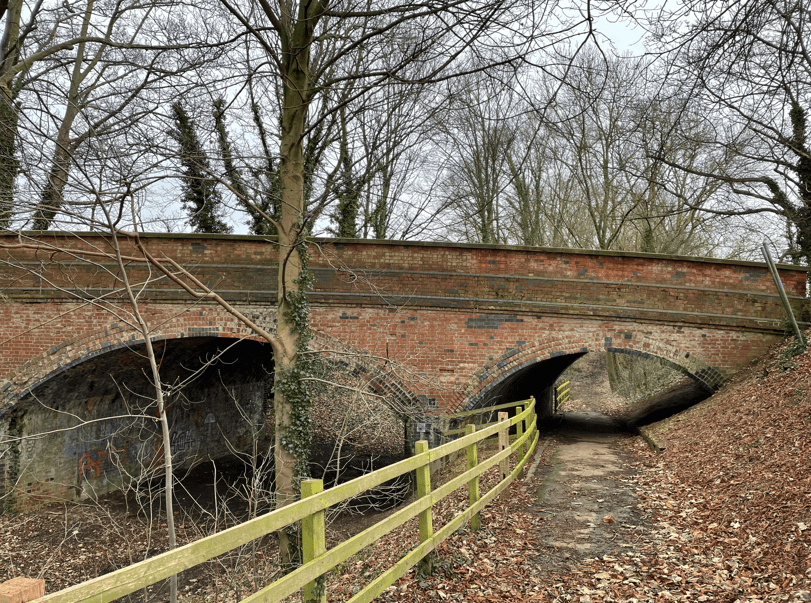
The reservoir is a nice tranquil place normally but today there was shrubbery clearance going on so it was very noisy! We stopped for a cuppa and a bite to eat before doing a loop of the reservoir, watched some cormorants and then headed off towards Denton. Our route took us through the village and then uphill along the road to an old railway bridge where we joined the cycle trail.
Cormorants fishing at the reservoirJoining the cycle trail
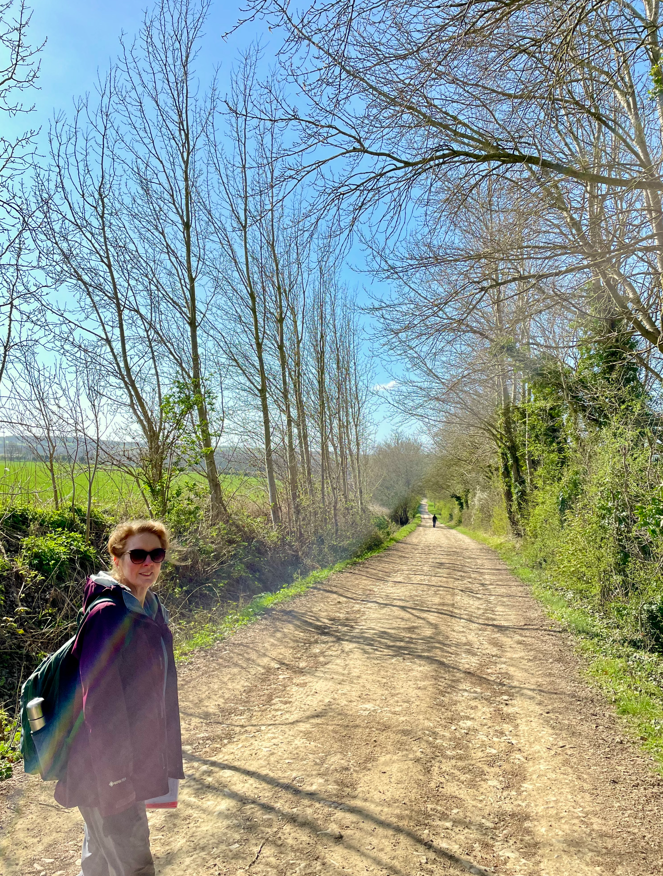
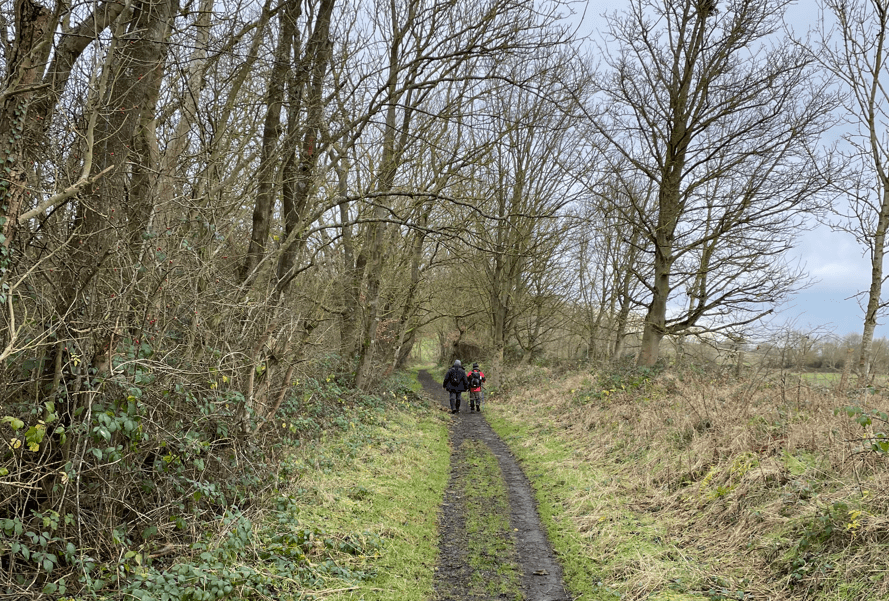
It was a nice wide path along the cycle trail and easy walking.
The miles were slipping past easily and neither Mick nor Chris were showing any adverse affects from the lurgi. We arrived back at the canal and walked along the towpath back to the cars.
We had enjoyed the walk and the chat along the way.
This morning myself and Angela met up with Mick and enjoyed a 7-mile circular walk in the Vale-of Belvoir. It was a sunny but chilly morning following heavy rain overnight.
We started our walk at Woolsthorpe- by- Belvoir and walked westwards along the rather muddy towpath of the Grantham Canal.
The weeds along the canal were dying back which allowed a clearer view of the canal. A friendly swan swam over to say hello.
After about a mile and a half the towpath reverted to stone rather than grass so it was less muddy underfoot.
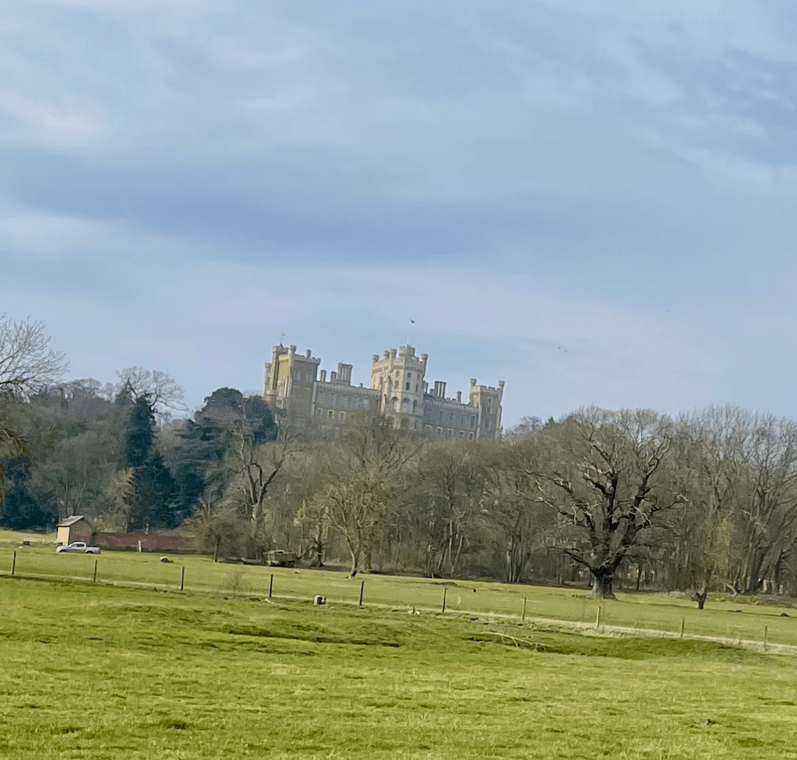
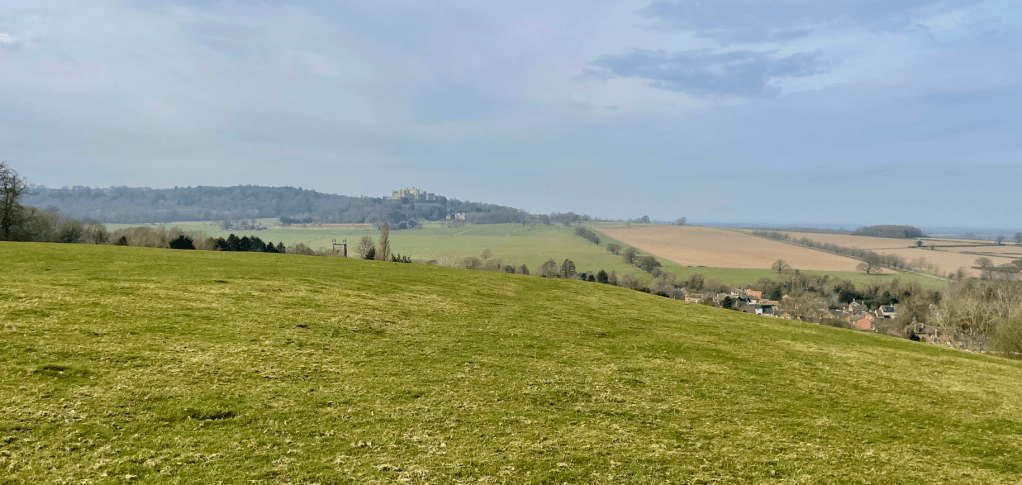
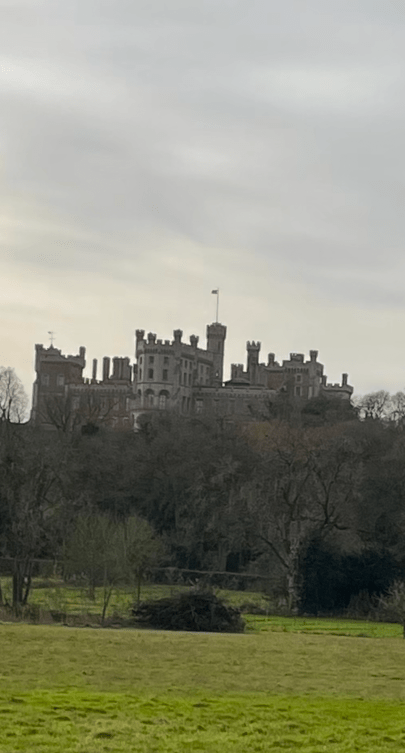
All along this stretch of the canal we could see Belvoir Castle standing on its hill in the distance – the castle has a great view of its surrounding lands. The castle is home to the Duke and Duchess of Rutland.
Belvoir castle in the background
A little further on we halted. The towpath was flooded where the canal had overflowed.
We decided that, because we could not see how deep the water was ahead, we would look for an alternative route around. Unfortunately, this took us through muddy fields so it was a good job we were all wearing gaiters!
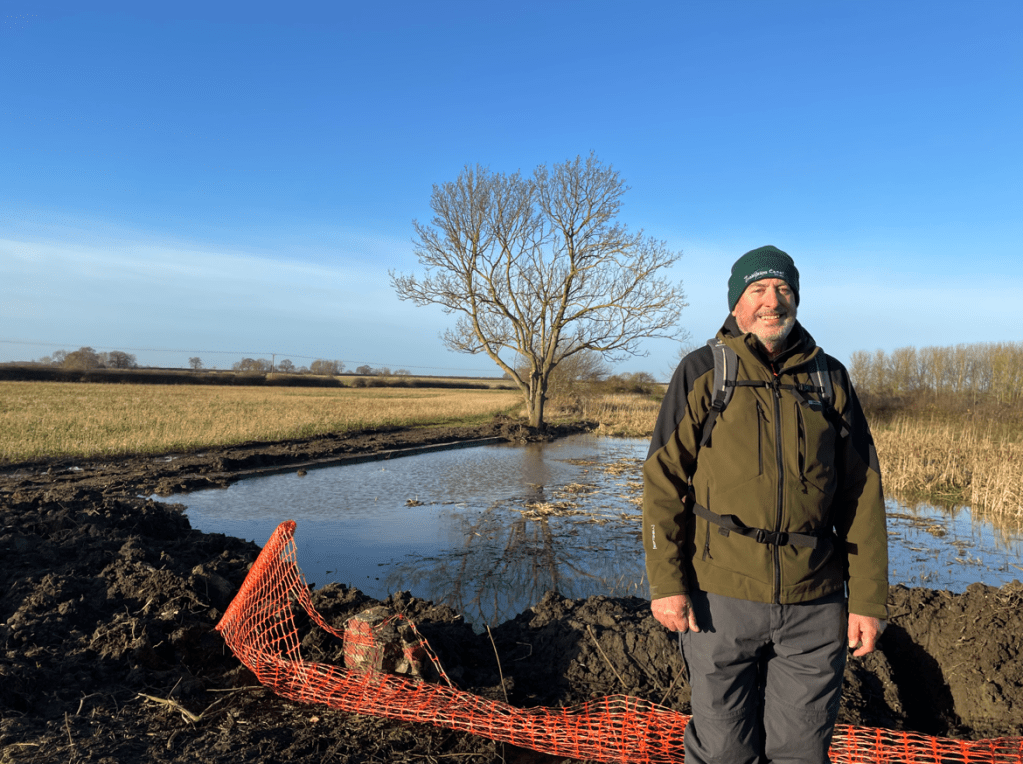
Re-joining the towpath we got to Muston Gorse and were able to view the work being carried out by The Grantham Canal Society at a site of historical interest known as ‘The Dukes Wharf’.
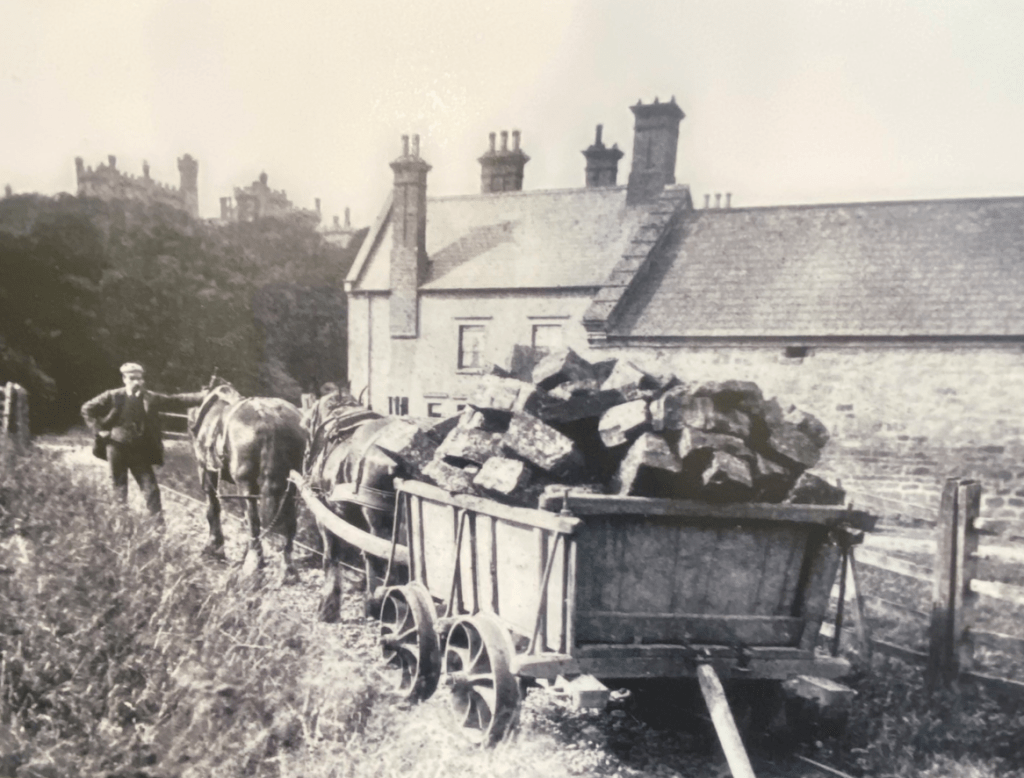
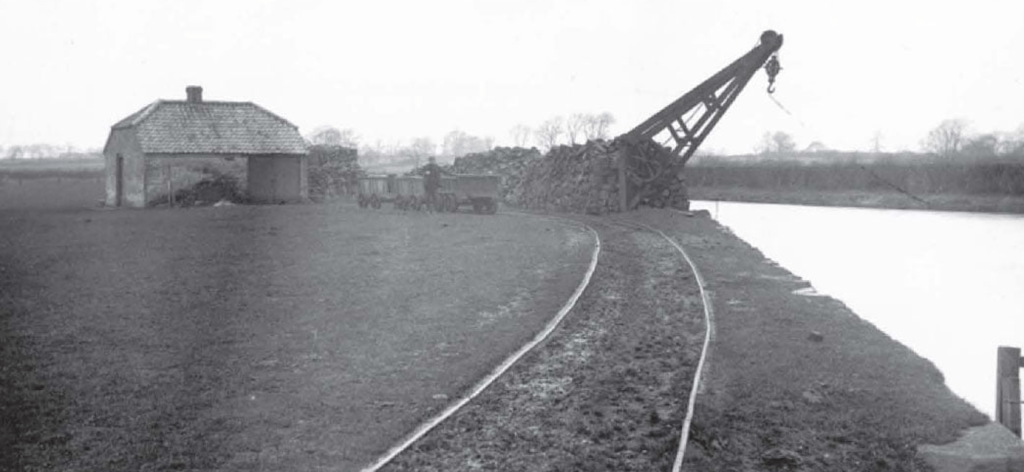
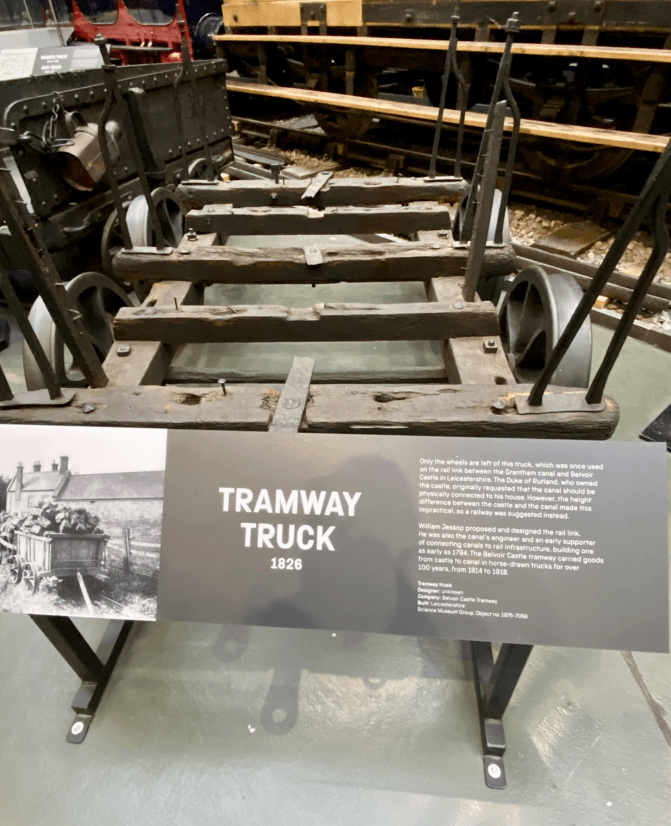
Soon after the canal was built (1797) by the famous canal engineer William Jessop, the Duke of Rutland asked whether an extension to the canal could be made to bring goods up to the castle. Knowing how many locks would be needed and that the amount of water needed to operate them would be prohibitive, Jessop came up with a proposal for a tramway. Uniquely, he fabricated metal fish-belly rails in his own foundry (previous tramways in the country had used wooden rails). The tramway was built in 1815 and operated for over 100 years. The wharf where the canal boats unloaded was known as The Dukes Wharf and it contained a weigh house (to check the weights of the good’s (e.g coal) received.
The Dukes Wharf
The National Railway Museum in York has a tramway truck on display.
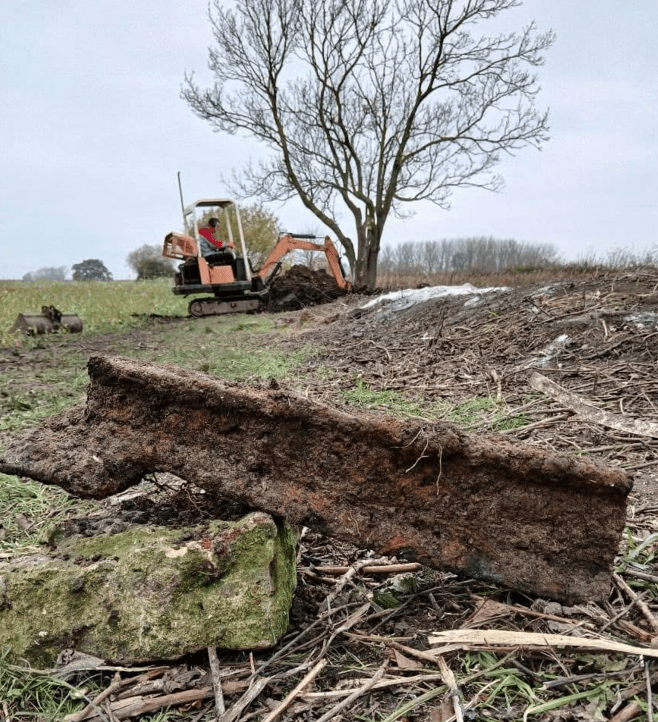
Recently, the Grantham Canal Society has been working here to expose the original wharf. They have even found a piece of rail. The crane used for unloading has long gone.
Coping stones on the original wharfFish-belly rail
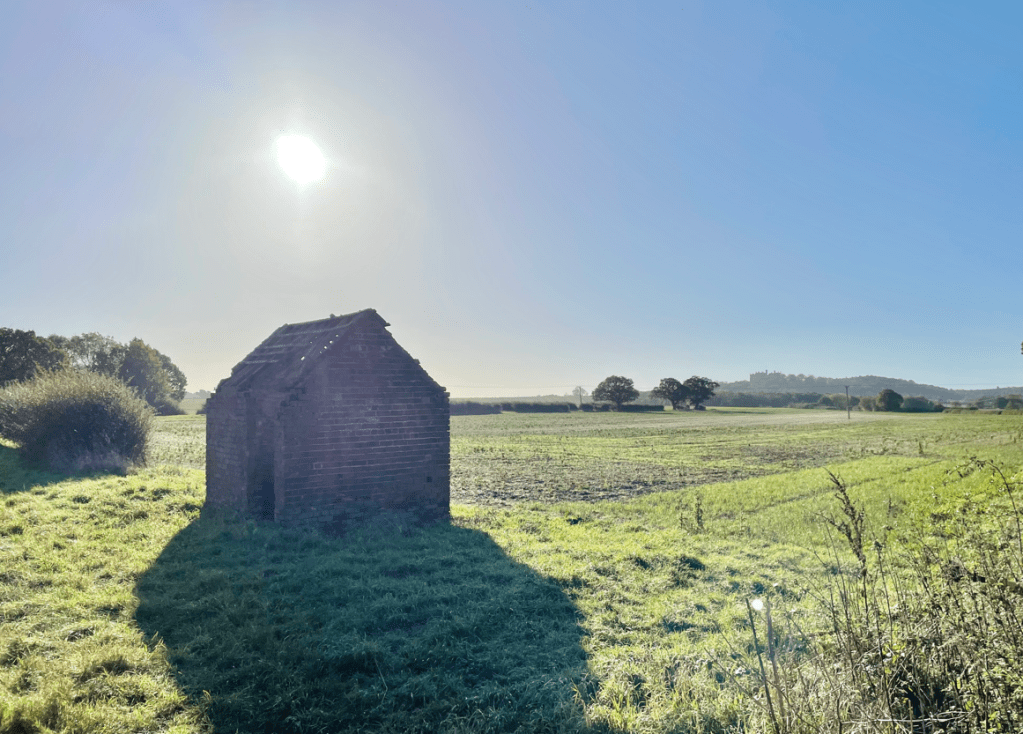
There is an building nearby which is thought to have been the weigh house. The Society hope to restore this area.
The weigh houseThe Dukes Wharf
Leaving The Dukes Wharf we headed up the hill towards Belvoir Castle.
We walked past a small retail centre called ‘The Engine Yard’ and headed down the scenic, tree lined road, crossing the river Devon to enter Woolsthorpe-by-Belvoir.
It was a short walk to where we had parked our car. Mick headed off home and myself and Angela popped into ‘The Duck’, a recently re-opened pub, where we enjoyed a warm welcome from the staff and a lovely hot couple of coffees. In was nice to get into a warm pub after the cold walk.
On todays walk Angela and I did a wonderful 13-mile ‘there and back’ coastal walk from Chapel St Leonards to Sandilands. We walked along the beach on the way up the coast and returned using the King Charles III England Coastal Path.
Arriving early in Chapel St Leonards the large car park was empty. We like to walk along this section of the Lincolnshire coast, but we only do it out of the tourist season. Our first port of call was the local Co-Op to get a butty for lunch and a coffee. Its always good to get the first caffeine hit of the day π.
We walked past the wooden beach huts that line the promenade. I wondered how much it would cost to buy a beach hut – I know that in some places they cost tens of thousands of pounds.
The beach was completely empty, no-one in sight. It feels like a rare privilege to have so much space to yourself.
Looking back towards the observatory
The tide was quite a way out. Its interesting how walking on a beach is more demanding that firmer ground and we were picking our path along the beach to find the best ground. All that was missing was the sun!
Out at sea we could just about see the wind turbines that line this section of the Lincolnshire Coast.
As we neared Sandilands we heard the loud reversing beepers of heavy plant coming from over the sandbanks. We thought that maybe, houses were being built, or yet another caravan park. Further on we were walking by beach huts again.
Work only started last month on transforming what was previously a golf-course. On our return, leg via the coastal path, we could clearly see the work in progress.
The Sandilands project has startedreturning along the coastal path
The coastal path took us behind the sandbanks and along grassy paths. It was much easier than beach walking.
Eventually, we were returned for a short section along the beach.
Arriving back into Chapel St Leonards we visited the award winning fish n’ chip shop called Marina – it was very good and enjoyable after a long walk. There were signs that darkness was on its way as we headed to the car park for the drive home.
Today’s walk was a 9-mile circular walk starting in the Lincolnshire town of Louth. The walk would be mainly through agricultural fields ending in a walk through Hubbards Hills.
Myself and Angela parked in a suitable car park in Louth and headed off through the town, passing an interesting plaque to a famous daughter of Louth and a building that once was the railway station, but is now a shop. It was early and there were few people about.
The old railway station facade
It was another grey day but mild and dry as we headed across fields. We passed through a field containing Alpaccas – they ignored us. It made a change from cows and sheep π. I wondered if they would become a more common sight in the future.
We soon found ourselves unable to follow the path as a number of fields had recently been ploughed up- it would be very easy to turn an ankle. We walked around the outside of the fields instead. It was a little frustrating but to be expected at this time of year.
It was nice to admire the autumnal colours in the trees as we passed by.
Pausing for a break in the hamlet of Tathwell we had a walk around the pond. The surface was covered in fallen leaves – very autumnal.
Walking on to the hamlet of Raithby I noticed that the church (St Peters) had been built in a unusual style.
After crossing the A16 we entered Hubbards Hills, a 40m deep valley that was formed by glacial meltwater cutting through chalk hills at the end of the last Ice Age.
At Hubbards Hills
This beautiful site was saved for the people of Louth in 1907 by Trustees investing money left in the will of schoolmaster Auguste Pahud as a permanent reminder of his wife Annie. It was a lovely walk through the deep sided valley. It was a fitting end to a nice walk.
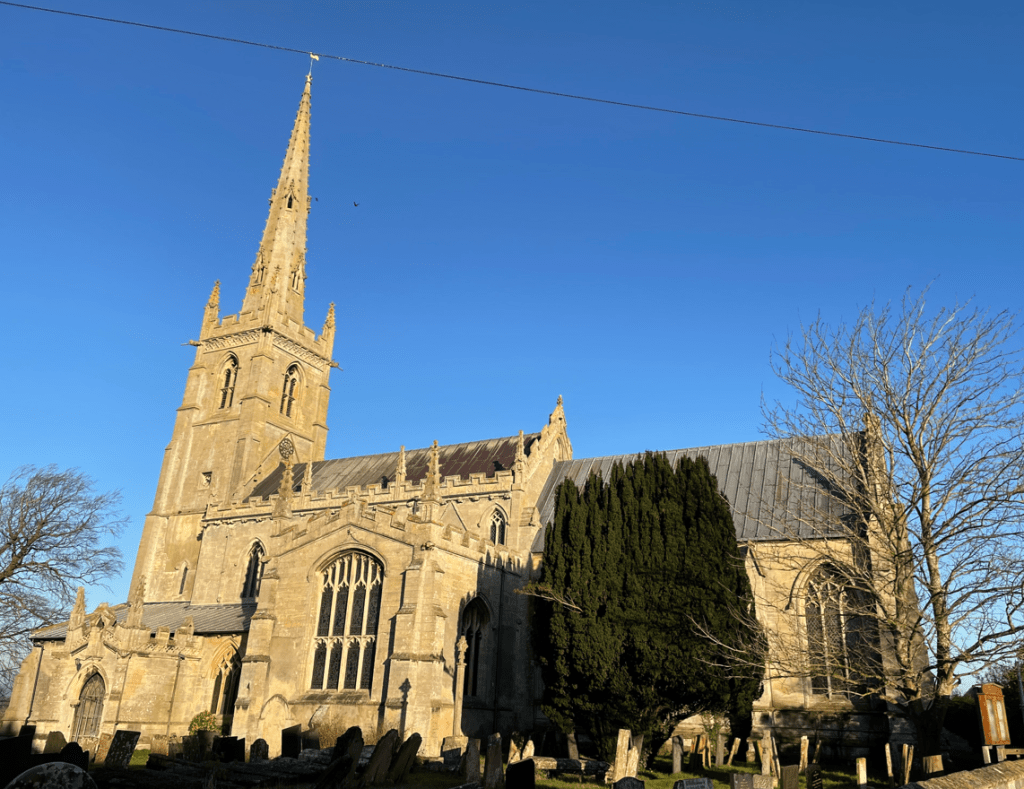
Entering Louth we walked past St James church which has the third tallest spire in the UK. I do like a flying buttress.
In the town centre there is a sign on a wall marking the zero degree Greenwich meridian line.
This explains the signs that we saw when walking for the Greenwich Meridian trail http://greenwichmeridiantrail.co.uk. The route is a 273 mile trail that follows the line of the Prime Meridian. I might have a look at this!
It had been an interesting walk today and I enjoyed the autumnal feel to it.
Today’s walk was a 10-mile circular walk starting in the market town of Horncastle. Myself and Angela parked the car in the Tescos supermarket long stay carpark and planned to follow a walk from the OS book ‘Lincolnshire and the Wolds – outstanding circular walks’.
The walk was a wide circuit of the Bain valley to the north, west and south of Horncastle. We followed the Viking Way at the beginning and end of the walk.
Leaving the carpark nice and early in the morning the local ducks were making a lot of noise as we made our way to the market square – we wondered whether it was feeding time.
In the market square there was a grand monument, built by the people of Horncastle, to Edward Stanhope – a respected benefactor to the town.
Stanhope Memorial
Outside the Post Office in the market square there was a nice knitted cover on top of a post box – Halloween themed.
Navigating our way through Horncastle we walked beside the little River Waring.
River Waring
After walking along a track beside housing estates we emerged on to a road and then, after a short road walk, started across fields.
The grass was wetter than anticipated. The day had turned cloudy. After a stretch across field paths we came to a road section. This was not enjoyable because there was just too many cars/lorries passing along it. We wondered whether the walk had been designed years ago before road traffic was as heavy as it is today and hedges were not so big.
A very brief quiet spell on the busy road
The road passed over the River Bain.
River Bain
We were glad to leave the road and head across fields again.
The walk was pretty uninspiring from a scenic perspective, however, we were enjoying being out walking and getting some miles in.
Eventually we came to the disused Horncastle Navigation canal. In 1802 the canal linked Horncastle and Tattershall, running parallel to the Old River Bain. As I am interested in canals this was the highlight of the walk today.
A disused lockHorncastle navigation canal
We followed the canal, walking on the embankment to Coronation Walk in Horncastle, and on through town to the car.
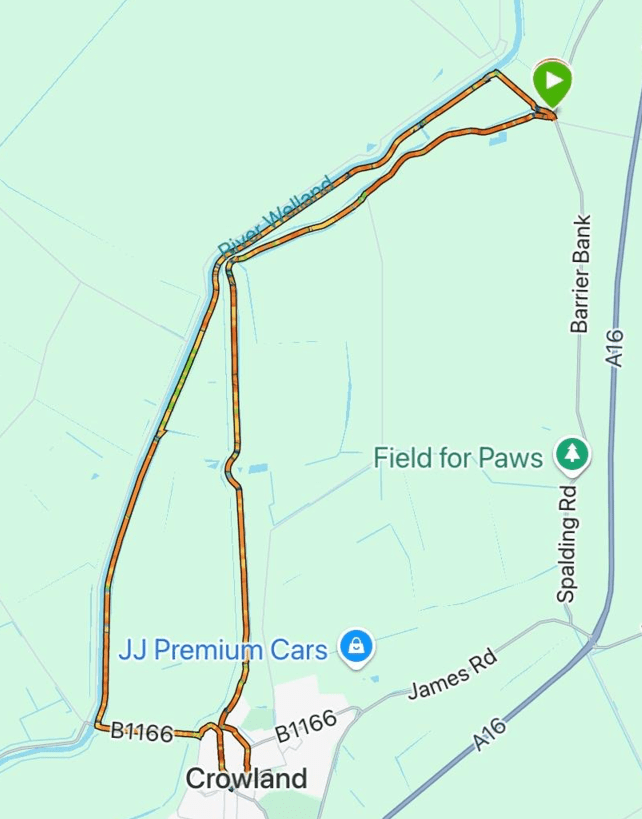
Today, myself and Angela drove to Spalding – a market town on the river Welland in the South Holland district of Lincolnshire. We did a 7- mile circular walk which followed the river Welland, the Coronation channel and Vernatts Drain.
It was a sunny but chilly morning as we left the car park and headed to the river Welland. The river is lined with trees which is nice to see, especially in Autumn.
River Welland in Spalding
We passed the church with its fine steeple.
I spotted an old shop sign outside a building – it used to be a cabinet makers workshop.
We followed the Welland for about half a mile and then turned left where we met the Coronation channel.
Tree lined river Welland
The Coronation Channel flows north from Crowland, through Spalding and out to the Wash. Land in Spalding had been reclaimed from the wetlands in medieval times. Consequently, Spalding was subject to frequent flooding. The Coronation Channel diverts the excess waters around Spalding and ended the flooding.
The Coronation channel
We walked along a high embankment which was built from the spoil taken out of the channel. The channel is quite wide – I wondered how deep it was? It was very pleasant walking in the sunshine.
The channel banks had been breached in places from the recent heavy rain.
High water in the channel
There were quite a few bridges over the channel including a disused railway line. We stopped on one of the bridges for a cuppa – there was a distinct lack of benches on this walk.
Old railway bridge
‘What’s that smell?’ said Angela as a particularly obnoxious odour enveloped us. It was coming from a factory adjacent to the bank and was foul! Angela moved into top gear and scooted along the embankment to get away from the smell. I think the factory was an Abattoir.
Continuing along the embankment we could hear church bells ringing and we soon found the church where it was emanating . The ringing was very pleasant on the ear.
We passed some large sluice gates. We had seen a couple of Herons and cormorants along the way.
Further on we passed Spalding Power station. The new Β£425m, 860Β MWΒ combined cycleΒ gas turbineΒ Spalding Power Station, owned by InterGen, was built on the former site of British Sugar in October 2004. A second 300 MW expansion to the existing Power station opened in 2019.
Spalding Power Station
The route we were following was from a guide and clearly it needed updating. The route took us to the very busy A16 where roadworks were occurring and there was little in the way of a path for walkers. We did not enjoy this section which led us to Vernatts Drain (named after one of the engineers who drained the fens).
Walking on the footpath adjacent to Vernatts Drain proved troublesome with overgrown shubbery restricting access. Angela was not happy when she got stung by nettles. Funny smells, no benches and now poor paths, Angela was not enamoured with our walk today.
A poor fothpath along Vernatts Drain
Eventually the path improved.
Vernatts Drain
We passed a nice house by a bridge and then proceeded along our route to where we needed to cross the railway line.
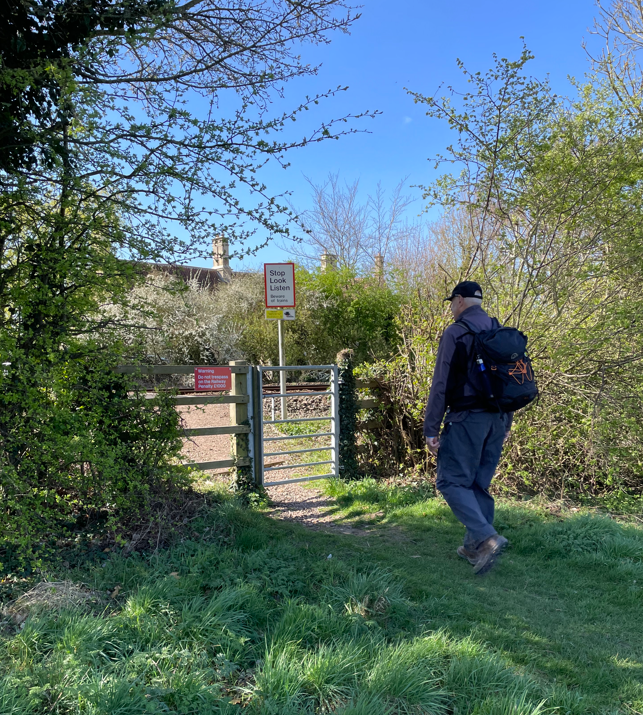
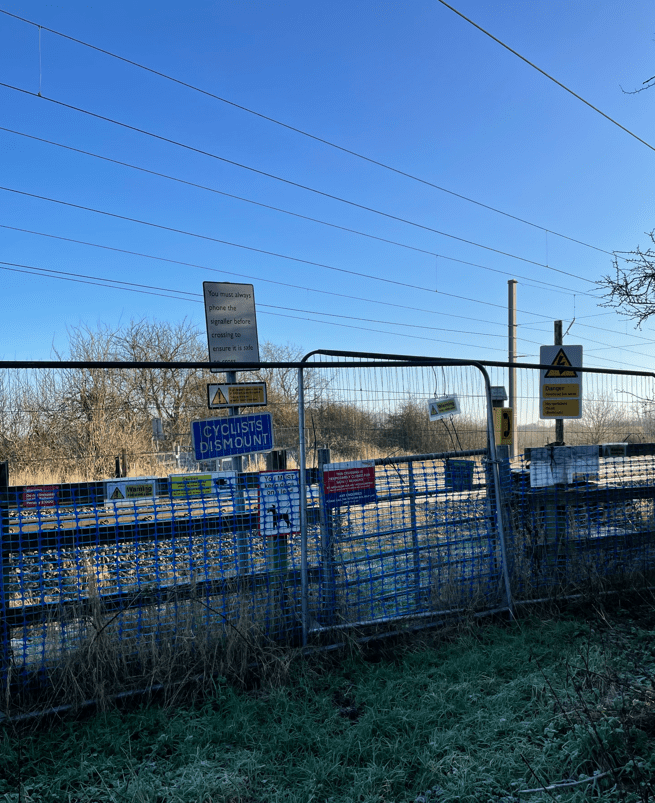
We found that the old railway crossing had been fenced off so, had to find a different route back through Spalding. Most frustrating.
Access to railway crossing fenced off
On our way back to the car we passed a fine looking building with an unusual weathervane- the building is used by Spalding Gentlemen’s Society as a museum! https://www.sgsoc.org/.
So, a mixed bag of a walk and one that we probably would not do again. Still we enjoyed the sunshine and a stretch of the legs.
Today myself and Angela enjoyed a 9- mile circular walk beginning in Colsterworth and passing through North Witham, South Witham and Gunby then back to Colsterworth.
After finding a spot to park the car and opening the boot, I was dismayed to find that I had left my walking boots at home – good job I was wearing my trainers! (not ideal, but ok for this trip).
It was quite a hot summers morning as we set off across crop laden fields towards North Witham.
Angela setting the pace
We passed through a ford which only had a trickle running through it today – I expect its different on a rainy day. Angela took the bridge to cross the ford and we were soon heading into North Witham.
Crossing the ford
We passed through the grounds of the church of St Mary – we noticed the roof was in poor shape. Apparently, in 2019 the lead was stolen and the roof damaged. The interior is now vulnerable to the elements. No attempt or plans exist to repair the roof which is a great shame.
The church of St Mary, North Witham
Leaving the church cemetery the path took us across the river Witham (whose source is close to South Witham). We were dodging nettles and brambles for most of the walk today.
Crossing the river Witham
We crossed numerous good wooden bridges across dykes and more fields of wheat. Two of fields that we crossed had cattle in, but they were not bothered by our presence.
One of the numerous wooden bridges on our route today.
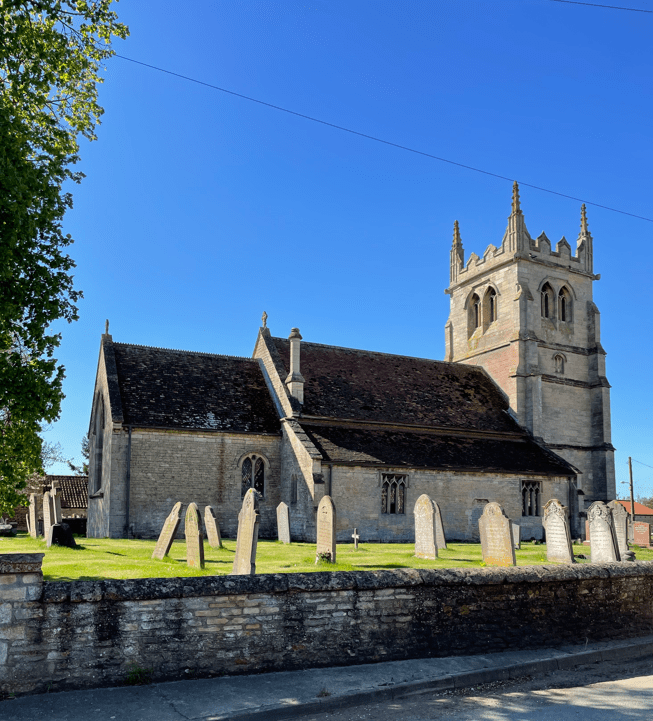
Arriving into South Witham, we took a stroll into the pretty village. The church – St John the Baptist, sits opposite the pub.
St John the Baptist church South Witham
On our route into South Witham we had passed over a site that was once a Preceptory of Knights Templars. There was a notice board with info about this by the church but it was in poor condition. https://en.wikipedia.org/wiki/Witham_Preceptory
Moving on we had a chat with a helpful woman who gave us instructions on how to get out of the village and then met a dog walker who we also had a nice chat with.
We headed for the village of Gunby. The temperature was rising so we paused numerous times to take on water.
Gunby was a tiny village and we were soon headed out of it towards Colsterworth.
Wading through a fieldFreshly ploughed field
Arriving into Colsterworth I stopped at a shop and grabbed a white chocolate Magnum – it was just the ticket on such a day π.
Having successfully avoided catching COVID through the pandemic years I was somewhat miffed to have recently fallen foul of the current summer wave. Well, I suppose I was fortunate in having avoided COVID for so long and it was inevitable that it would catch up with me at some stage. I can’t complain.
So, I have been isolating for a week to avoid transmitting to anyone else. I am on the other side of COVID now, feeling ok but awaiting my sense of smell/taste to return.
Today, I enjoyed a 6 mile countryside walk taking in the views as the farmers begin their harvesting of crops. It was great being out walking.
Following paths across fields and along hedgerows on a balmy summers day was just the tonic I needed.
Today, myself and Angela met with Mick and we enjoyed a 6.5 mile circular walk in the Vale of Belvoir.
Our route
We started at Dove Cottage Tea Rooms, followed paths across fields to Hose, then, after walking through Hose, joined The Grantham Canal towpath towards Harby. We walked through Harby and re-joined the towpath taking us back to the start. It was a lovely summers day and a joy to be out walking.
Heading to HoseOnwards to Hose
Arriving into Hose Mick had a chat with some curious cattle π.
We passed the church of St Michael & All Angels.
St Michael & All Angels Church
Walking past a cottage with some lovely flowers displayed in window boxes we stood and admired them.
Leaving Hose we walked down a lane to join the Grantham Canal towpath and headed West towards Harby. Along the way we encountered a swan family and the male swan began hissing at us and raising his wings. His six signets trotted into the canal. We managed to get past safely without upsetting Mr Swan too much.
Signet’sAlong the good towpath towards Harby
We walked through Harby looking at the nice cottages and pub, then headed past the village church to pick up a path across fields leading back to the canal. We saw a nice display of roses along the way.
Walking through HarbyHeading back to the canal
A half mile walk along the towpath brought us back to our starting point. The temperature was increasing so we were pleased to have completed this short walk. Plenty of water was drunk along the way.
This morning myself and Mick did a 7-mile circular walk from the South Lincolnshire village of Skillington. It was a walk that we had done earlier in the year and Mick fancied doing it again. The other Amigo, Chris, couldn’t make this walk due to an incident involving Covid – yes, its still about!!
Yesterday was very wet so we were expecting wet conditions underfoot and we weren’t disappointed. This morning there was no rain forecast so we were grateful for that – it’s a very disappointing Summer so far, but we live in hope for a better August/September.
After finding parking in Skillington (it was busy this morning) a car I didn’t recognise pulled up behind me and as I got out of my car Mick shouted up ‘Good Morning!’ and surprised me with his very nice new car π.
Walking through the village we found our intended path and we set off along it- the path ran at the side of fields of beans.
Leaving Skillington
After crossing a number of fields we crossed a wide concrete road that followed the path of a dismantled railway line – Melton Mowbray line?
Nice concrete on the old railway line
Crossing the concrete road we walked along a good track past a nice looking barn at Mere Barn farm and headed towards Saltby Airfield.
Mere Barn Farm
Our route took us into a field containing wildflowers including some colourful blue flowers – reference to my ‘Seek’ App indicated that the flower was Chicory.
Wildflower rich grassland
We continued along to a spot for a short refreshment stop on a track called The Drift’ which is on ‘The Viking way’ and is also a Site of Special Scientific Interest containing some of the rarest wildflower rich limestone grassland in the country.
On The Viking Way
I had enjoyed eating my scotch egg and we resumed our journey to Saltby Airfield – site of Buckminster Gliding Club. We walked past the end of the runway.
Runway at Saltby AirfieldGliders
During the Second World War the RAF handed the airfield to USAAF 9th Troop Carrier Command who were involved in preparation work for the D-day landings and then subsequent active service.
Memorial to those who served at Saltby
Mick spotted a sign for an air-raid shelter so we followed the path and found it. Carefully descending the stairs the mobile phone torch came in handy – inside it was dry and in good condition.
Mick entering the Air-raid shelterInside the Air-raid shelter
Coming away from the Air-raid shelter Mick spotted a cute tiny snail sitting on a nettle leaf.
The miniscule Mollusc
Leaving Saltby Airfield we followed the very rutted Drift track for about 1.5 miles. It was very wet in places and both of us nearly came a cropper slipping on the muddy embankments. Both of us had wet feet by the end of the walk.
Walking on muddy embankments to avoid the floodsTypical flood on The Drift
We had to remind ourselves that it was the middle of July and not April.
A drier section of The Drift
We were glad to leave The Drift and headed across pasture land to pick up Buckminister Lane which brought us nicely back into Skillington.
Buckminister Lane on the way back to Skillington
It was quite a tricky walk in places, with having to watch where you put your feet continually along The Drift, but enjoyable all the same, and nice to see the countryside and animals along the way (Hares and Muntjac deer)