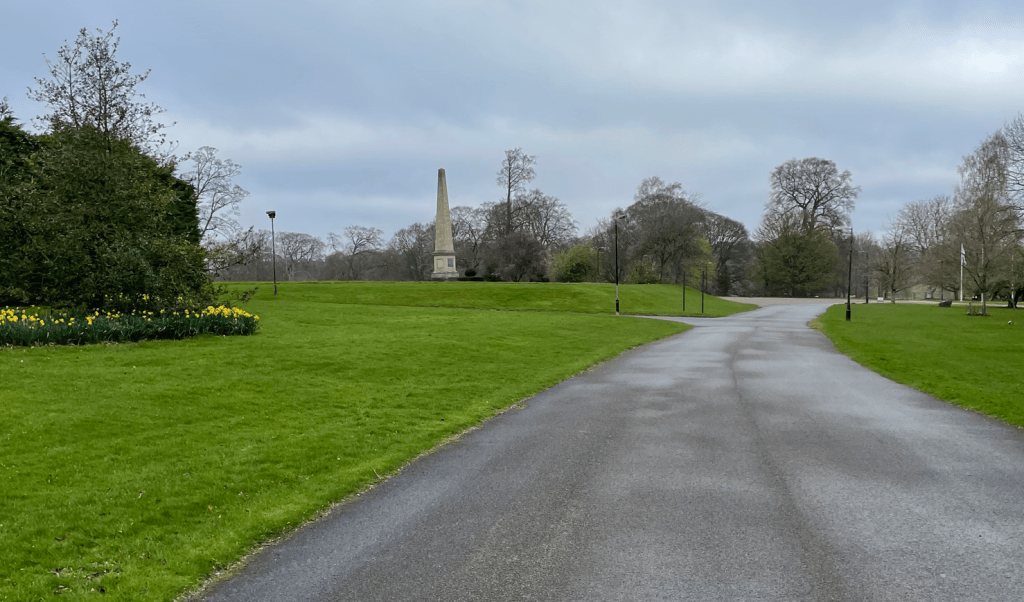
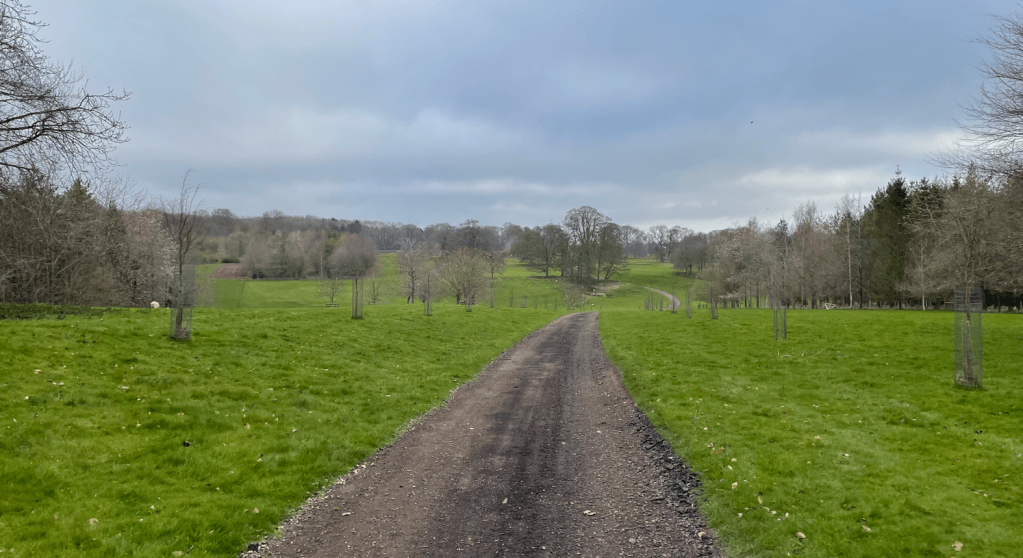
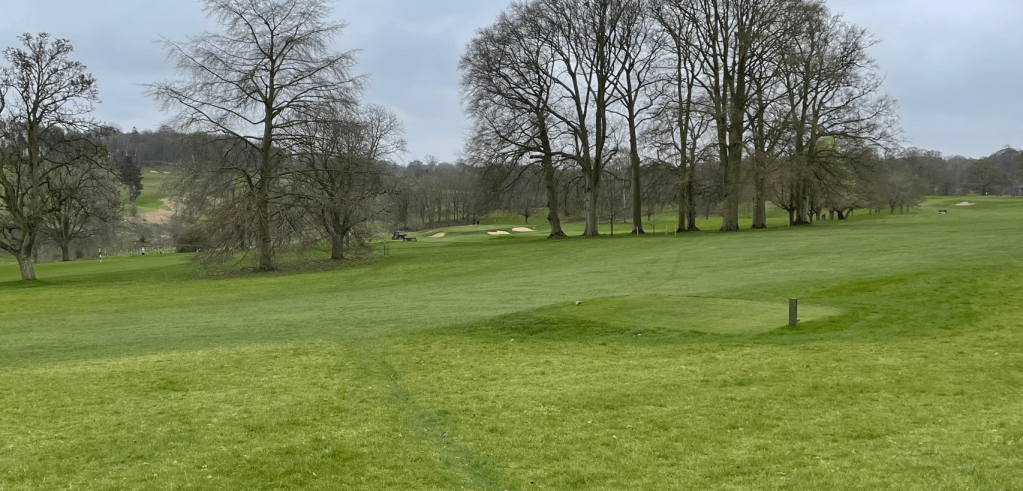
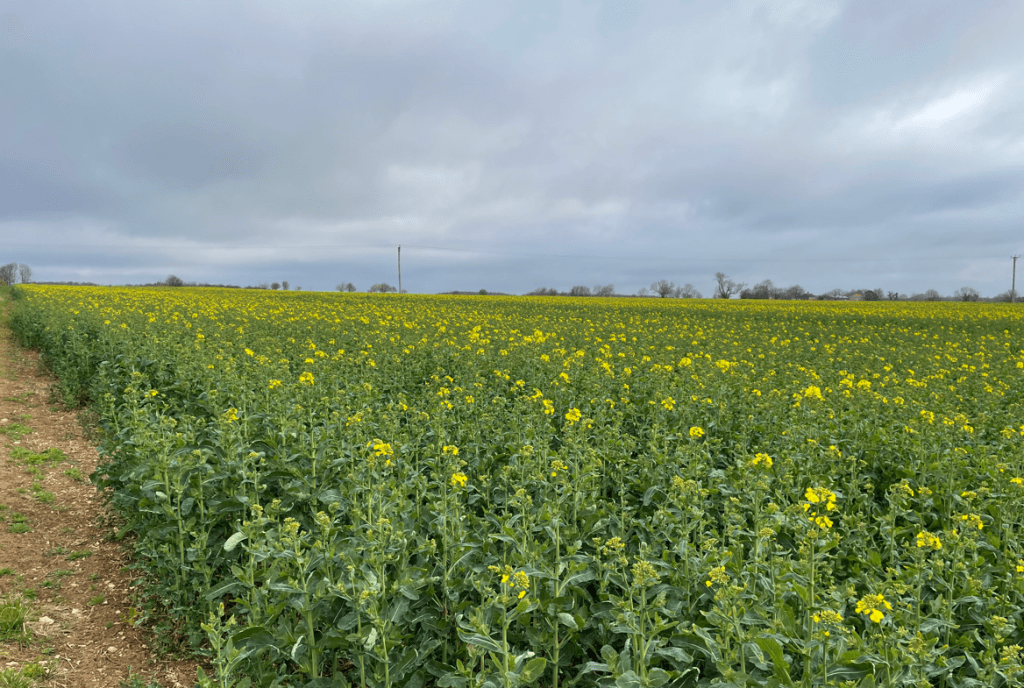
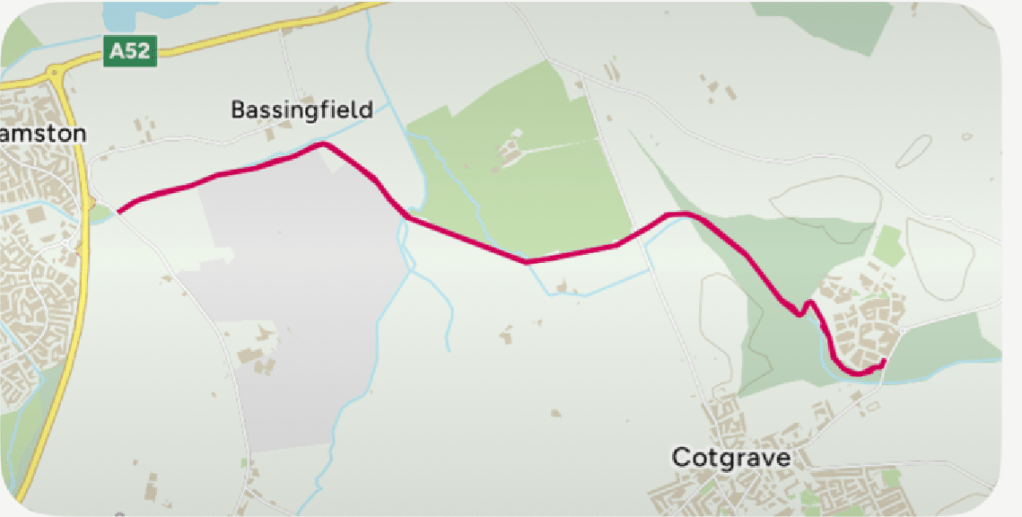
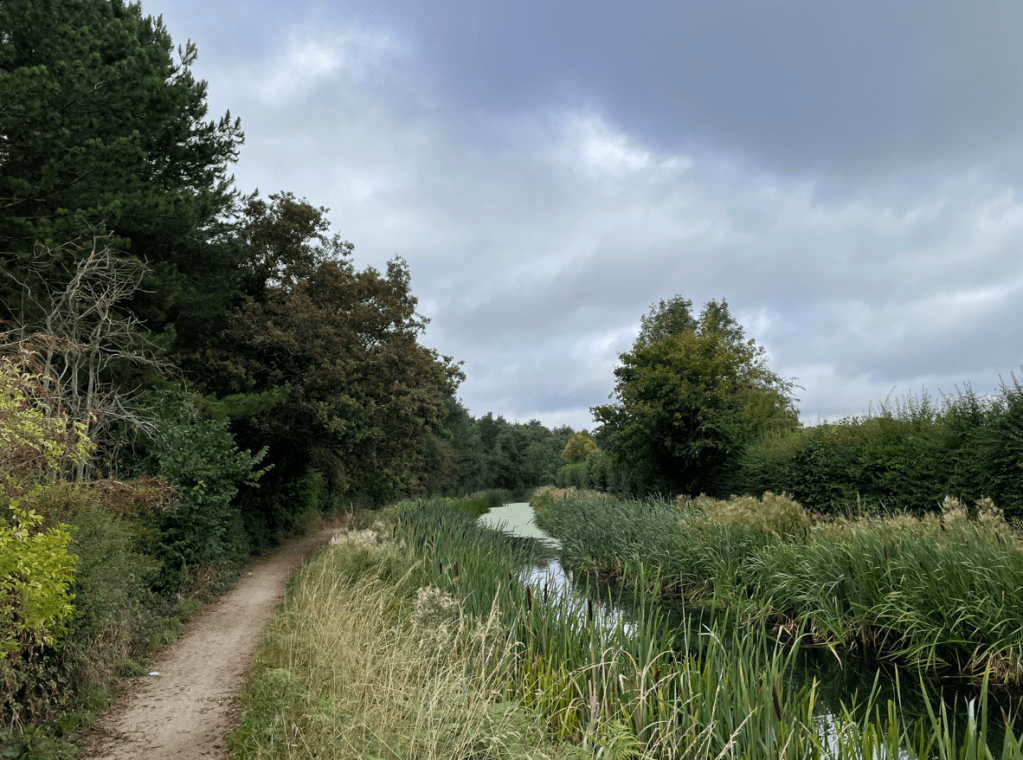
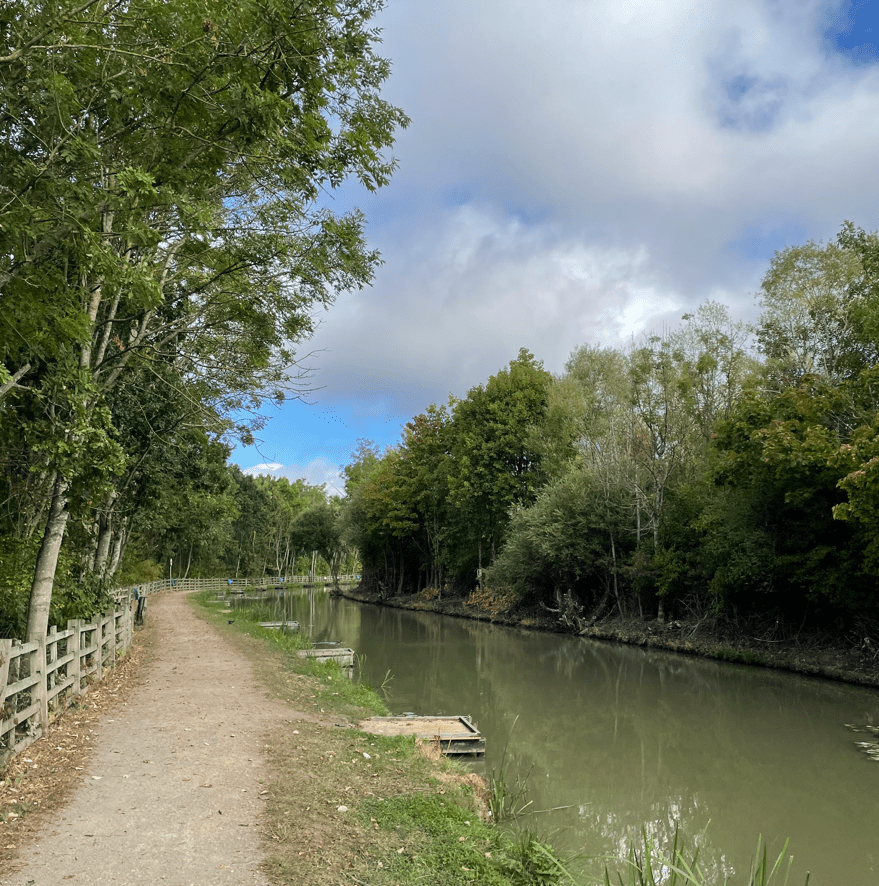
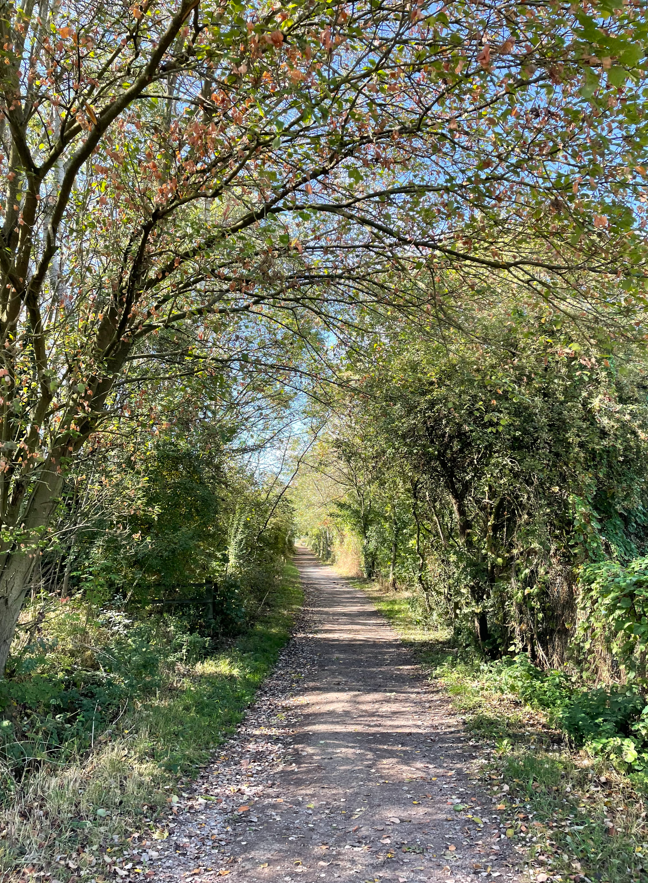
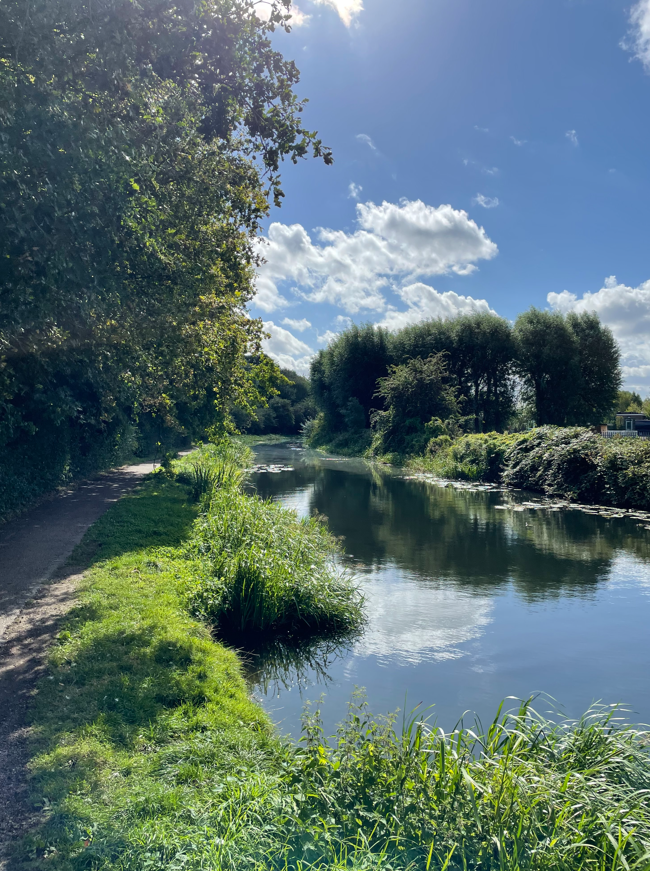
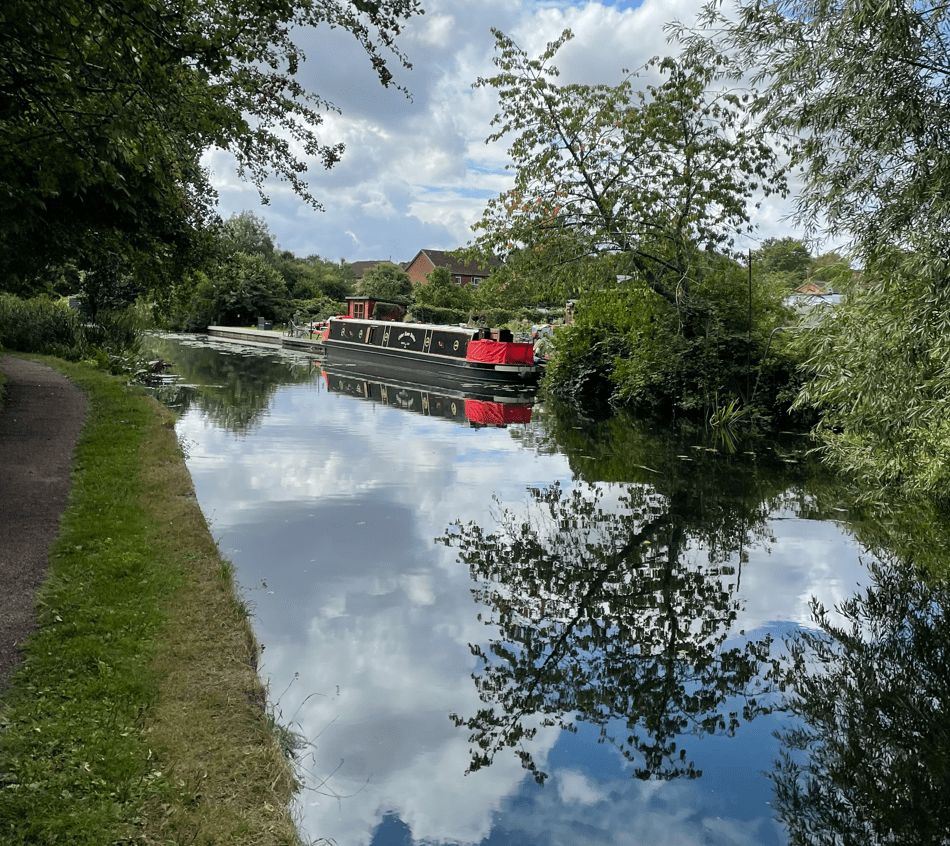
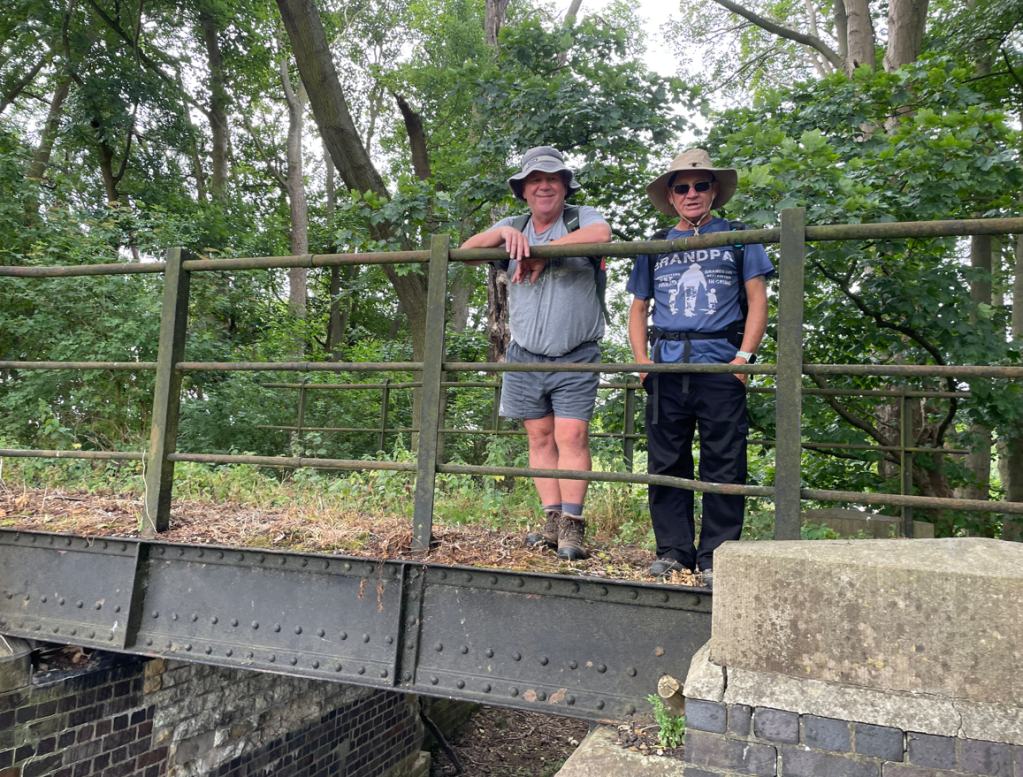
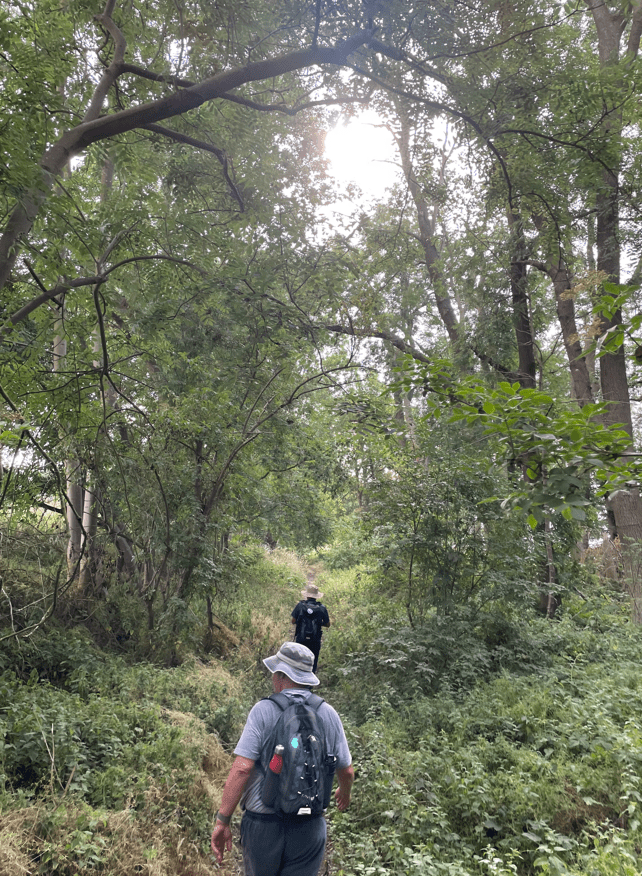
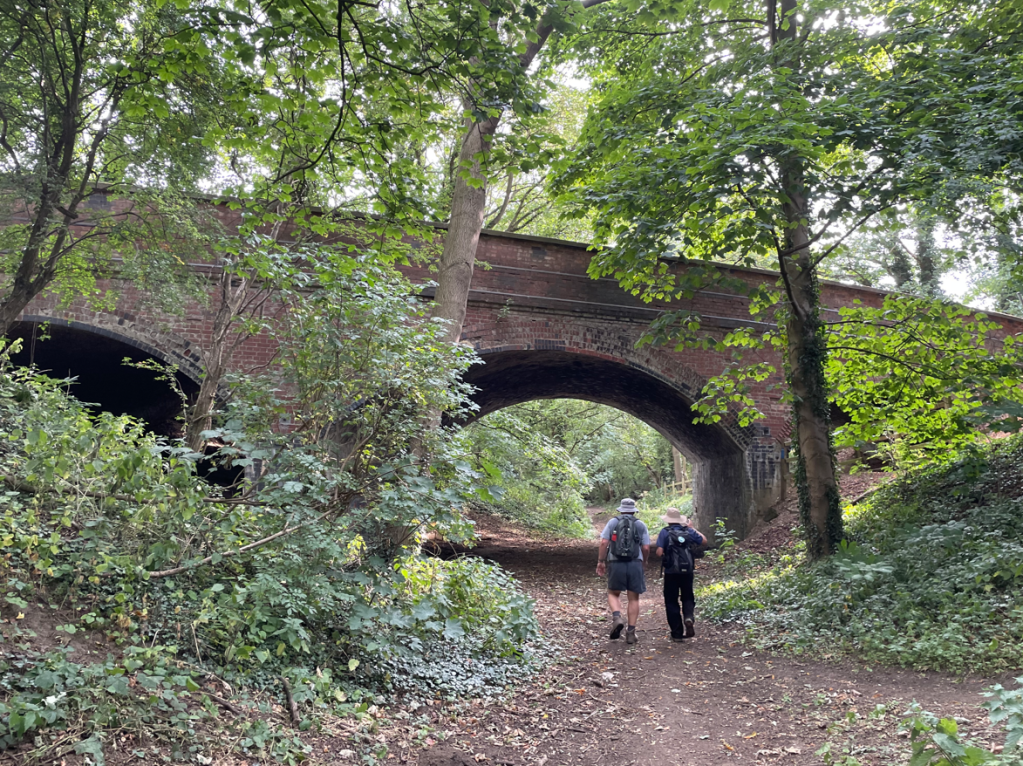
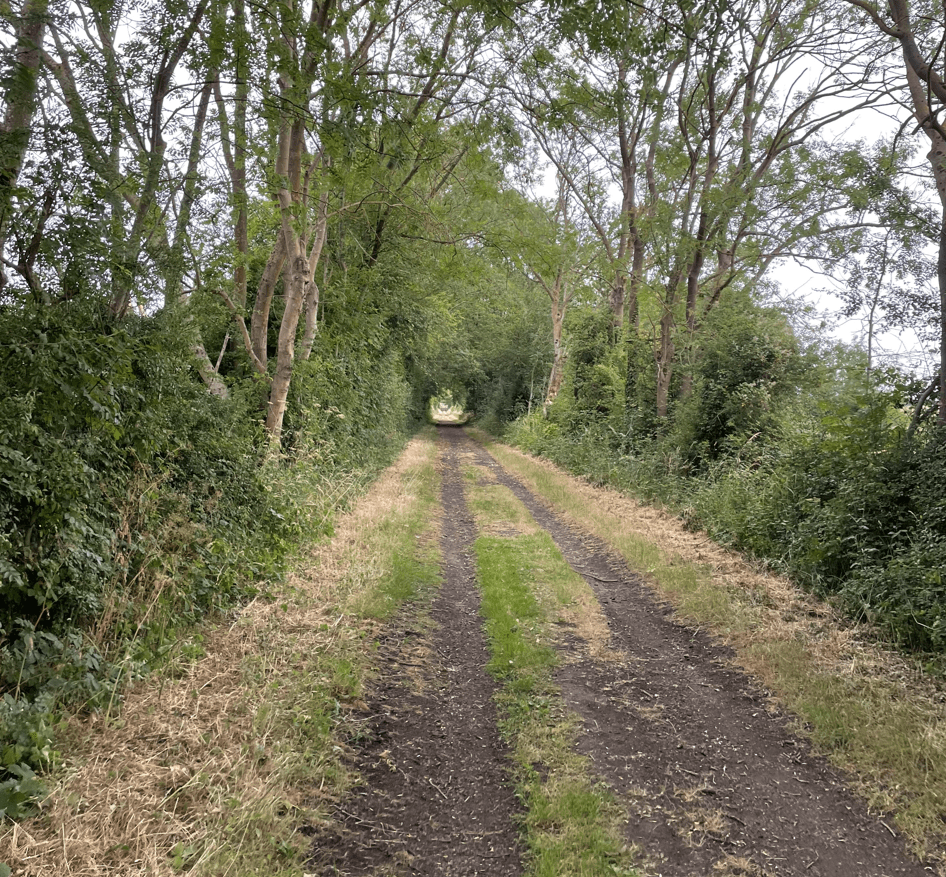
This morning the Three Amigos met at a car park for Cotgrave Country Park in Nottinghamshire. It was forecast rain all morning so we donned our wet weather gear. We enjoyed a 7-mile walk to Gamston, and back, along the towpath of the Grantham Canal.
We were looking for a walk where the footpath would not be too muddy and I think we found that with the canal towpath.
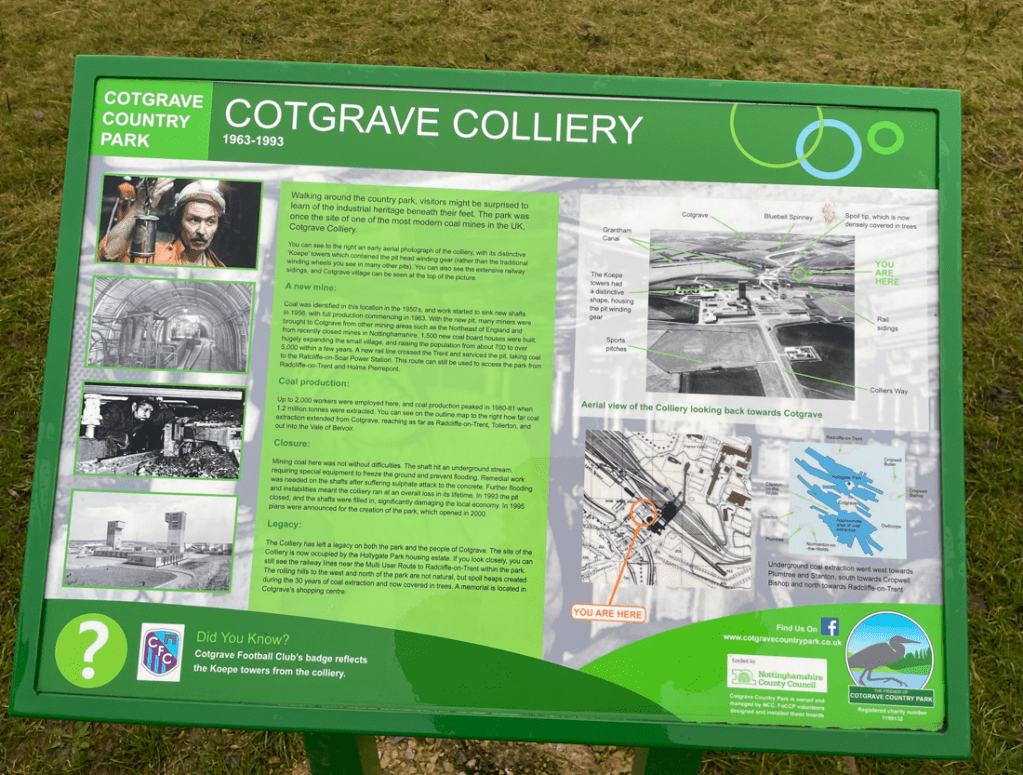
The Country Park and adjacent housing estate are a legacy from the coal mine that existed here from 1963 to 1993. Over that period the mine produced 1.2 million tonnes of coal and employed 2,000 people. The Country Park opened in 2000.
The Country Park is well used by the local community and particularly dog walkers. The Grantham Canal, which runs through the park, is a Restoration Canal that runs 33-miles from Grantham to Nottingham. The Grantham Canal Society are gradually restoring the canal. https://granthamcanal.org/
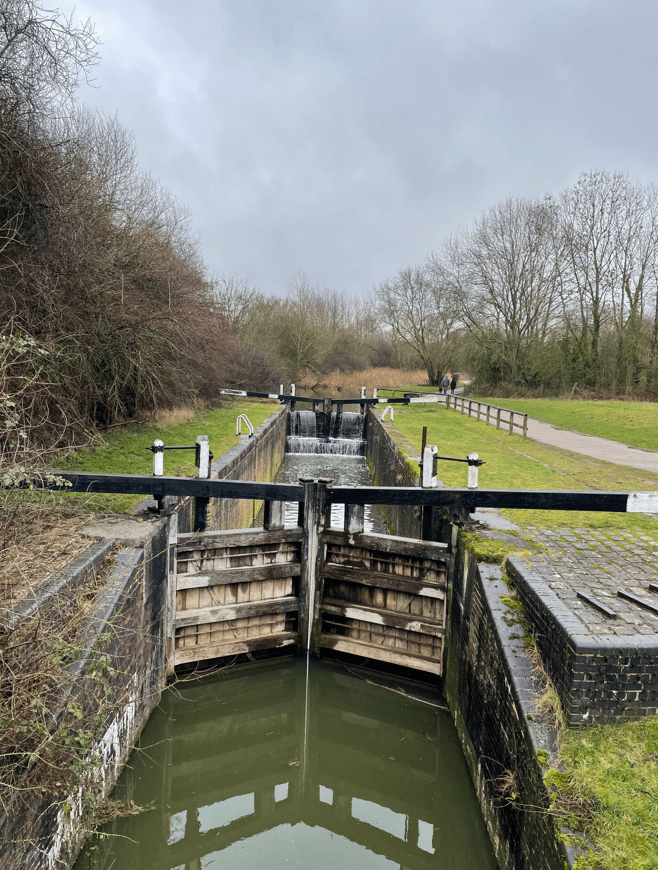
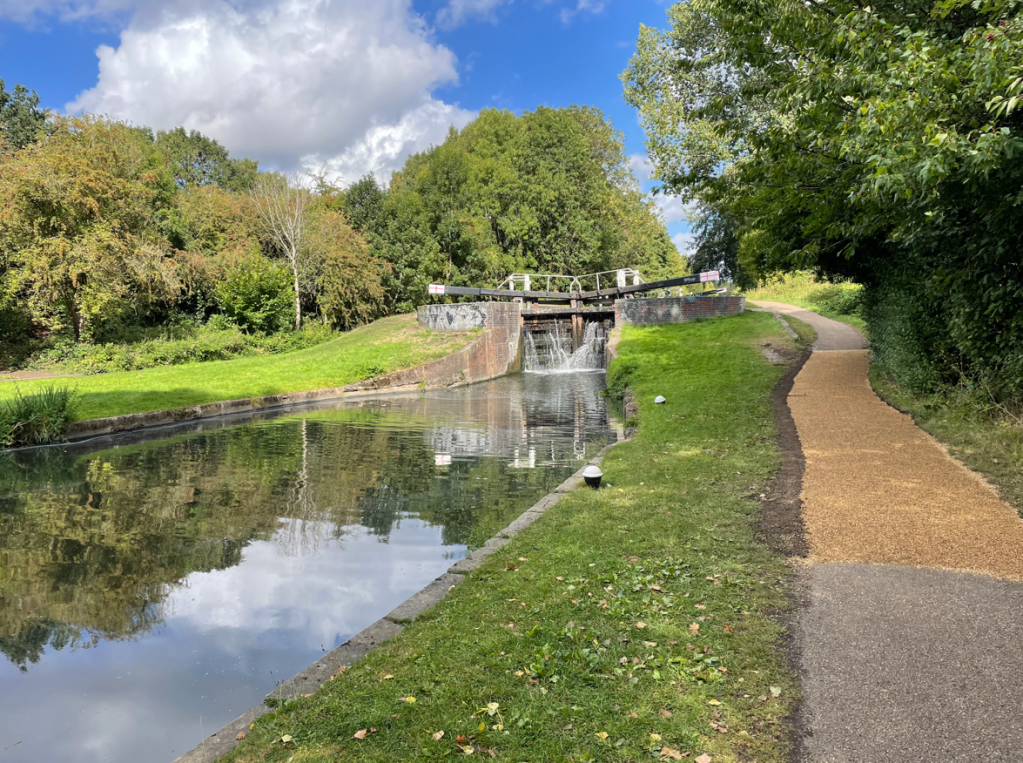
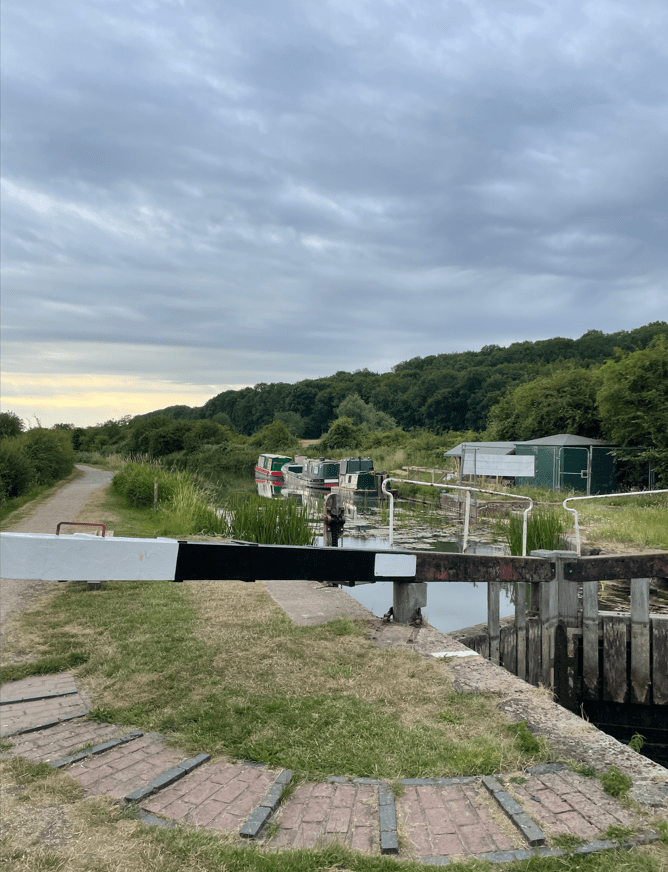
Lock 7 Hollygate Lane Lock
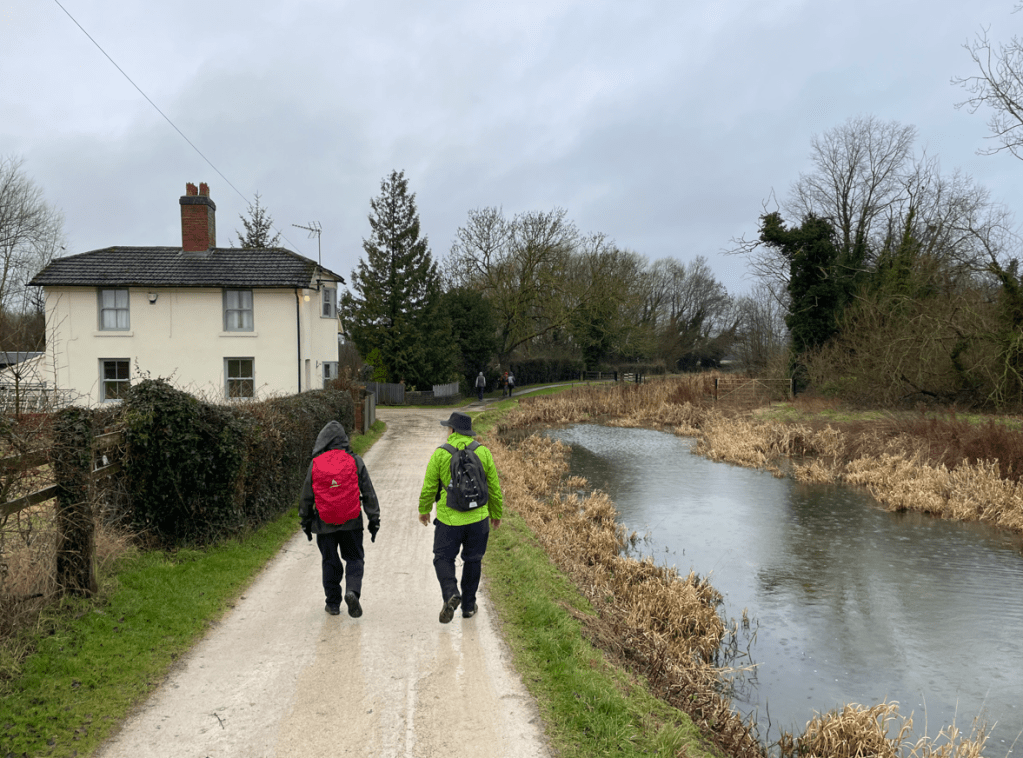
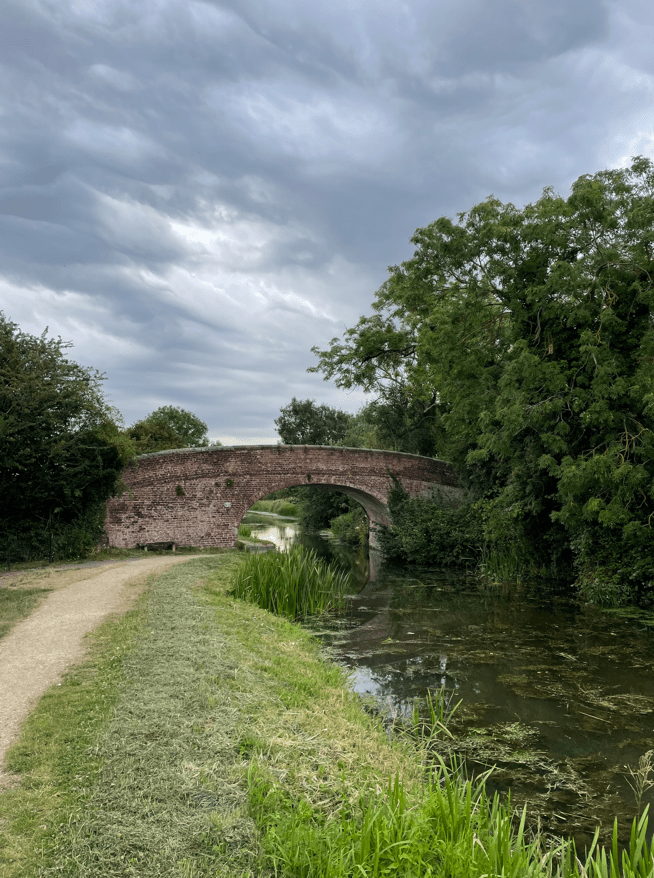
After walking through the Park we crossed Timms bridge and joined the towpath heading past the former Locksmiths Cottage at Skinners Lock .
Former Locksmiths Cottage at Skinners Lock
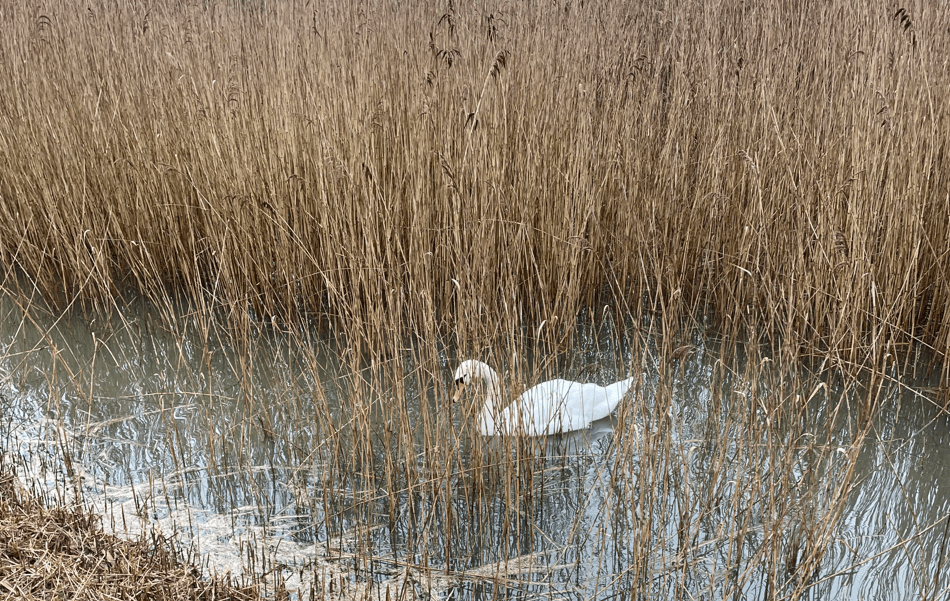
It was raining as predicted and it was cold. Cyclists and runners passed us by bidding us good morning. We saw some Swans along the way.
Beautiful Swan
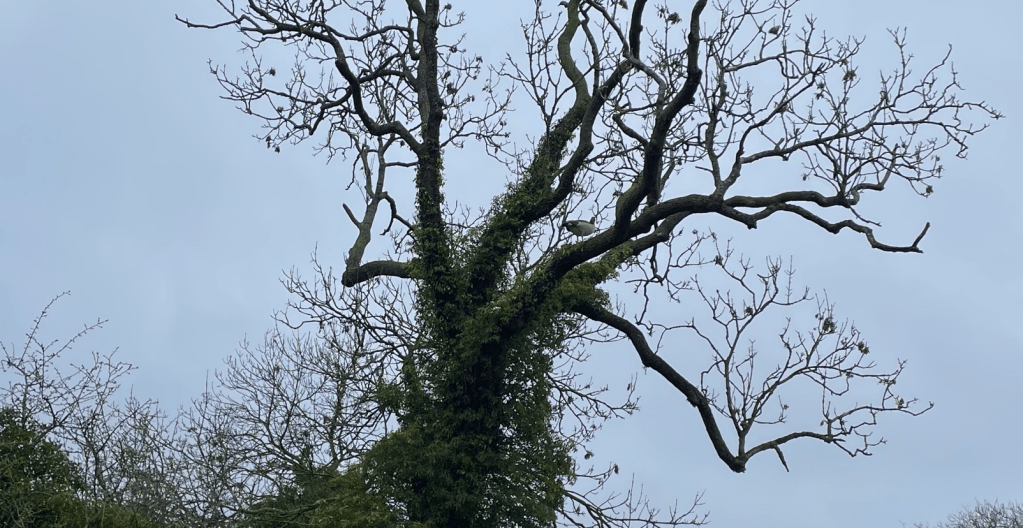
We came across a goose that had perched high on the branch of a tree – quite a surprise.
Goose sitting on a tree branch
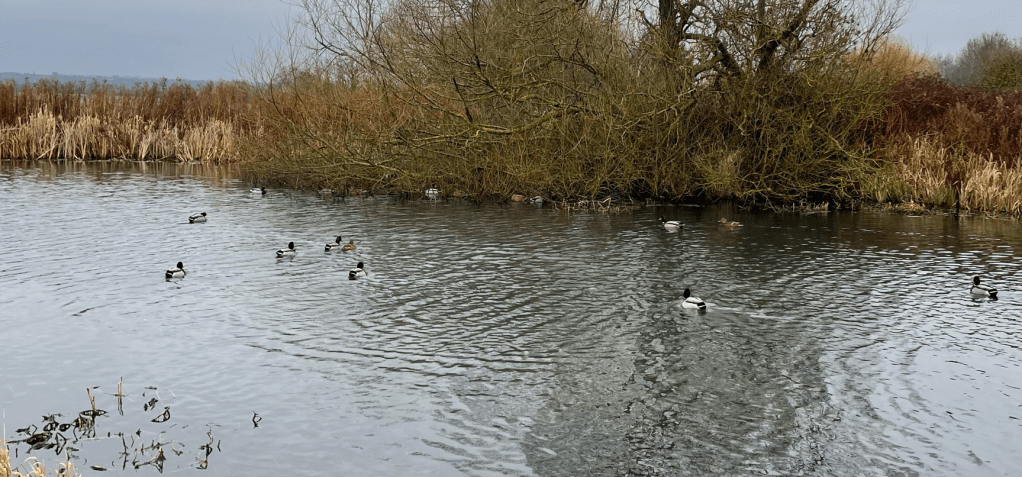
Mallard Ducks were also at home on the canal.
Mallard Ducks
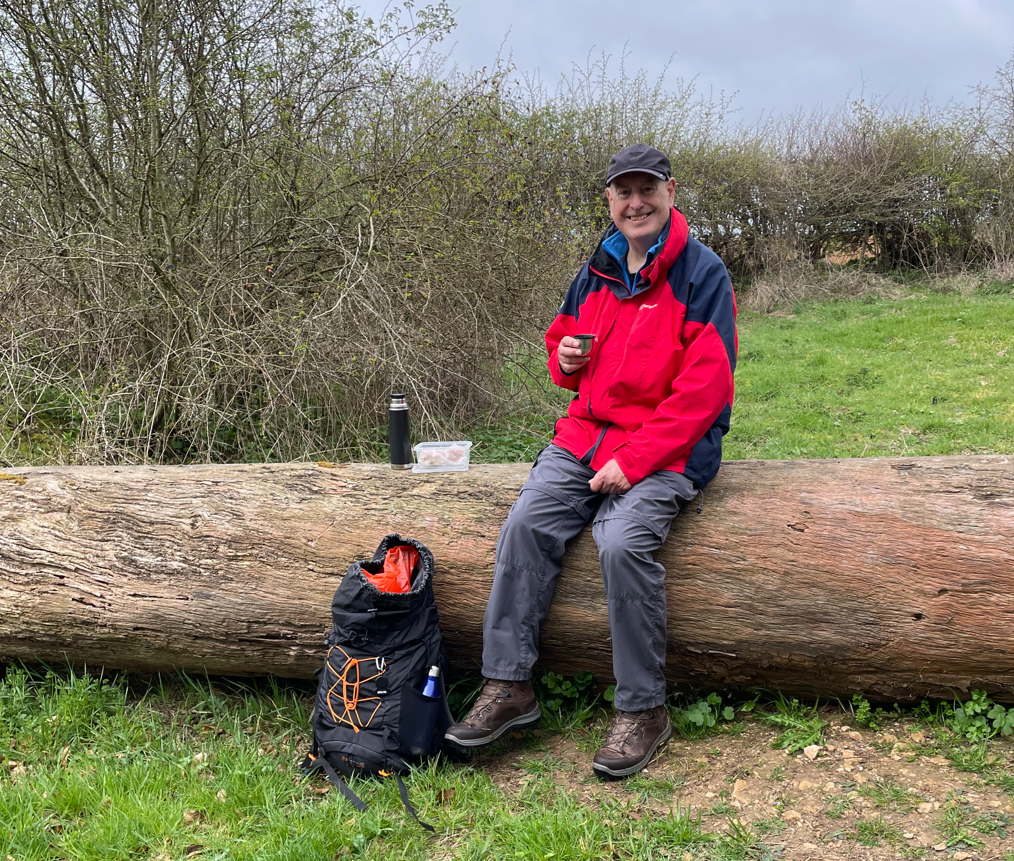
Before long we reached the edge of Gamston and our turnaround point. We stopped for a quick hot drink.
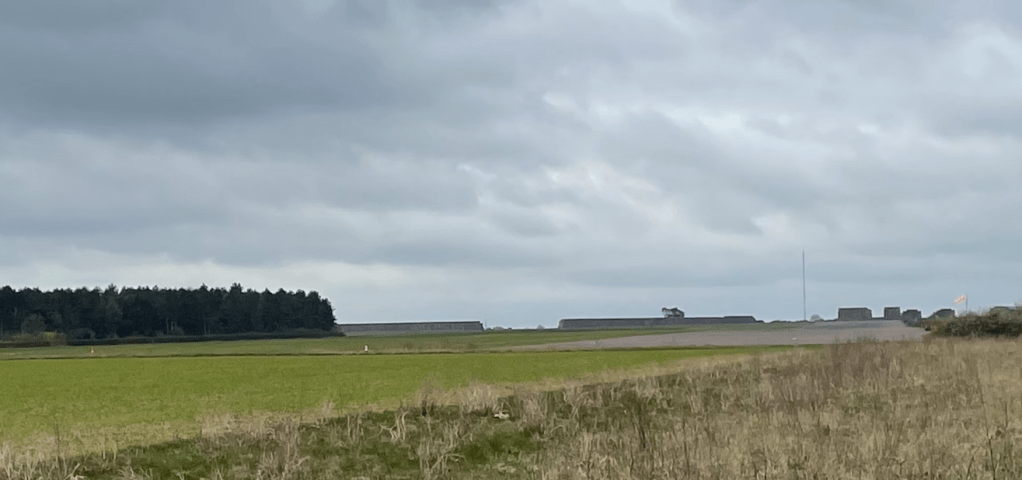
The rain had eased off so we were happy with that. It was odd walking past Tollerton Airfield and not hearing aircraft taking off and landing. The airport was closed to make way for a very controversial, vast housing estate.
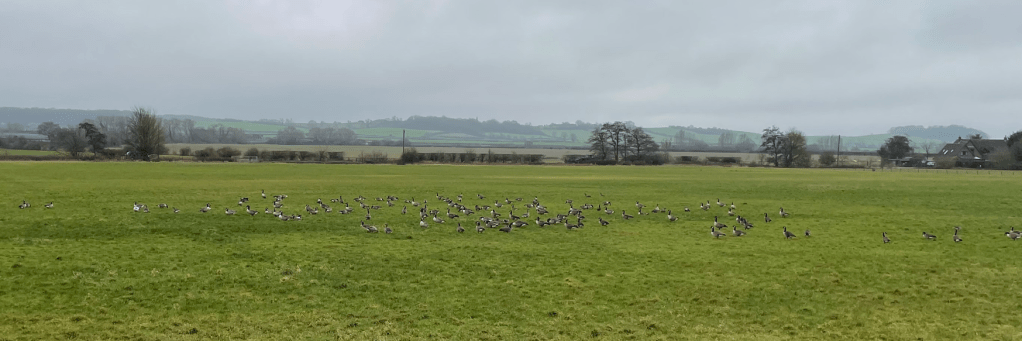
Along the canal there were many flooded fields – more evidence of our changing climate. We spotted geese in one of the fields.
We arrived back at the carpark and felt pleased with ourselves for making the effort on a grey day.
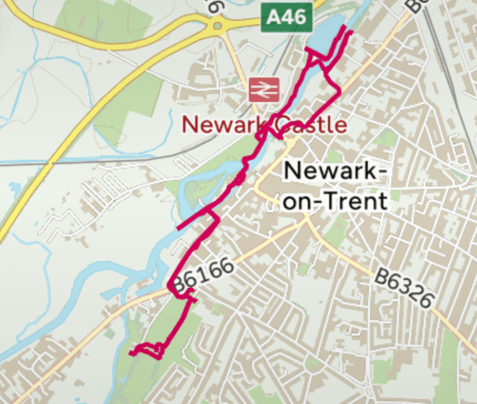
Today Angela and I enjoyed a short circular 4.5-mile walk in Newark. The weather for the past couple of weeks has been very wet culminating in storm Claudia a couple of days ago. Everywhere was water logged so we chose a route with good paths.
We parked in Sconce and Devon Park – the largest open space in Newark. You may be wondering how it got such an unusual name. Well, within the park lies The Queen’s Sconce – a scheduled ancient monument and the river Devon. Neither of us had been here before.
Because it was early on a Sunday morning the park was occupied with dog walkers mostly. The Park Run team were setting up for a Children’s Park Run.
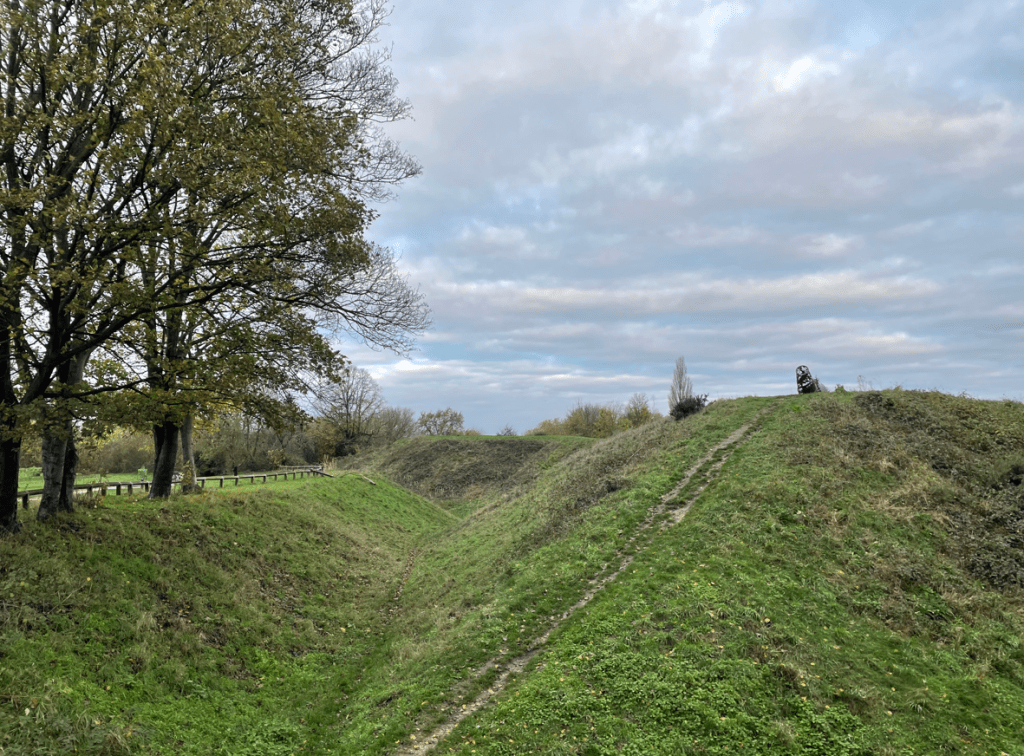
During the English Civil War Newark played a vital role. It was a Royalist stronghold and was besieged on three occasions. At the end of the second siege the towns defences were fortified by building two earthwork defences. A Dutch Engineer named Sir Bernard de Gomme designed the new defences – the word sconce is the Dutch word for fort. The two earthwork forts were named the Kings Sconce and the Queens Sconce – only the Queens Sconce survives.
A view of the Queens Sconce
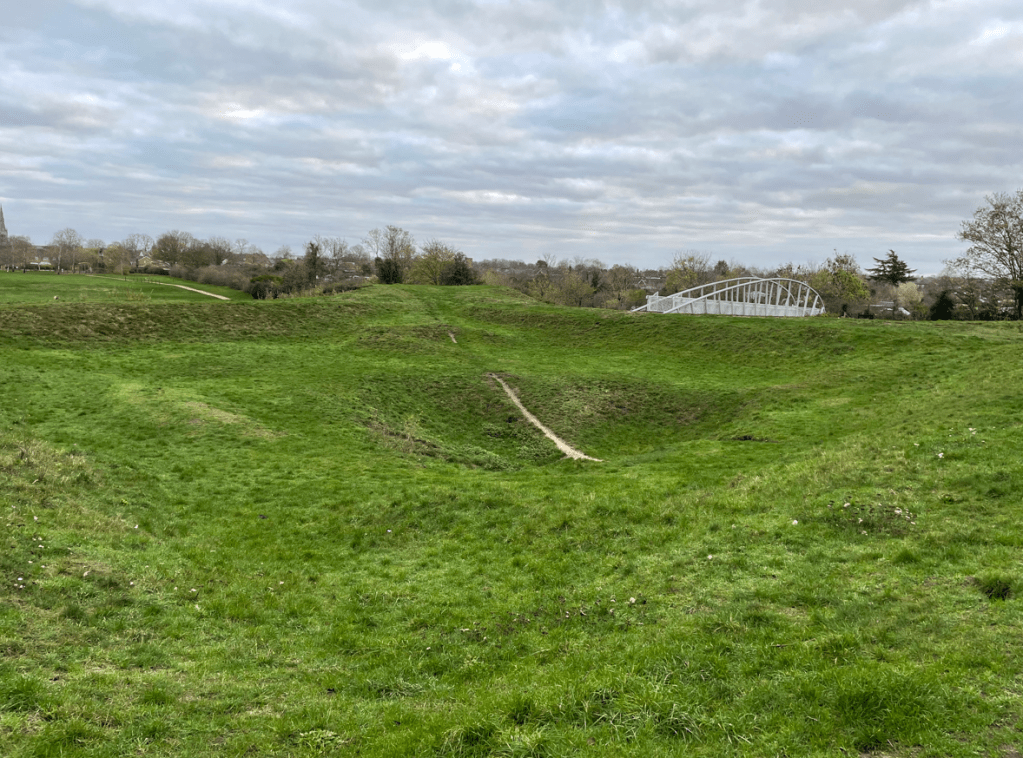
The Queens Sconce would have been garrisoned by around 150 troops during the siege. The soldiers had their quarters close to the ammunition store in the hollow at the centre of the sconce.
The hollow at the centre of the sconce
The third siege lasted six months and the Royalist forces were weakened by famine and plague. Finally, the King ordered the surrender of Newark. After the surrender the parliamentarians left quickly, not wishing to risk the plague. Hence, the Sconce is still here today.
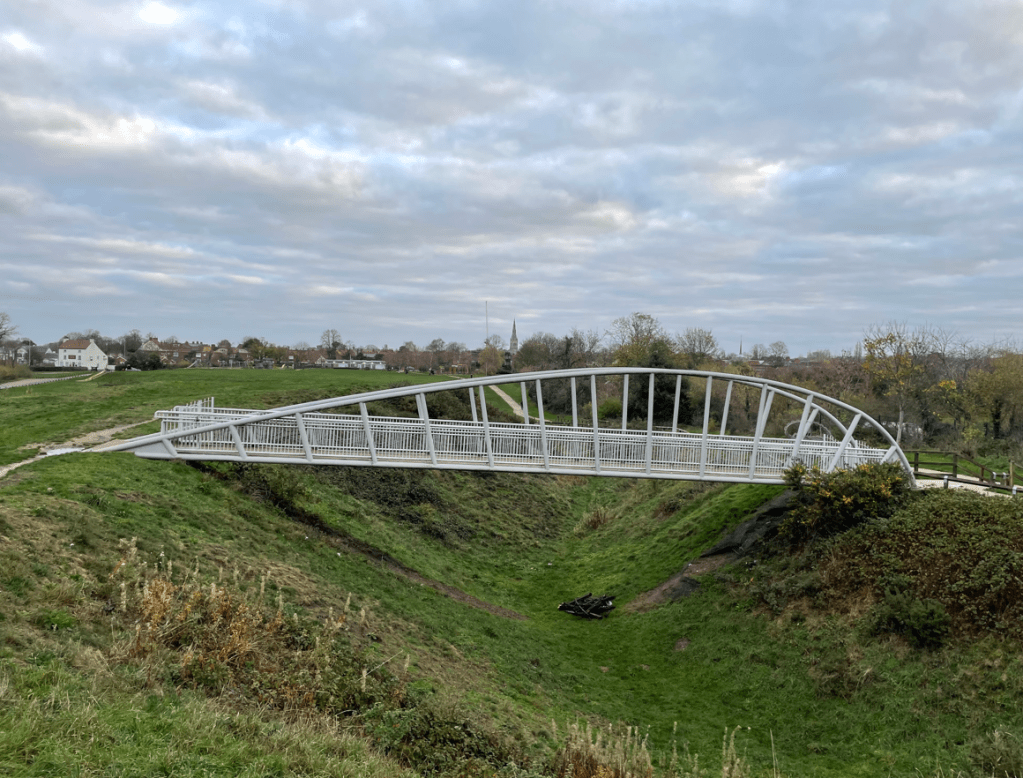
We crossed over the forts ditch using the attractive bridge.
Bridge to reach the sconce
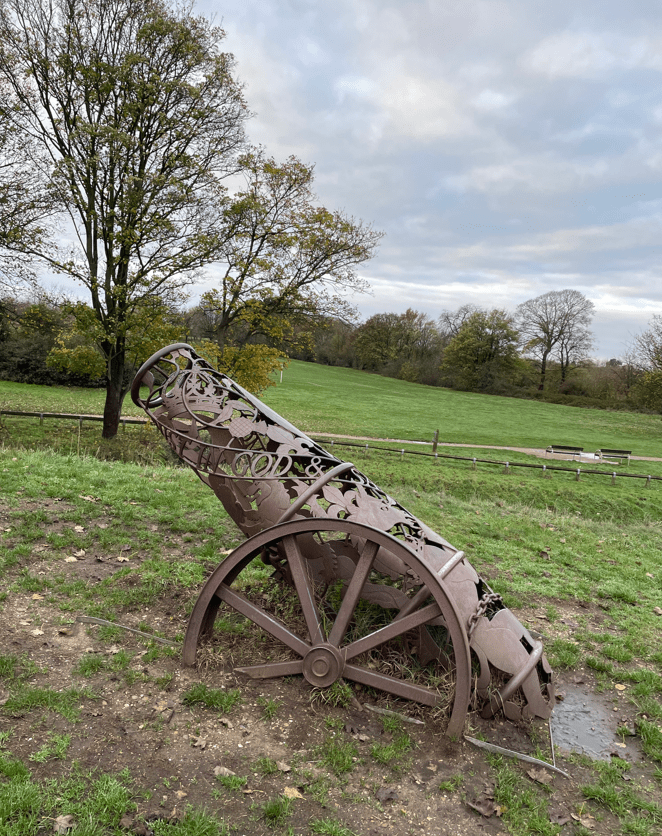
There is a lovely sculpture of a canon on the high point of the sconce.
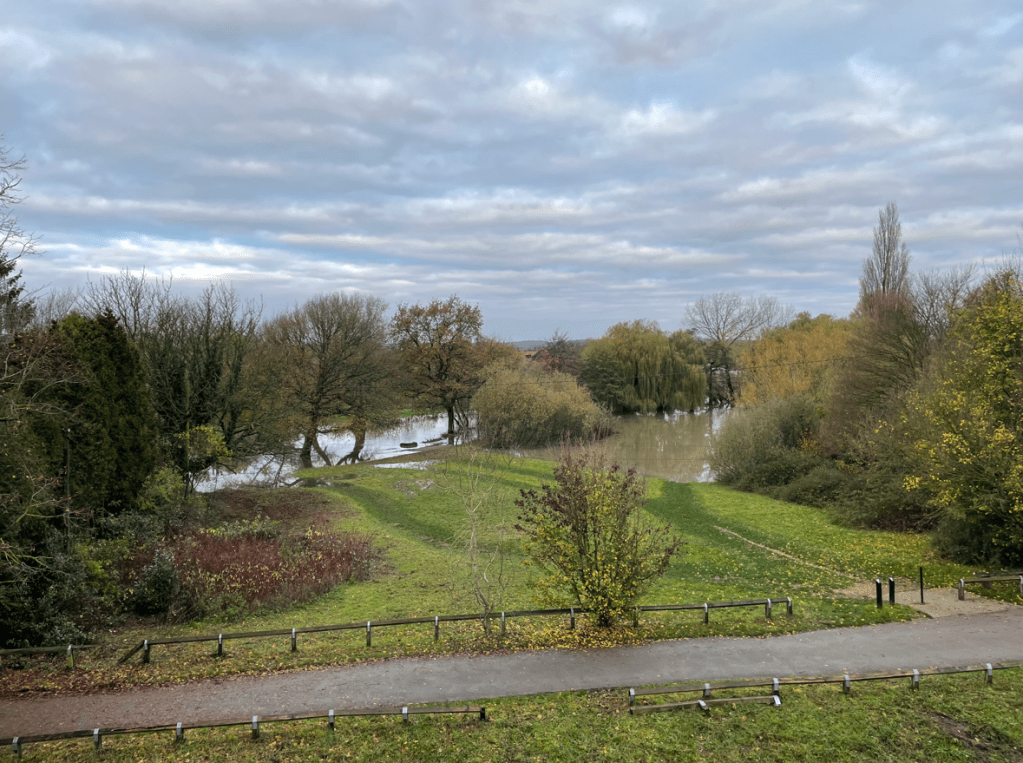
From the top of the sconce we could see the swollen river Devon below.
River Devon in flood
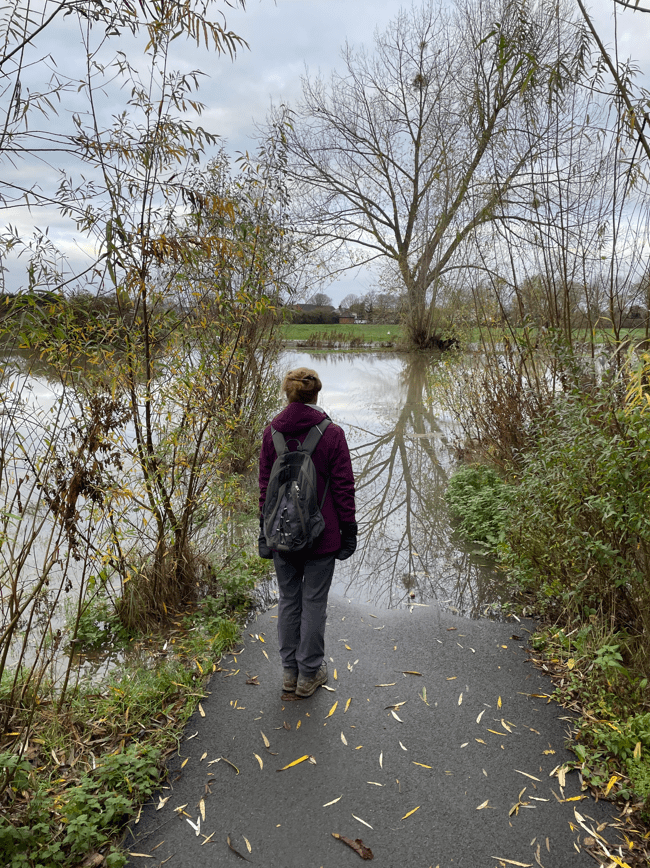
As we walked around the park we found that our access was restricted because the river Devon had flooded the paths.
Do you fancy a paddle Angela?
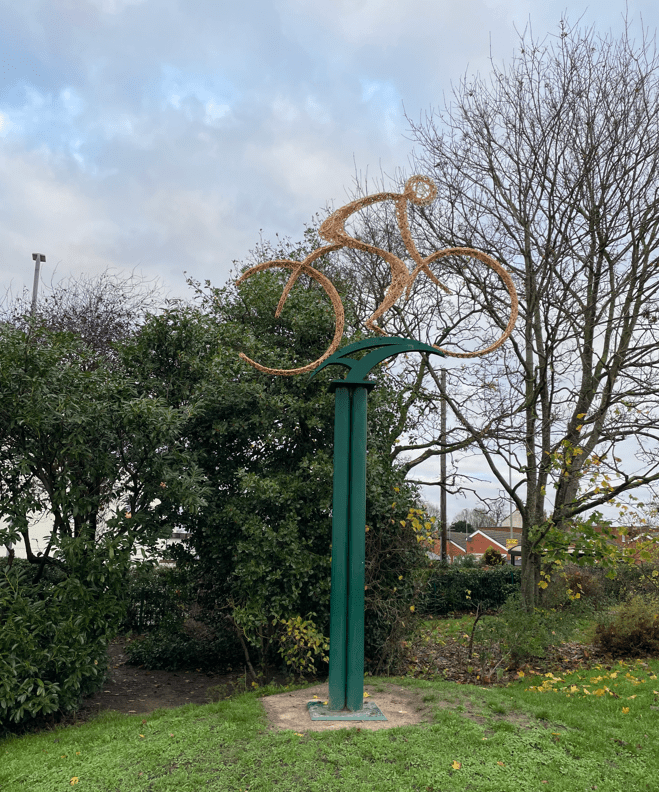
As we left the park, to head for the Trent Navigation, we passed another nice sculpture (by Phil Neal)- a bicycle made from bicycle cogs to commemorate the Tour of Britain in 2017.
Reaching the Trent Navigation we could see that the water was moving quickly.
I love this walk by the Trent Navigation – its steeped in history. You can just sense it.
View from Newark Town Lock gates
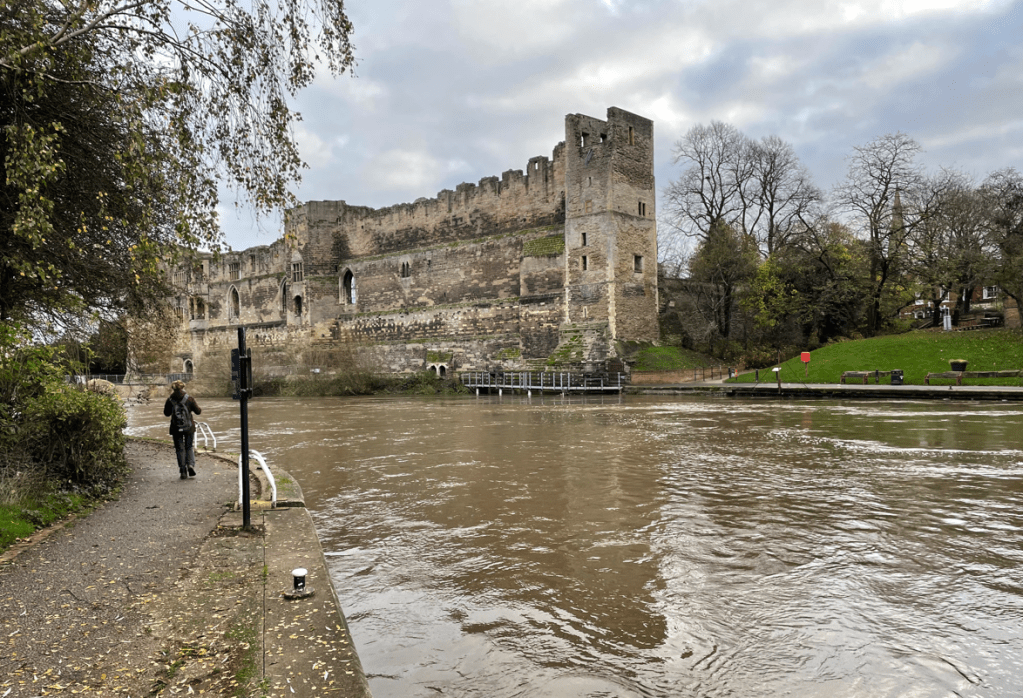
Our riverside path took us beside the ruins of Newark Castle.
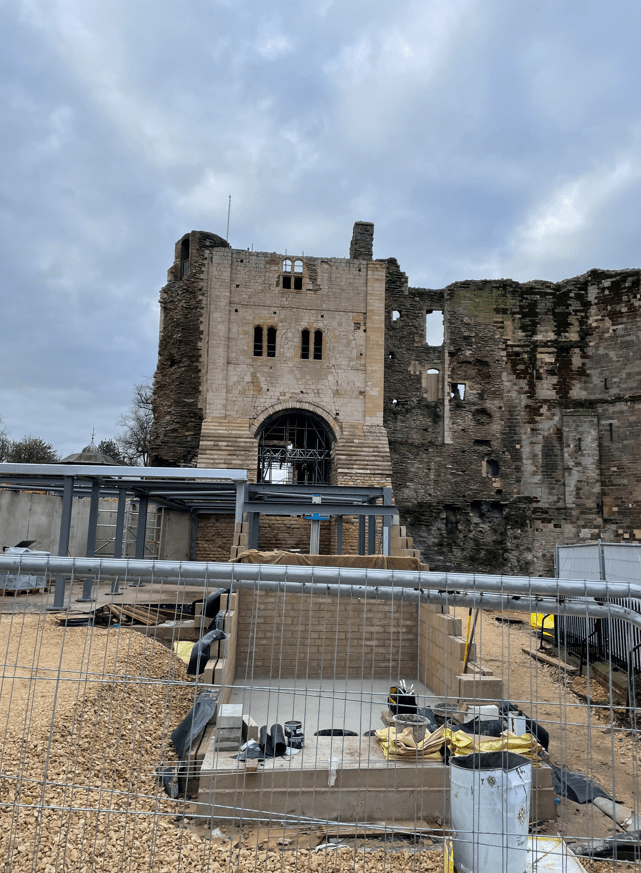
It was pleasing to note that some restoration works are occurring and what looks like a visitors centre is being built.
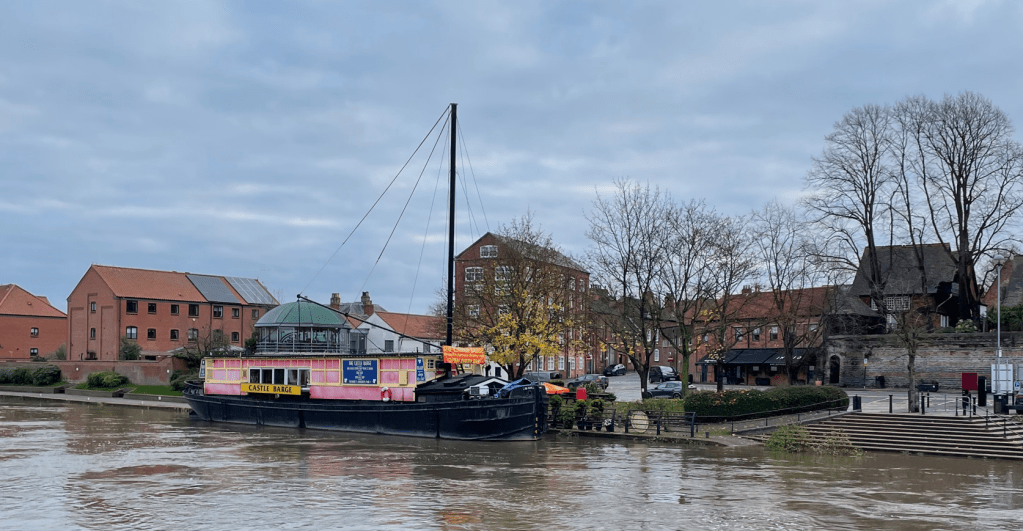
At the town wharf an old barge is being used as a café. I imagined it with its sails hoisted.
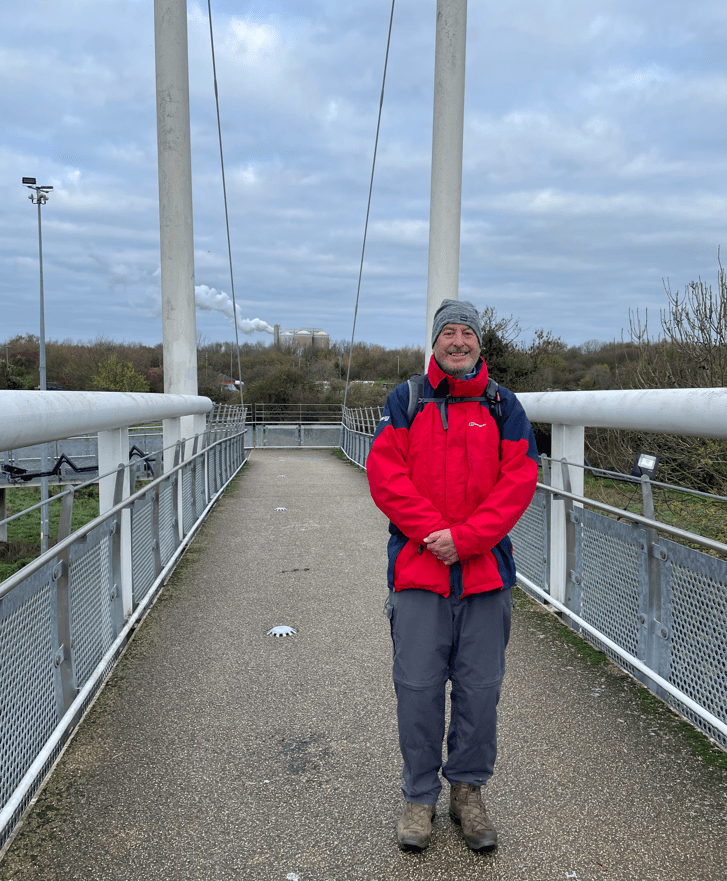
We continued along beside the river until the path became too muddy. We then crossed a pedestrian bridge with the famous sugar factory stack billowing steam in the background. There was a distinct smell of sugar beet in the air.
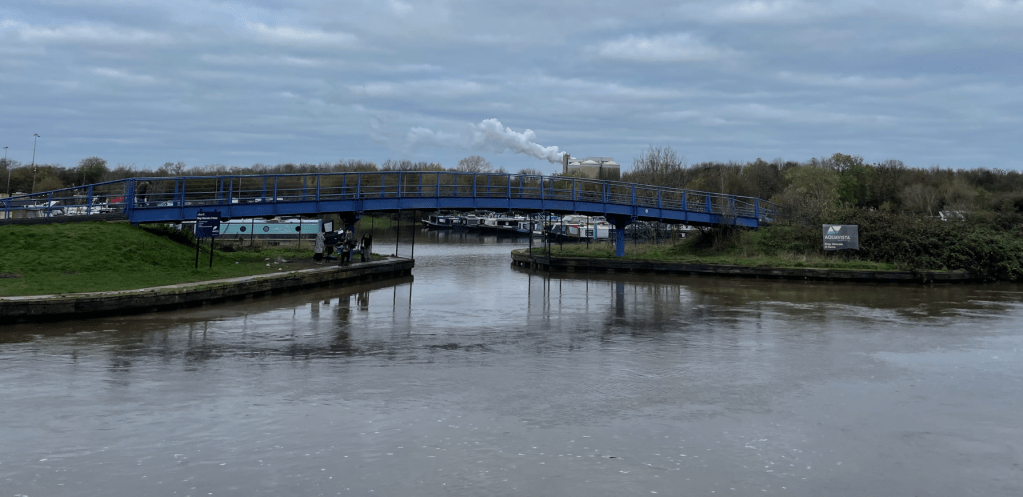
Walking along the opposite bank we passed the entrance to Kings Marina and a bridge that we had crossed earlier.
Kings Marina
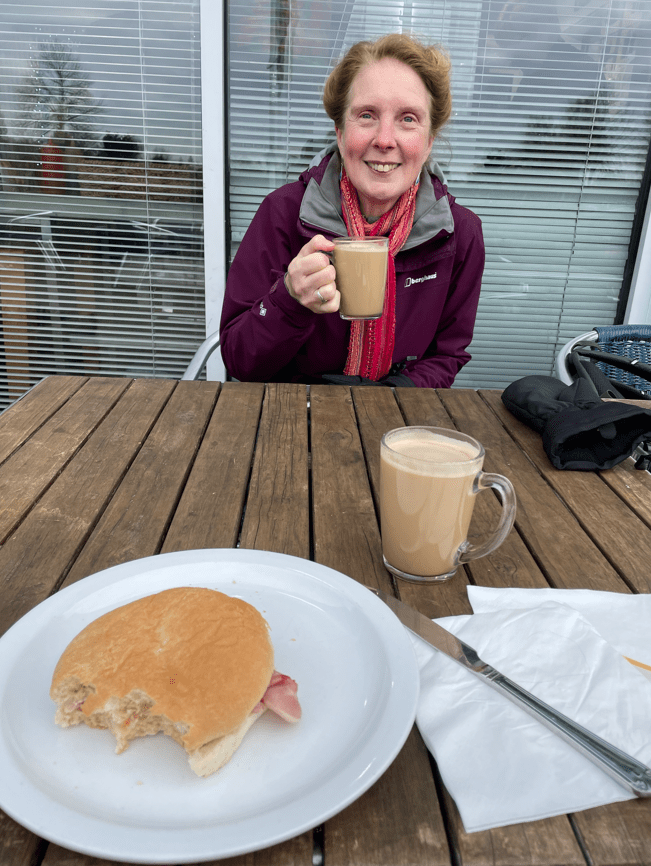
Our onward progress was frustrated by a path closure and a diversion. We decided that we were not going around the houses and headed back to Sconce and Devon Park. We stopped at the café in the park and enjoyed a coffee.
Rumbles cafe in the park
We will return to the park in the future to enjoy the areas that we couldn’t see today because of the flooding.
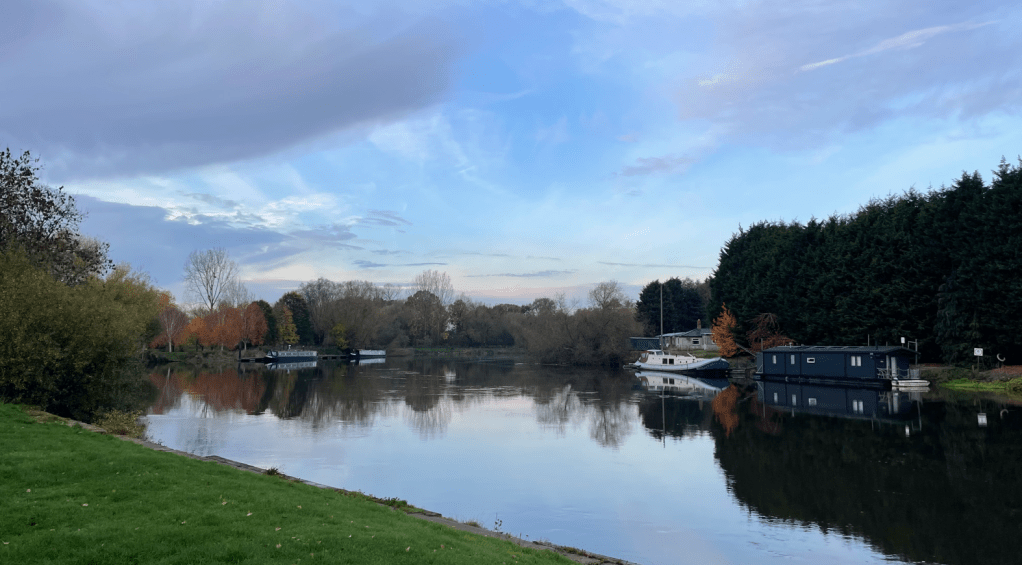
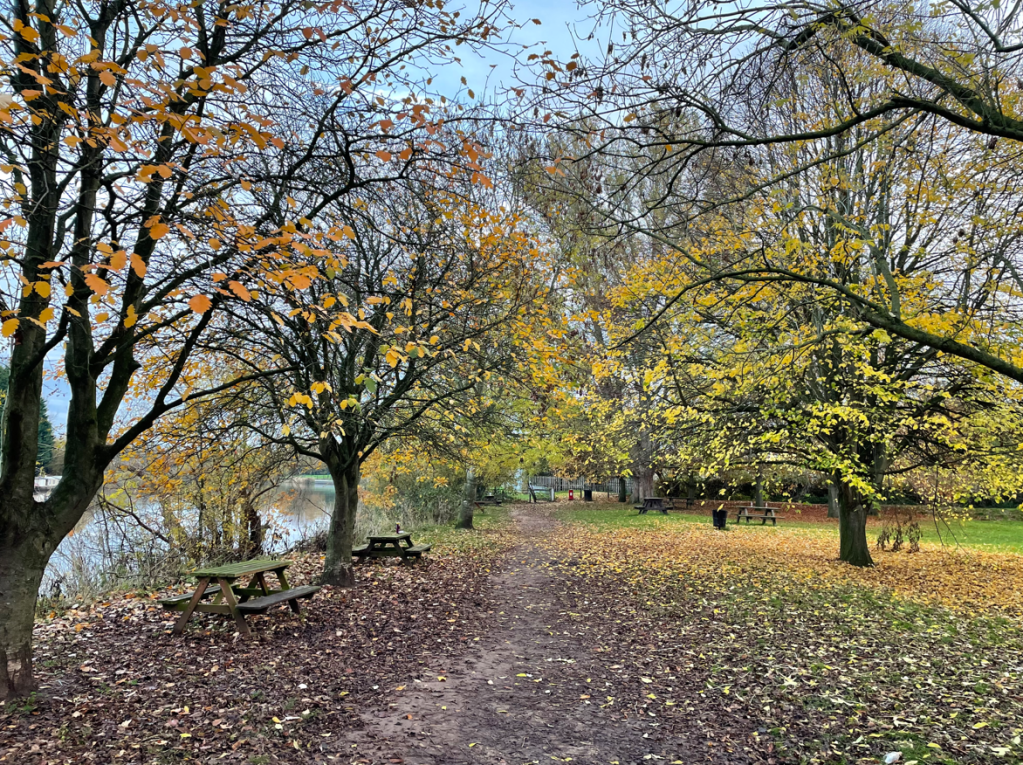
This morning I was out early and enjoyed a delightful 7.5-mile walk from Farndon to Newark along the river Trent and the Trent Navigation. I parked at the Riverside pub in Farndon and set off walking at 07:30. The pub lies adjacent to the River Trent and I was soon walking beside the river – all was still and quiet.
River Trent
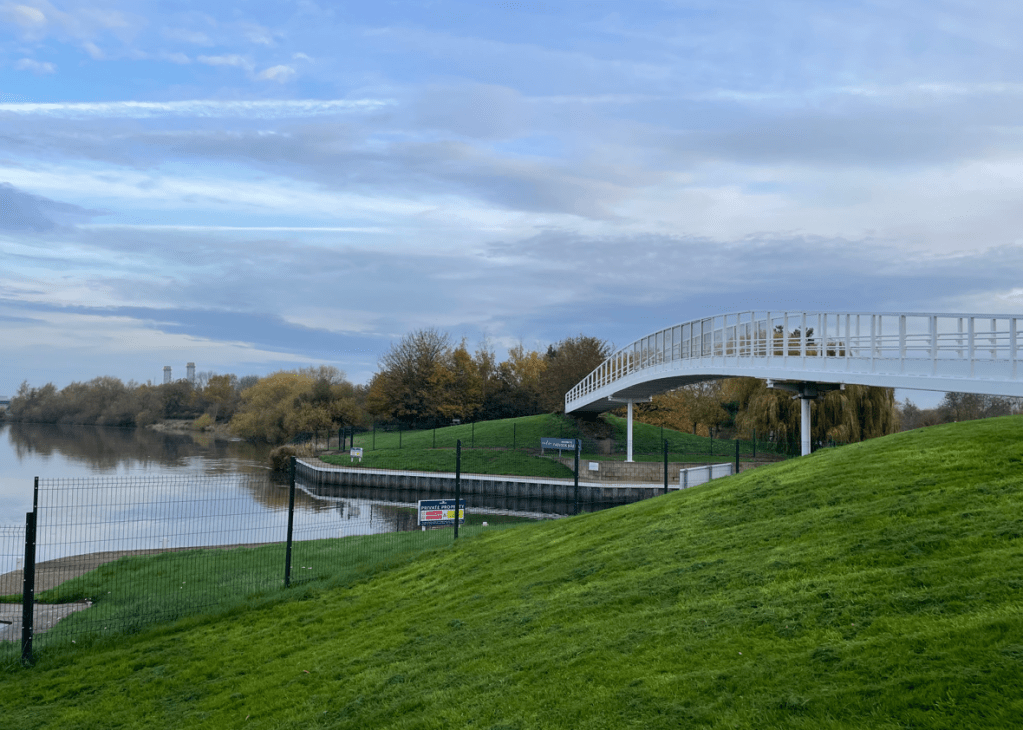
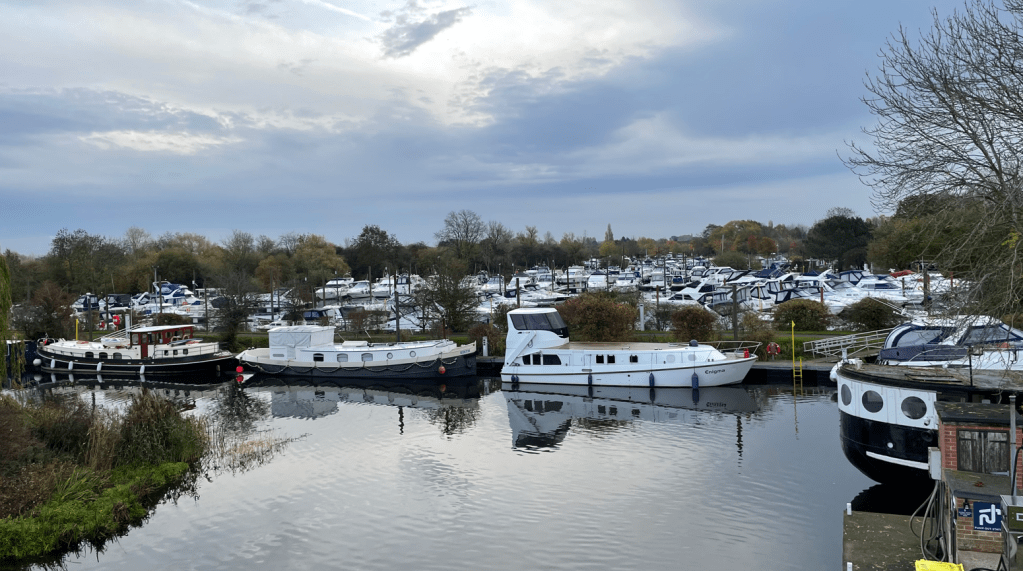
It wasn’t long before I was crossing a white pedestrian bridge over the entrance for Farndon Marina where there were boats galore to admire!
Bridge over entrance to Farndon MarinaFarndon Marina
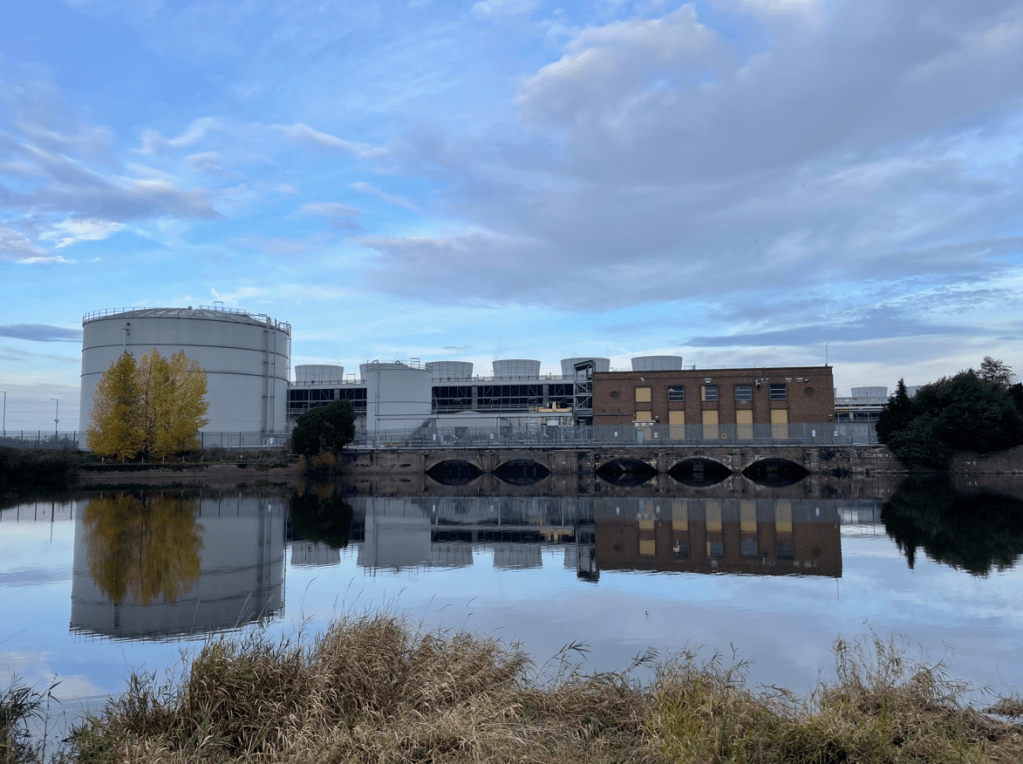
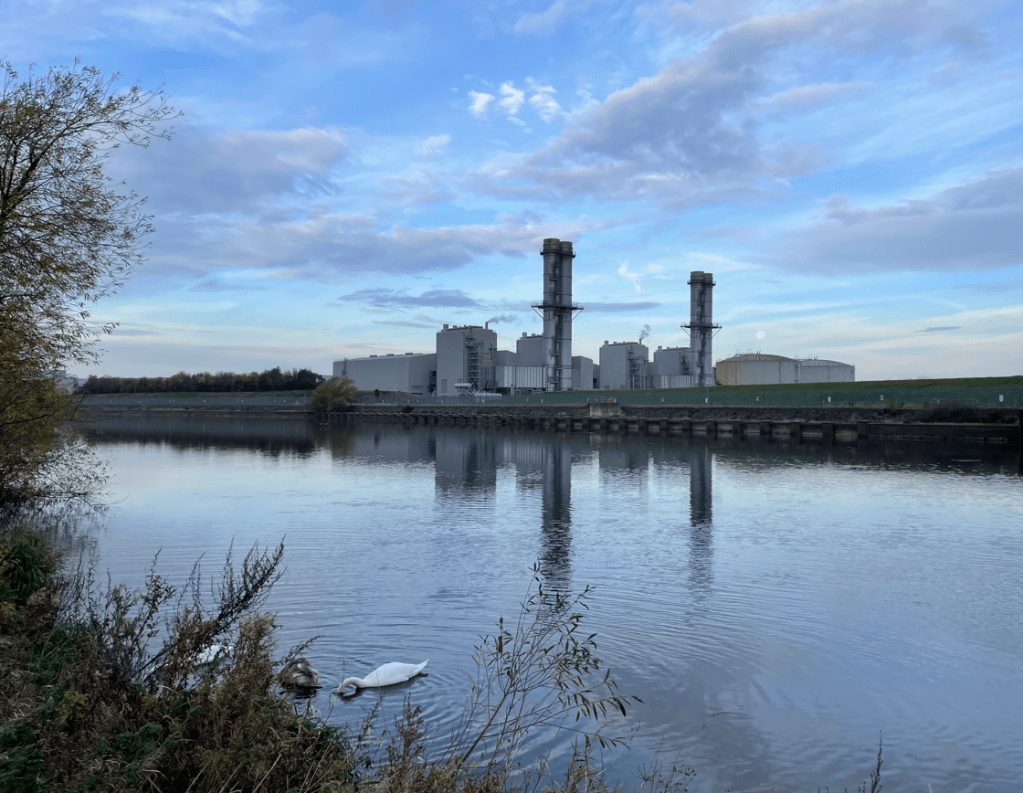
As I walked along the bank of the river I had super views of Staythorpe Power Station on the opposite bank. The buildings were reflecting in the calm waters.
Staythorpe Power Station
The power station is owned by the German energy company RWE Generation UK. It is the second largest gas fired power station in the UK and the third largest in Europe.
Staythorpe Power Station
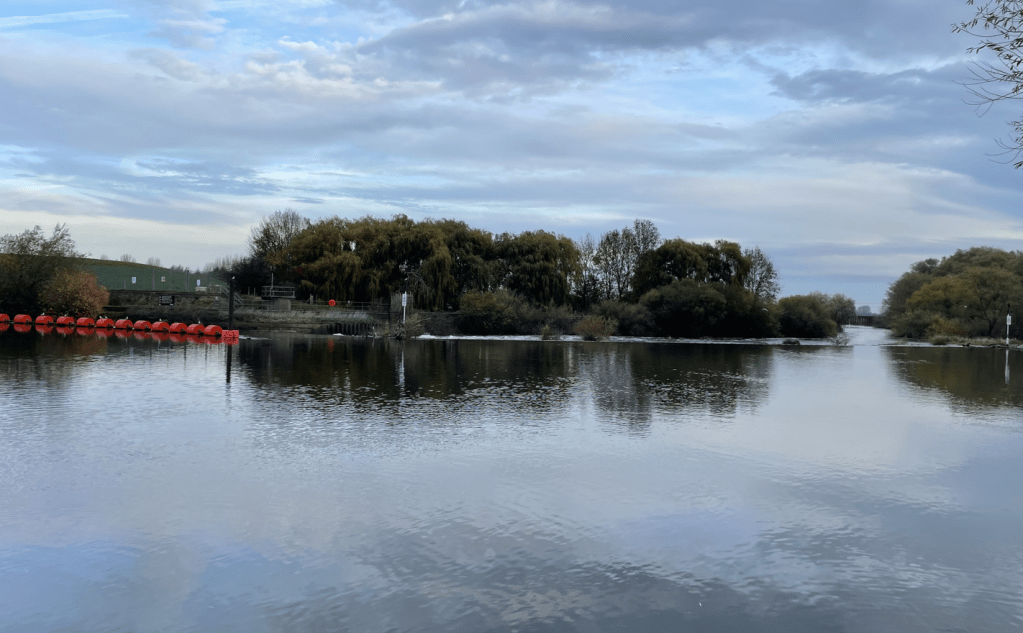
Soon after this I passed by Aversham Weir. You couldn’t help but notice it – the sound of the tumbling water was booming and an indication of just how powerful moving water can be. It was just after this that I left the river Trent and joined the Trent Navigation.
Aversham Weir
The Trent Navigation was completed in 1772. It created a navigable channel right through Newark. Goods such as corn, wool and coal could now be landed right in the town and the economy prospered.
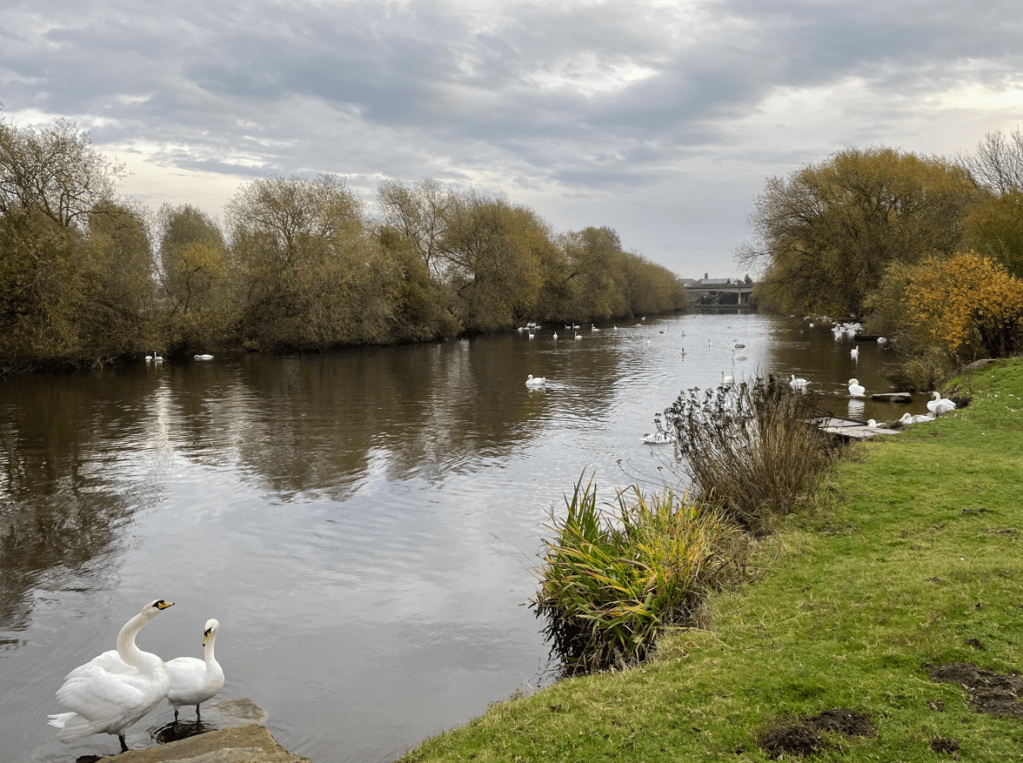
The Navigation is rich with swan life.
Swan life on the Trent Navigation
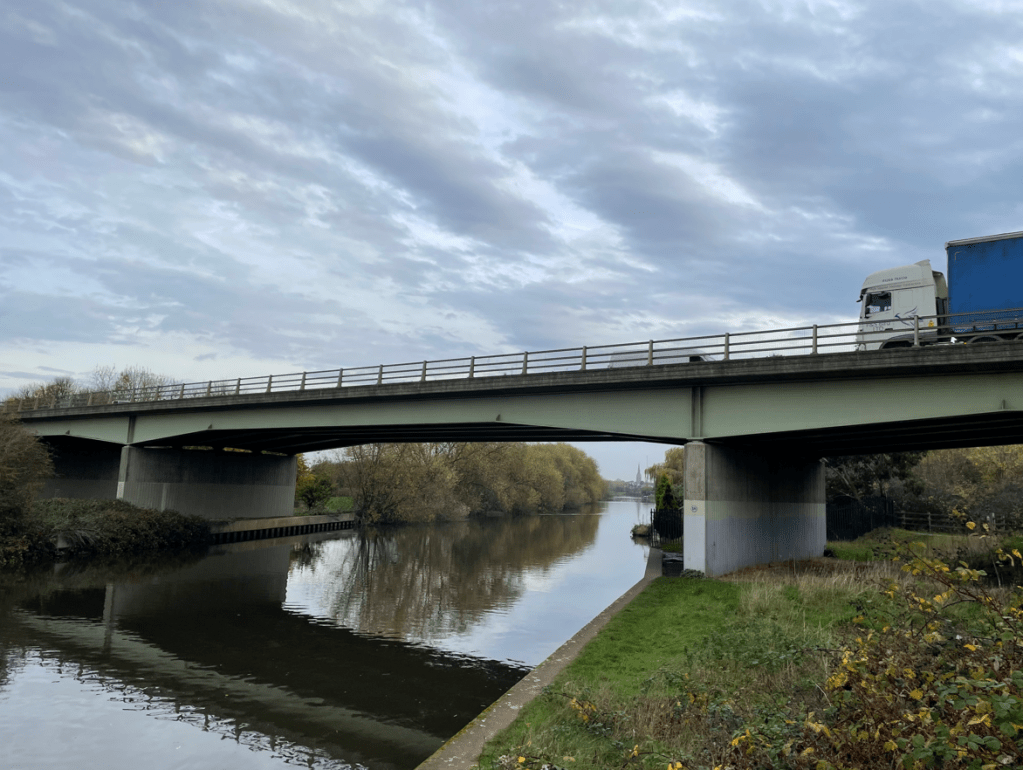
I passed under the A46 road bridge and in the distance I could see a church spire – Newark was close.
A46 road bridge
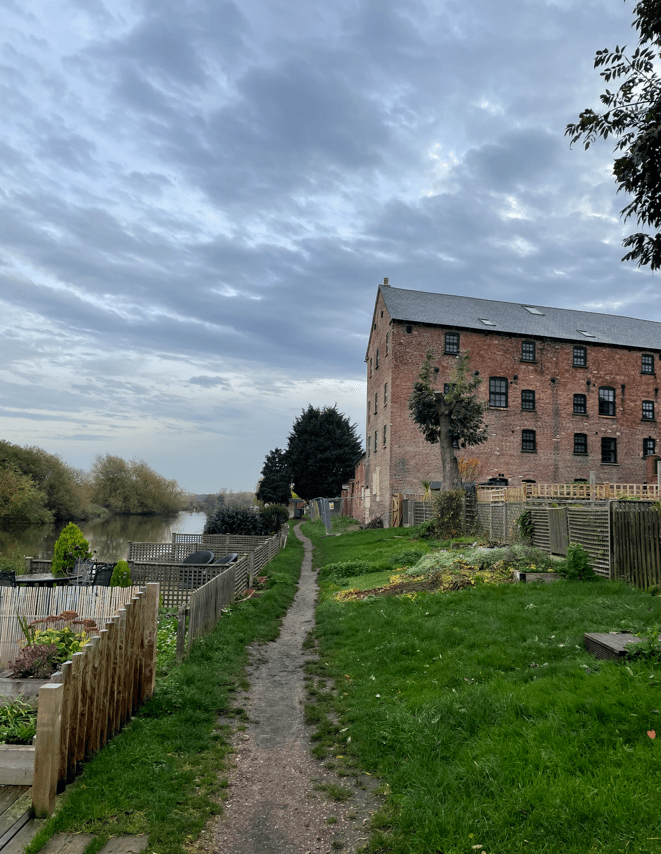
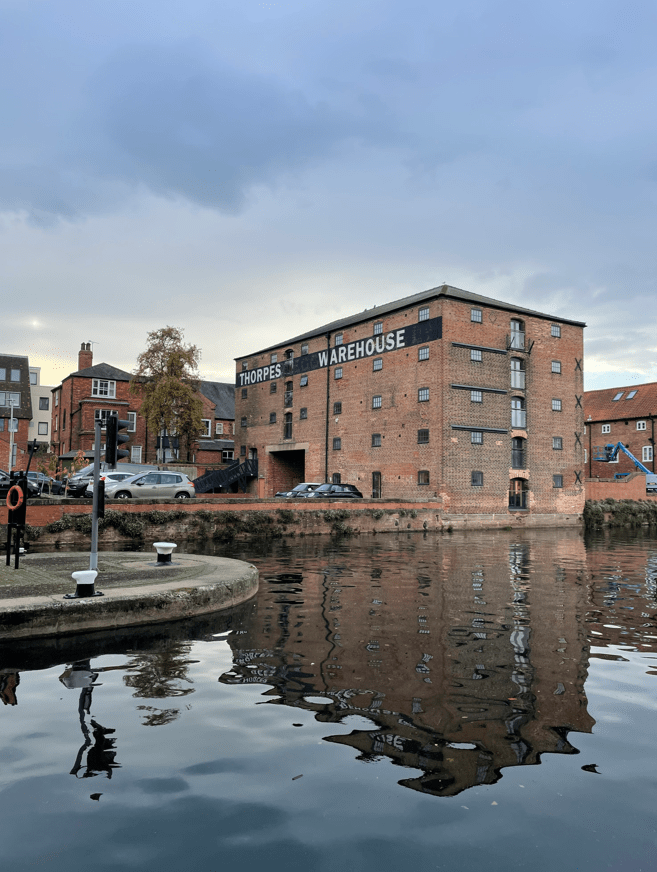
My path took me past the bottom of peoples gardens and I saw my first old warehouse of the day- it is being restored, presumably, into apartments.
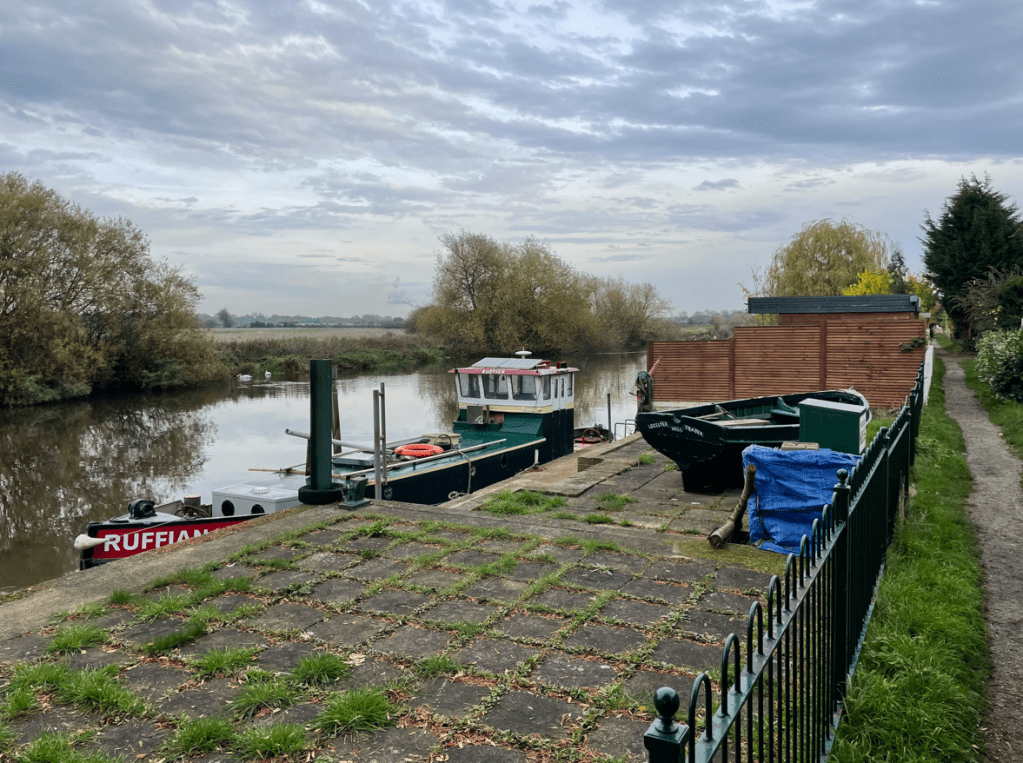
I passed a wonderfully quaint boat called ‘Ruffian’ moored up at the bottom of one of those gardens – I really liked it.
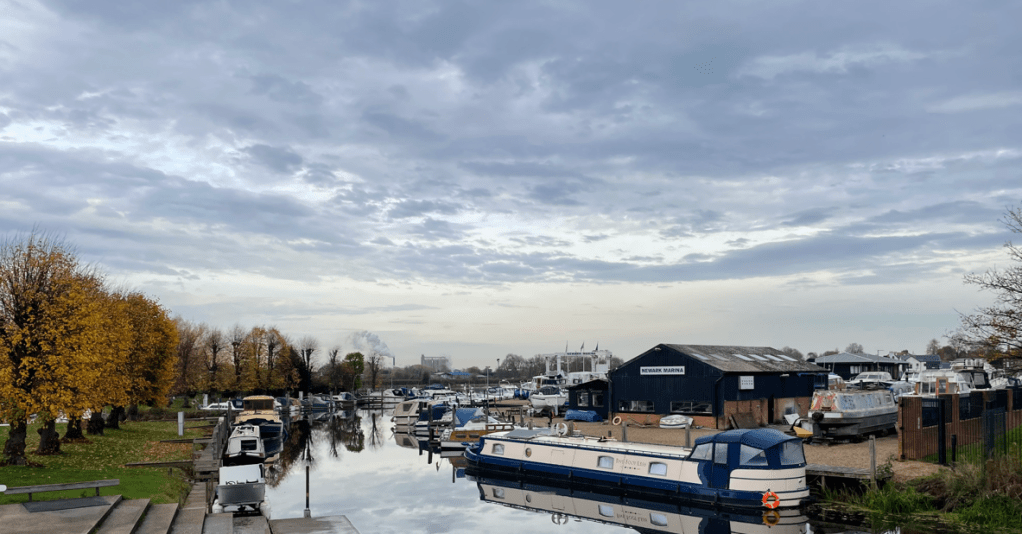
Further on I reached the outskirts of Newark, passing Newark Marina. Nearby is Newark Rowing Club – founded in 1873 according to a proud sign on one of its buildings.
Newark Marina
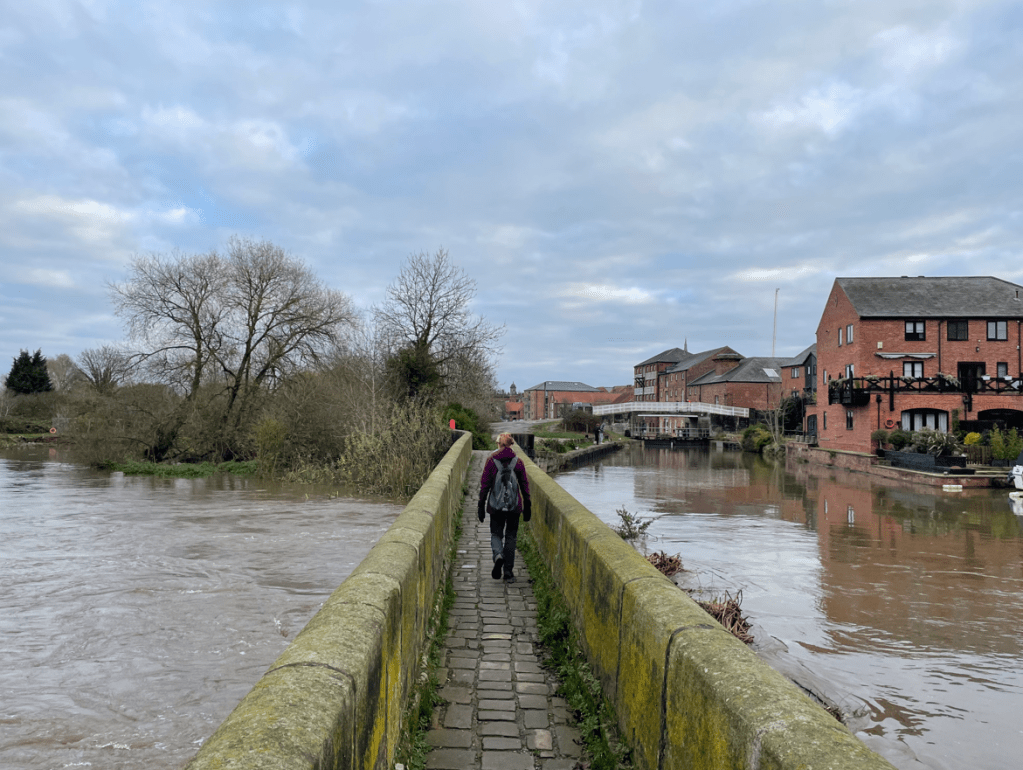
As I walked further I saw an old cobbled footbridge and thought that looks great!
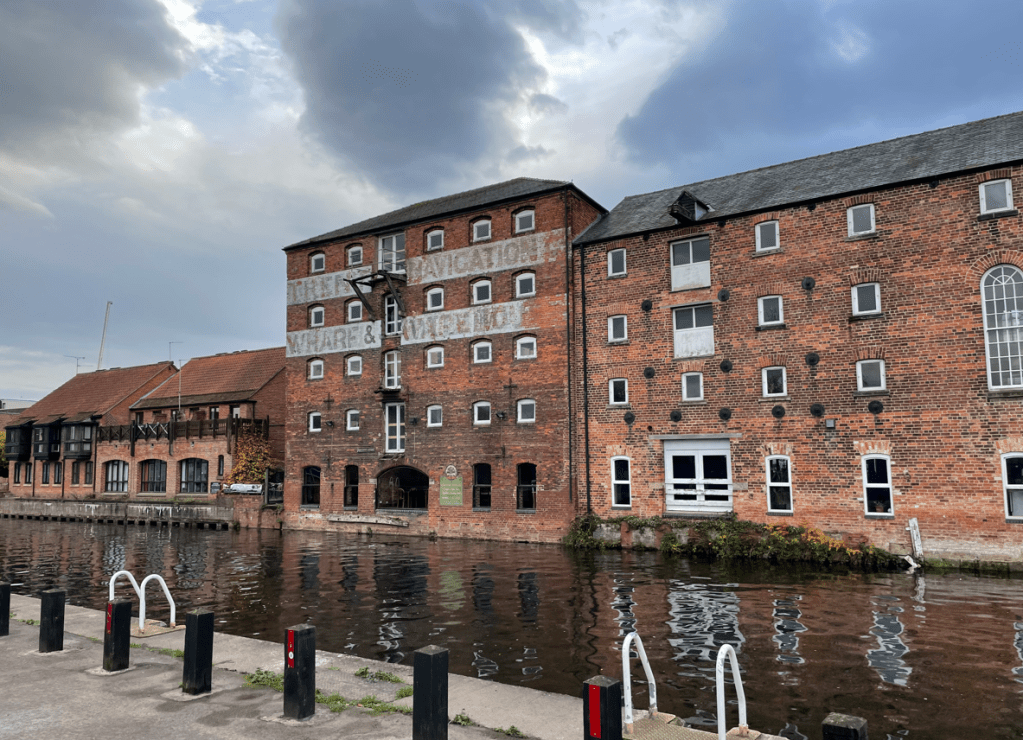
As I neared the centre of Newark I passed more converted warehouses to admire. I just love to see the heritage buildings still enjoying a useful life.
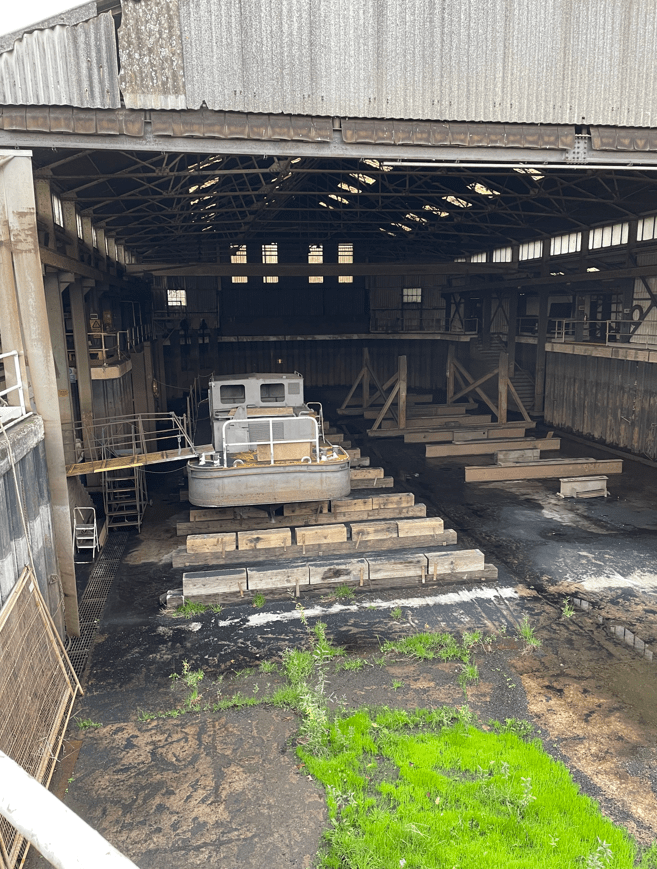
A light shower remined me that the weather forecast for the morning had mentioned rain. I passed a Canal and Rivers Trust site and their dry dock – the largest inland dry docks in the UK.
CRT dry dock
A couple of police dinghies past by, heading for the lock.
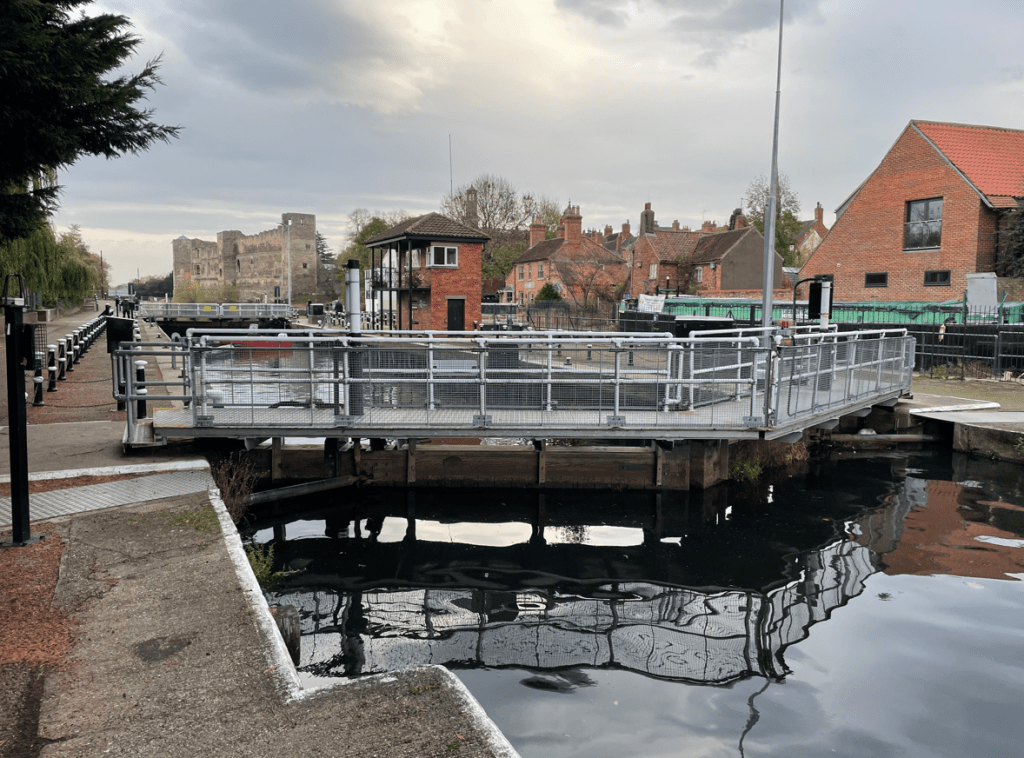
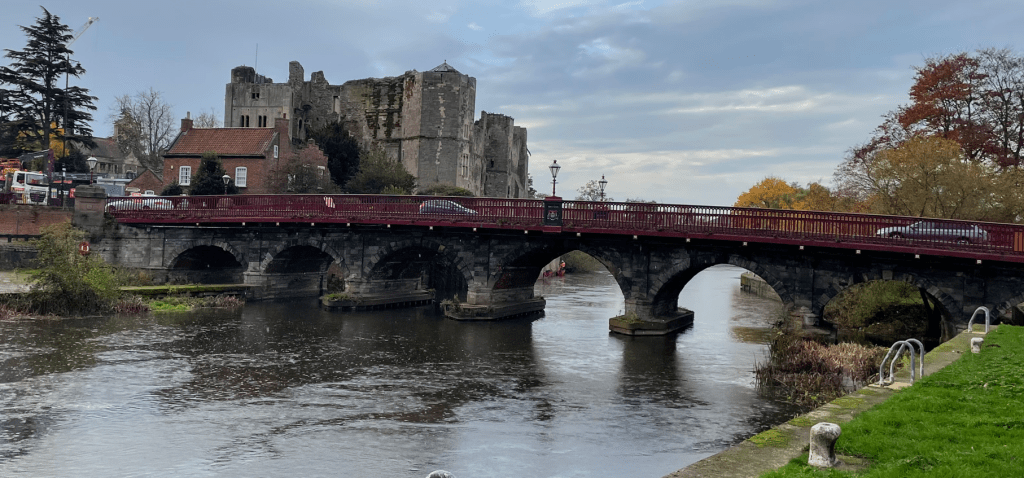
Soon I was walking by Newark Town Lock – I could see the ruins of Newark Castle behind.
Newark Town Lock
The castle was built in the mid-12th century. During the English Civil War the castle was besieged three times but remained loyal to the Royalist cause.
The ruins of Newark Castle
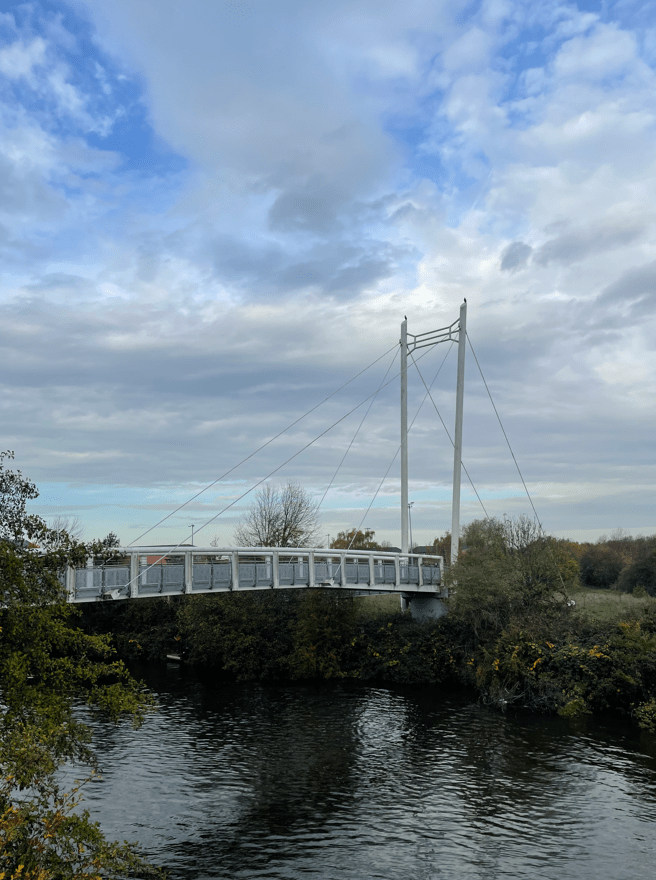
I continued along the path passing under Trent bridge and then further along I crossed on to the opposite bank via a modern pedestrian bridge.
Trent BridgePedestrian Bridge
I had reached the turnaround point on my walk so I headed back retracing my path but taking a short cut back to the start point.
I had thoroughly enjoyed my walk, seeing new sights and the rain kept away.
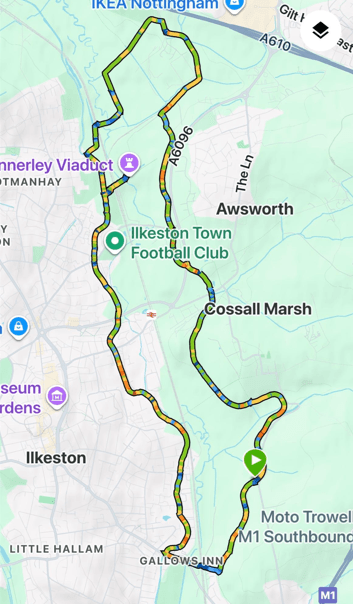
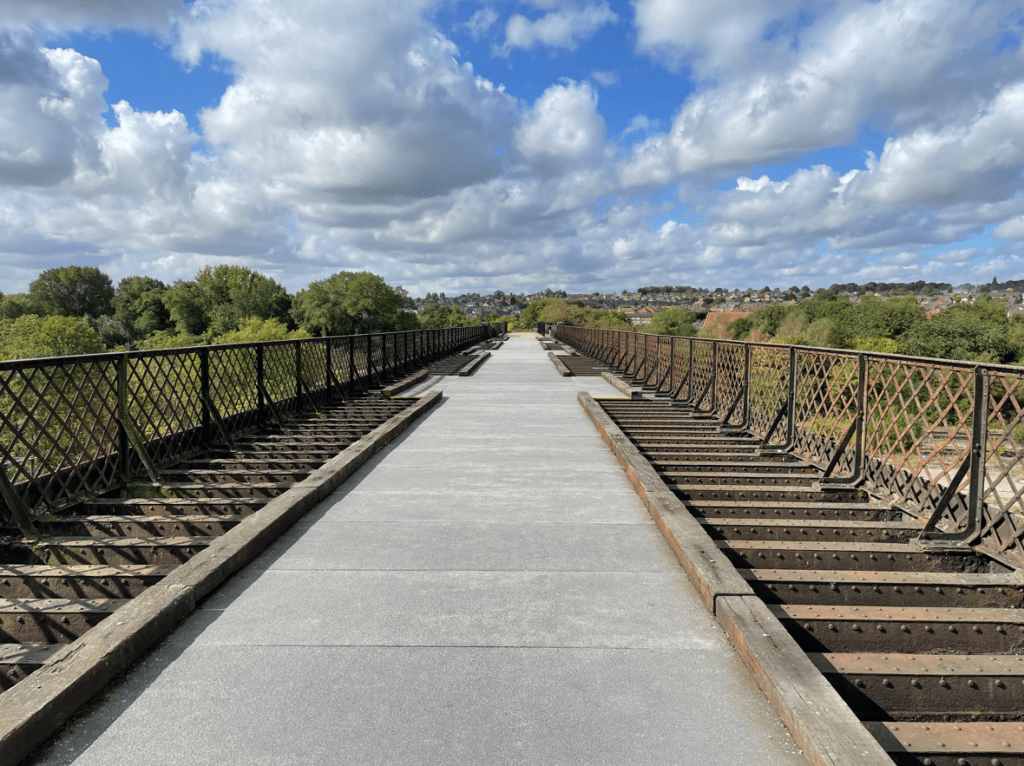
Today Mick and I enjoyed a 8.75-mile circular walk which took in the Nottingham (disused) and Erewash canal’s. The highlight of the walk was visiting the Bennerley Viaduct – one of only two Victorian Wrought Iron railway bridges still standing today. It is grade 2 listed.
Bennerley Viaduct
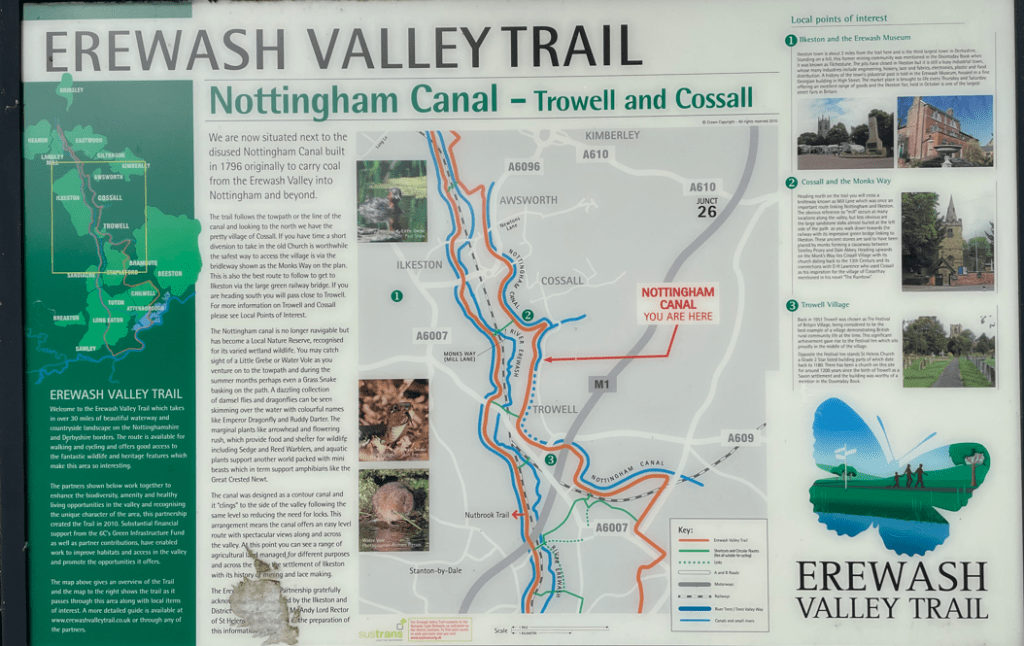
After parking we set off following the Erewash Valley Trail along the defunct Nottingham Canal. The canal was opened in 1796 (built by William Jessop) and ran nearly 15 miles from the River Trent at Nottingham to its junction with the Cromford and Erewash canals at Langley Mill. It carried coal from local pits to Nottingham and beyond. It was abandoned in 1937 and is now a nature reserve.
As we walked along the towpath we saw coots and moorhens, Swans, Mallard ducks and a number of Herons.
Nottingham CanalA Heron looking for its breakfast
We reached the Nottingham Canals Awsworth Fishery which was clearly well kept and popular with Anglers. It was whilst walking along this section that we caught our first glimpse of the Iron Giant spanning the Erewash valley.
Awsworth Fishery
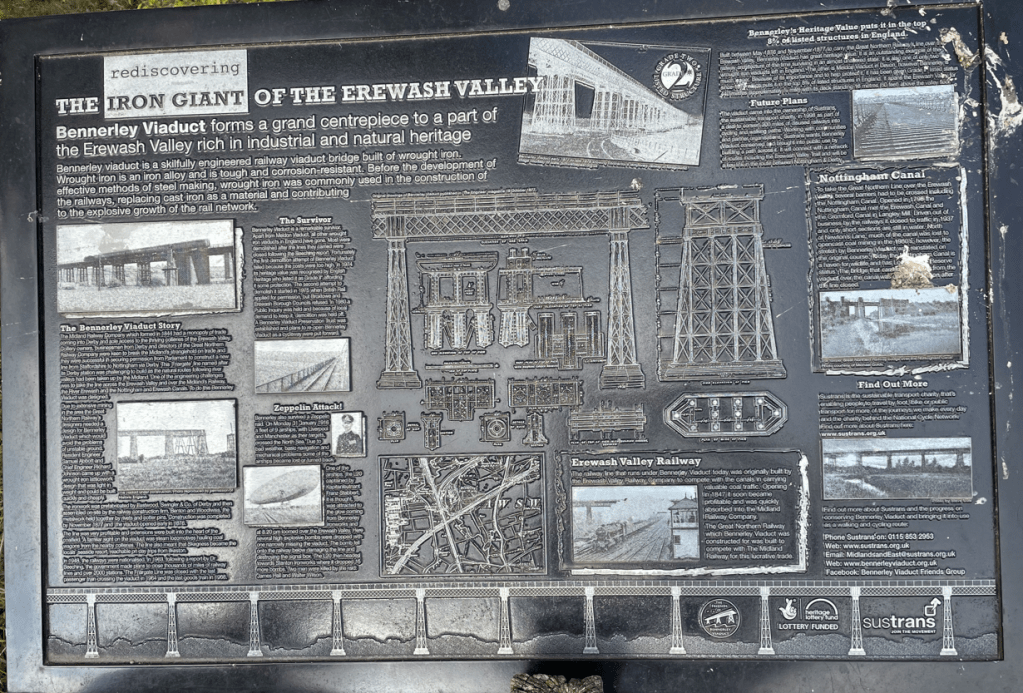
There is an impressive metal sign detailing the history of the Viaduct at the viewing point which is most appropriate.
The Viaduct was part of the Friargate line which was built to break the monopoly of the Midland Railway Company in carrying coal from the mines along the Erewash Valley. One of the engineering challenges was to take the line across the Erewash Valley and over the Midlands Railway, the river Erewash and the Nottingham and Erewash canals. The Bennerley Viaduct was designed to do this. The design engineer came up with a lattice framework that was light and could be built cheaply and quickly.
The line was opened in 1878 and the last train across it was in 1968- thank you Dr Beeching.
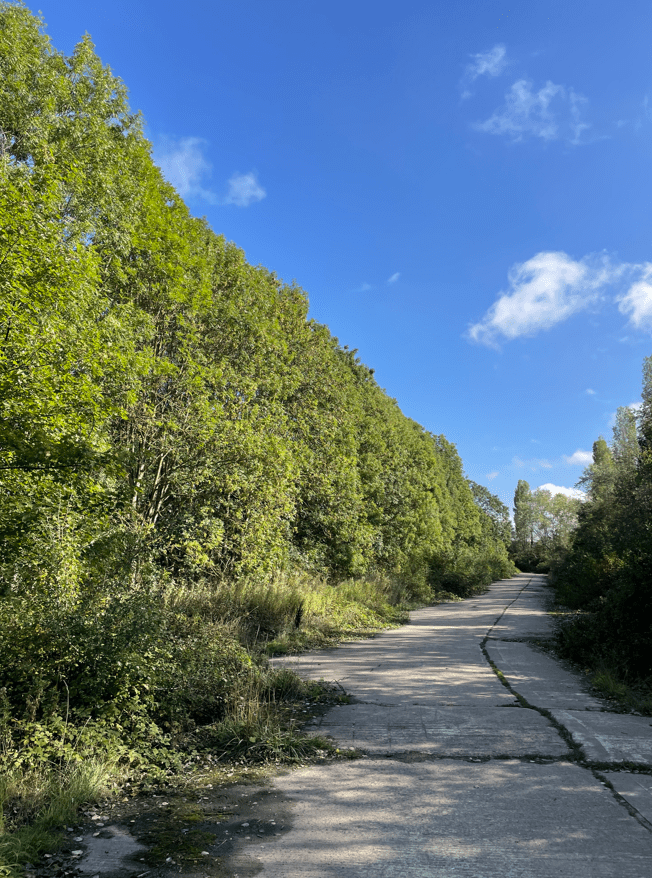
We continued along the towpath and found that access to the Viaduct was blocked by major construction works so we did a detour along a concrete lane that skirted the sewage works (yes, it did smell!) and footpaths.
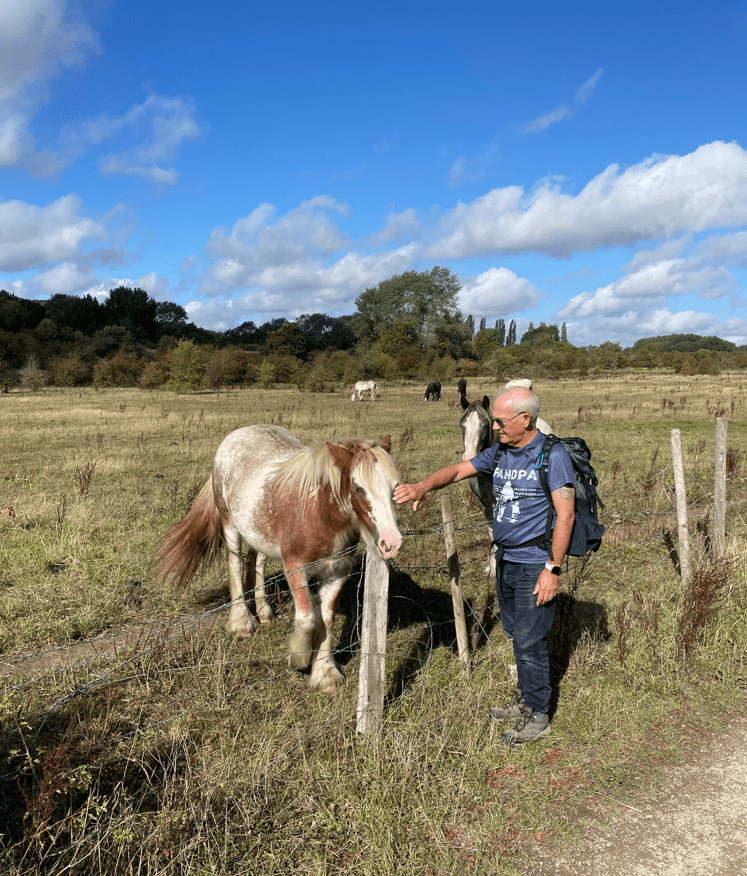
Concrete lane by sewage worksMick saying hello to a local horse
We crossed over the River Erewash passing from Nottinghamshire to Derbyshire and reached the Erewash canal- no passports required 😊.
Erewash canal
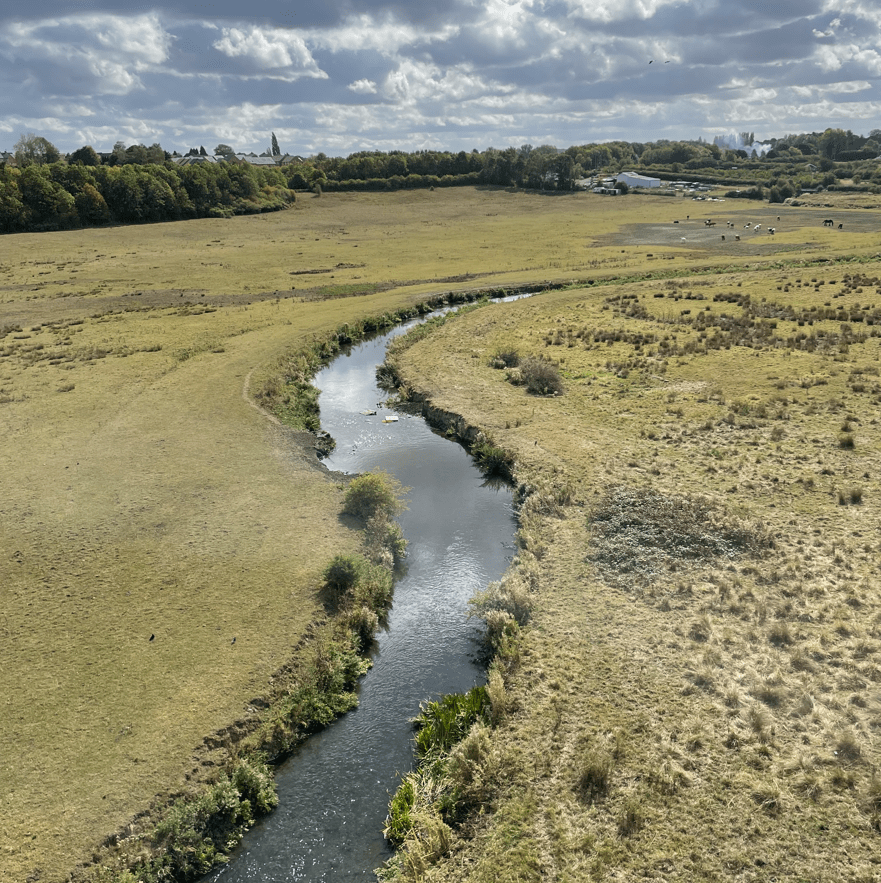
A short walk along the canal brought us to the Viaduct where we could access it. The railway lines and River Erewash were below as we walked across the Viaduct admiring the views and looking at the Viaduct.
On top of the Viaduct
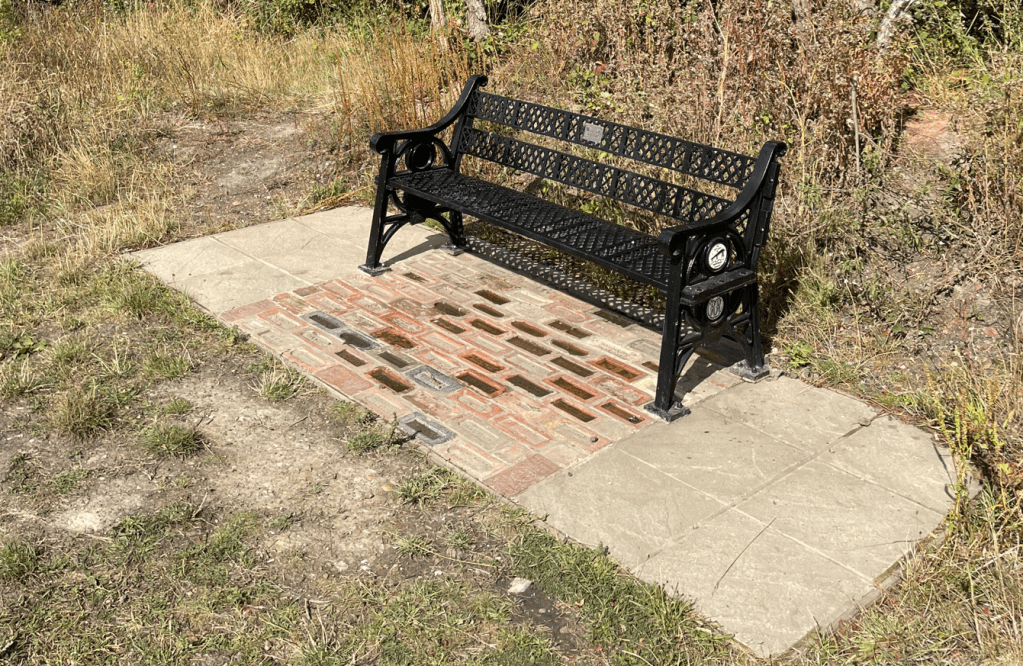
There were nice steel benches leading to the Viaduct – these had been donated by Railway Ramblers. There were bricks on the floor from many different manufacturers – each brick had the manufacturers name on it- a very nice touch. http://www.railwayramblers.org.uk
Steel benches- top qualityView of the River Erewash from the ViaductBennerley Viaduct
Re-joining the Erewash canal we walked past a number of locks enjoying the sunny weather.
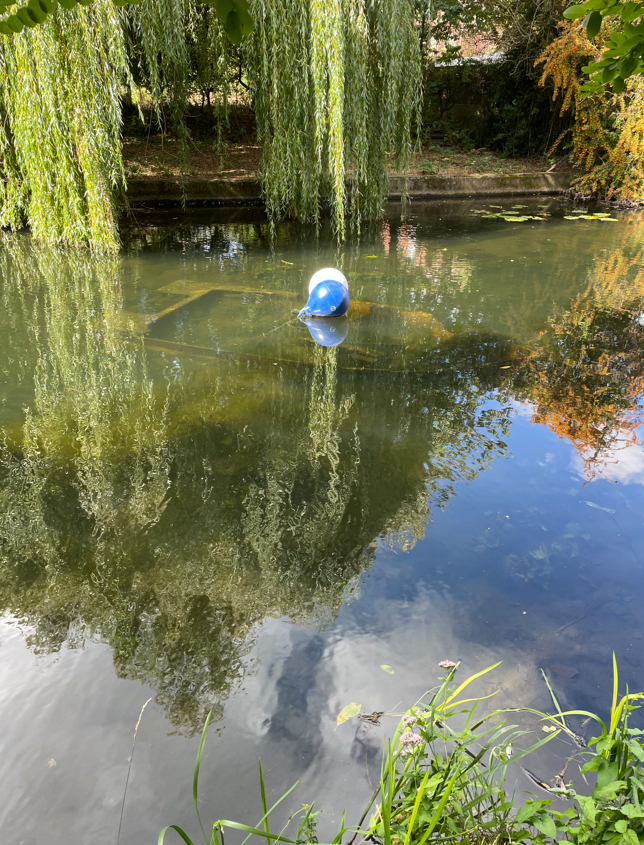
At one point we passed a sunken small boat – definitely a hazard for boaters. We wondered why it had not been removed.
Sunken boat
Soon we left the canal and followed easy paths back to the car. We had enjoyed the walk and the Iron Giant was a little gem.
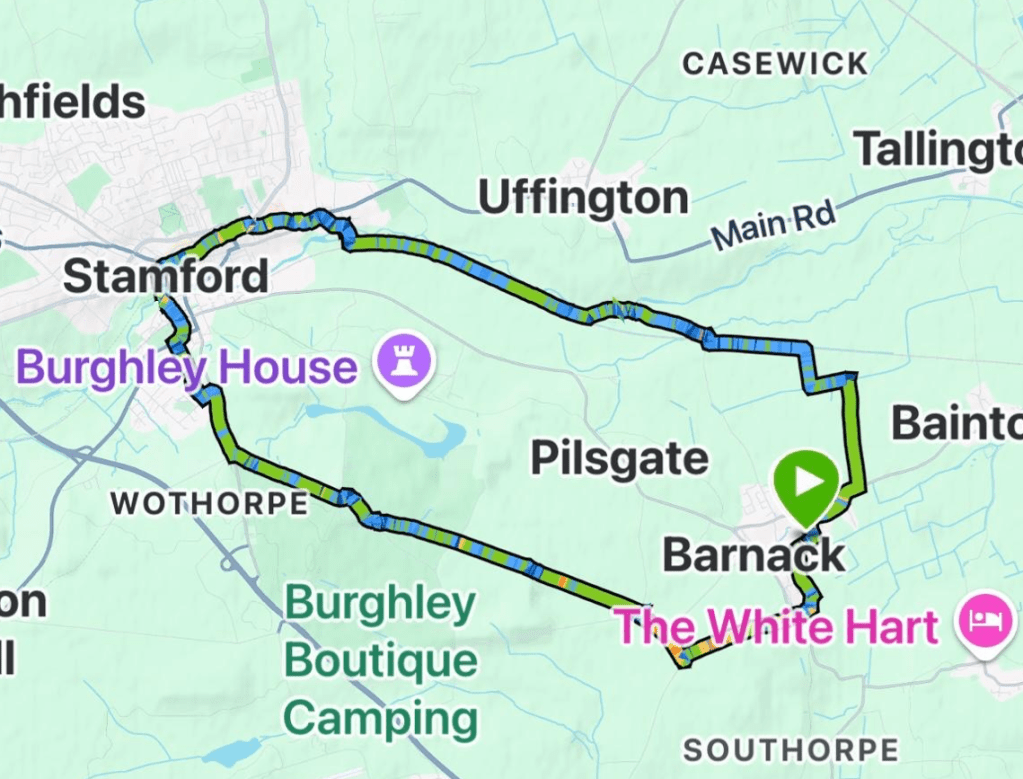
Today, the Three Amigos enjoyed a 10-mile circular walk starting in the pretty village of Barnack and crossed lovely countryside to enter the beautiful and vibrant town of Stamford. Leaving Stamford we crossed the parkland of Burghley House to return to Barnack.
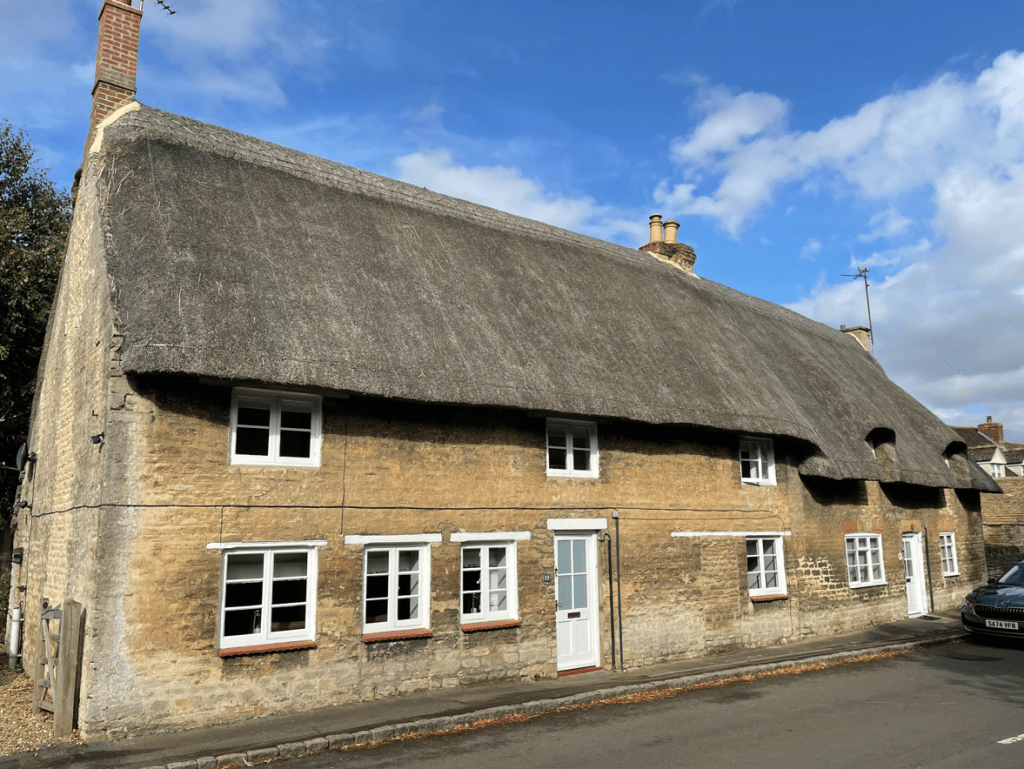
It was a hot and humid day as we set off from our parking spot adjacent to St John the Baptist Church in Barnack. Walking through the village I admired the thatched cottages.
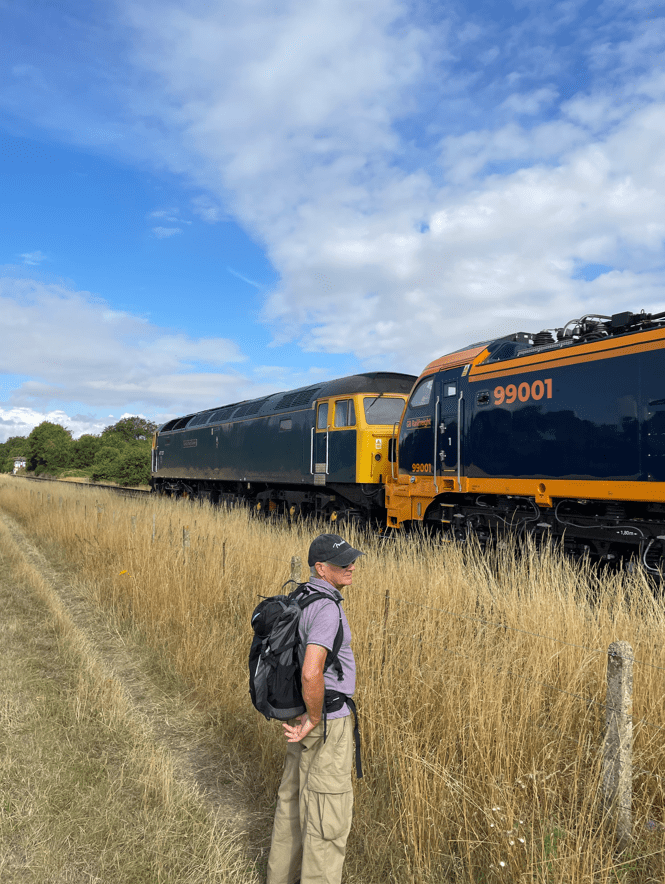
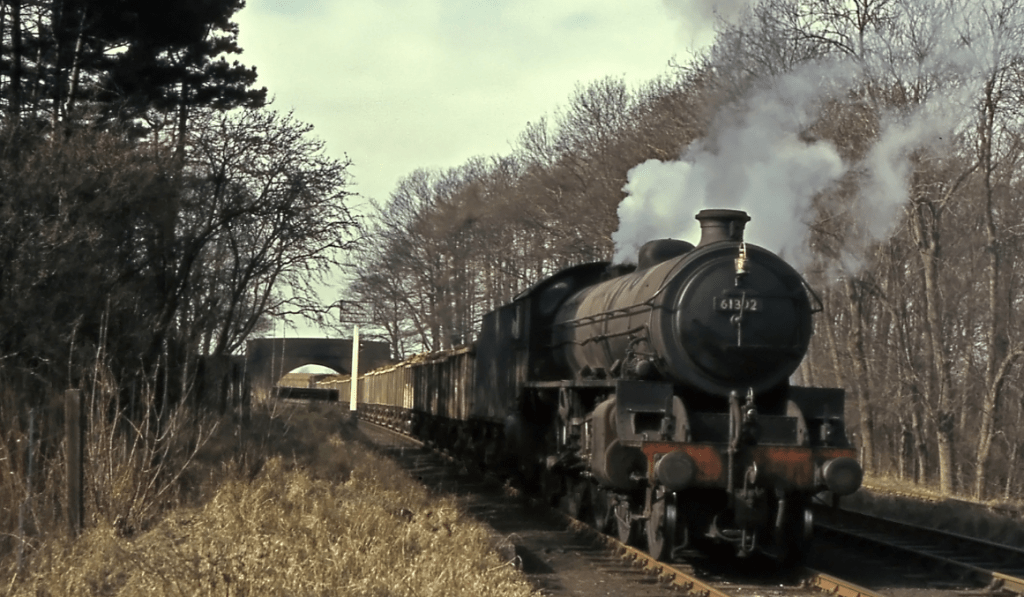
Soon, we were walking in fields and then adjacent to a railway line where we experienced a grand parade of various trains using the line. That kept us amused.
Mick checking out the Loco’s
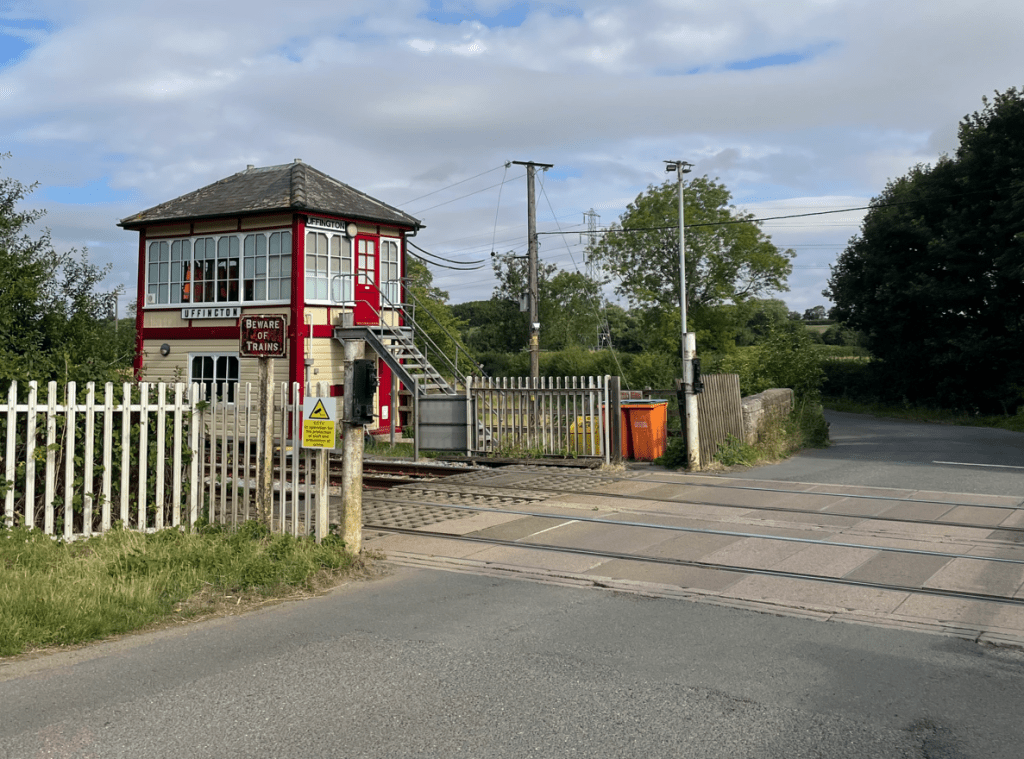
We reached a level crossing with a beautiful traditional signal box and were surprised to see the signalman manually closing the gates. Clearly, the old traditions are hanging on in some places.
Uffington signalbox
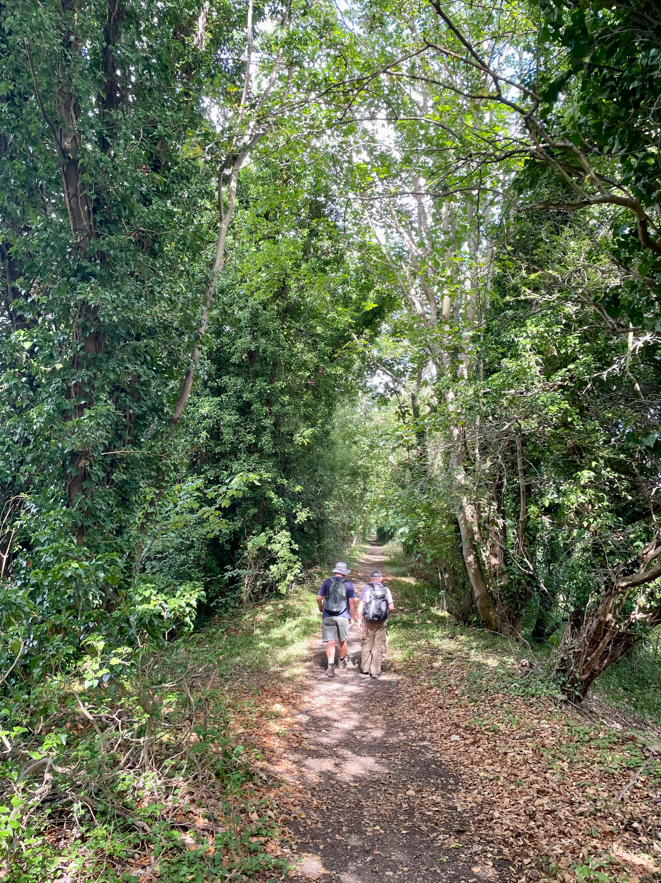
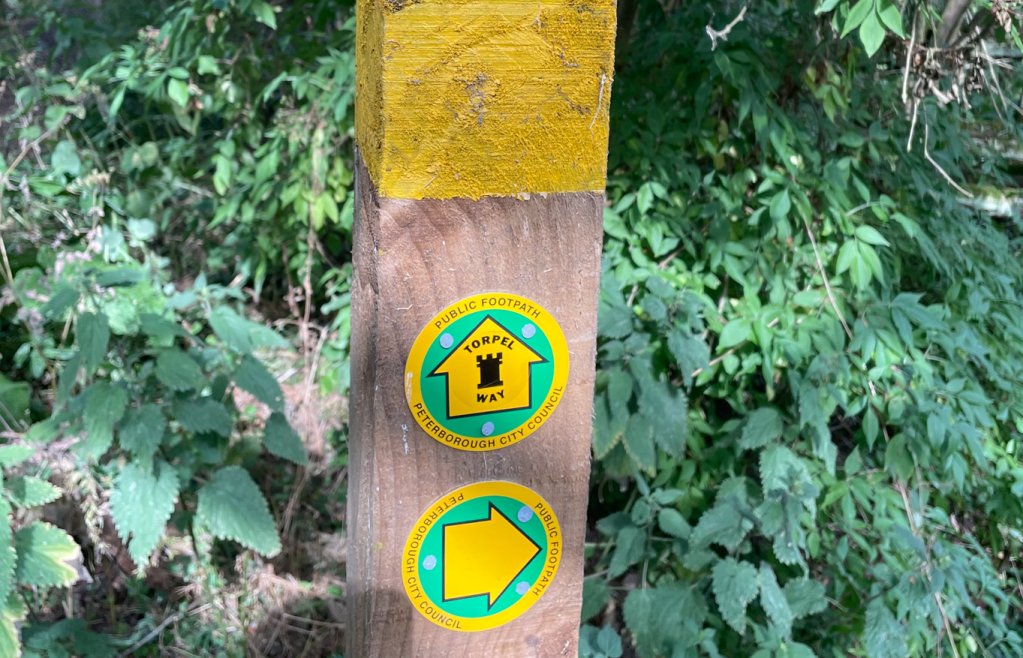
Continuing across a field we reached the river Welland – not that we could see water at this stage, just lots of weeds. We followed a track through a tunnel of trees, with the river to our right and the railway line to our left. We were on the Torpel Way- an 11.2 mile walking route from Peterborough to Stamford.
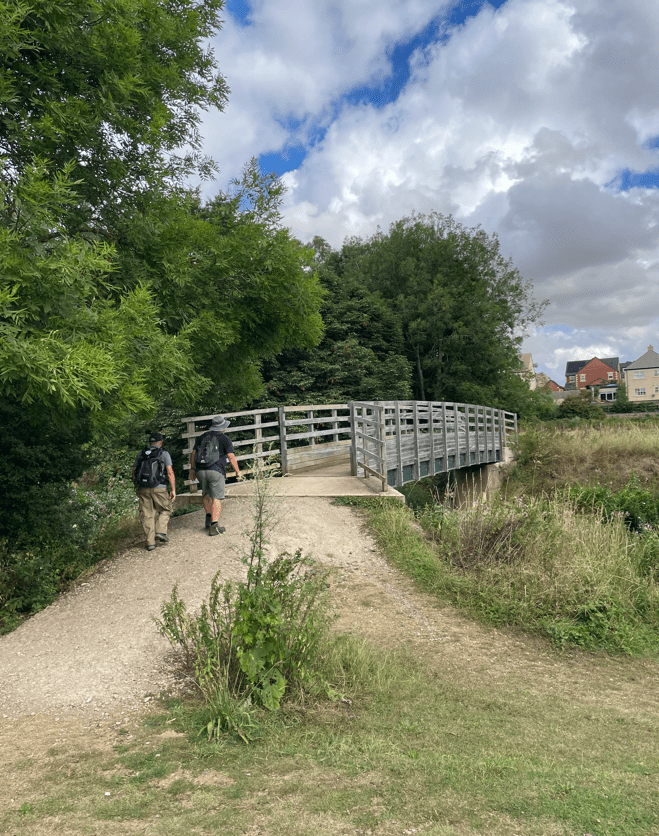
Eventually, we could see water in the river, which was a relief, because I had been wondering if it had dried out with the drought conditions we are currently experiencing. Our route took us across a bridge and then up a track to arrive in Stamford. Traffic was very busy and a complete contrast to the quiet of the start of the walk.
Bridge into Stamford
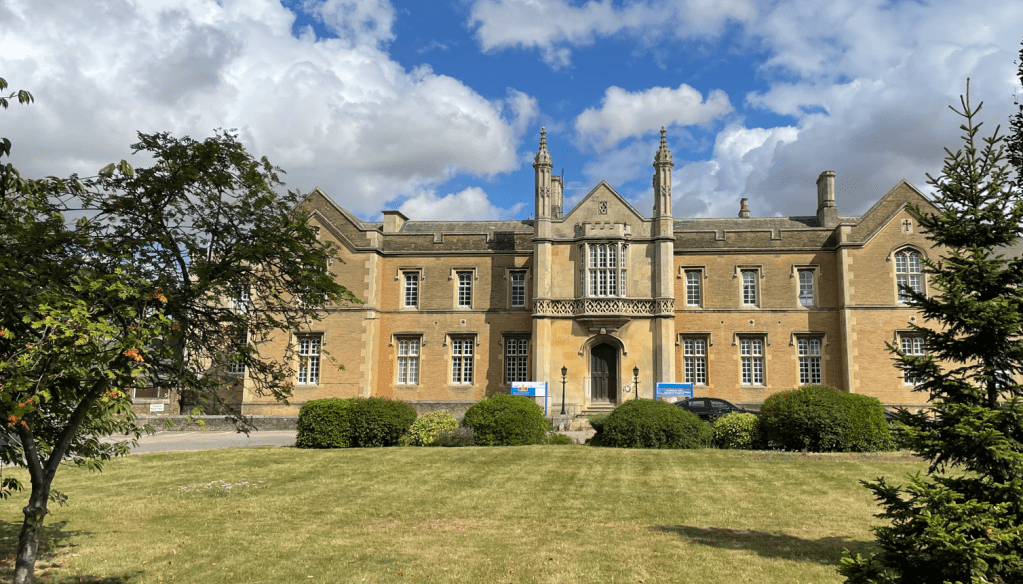
Stamford is a prosperous town with over 600 listed buildings, in and around, the town. It was made England’s first conservation area in 1967. Even the hospital looks grand! Sir Walter Scott claimed that Stamford was ‘the finest sight on the road between Edinburgh and London’.
Stamford Hospital
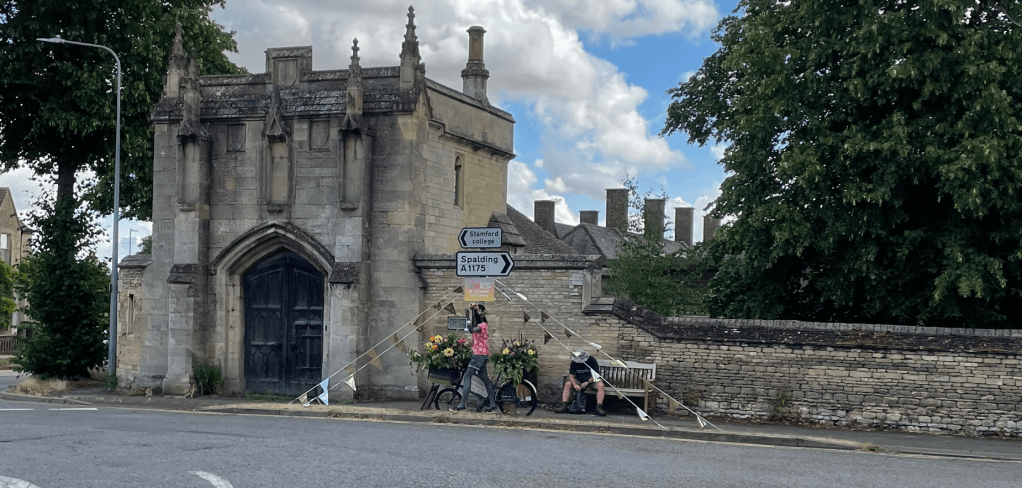
We spotted a bench adjacent to a busy roundabout and decided to stop for a quick refreshment break anyway. Where was all the traffic coming from we asked?
Chris packing his rucksack after a break
We walked through the town, and the busy street market that was on.
Getting busy as we head for the market
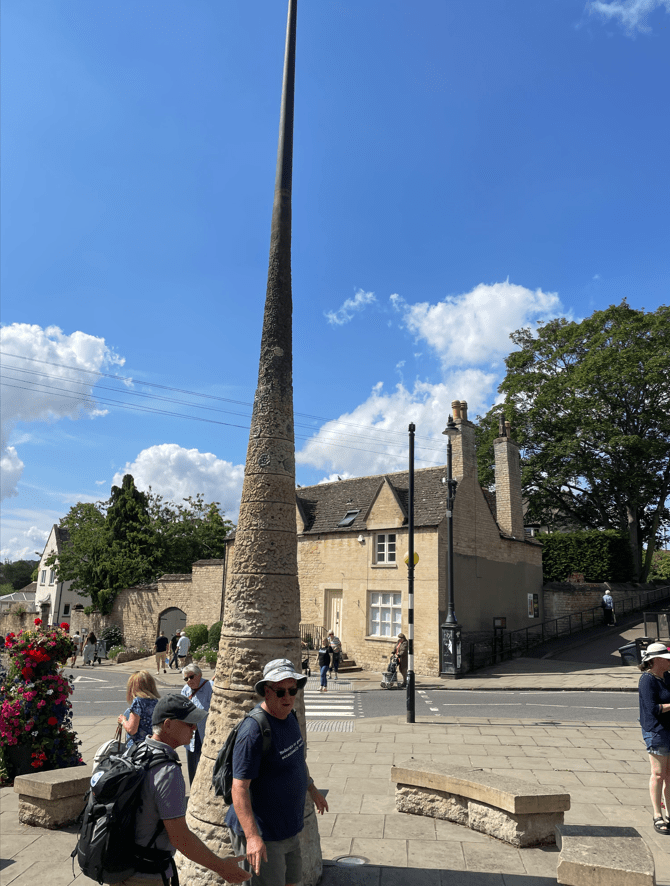
We passed a tall tapering structure with a circular base in the sheep market. Turns out it is a modern memorial to Queen Eleanor and stands where it is believed the old Eleanor Cross stood.
The Eleanor crosses were twelve tall and lavishly decorated stone monuments erected by King Edward 1 marking the stopping places where his wife’s body rested on its final journey to Westminster Abbey.
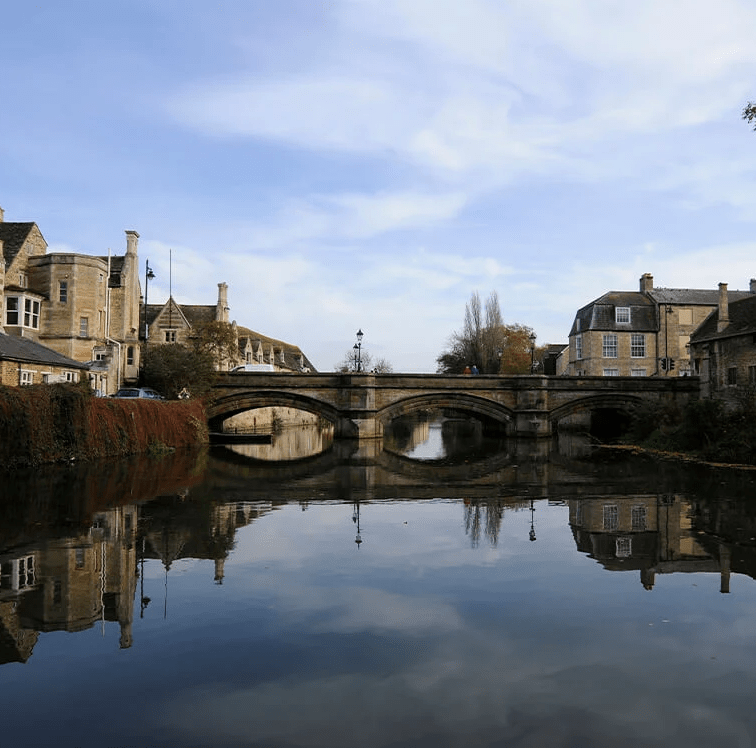
Bridge over the river Welland in Stamford
We all agreed that it was nice to see such a busy town, not at all rundown like many other towns. There were people everywhere – is this normal we wondered?
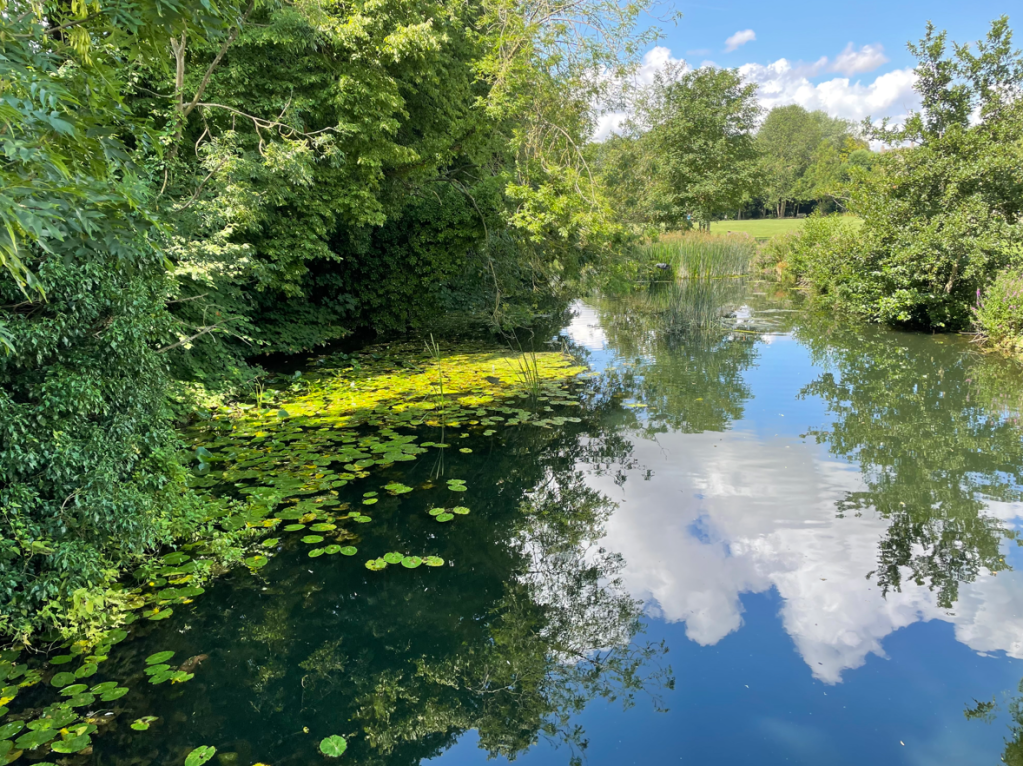
River Welland
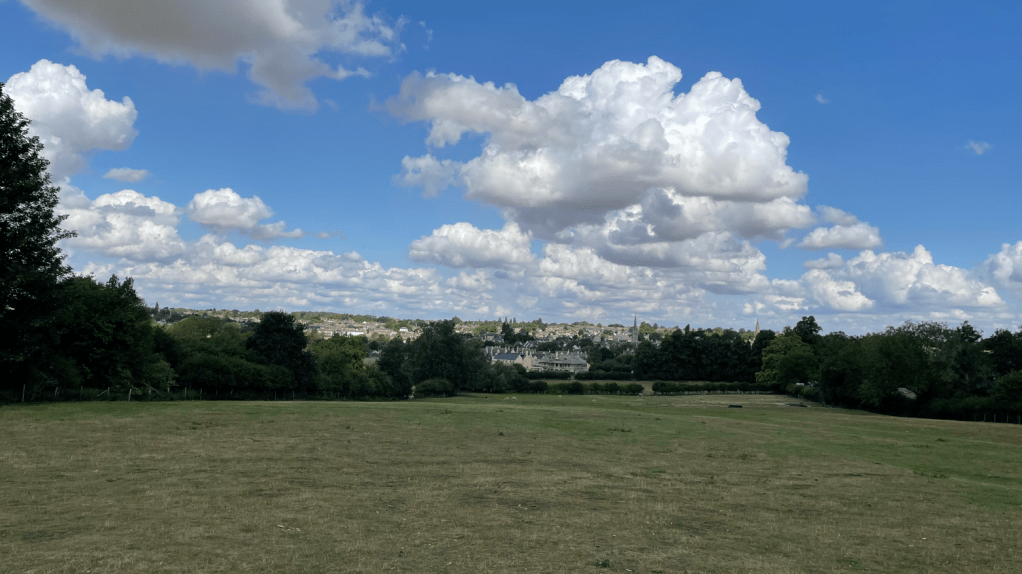
Leaving Stamford we took a path diversion around a new housing development, consisting of a couple of very grand houses and headed uphill through a field of sheep. Glancing back we had views across Stamford.
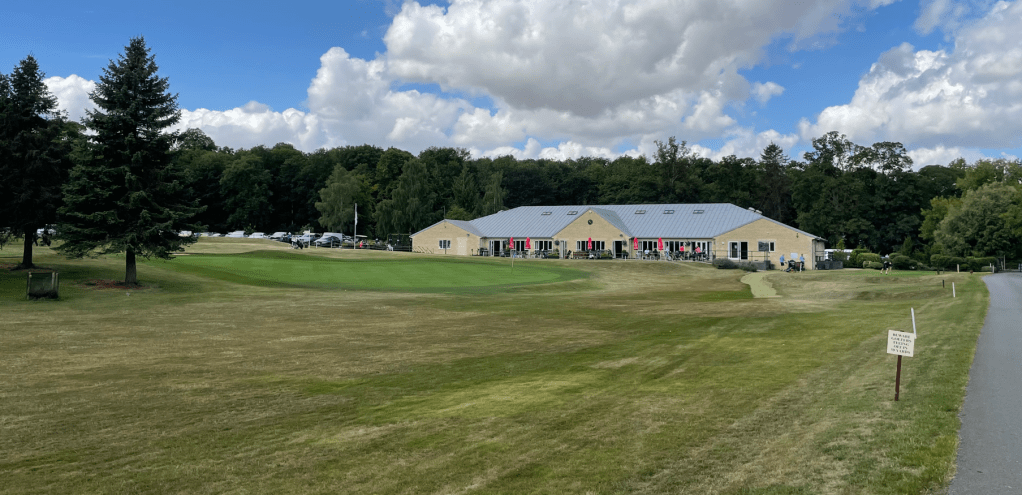
Before long we entered the grounds of Burghley Park Golf Club and walked beside the greens. The greens had been watered and were in pristine condition.
Burghley Park Golf Club
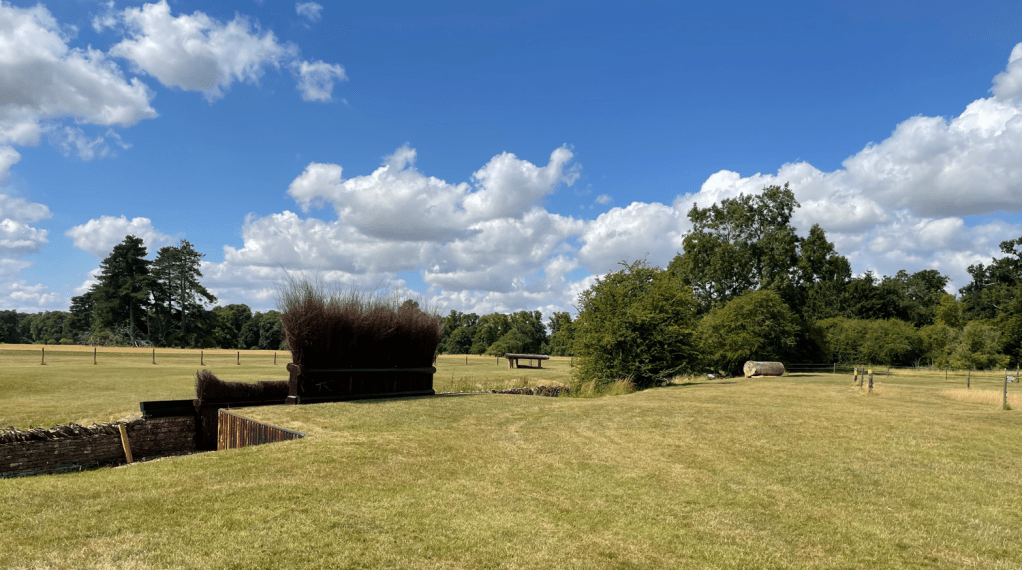
Next, we entered the grounds of Burghley House, although we somehow missed seeing the house (which would have been in the distance), and came across part of the course for the famous horse trials where we saw a few of the ‘jumps’.
Horse jumps
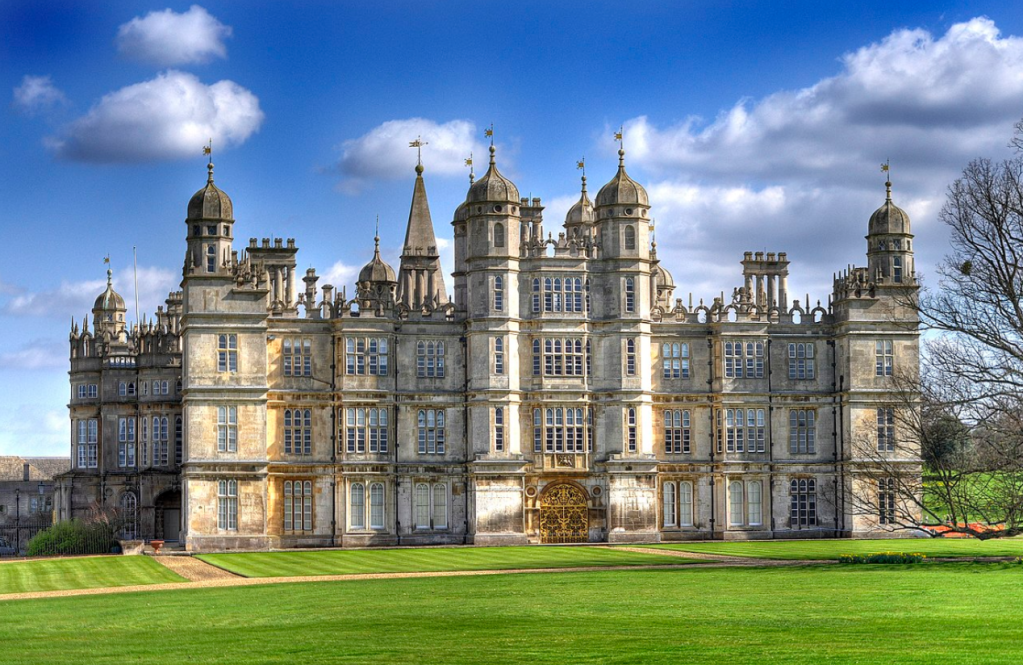
Burghley House is a Tudor mansion built by William Cecil, secretary of state to Queen Elizabeth 1, and has been occupied by the same family for 16 generations.
Burghley House
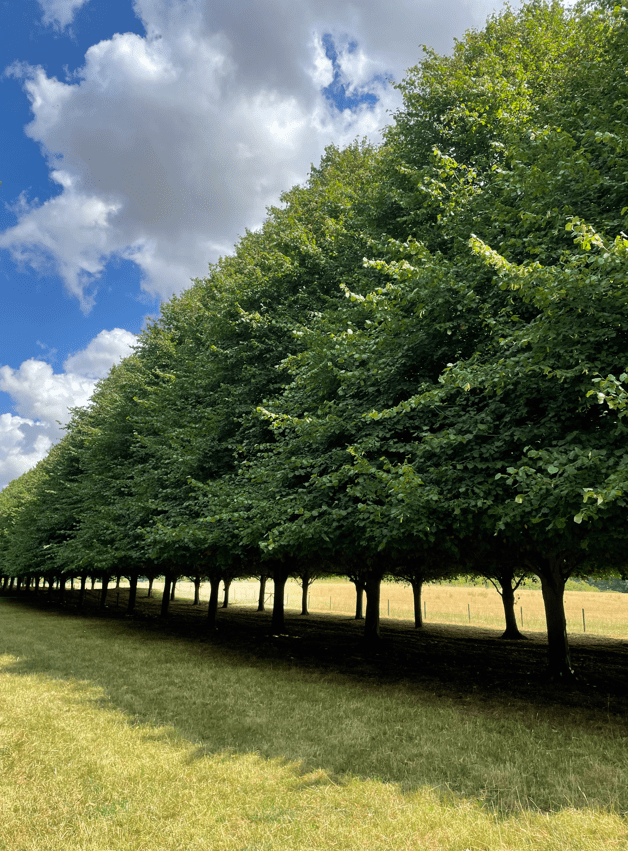
The grounds were landscaped by Capability Brown. We noted the trees were nicely manicured.
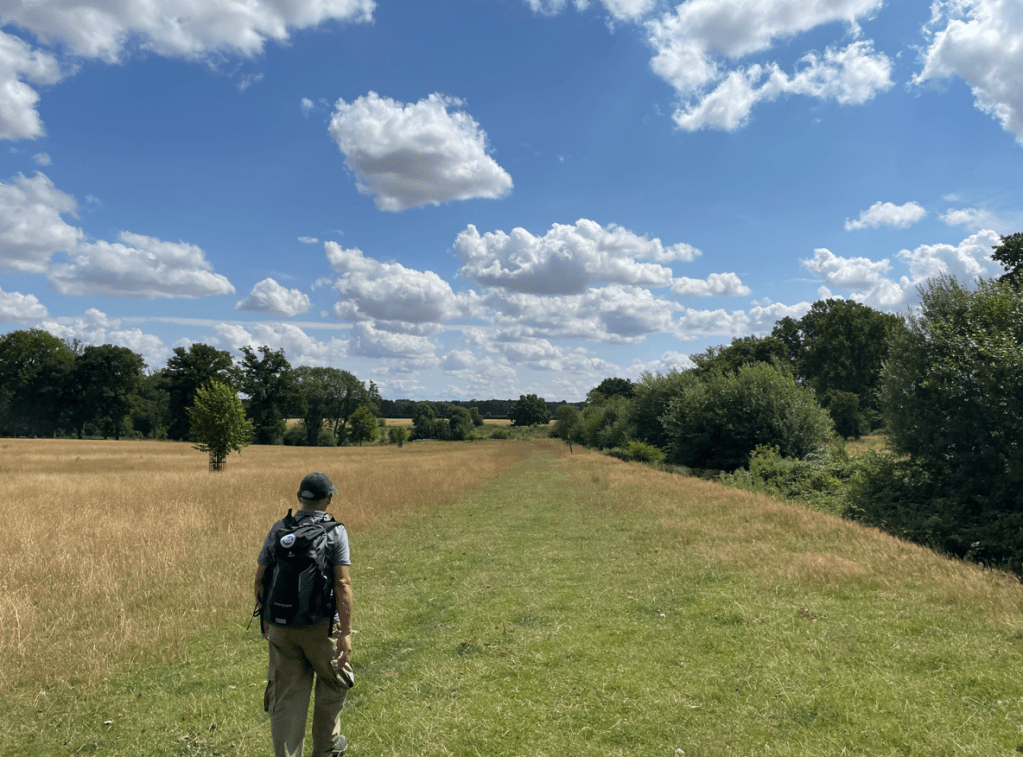
We enjoyed walking through the parklands – not a soul around.
A dry stream crossing
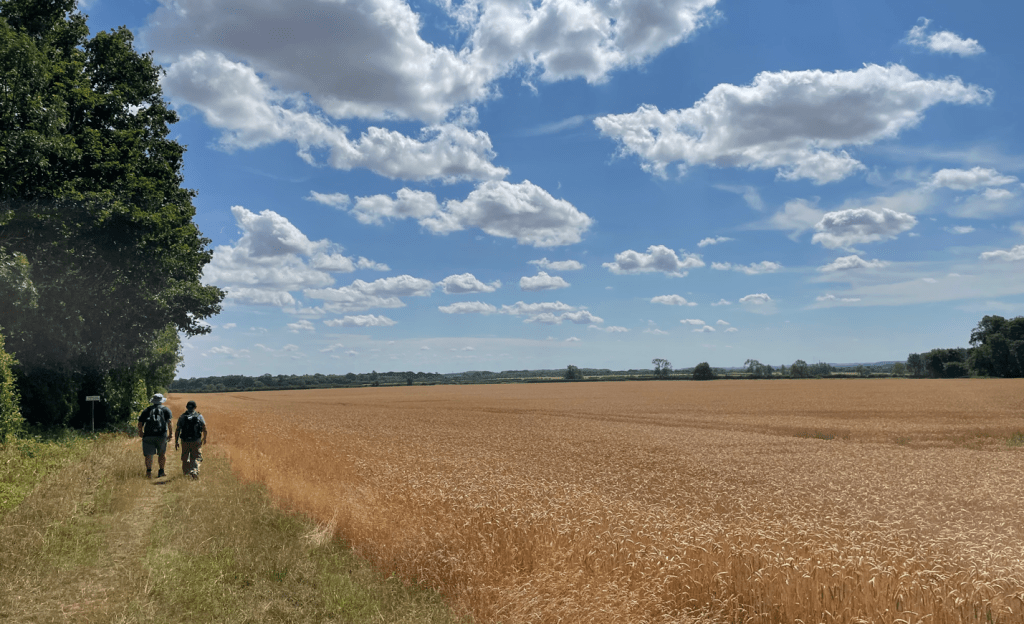
We were on the home stretch now, and after crossing some arable fields ,we arrived back at Barnack – water flasks depleted!
We all agreed that it had been a lovely walk – the nice weather definitely helped!
This morning the Three Amigos met up early and thus avoided the heat of the day. The recent heatwave is due to break tomorrow which will come as a welcome relief. Our 7-mile walk today was along the redundant ironstone railway near Woolsthorpe. We would see many lovely brick bridges along the way.
A number of quarries were worked in the area by Stanton Ironworks Ltd. These are long gone but digging into the history is very interesting. I highly recommend a book by Eric Tonks ‘The Ironstone Quarries of the Midlands -part 9, Leicestershire’
A typical ironstone train back in the day
We parked by ‘The Duck’ pub at Woolsthorpe-by-belvoir and set off along the Grantham Canal towards Longmoor bridge where we crossed over the canal and joined the Viking Way.
Lock 18 on the Grantham CanalLongmoor bridge
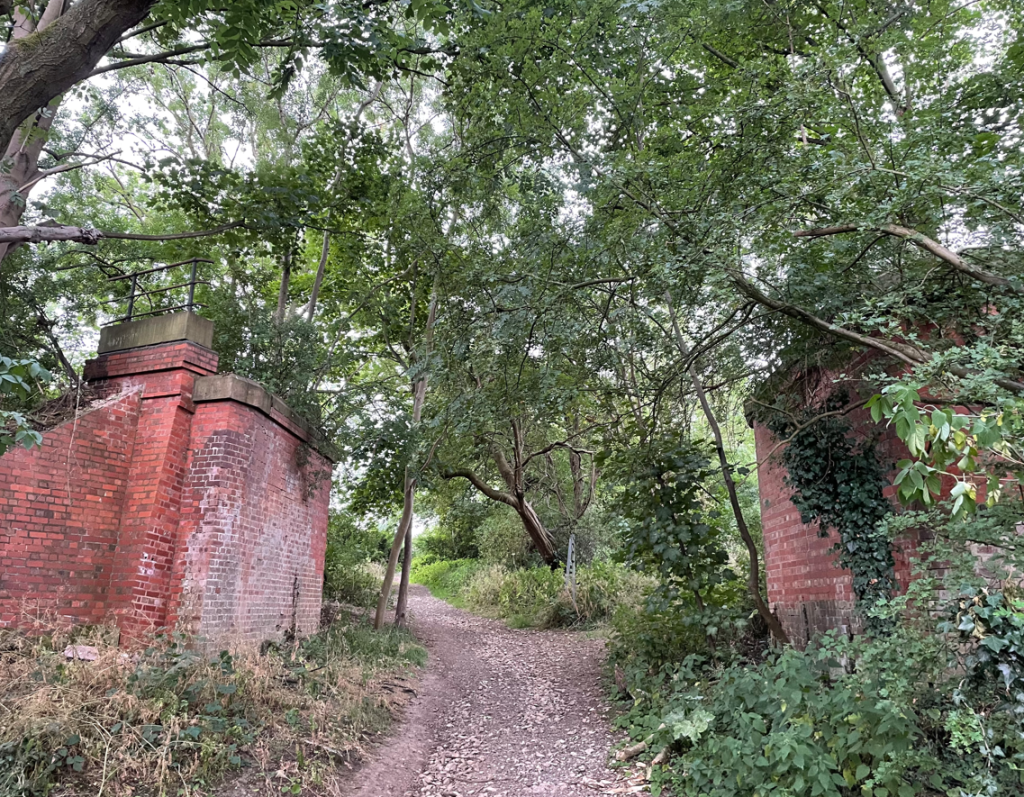
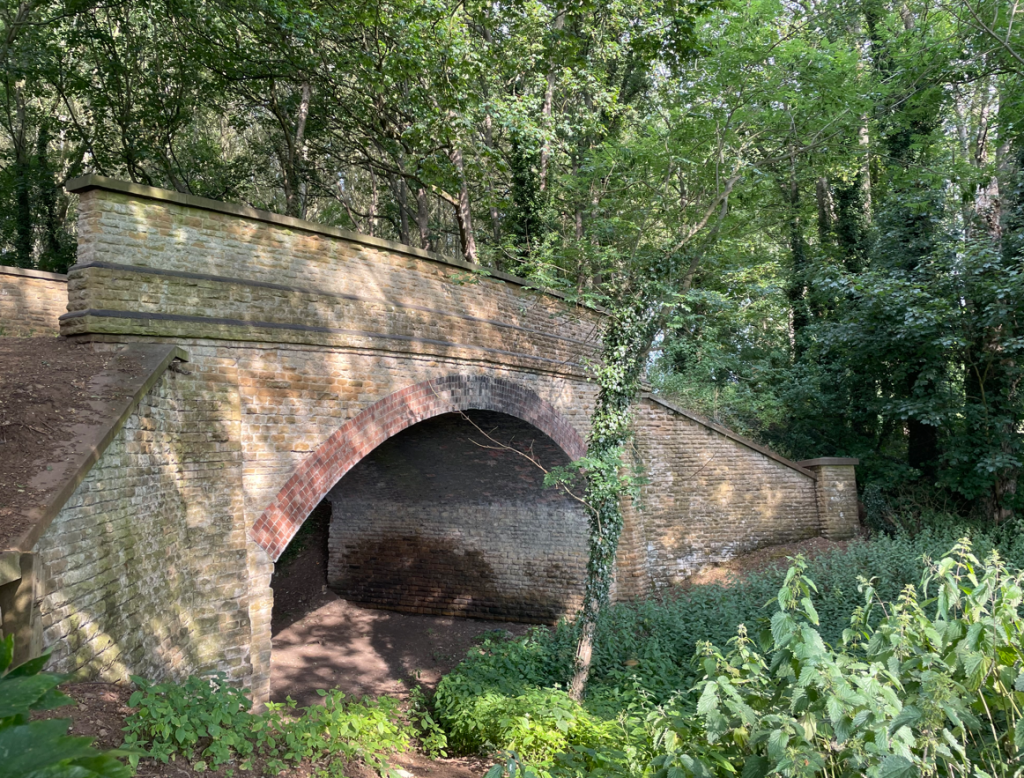
We were heading up towards Brewers Grave. We passed the remains of a railway bridge where the brick embankments still stand proud.
remains of a bridge
A steady walk uphill on a narrow stony path brought us to Brewers Grave.
The path rising towards Brewers Grave
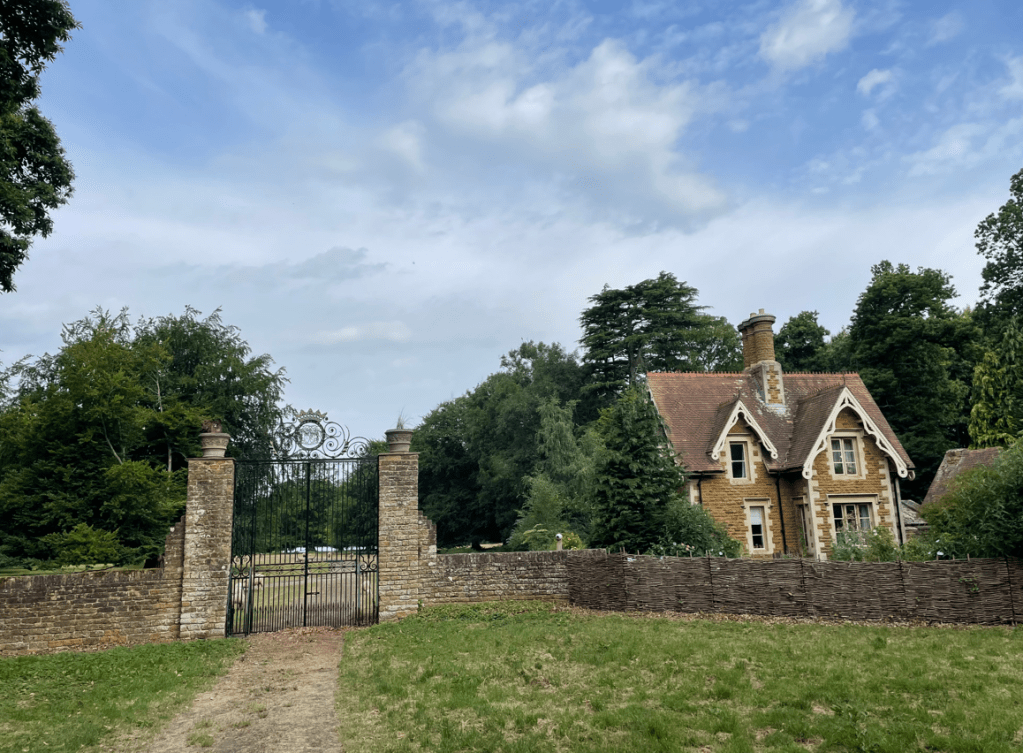
At the top we passed by wrought iron gates – a minor entrance to Belvoir Castle. We then joined Sewestern Lane and followed this wide, straight track to reach an old railway bridge.
Gates at Belvoir Castle
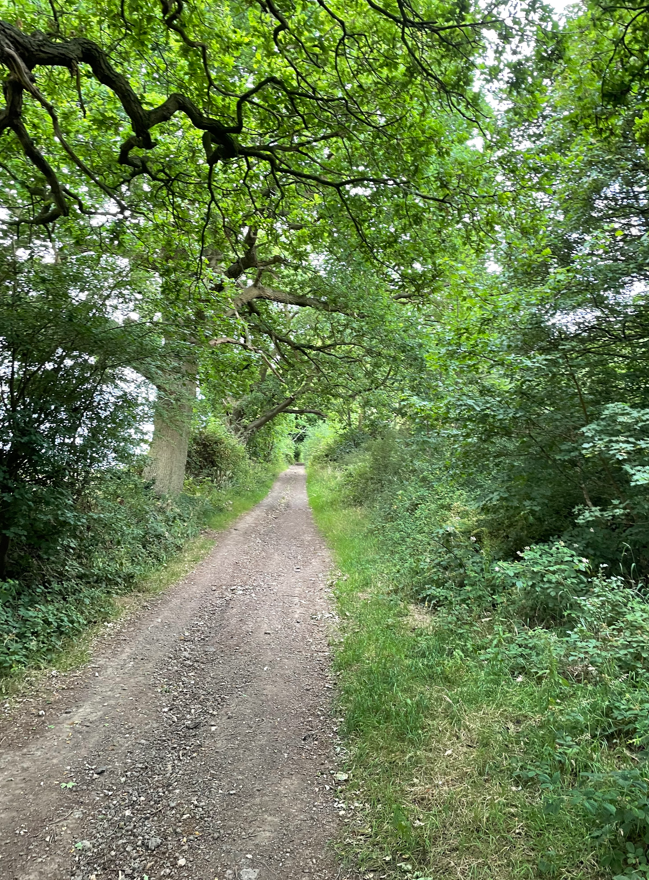
One of the reasons for choosing this particular walk today was that it was shaded by trees for much of the route.
Sewstern Lane
It is would be quite bizarre after walking through woodland to find such a bridge if you weren’t aware of the history.
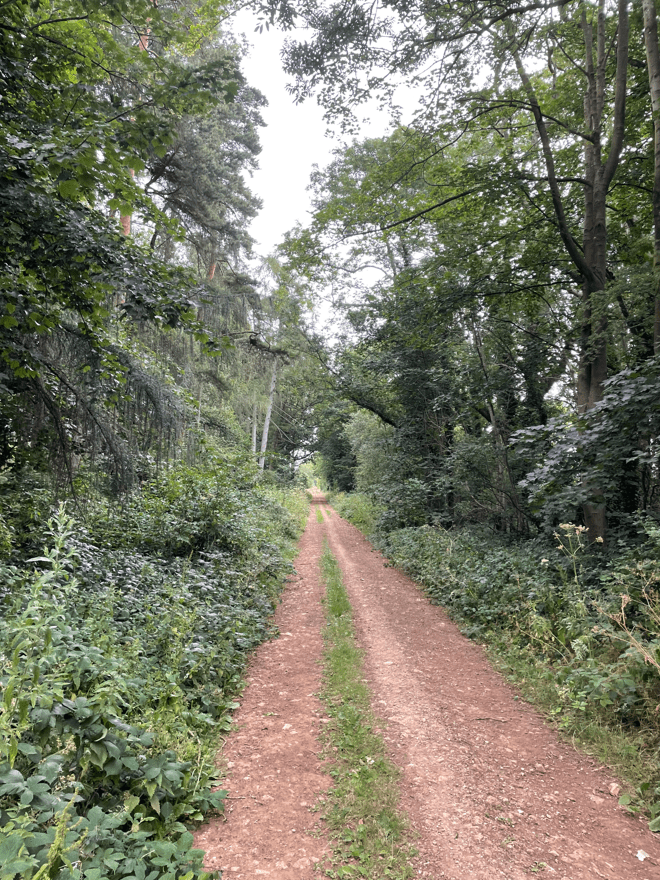
We had not met a soul so far – not even a dog walker! We continued along the straight wide track where the railway had run.
The old ironstone track
Just past Denton Manor Farm we crossed a metal bridge built to allow the farmer access to his land.
Chris and Mick having a breather.
The path narrowed and we pressed onward.
We arrived at a lovely three- arch road bridge across the old railway.
As per usual we were enjoying putting the world to rights as the miles slid by.
Path of old railway line
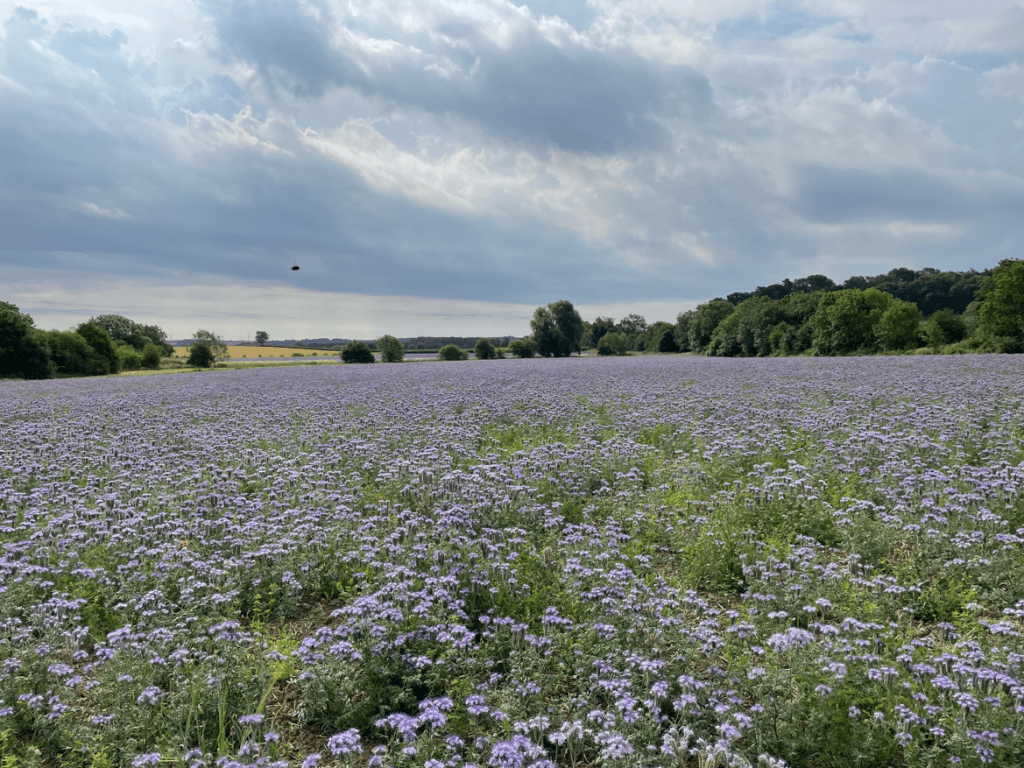
Leaving the railway track we passed through a field containing the purple Phacelia – used to improve soil health. Its beautiful to see the vibrant purple flowers.
Phacelia in the field
We arrived at the Grantham Canal once more and walked back along the towpath before re-joining the old railway line.
We walked along this track to reach lock 15 where fish were viewed swimming in the lock – a sign of a healthy canal. A walk back along the towpath brought us to our cars. The temperature was rising and we were glad we had made the effort to get out early.
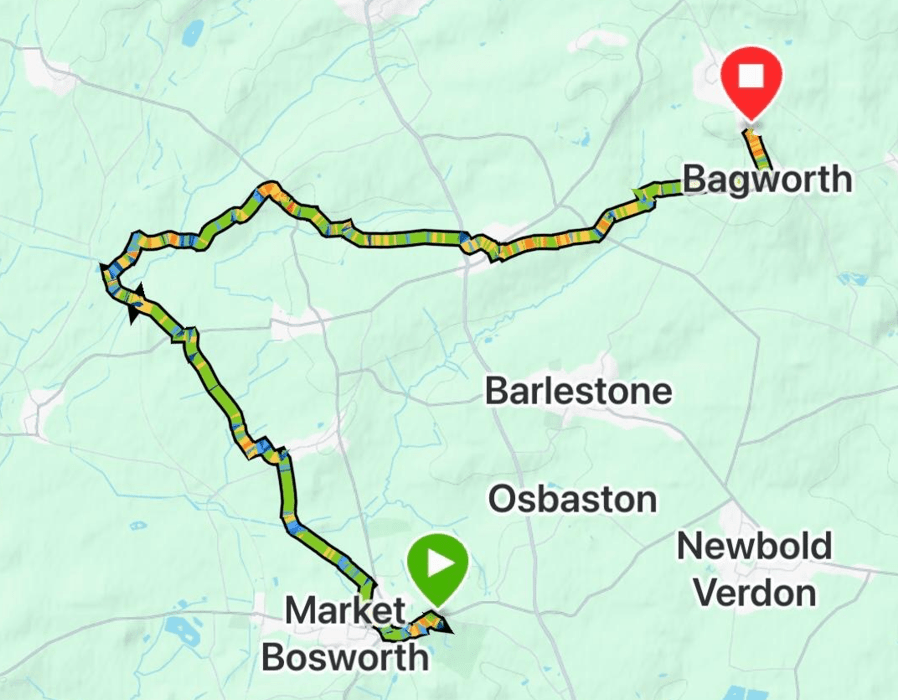
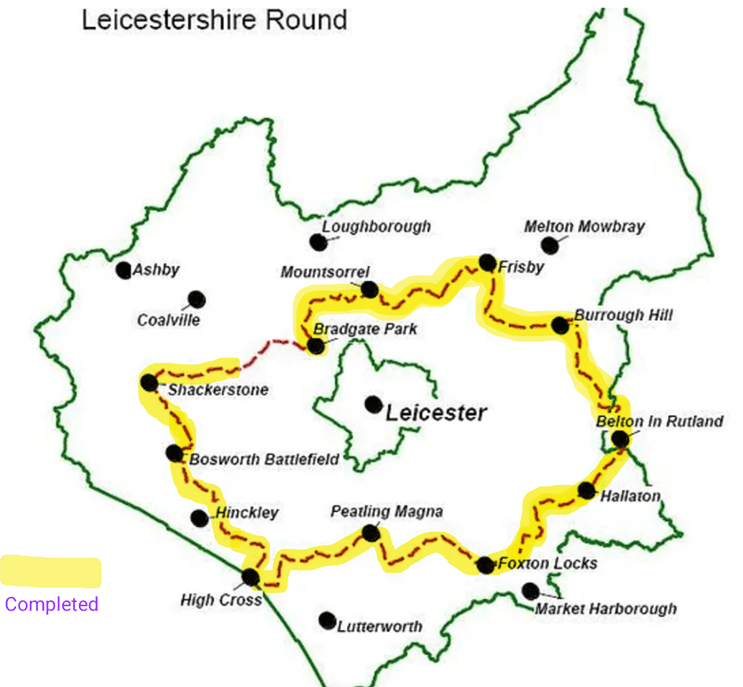
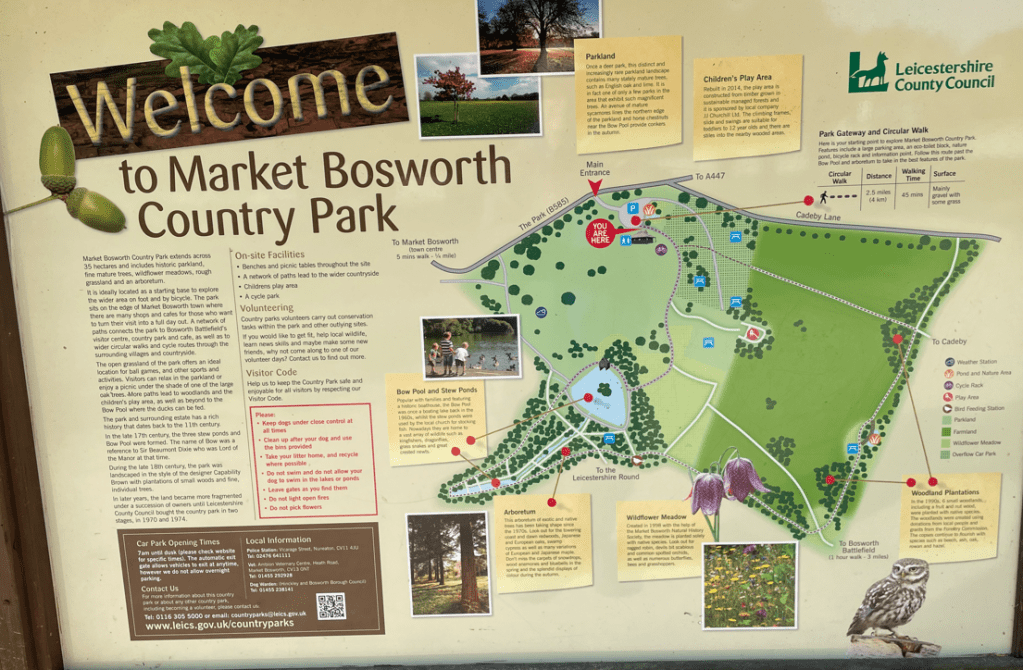
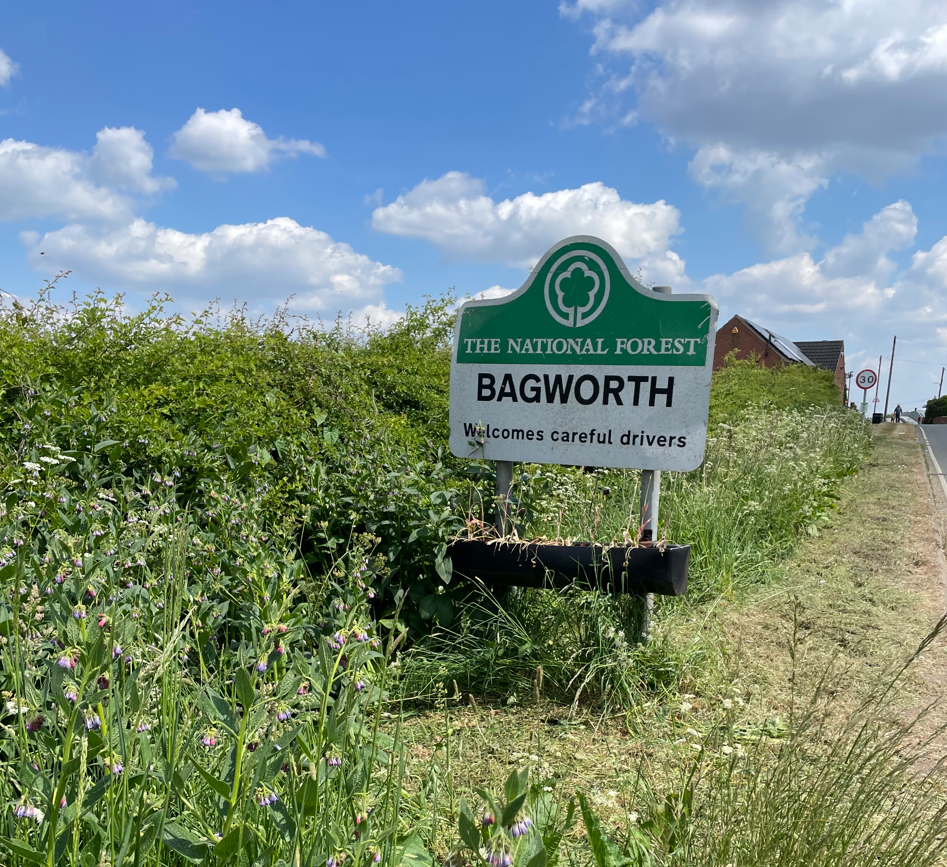
Today Mick and I completed our penultimate leg of The Leicestershire Round, walking 10 miles from Market Bosworth Country Park to Bagworth.
It was a chilly start as we set off from the car park of Market Bosworth Country Park. We are expecting a week of rain (much needed) starting tomorrow so it was nice to have blue skies today.
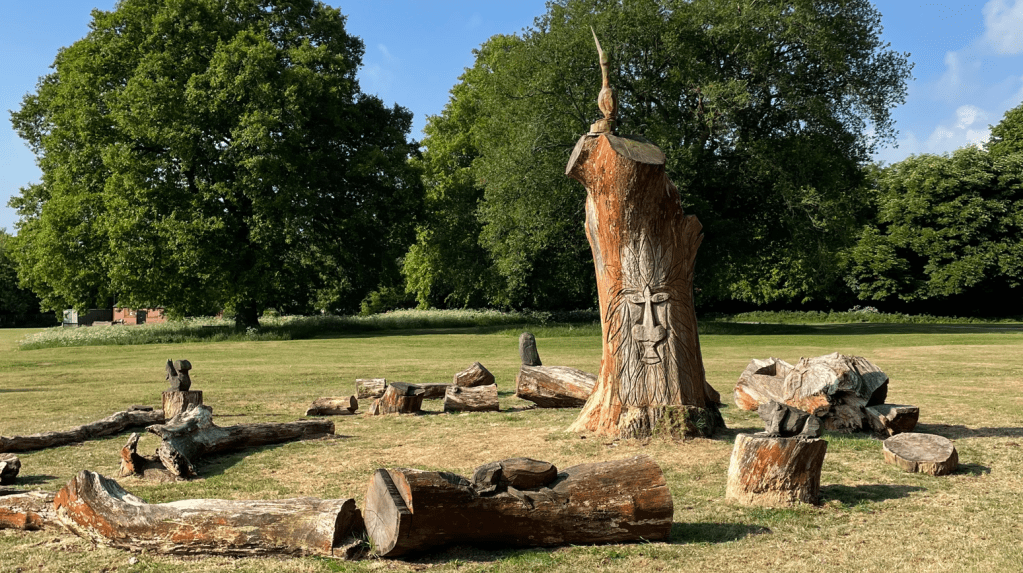
We passed some interesting wooden sculptures in the park – can you see the face in the tree stump?
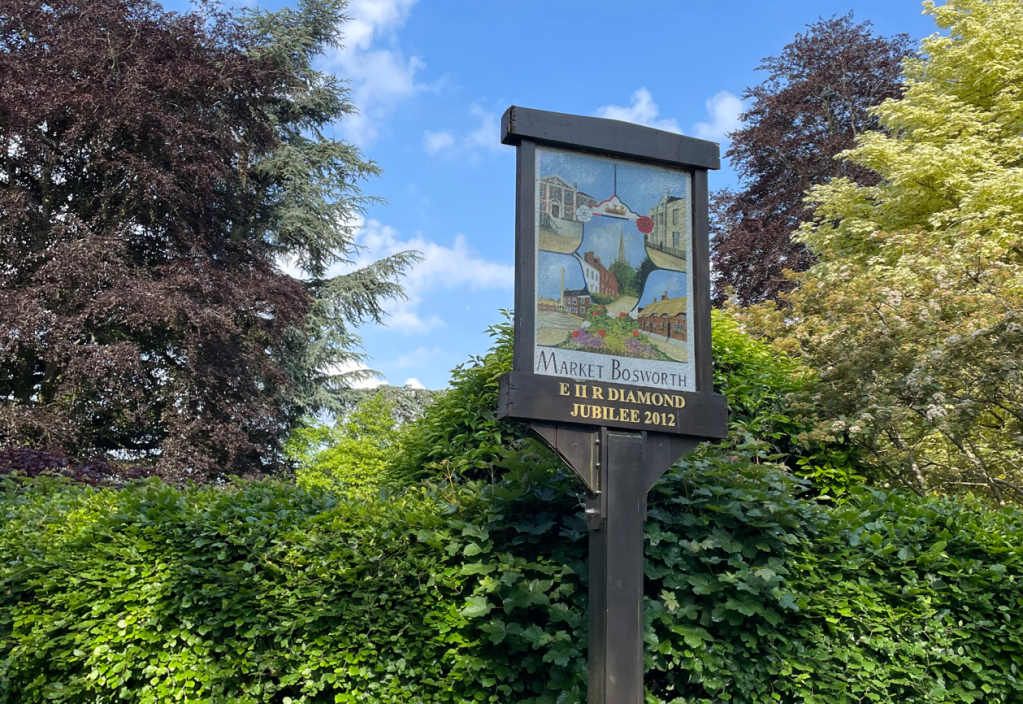
We walked towards the village passing the village sign, passed through the large market square and found our path away from the village.
Cottage in Market Bosworth
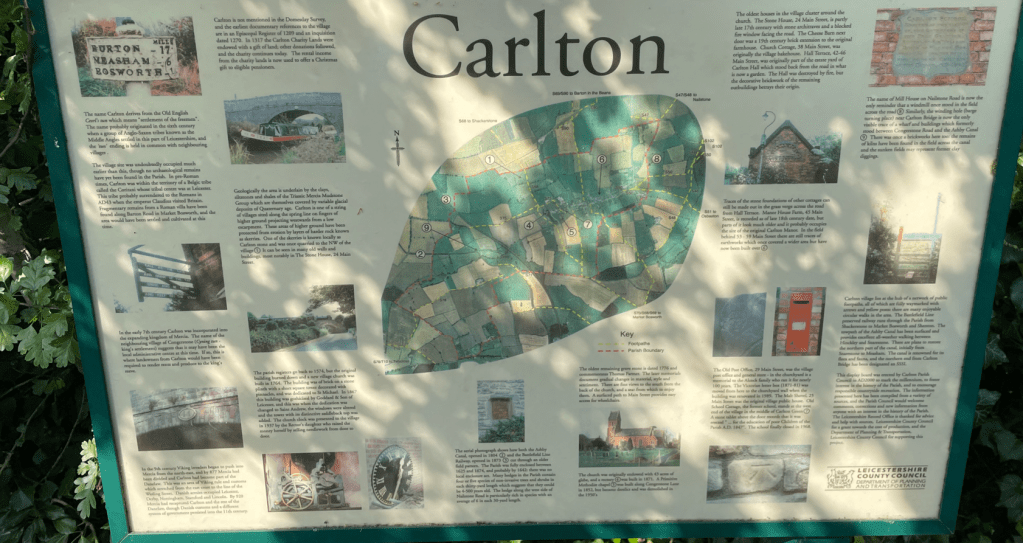
Our first port of call would be the village of Carlton. We followed the path through fields to reach the village -it had a very informative information board.
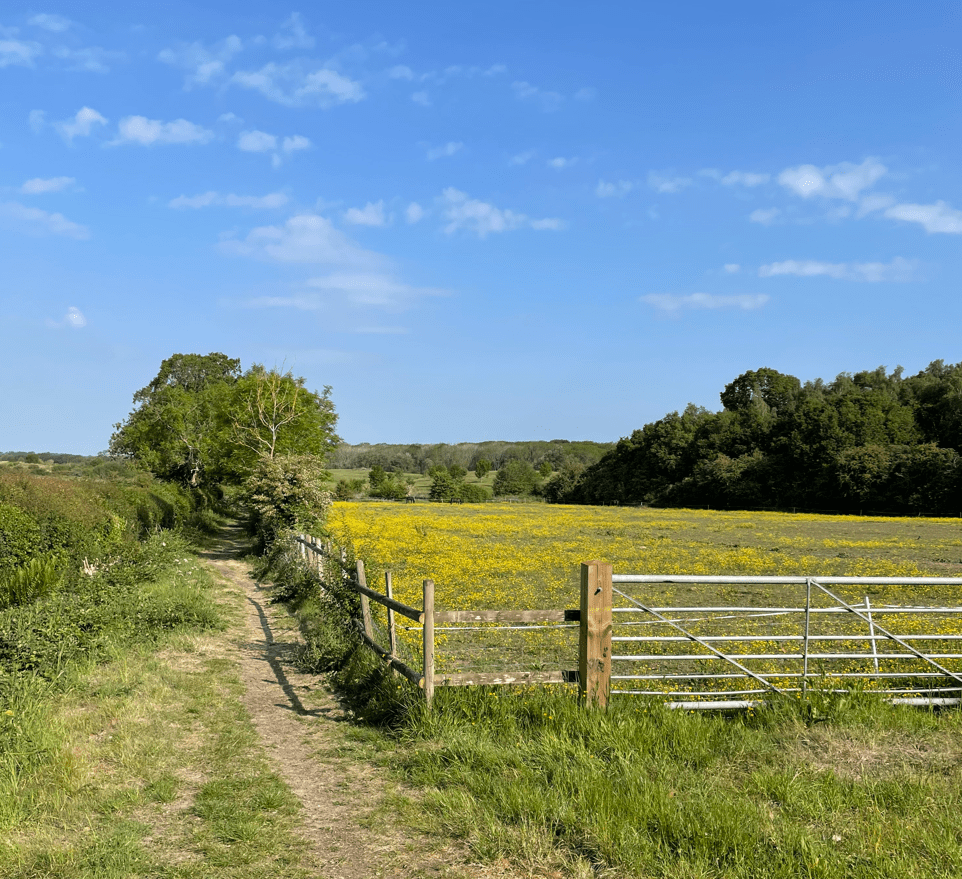
Nice buttercups
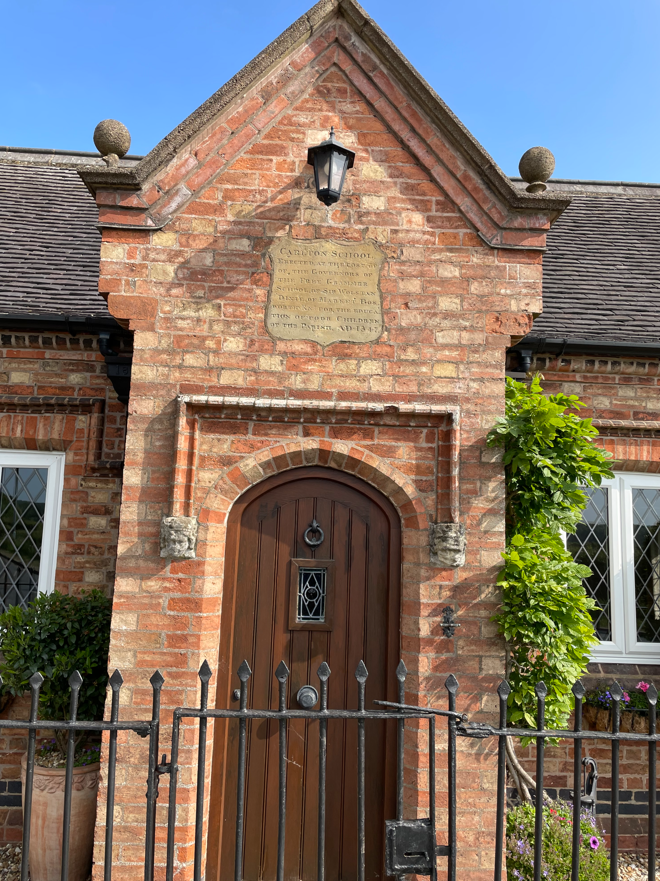
We passed the former school (now a private residence) that provided ‘for the education of poor children of the parish AD 1847.
Former school entrance
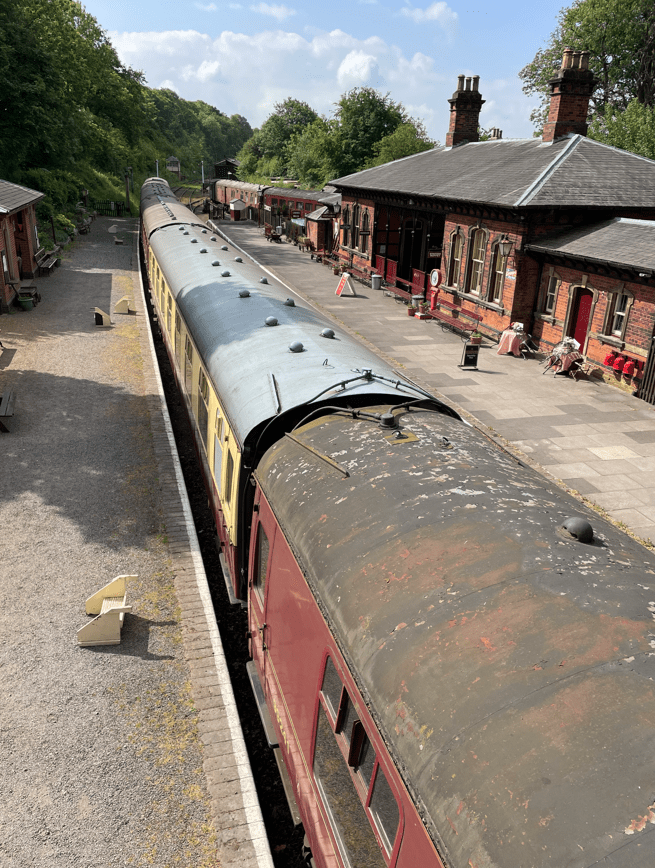
Leaving Carlton we said hello to some sheep on the way to Shackerstone where we arrived at the Heritage railway known as The Battlefield Line. The railway here opened in 1873 and closed in 1970. It was then bought by enthusiasts and runs as a heritage railway.https://www.battlefieldline.co.uk/.
It runs from Shackerstone via Market Bosworth to Shenton. I think I will have to visit and take a trip because I do like a steam railway 😊.
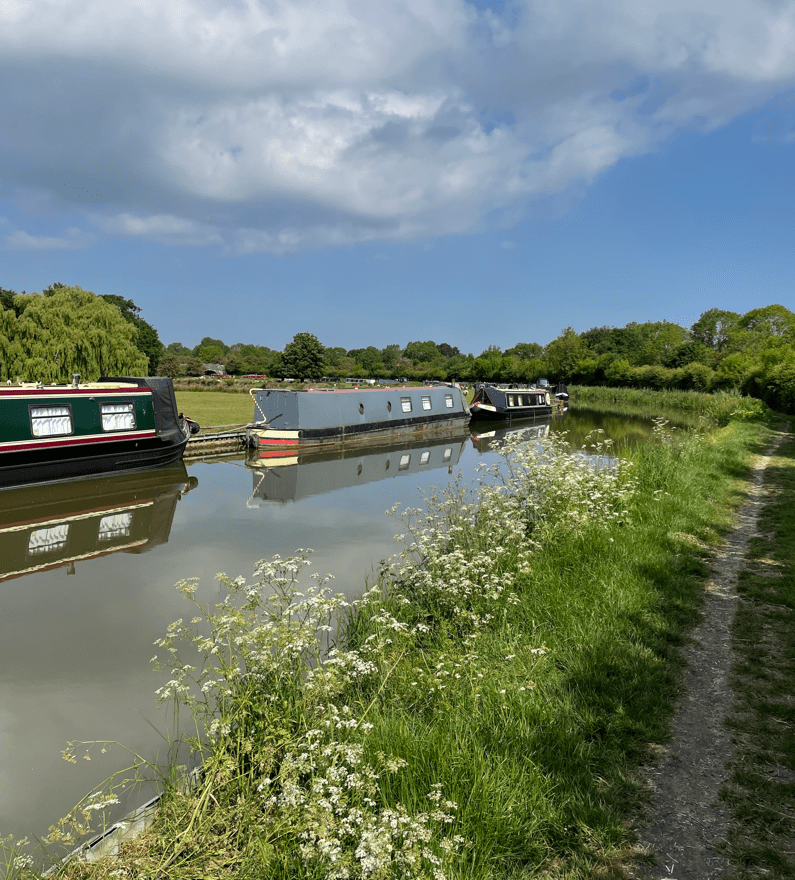
The Ashby Canal runs close to the railway line and we walked along the towpath for a while before heading off across fields towards Odstone.
The Ashby canal
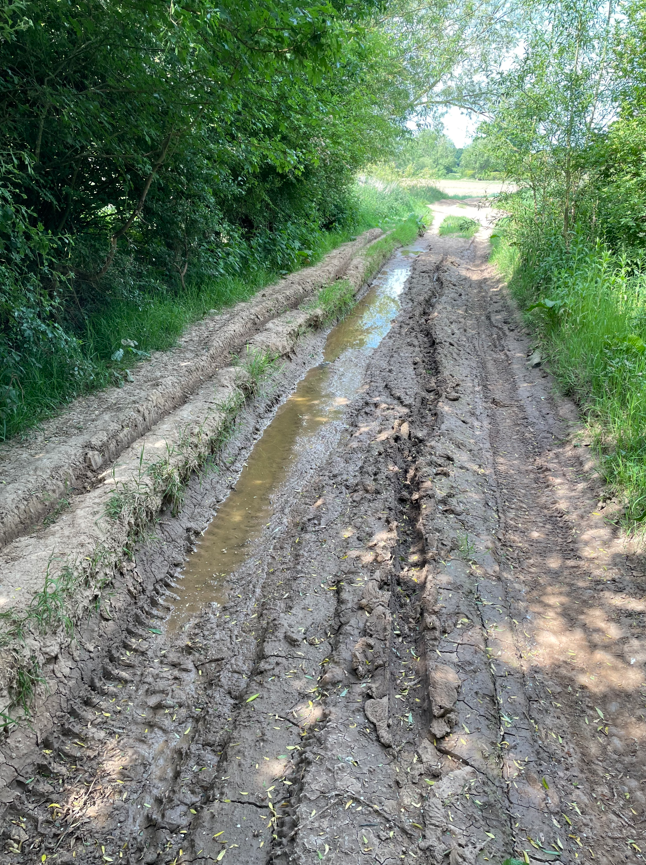
We followed farm tracks and passed through a long section which would have been diabolical in wet conditions. Thankfully, not a problem for us today.
We passed a very nice property- Odstone Hall. Who lives in a house like this?
Odstone Hall
We soon arrived into Odstone where we found a bench in the small park and had a break – a scotch egg for me and plenty of water as it was turning hot.
Leaving Odstone we passed across fields on our way to Nailstone.
The crops were in desperate need of watering.
Mick on the way to Nailstone
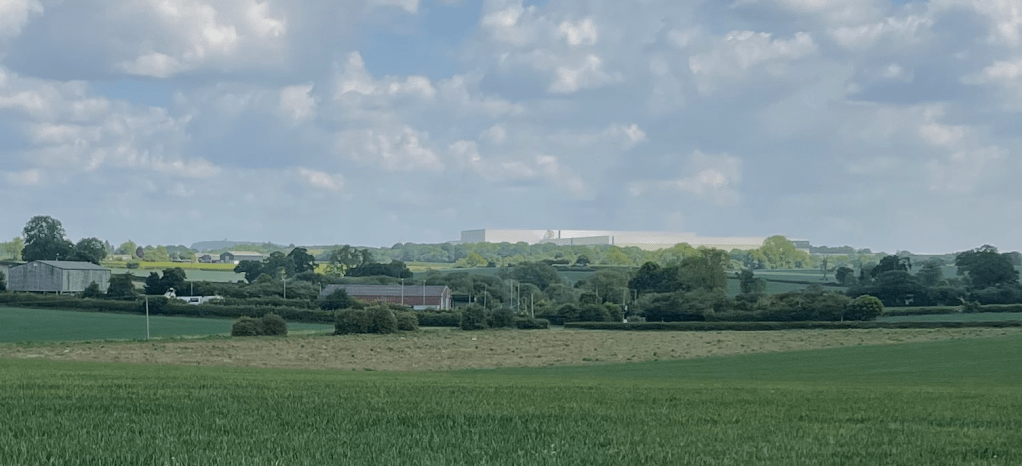
On the way we couldn’t help but notice a huge warehouse in the distance – we wondered who owned it. It looked completely out of context with the environment we were walking through. Further on we saw the ALDI sign.
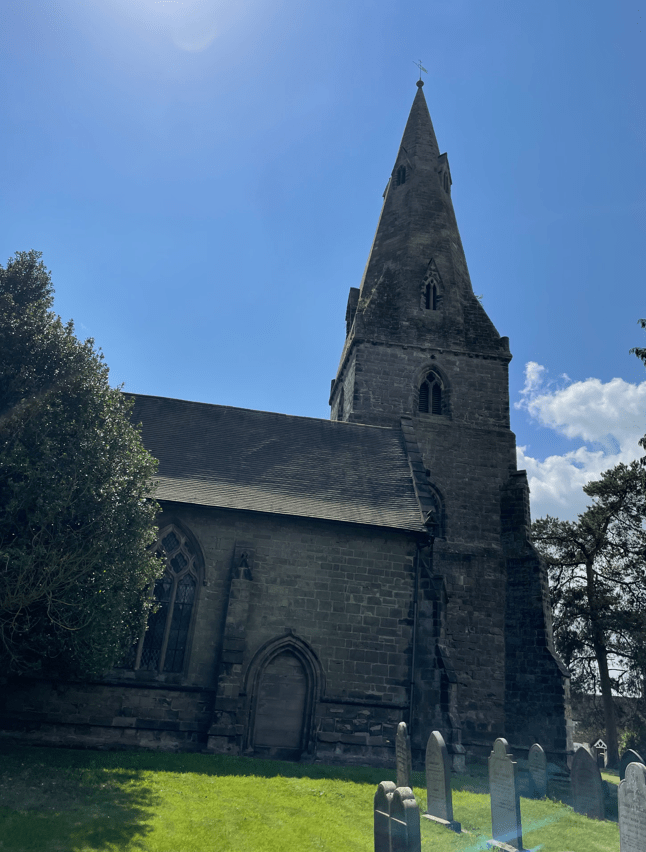
We reached Nailstone passing by the 13th century church with its fine broach spire.
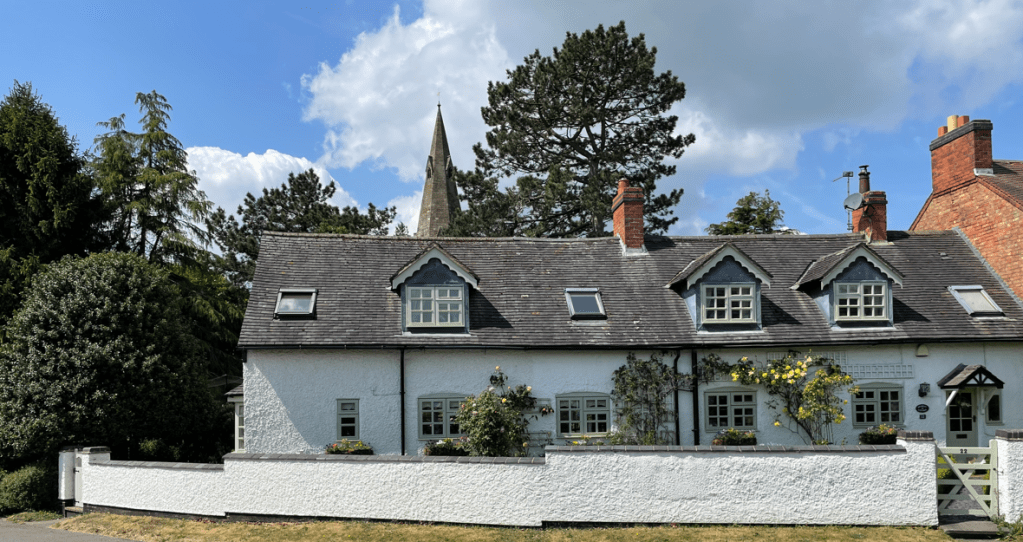
Close to the church we saw a wonderful cottage with yellow roses growing outside.
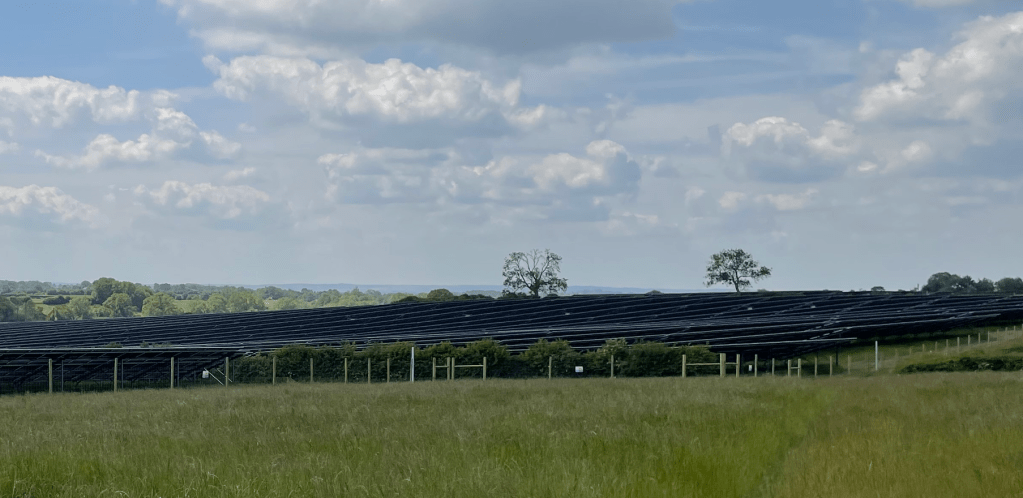
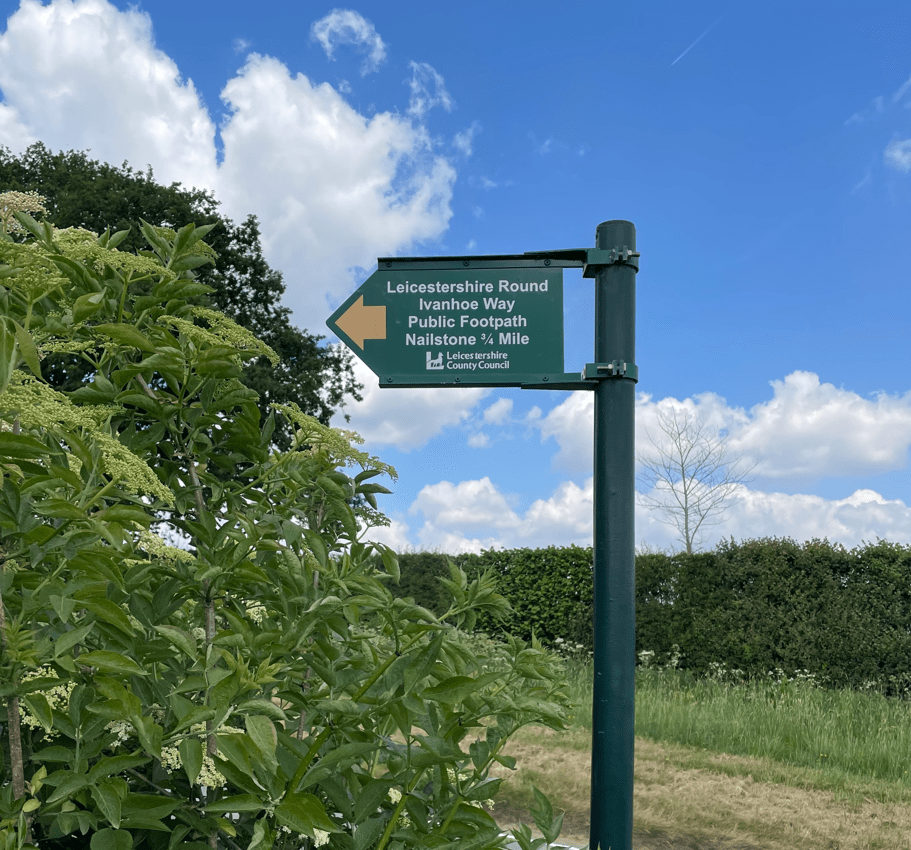
Leaving Nailstone, we were heading for Bagworth. We passed fields containing solar panels – the first we had seen whilst walking the Leicestershire Round. Apparently we were also on the Ivanhoe Way trail. This is a 36-mile circular walk beginning in Shackerstone and the walk is in the north west part of Leicestershire. Its called The Ivanhoe Way because The novel ‘Ivanhoe’ by Sir Walter Scott, written in 1819 and set in 12th century England, used the castle at Ashby and the surrounding countryside as its setting.
Solar Farm
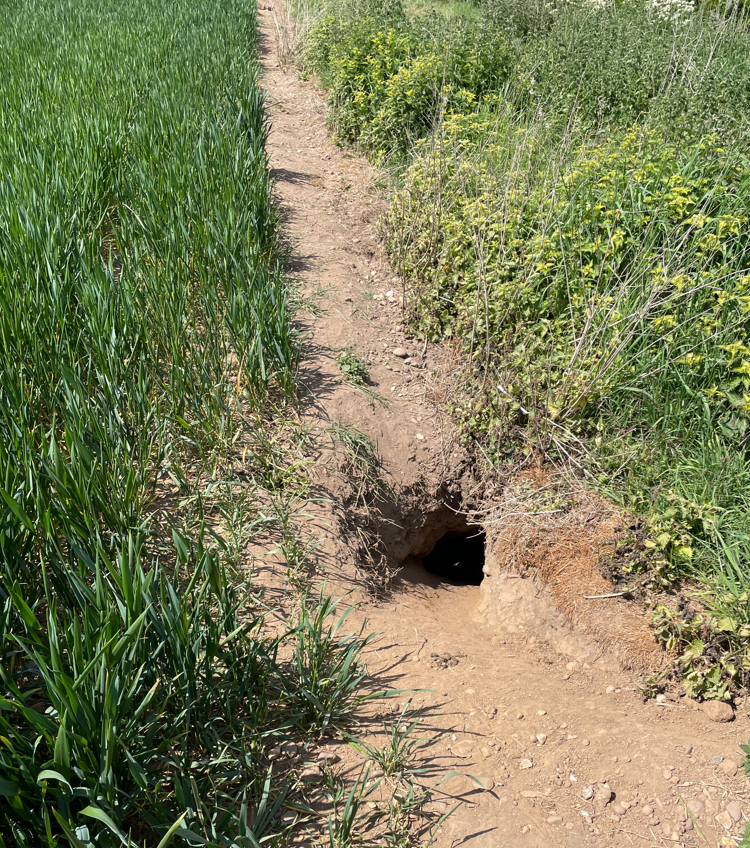
An unusual sight in a field we passed through was ‘men at work signs’ and orange cones – turned out to be large holes dug by Badgers and quite deep too. We were glad of the warning.
One of the Badger holes
Shortly after a steady walk uphill we arrived into Bagworth.
It had been a relatively easy walk and this now leaves a 6-mile section from Bagworth to Newtown Linford to complete the Leicestershire Round – hopefully next week.
Today I was up early and travelled to Woodhall Spa in Lincolnshire to enjoy a 6.75 mile circular walk.
Woodhall Spa is known as one of Lincolnshire’s prettiest villages and this was my first visit (and it won’t be the last!). It developed as a small health resort in the Victorian period and came about by accident in 1811, when a man named John Parkinson made several failed attempts to find coal. The enterprise was abandoned after the 1,000 ft deep shaft filled with spring water. It was then discovered that the Iodine-rich water had healing benefits. Spa Baths were built so that visitors could ‘take the waters’ and hotels followed.
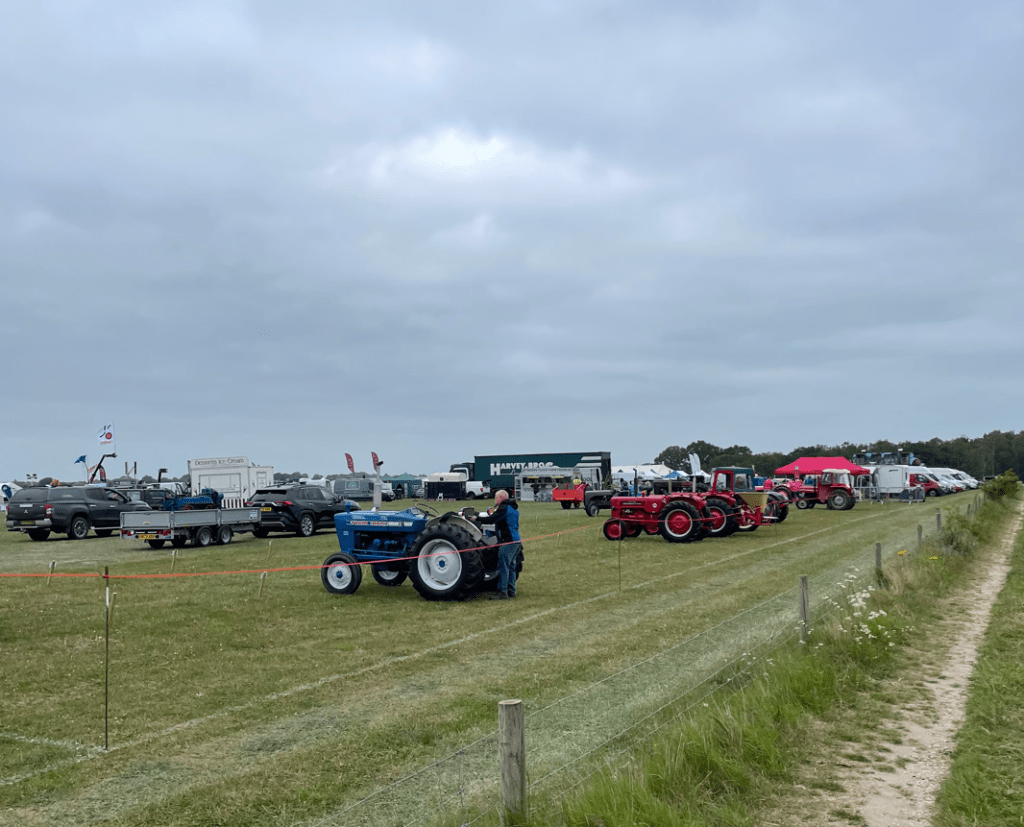
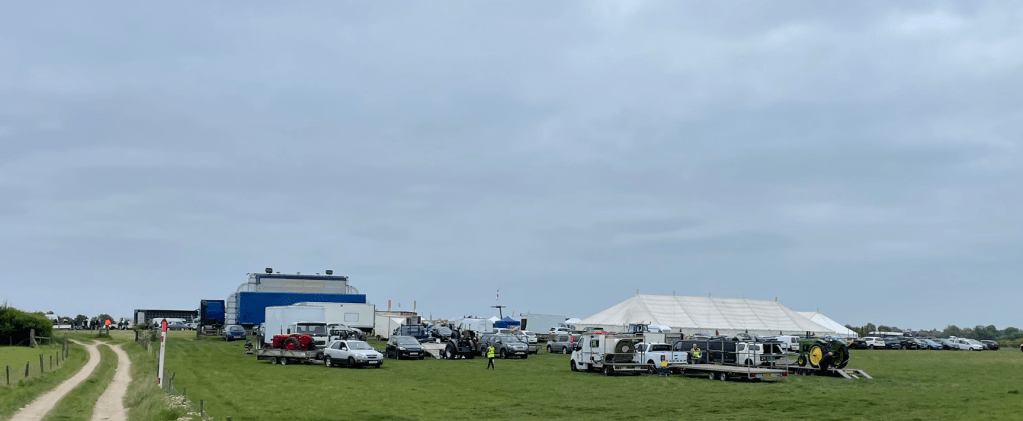
As I drove to Woodhall Spa I passed old tractors and vintage cars along the way- there must be an event on somewhere I said to myself. Arriving into Woodhall Spa there were a lot more people about than you would normally find early on a Sunday morning – then I saw a sign and all became clear.
Woodhall Spa
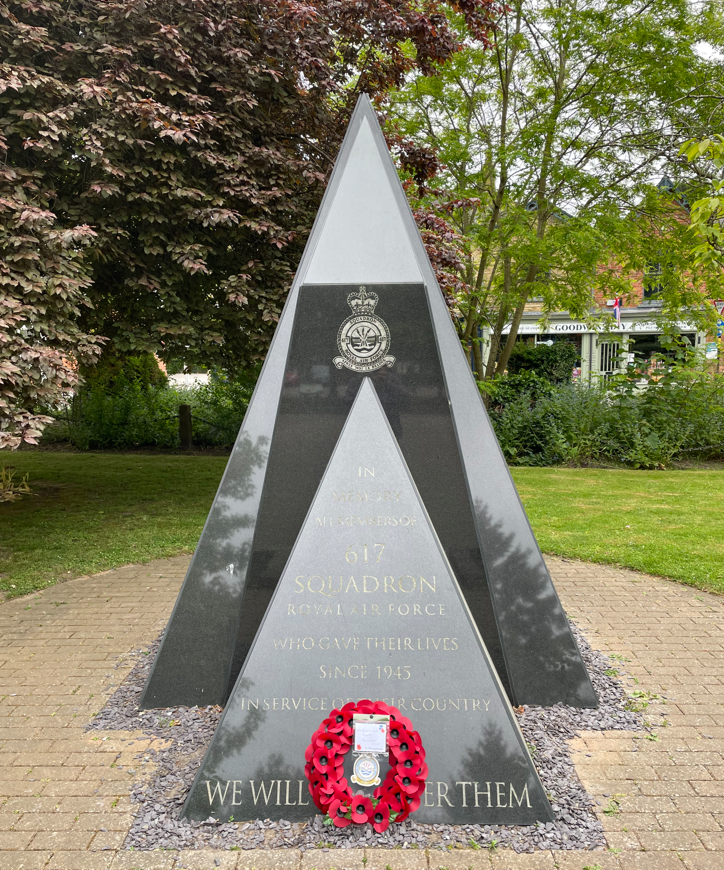
These days Woodhall Spa is a popular golfing resort. During World War 11 the village was home to some 5,000 servicemen. 617 squadron (the famous Dambuster’s) has strong associations with the village. After parking up I visited the memorial for those members of 617 squadron who have died whilst serving their country.
I paused for a while and reflected on their sacrifice.
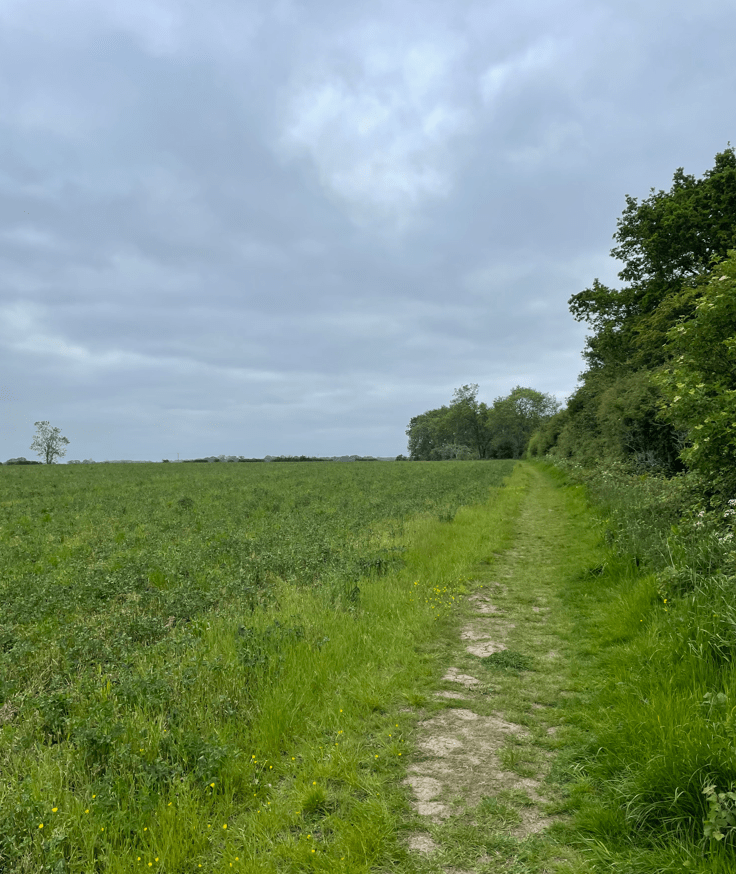
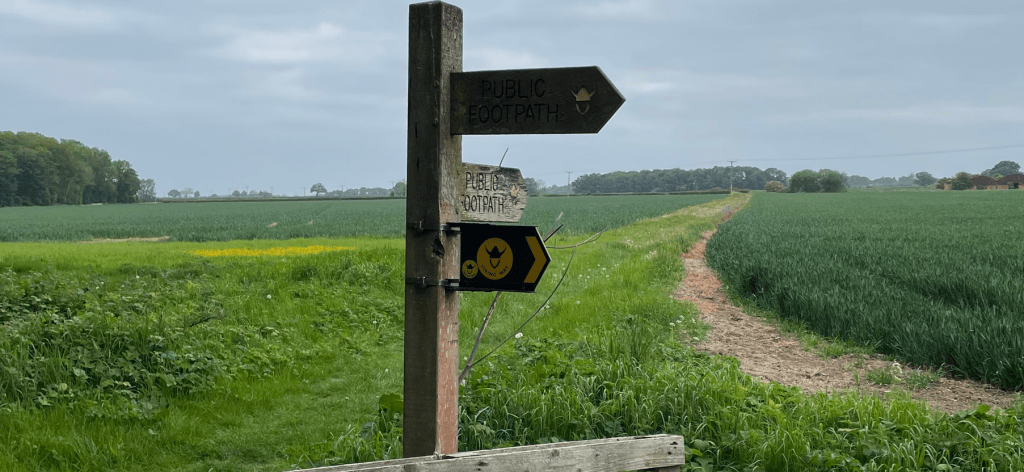
Heading off I walked through the village and suddenly came across the site of the Woodhall Spa Show – the place was busy. My route along The Viking Way was barriered off so I asked one of the Marshalls, who was directing traffic, could I still use the path. Thankfully he replied ‘ yes, just move the barrier to pass through’. And so I did, the show was setting up in a large field. I stopped for a chat with another Marshall and he said the show is a big event for the village and later on, the fields for parking would be full.
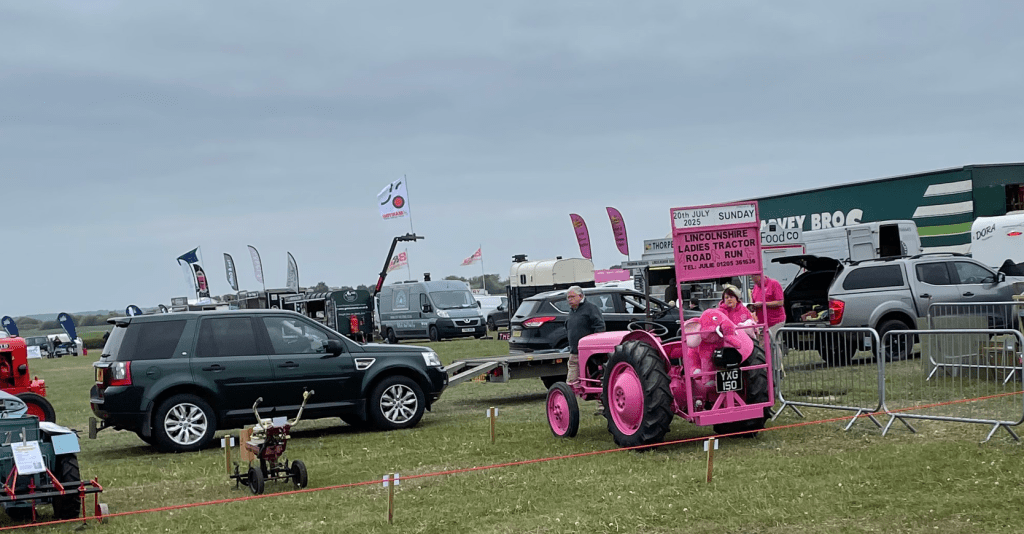
There was even a vintage tractor painted pink advertising the Lincolnshire Ladies Tractor Road Run on 20th July.
After I had passed the show grounds it became much quieter.
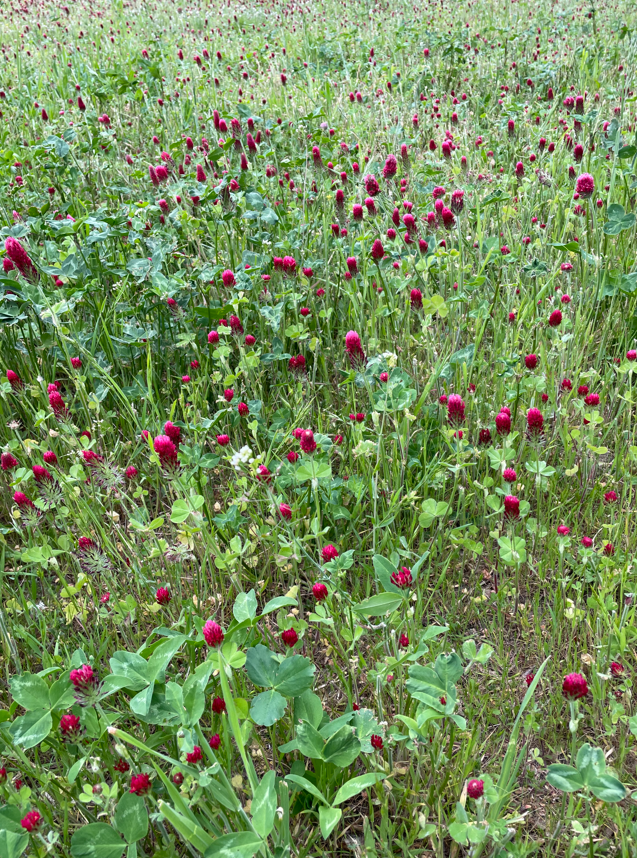
This is more like it I thought, the birds twittering in the trees and no one in sight. I admired a field containing Crimson Clover as I walked by.
Crimson Clover
The soil is quite parched at this stage of the current dry spell.
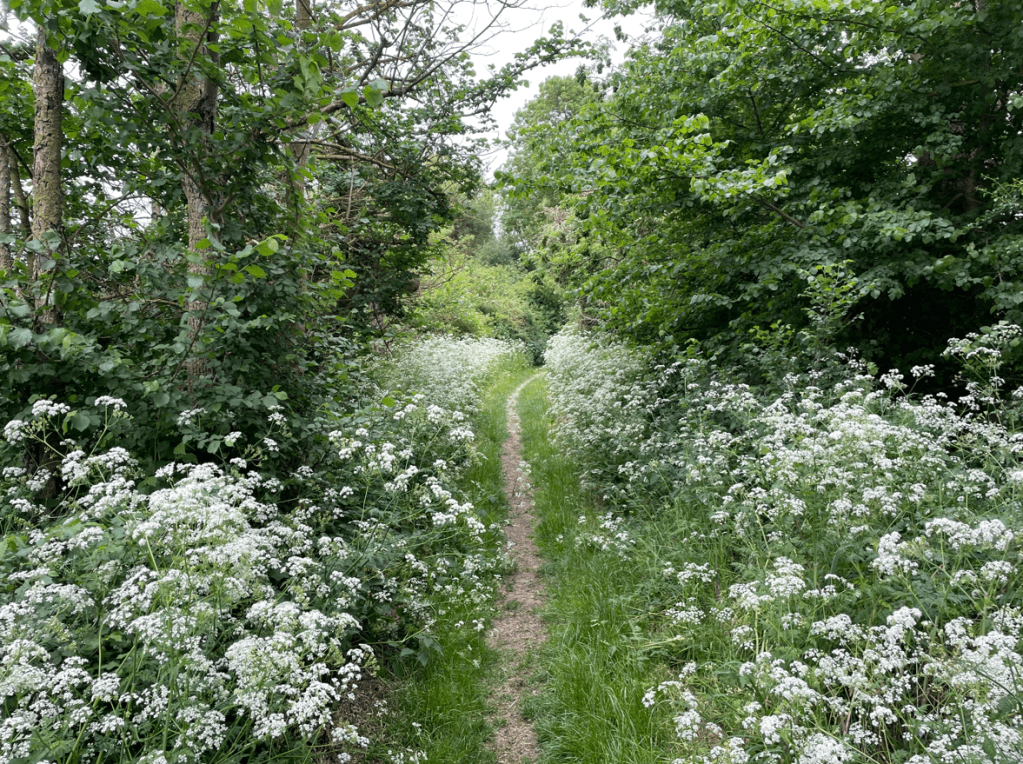
The white flowers on the Cow Parsley were bountiful.
Cow Parsley
I met a woman out walking her dog and we had a chat about the show and where I had come from today. After, I continued following The Viking Way across fields.
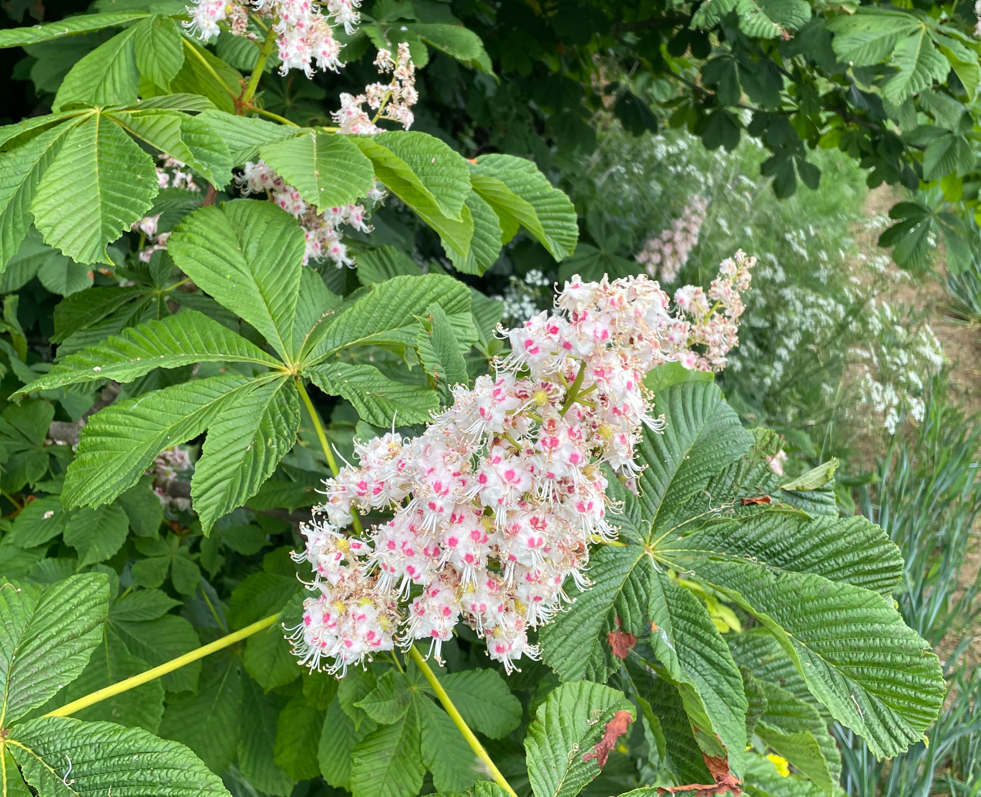
I spotted some beautiful flowers on a Horse-Chestnut tree.
Horse Chestnut tree flowers
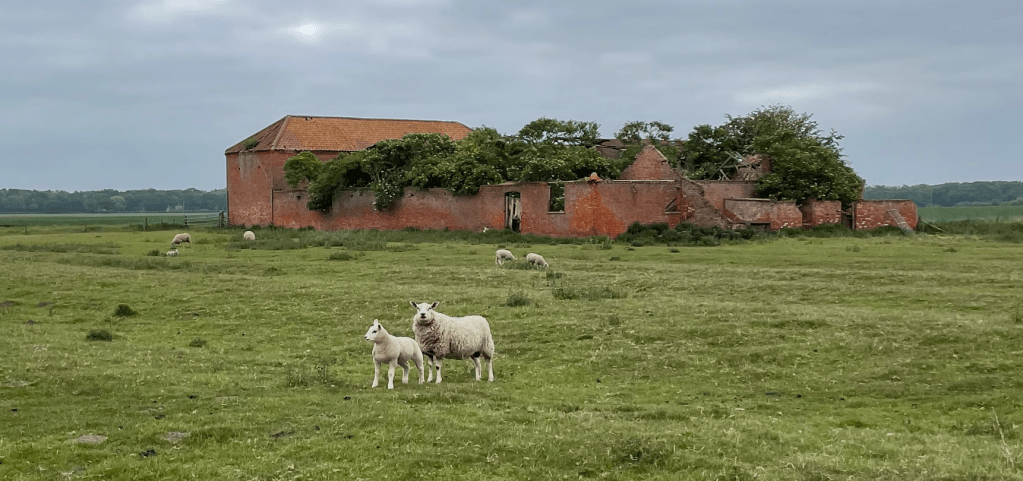
I passed through a few fields containing sheep with lambs in tow. Bahhhh!
Derelict farm
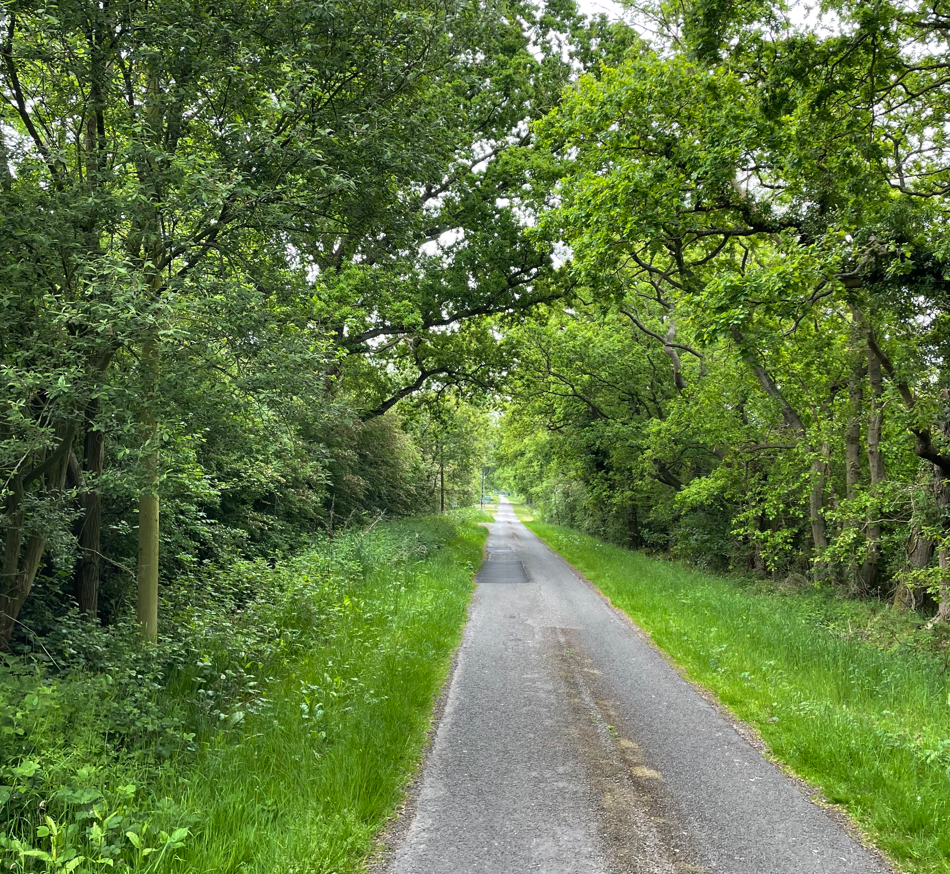
My route then took me along quiet tree- lined lanes.
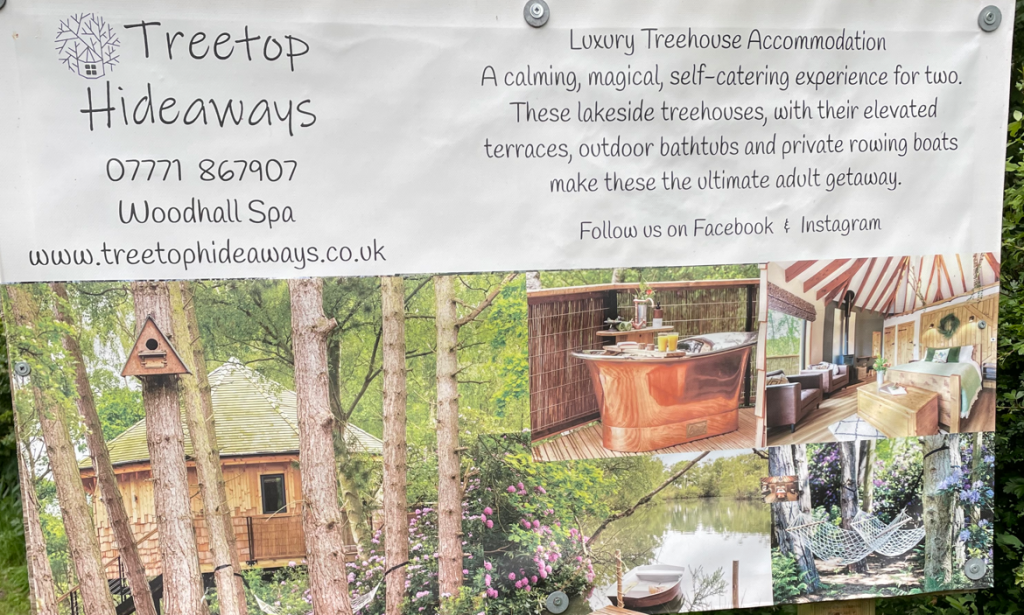
As usual whilst walking along I was lost in my thoughts and then I came across a sign for luxury treehouse accommodation. ‘That’s very interesting’ I thought -I will check it out later. http://www.treetophideaways.co.uk
This is what I love about walking – coming across the unexpected.
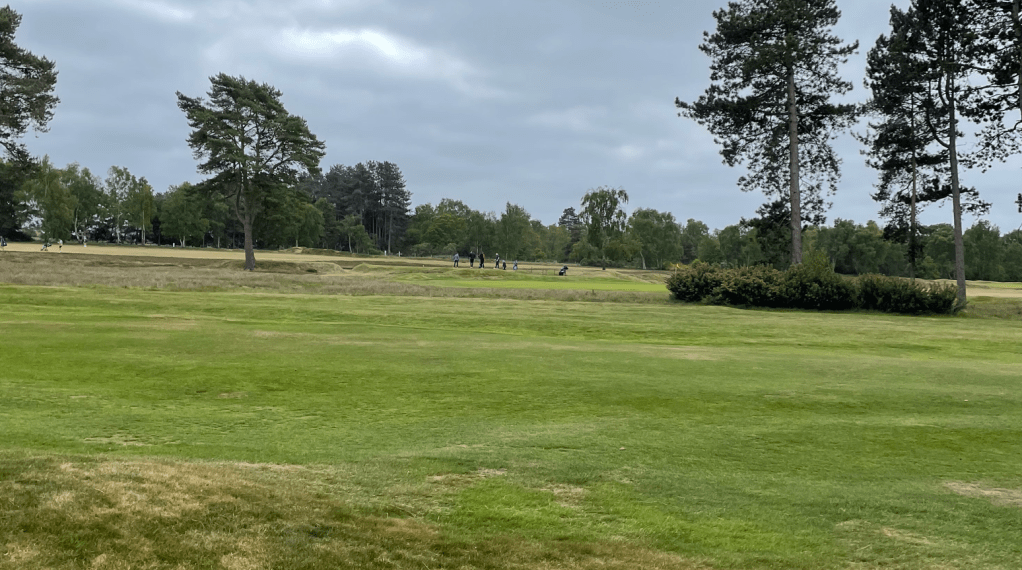
The final part of my walk was through The National Golf Centre which is lined with golf courses. It was a lovely walk and I am pleased to report that I didn’t get hit by any stray golf ball’s 😊.
There were a few golfers out enjoying a game.
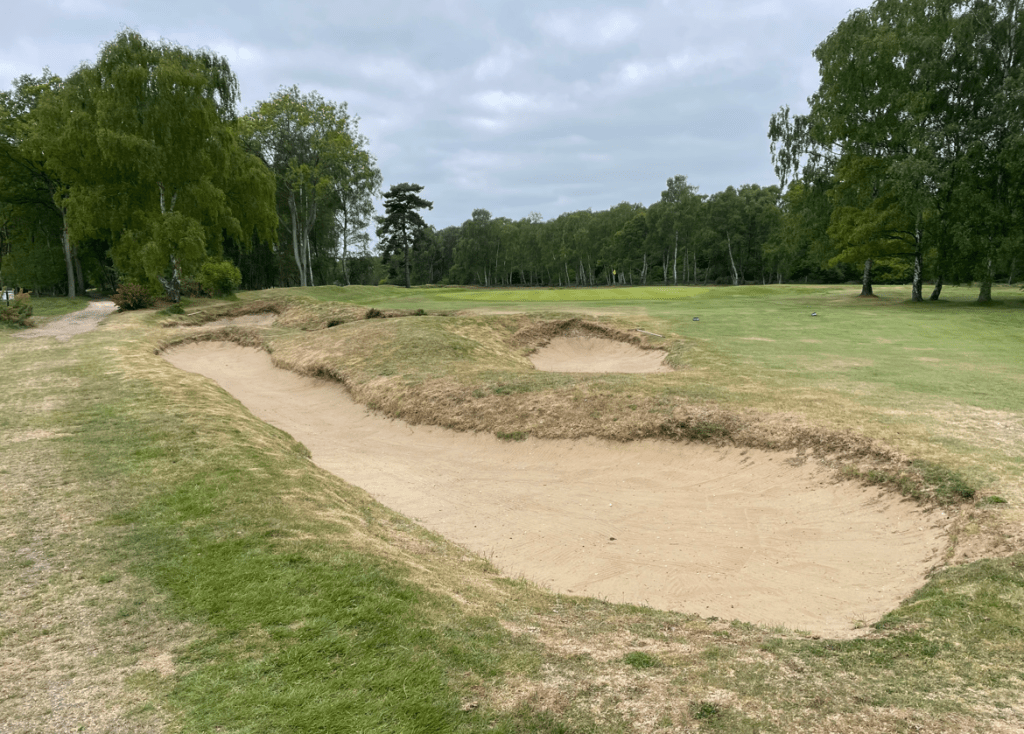
I walked past this bunker and wondered how many golfers had come a cropper in here?
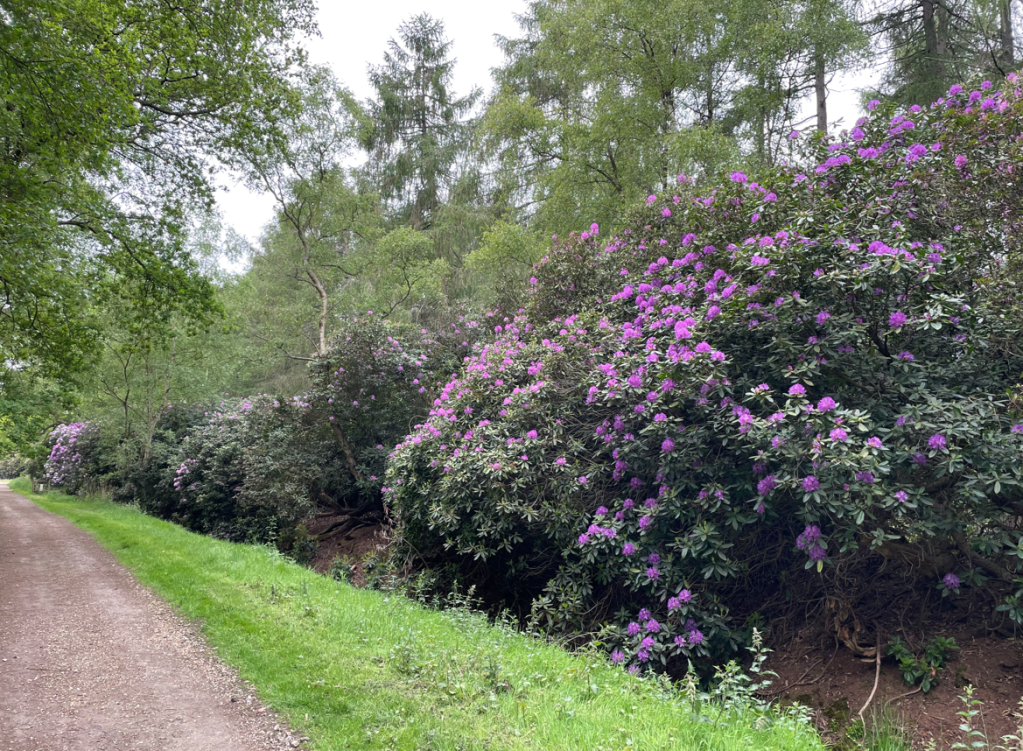
The path was lined with Rhododendron bushes – lovely.
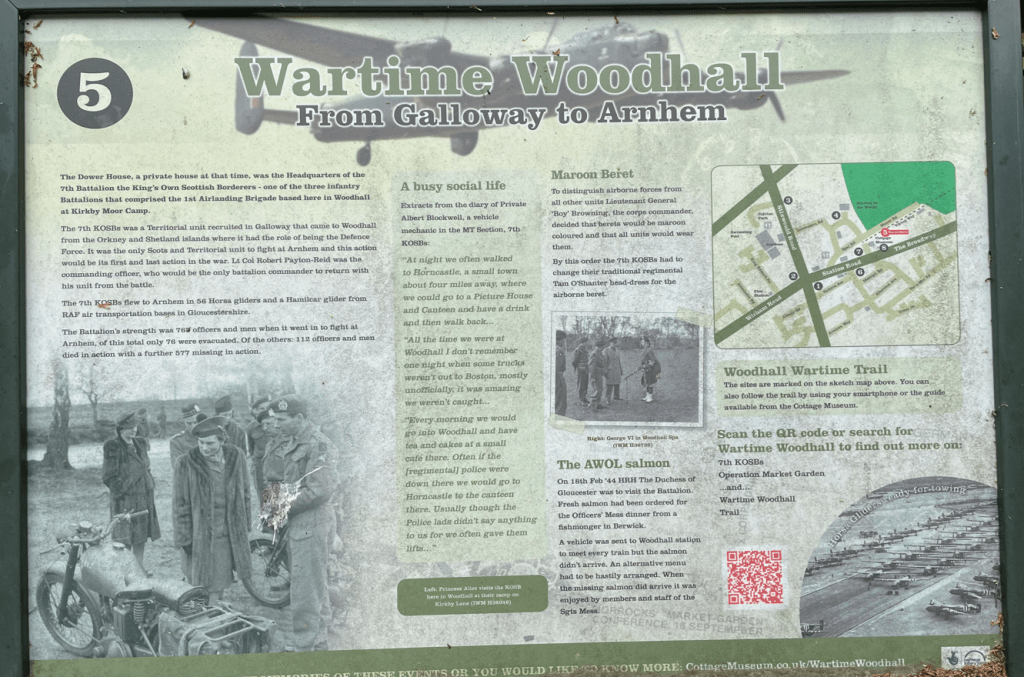
On my route today I came across a number of information boards about Wartime Woodhall – its a great idea I think.
Soon, I was walking back into the village and I popped into the co-op to get a coffee. The main street in the village is lined with cafes (busy!) and interesting shops including one claiming to be the smallest shoe shop in England- it was small!
I had loved exploring Woodhall Spa and will definitely be returning.
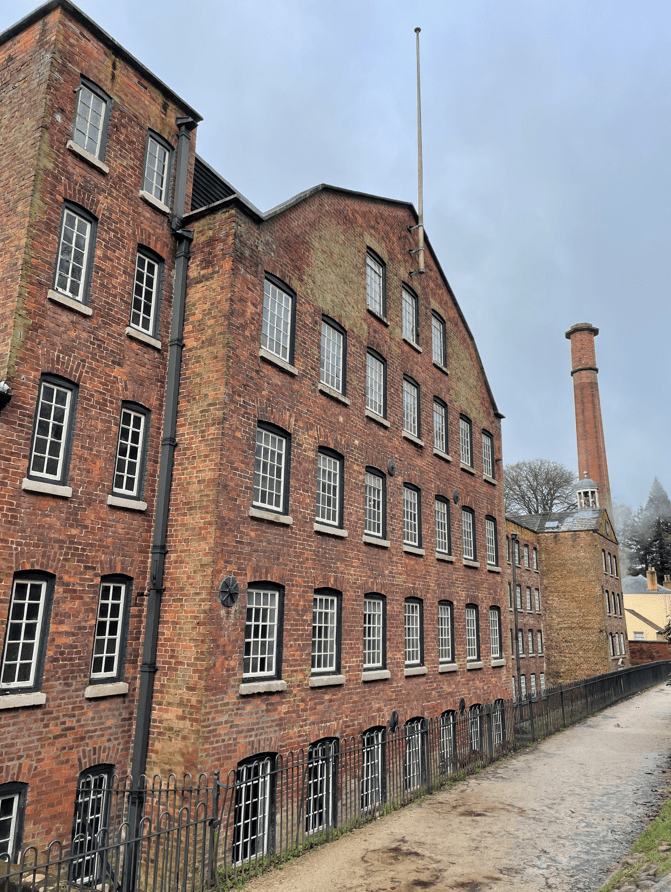
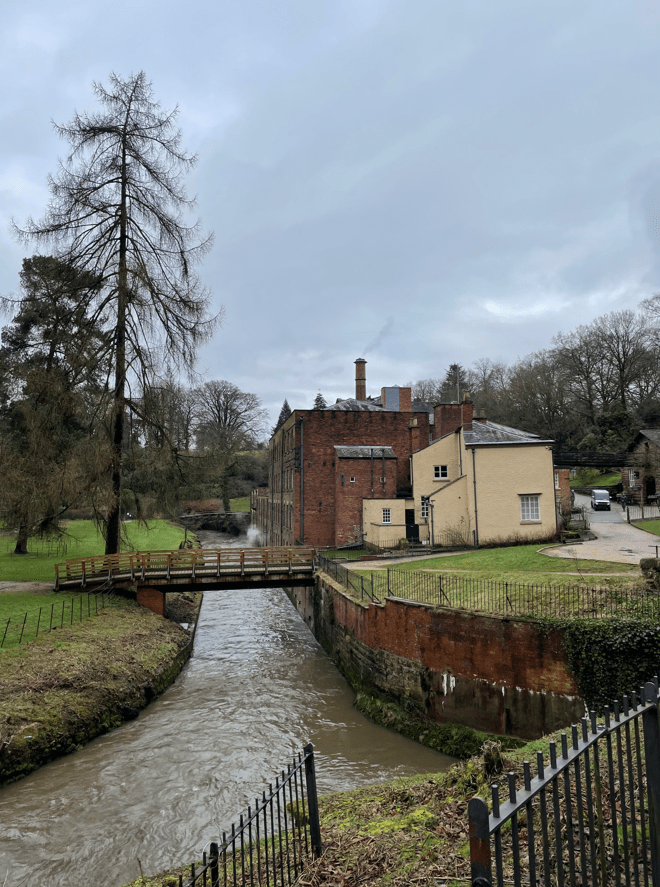
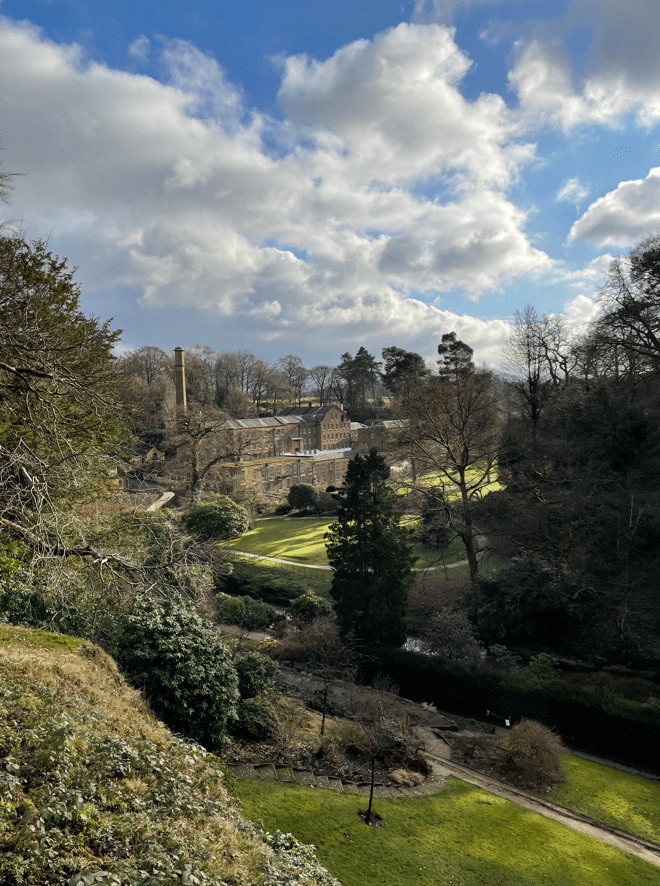
Today myself and Angela visited Quarry Bank Mill. This is a National Trust property adjacent to Manchester Airport and is a beautifully example of a former cotton mill. It is one of Britain’s greatest Industrial Heritage sites set in picturesque gardens and countryside. https://www.nationaltrust.org.uk/visit/cheshire-greater-manchester/quarry-bank
We had visited a number of years ago so thought that it was worth another visit and we knew it was a nice place to walk. However, when we arrived we found that our planned walk beside the river Bollin and through Chapel Woods was off the cards due to flood damage on the footpath by the river. We decided to stay and look around the former mill and make the most of our day. At the end we were glad that we had because it was a most interesting day out.
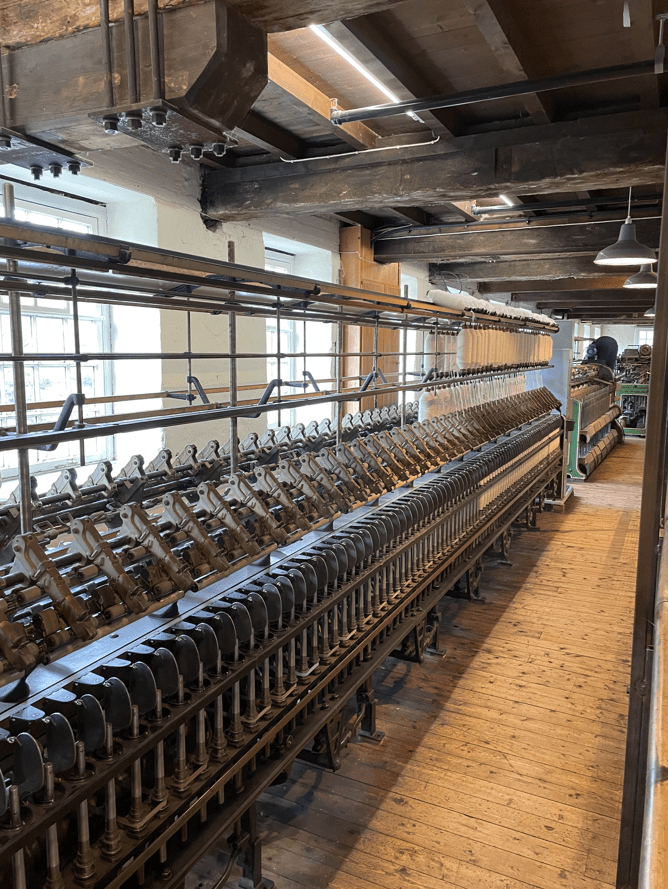
The mill building
The mill was built by Samuel Greg in 1784 at Styal, adjacent to the river Bolin, which would be the source for the water mill used to power the new machines that were pushing innovation in the cotton industry.
Manchester’s damp climate made it perfect for processing cotton. Together with access to the canals / rivers and later the railways, transport of raw cotton into the mill and cloth leaving the mill was made easy.
Arriving into the car park we were pleased to see that it was a new addition and that there was a nice new reception building. This would be a theme for the day where there had been big improvements to the infrastructure all around the site. We headed for the impressive mill building where we were told that a ‘Hydro Tour’ was leaving in 5 mins time and we were asked whether we like to join it. Yes, of course, so we enjoyed a 45 min tour by our knowledgeable guide Chris of the water system that feeds the mill.
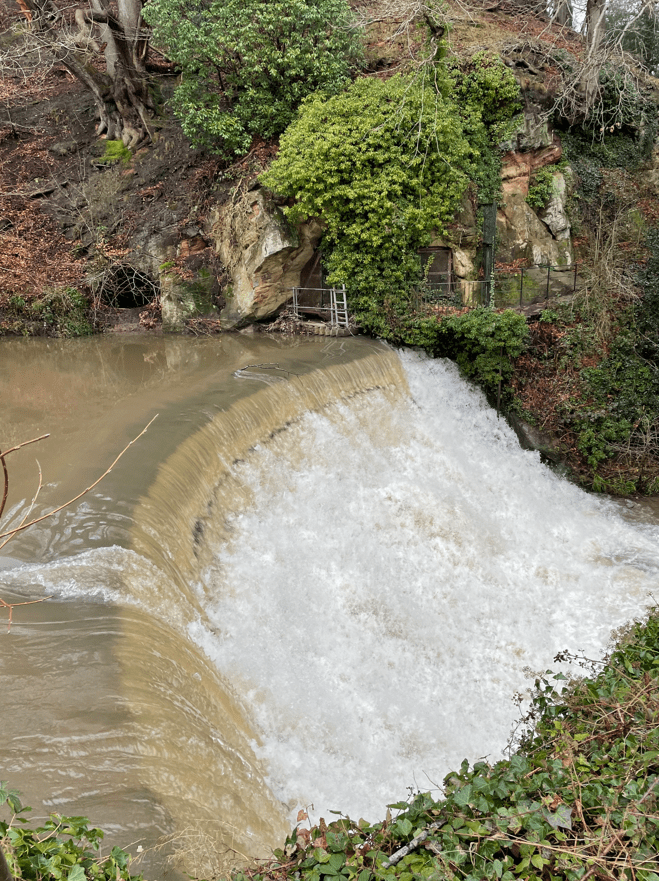
Dam / weir across the river Bolin that feeds the mill
We found out that in 2013 a water turbine was installed that now provides half of Quarry Banks electricity. A fish and eel pass were built to enable salmon to swim up river past the weir once more. A series of channels and sluices moves the water to the giant water wheel inside the mill. The supply of water, especially during the summer months, could be erratic and a large buffer pond was built close to the weir to supply additional water when the river was low. The giant gears that drove the belts powering the machinery were impressive.
The new spinning machines required a steady power input and because trying to control the water to drive the water wheel was difficult, the mill took advantage of innovations in steam power and installed a couple of steam engines to power the machines. We saw one steam engine operating – the second had blown a gasket and was awaiting repair. This tour was a good introduction to the mill. After the tour we headed to the café for a coffee and a breather.
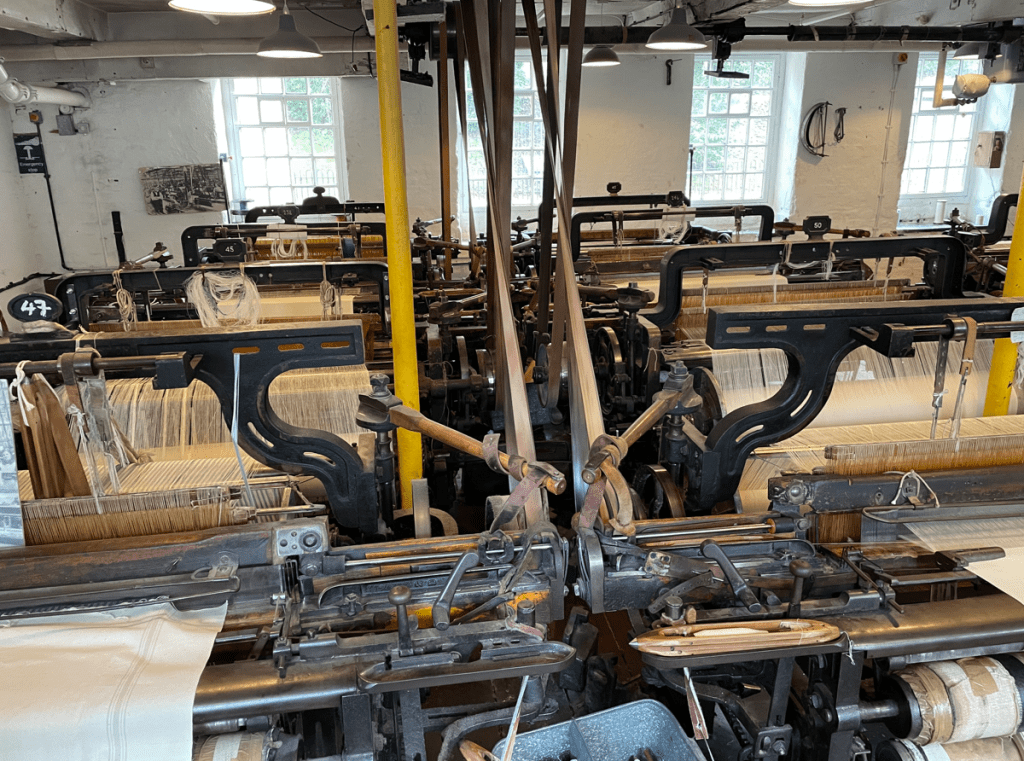
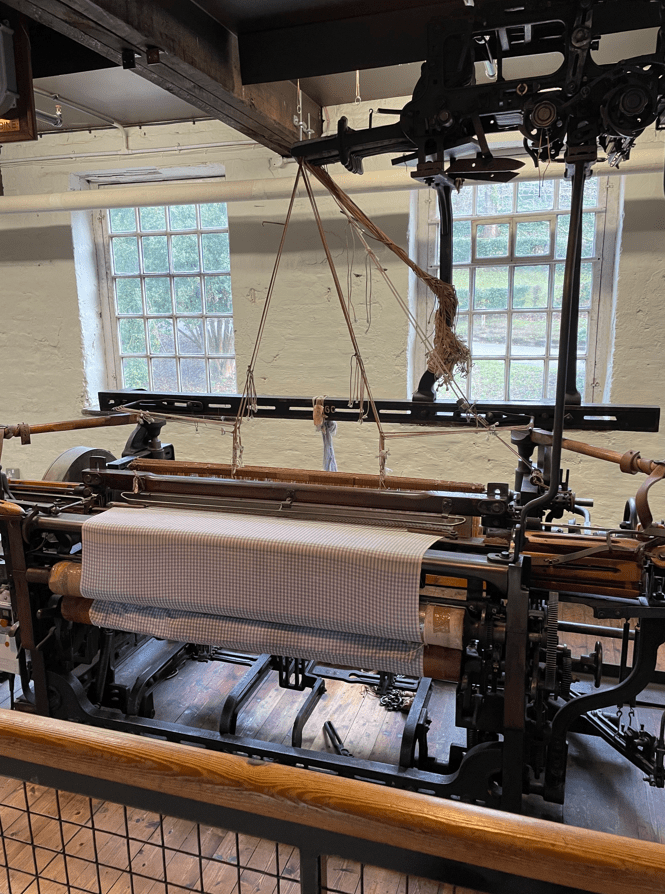
After coffee we went around the mill looking at the various machines used to process the cotton. A volunteer started the carding machine which cleaned and brushed the fibres forming them into thick soft ropes called slivers. It was very loud and gave us an indication of the noise that would have been generated when a number of these machines were operating.
It was fascinating learning about the very hard lives of the mill workers and particularly the apprentices. The mill owner built a house for the apprentices and in 1800 there were 90 children living there. Working 12 hours a day, six days a week they were legally bound to the mill owner until they reached 18 or 21. Robert Greg, Samuels son was now running the mill and he build more houses for the workers, a shop, pub and gardens that provided fresh vegetables. This was a glimpse into the days of our Industrial revolution and this particular mill owner was more enlightened than some.
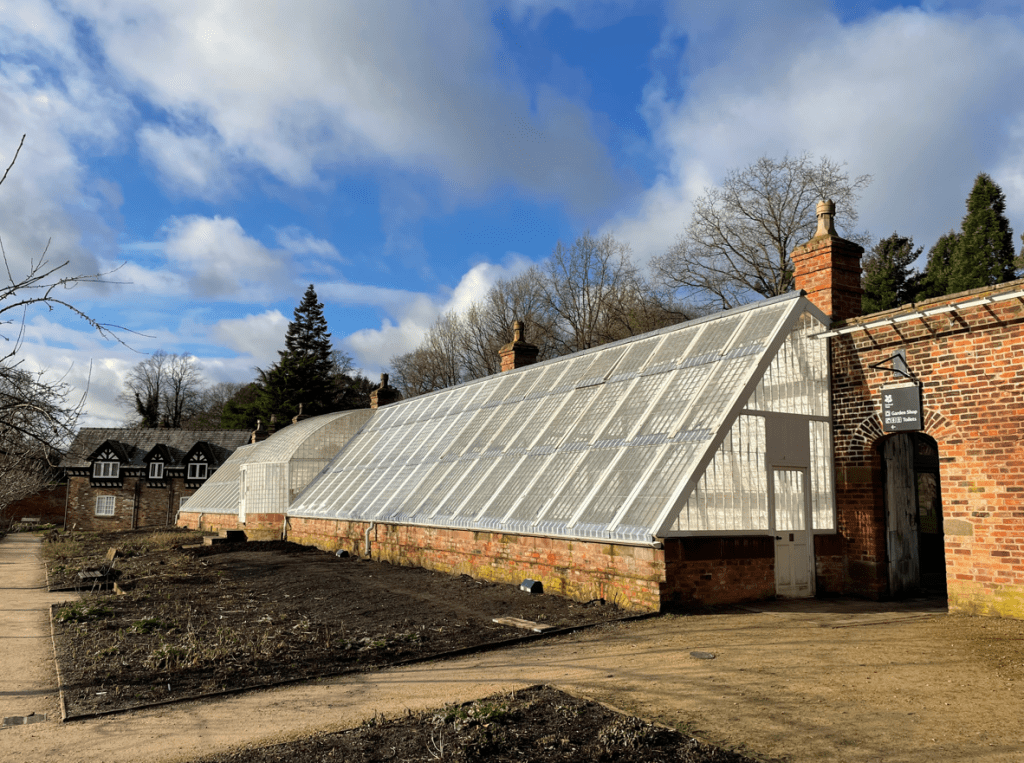
Having toured the mill we had another coffee and then headed up to the walled gardens where we viewed the restored glasshouse. 7,500 panels of hand- blown Polish conservation glass were used in the restoration.
The refurbished glass house
As the gardens are at height we had a nice view down over the mill. A nice café has been built at the entrance to the gardens.
View from the walled gardens
We decided that we would definitely return to view the Apprentice house/ garden, Styal village and see if we can do that walk we had planned.
Today myself and Angela enjoyed a 5-mile walk along the Shropshire Union Canal followed by a visit to the National Waterways Museum at Ellesmere Port. It was dark when we set off from the house to drive to Tiverton, but the sun was just rising as we parked up in a lay-by close to the canal.
The towpath was grass/mud and quite uneven in places. We strolled along looking at the bird life – there was the usual Heron fishing and plenty of Mallard Ducks. The canal could obviously take boats larger than the current narrow boats – it was wide and the locks/bridges were sized for much larger boats.
Whartons Bridge
We visited a lock called the Beeston Iron Lock and another called the Beeston Stone Lock. The former was lined with steel sheets and the latter had large stone blocks instead of brick. So,quite unusual locks.
Beeston Iron LockBeeston Stone Lock
It was great to have a sunny morning after the totally gloomy recent weather.
A large winding hole
We walked past a section of canal where a temporary (permanent?) repair to a breached bank had been carried out using sand bags.
We found a café and decided to get a coffee – our timing was off because two large families had just beaten us to order and it would be a long wait we were told. We decided to press on and go to the Canal Museum at Ellesmere Port.
Canal museum
We had visited the museum in February when unfortunately it was cold and raining. So it was nice to be able to walk around today and get a better look at things in the sunshine 😊.
We were particularly keen to visit the Island Warehouse exhibition which houses many artifacts including complete boats.
I was interested to see the ice-breaking boat which was used to break the ice in the canal during particularly cold spells. The museum is first class and does a great job in preserving canal heritage.
We made our usual coffee stop in the excellent café and headed home after a thoroughly enjoyable day out.